wayground logo

Free Printable Worksheets

Font size

S
M
L
XL
Worksheets

Test 1 Review

Total questions: 115

Worksheet time: 2hrs 13mins

Name
Class
Date
1.
Does the type of shoes affect the running speed?Which is the correct testable question?
a)
If the subject wears boots, then the subject will jump the fastest.
b)
If the subject wears heels, then the subject will run the slowest.
c)
The subject wears Nike, then the subject will run the fastest.
d)
If I wear Nike, then I will run the slowest.
2.
Every hypothesis begins with what word?
a)
Does
b)
If
c)
Which
d)
Then
3.

A hypothesis has to have which two words? (Select two)

a)

If

b)

Think

c)

Due

d)

Then

4.
Ralph is concerned about the number of ants in his kitchen. He wonders if cleaning the kitchen more than once a month would fix the problem.
What will be measured in the experiment?
a)
Ralph's concern.
b)
How often the kitchen is used.
c)
How clean the kitchen is.
d)
The number of ants
5.
Ralph is concerned about the number of ants in his kitchen. He wonders if cleaning the kitchen more than once a month would fix the problem.
What is the best hypothesis for this situation?
a)
If the kitchen is cleaned once a week instead of once a month, then the number of ants will be fewer than if the kitchen is cleaned once a month. 
b)
If the kitchen is cleaned, then will the number of ants go down?
c)
The filthiness of the kitchen is causing the ant infestation.
d)
If the kitchen is cleaned, then the number of ants will decrease.
6.
A controlled Variable is a variable that does change over the course of the experiment
a)
true
b)
false
7.

A hypothesis is

a)

a prediction about an experiment.

b)

a statement of variables.

c)

a phrase with scientific notation.

d)

a testimonial of data.

8.

What must come after the "If" in a hypothesis?

a)

The Independent Variable.

b)

The Dependent Variable

c)

The Control Variable

d)

The Optimal Variable

9.

What must happen with the dependent variable in a hypothesis?

a)

It must be measurable.

b)

It must be optional.

c)

It must be clear.

d)

It must resist change.

10.

Does the amount of water affect the plant's height?

Which hypothesis is correct?

a)
If the plant receives 20ml of water, then the plant will grow the shortest.
b)
The plant will receive 20 ml of water, then the plant will grow the tallest.
c)
If the plant receives, then the plant will grow the tallest.
d)
If the plant receives 10 ml of soda, then it will grow tall.
11.
Research question: does the distance a person kicks a soccer ball effect how well they will do on their math test.  What is the dependent variable?
a)
How far they kick the soccer ball
b)
who the person is
c)
how well they do on the math test
d)
Type of soccer ball.
12.
When experimenting with the growth of a plant, a scientist uses three (of the same type of) plants, two different fertilizers, equal light, and equal water. What type of variable is the fertilizer?
a)
Dependent
b)
Independent
c)
Control
d)
Compound
13.
Which variable depends on what is done at the beginning of an experiment?
a)
Dependent
b)
Independent
c)
Control
d)
Following
14.
What would the INDEPENDENT variable be in an experiment testing which types of paper airplane goes furthest?
a)
the paper used
b)
the type of paper airplane
c)
the distance of each plane's flight
d)
how hard the plane is thrown
15.
Research Question: Does the type of gasoline put in a car effect how fast the car can drive. What is the independent variable?
a)
Type of gasoline
b)
which car the gas is put into
c)
how fast the car can drive
d)
how much gas is put into the car
16.
An experiment is performed on plants to see how different liquids affect plant growth. Each plant in the experiment is given a different liquid; water, apple juice, or milk. Each plant has the same amount of soil, sunlight, and listens to the same music. In this investigation, the independent variable is ...
a)
The type of plant
b)
The amount of sunlight
c)
The type of music
d)
The type of liquid
17.
An experiment is performed on plants to see how different liquids affect plant growth. Each plant in the experiment is given a different liquid; water, apple juice, or milk. Each plant has the same amount of soil, sunlight, and listens to the same music. In this investigation, what is the dependent variable?
a)
Type of plant
b)
Water, apple juice, milk
c)
Plant growth
d)
Color of the plant's leaves
18.
Ms. S set up an experiment to see how the mass of a ball affects the distance it rolls off a ramp. Identify the independent variable.
a)
Distance traveled by the ball
b)
Height of the ramp
c)
Mass of the ball
d)
Who set up the experiment (Ms. S, etc)
19.
Maria wants to know if birds prefer to eat in one place over another. She makes three feeders out of 2-liter bottles and paints all of them red. She fills each of the feeders with the same amount of mixed birdseed, and plans to keep the feeders out for 10 days before measuring how much seed is eaten from each feeder. She puts each of the feeders in her back yard: one feeder in a large dead tree, another feeder she sits on the dog house, and the last she sits in a small bushy tree.
What is the dependent variable?
a)
Length of the birdfeeders
b)
Amount of time feeders are outside
c)
Amount of seed eaten
d)
Location the feeders are put in.
20.

The factors that stay the same or are constant throughout the experiment.

a)

Controlled Variable

b)

Dependent Variable

c)

Independent Variable

21.

The variable that is measured.

a)

Controlled Variable

b)

Dependent Variable

c)

Independent Variable

22.

The one factor that a scientist changes during an experiment.

a)

Controlled Variable

b)

Dependent Variable

c)

Independent Variable

23.

In a controlled experiment, how many independent variables can be tested at a time?

a)

one

b)

none

c)

two or more

d)

how ever many makes sense.

24.

Why is it important to have only one independent variable and to control the other variables when performing science experiments?

a)

So you can tell which factor is causing the change in the experiment.

b)

It does not matter, you can have as many independent variables as you want.

25.
Changes in the _________ variable causes changes in the _________ variable.
a)
independent; dependent
b)
dependent; independent
26.

Ben makes five paper helicopters with different wing lengths. He drops them the same way from a height of two meters for five trials each. He records the amount of time it takes for each helicopter to fall to the ground.

What is the independent variable?

a)

Dropping the same way

b)

Wing Length

c)

Amount of time it takes the helicopter to hit the floor

d)

Dropping from the same height

27.

Ben makes five paper helicopters with different wing lengths. He drops them the same way from a height of two meters for five trials each. He records the amount of time it takes for each helicopter to fall to the ground.

What is the dependent variable?

a)

Dropping the same way

b)

Wing Length

c)

Amount of time it takes the helicopter to hit the floor

d)

Dropping from the same height

28.

Cindy wanted to find out how the amount of sunlight affects the growth of plants. She placed two tomato plants in 10 inch pots with potting soil and watered them ¼ cup each day. One plant was placed under a cardboard box and one was placed in the sunlight. She measured the growth of the plant each week for three weeks.

What is the independent variable?

a)

Using the same type of plant

b)

Each plant was placed in a 10 inch pot

c)

The growth of the plant

d)

One plant is in the sunlight and the other is under a box

29.

Cindy wanted to find out how the amount of sunlight affects the growth of plants. She placed two tomato plants in 10 inch pots with potting soil and watered them ¼ cup each day. One plant was placed under a cardboard box and one was placed in the sunlight. She measured the growth of the plant each week for three weeks.

What is the dependent variable?

a)

Using the same type of plant

b)

Each plant was placed in a 10 inch pot

c)

The growth of the plant

d)

One plant is in the sunlight and the other is under a box

30.

Cindy wanted to find out how the amount of sunlight affects the growth of plants. She placed two tomato plants in 10 inch pots with potting soil and watered them ¼ cup each day. One plant was placed under a cardboard box and one was placed in the sunlight. She measured the growth of the plant each week for three weeks.

What are two controlled variables? (Select 2)

a)

Using the same type of plant

b)

Each plant was placed in a 10 inch pot

c)

The growth of the plant

d)

One plant is in the sunlight and the other is under a box

31.

Sarah is participating in a walk-a-thon to raise money for local reading programs. The amount of money Sarah will raise depends on the distance she walks.


Which of the variables is dependent?

a)

amount of money raised

b)

distance walked

32.

Carey and Justin are raising money to purchase books for the library. The more money they raise, the more books they will be able to purchase for the library.


Which of the variables is dependent?

a)

amount of money raised

b)

number of books

33.

Sarah is bringing treats to her elementary school class on her birthday. The number of treats she brings is based on the number of students in her class.


Which of the variables is independent?

a)

number of students

b)

number of treats

34.

Paco's daughter will be participating in an upcoming dance recital. She will need a different costume for each dance that she performs.


Which of the variables is independent?

a)

number of costumes

b)

number of dances

35.

Sarah is bringing treats to her elementary school class on her birthday. The number of treats she brings in is based on the number of students in her class.


What is the dependent variable?

a)

number of students

b)

number of treats

36.

Sarah is participating in a walk-a-thon to raise money for local literacy programs. The amount of money Sarah will raise depends on the distance she walks.


What is the independent variable?

a)

amount of money raised

b)

distance walked

37.

In the United States House of Representatives, the number of Representatives from a state is calculated based on its population.


What is the dependent variable?

a)

number of U.S. Representatives

b)

population

38.

In order to earn extra spending money, Delaney babysits children after school. The greater the number of hours she babysits, the more money she earns.


What is the independent variable?

a)

number of hours

b)

amount of money earned

39.

A food service worker earns $12 per hour. If the money earned depends on the number of hours worked, identify the independent variable.

a)

money earned

b)

number of hours

40.
Research question: does the distance a person kicks a soccer ball effect how well they will do on their math test.  What is the dependent variable?
a)
How far they kick the soccer ball
b)
who the person is
c)
how well they do on the math test
d)
Type of soccer ball.
41.
When experimenting with the growth of a plant, a scientist uses three (of the same type of) plants, two different fertilizers, equal light, and equal water. What type of variable is the fertilizer?
a)
Dependent
b)
Independent
c)
Control
d)
Compound
42.
The independent variable is the
a)
one you measure.
b)
one you change.
43.
The dependent variable is the one
a)
you measure.
b)
you change.
44.
The experimental group is the group that...
a)
you are testing
b)
is "normal"
45.
The control group is the...
a)
group you are testing
b)
"normal" group
46.
If I change my cat's food to Fancy Feast, then the amount of hairballs will decrease.  The control is:
a)
food type
b)
normal food (one the cat eats normally
c)
amount of hairballs
d)
food dish
47.
If I change my cat's food to Fancy Feast, then the amount of hairballs will decrease.  The dependent variable is:
a)
food type
b)
normal food (one the cat eats normally
c)
amount of hairballs
d)
food dish
48.
If I change my cat's food to Fancy Feast, then the amount of hairballs will decrease.  The independent variable is:
a)
food type
b)
normal food (one the cat eats normally
c)
amount of hairballs
d)
food dish
49.
If I change my cat's food to Fancy Feast, then the amount of hairballs will decrease.  A constant is:
a)
food type
b)
normal food (one the cat eats normally
c)
amount of hairballs
d)
food dish
50.
What is a factor that is measured for change in an experiment?
a)
control
b)
constant
c)
independent variable
d)
dependent variable
51.
What is the factor that an experimenter changes on purpose?
a)
Dependent Variable
b)
Independent Variable
c)
Constant
d)
Control
52.
A summary of the experiment that includes whether hypothesis was right or wrong
a)
Hypothesis
b)
Results
c)
Conclusion
d)
Independent Variable
53.
The part of the experiment that does not contain the independent variable. Used for comparison.
a)
Control Group
b)
Experimental Group
c)
Results
d)
Data
54.
What are all the things that are kept the same in an experiment?
a)
controls
b)
data
c)
constants
d)
independent variables
55.
What is the effect of salt water on the average of the height of the 3 tallest blades of grass?
What is the independent variable in the above question?
a)
salt water
b)
height
c)
average
d)
effect
56.
What is an if....then statement that predicts the outcome of an experiment or how the Independent variable effects the dependent variable?
a)
Conclusion
b)
Materials
c)
Hypothesis
d)
Problem
57.
What is mean by homeostasis?
a)
Controls and coordinates body activities through chemical 
b)
controls and coordinates body activities through electrical impulses
c)
For maintenance of a steady state in the internal environment
d)
remove metabolic waste products from the cel
58.

Which of the following levels of organization in the body is composed of one or more organs working together?

a)

Organs

b)

Tissues

c)

Organism

d)

Organ System

59.

Which of the following is the basic unit of structure and function in living things?

a)

Cells

b)

Tissues

c)

Organs

d)

Organ Systems

60.

_______ are a group of similar cells that perform the same function.

a)

Tissues

b)

Organs

c)

Organ Systems

d)

Organism

61.

Which of the following is a structure made up of different types of tissues?

a)

Cells

b)

Organs

c)

Organ System

d)

Organism

62.

Which level of organization in the body is shown in the image?

a)

Organ

b)

Organ System

c)

Cells

d)

Tissues

63.
How is homeostasis important to the survival of organisms?
a)
Homeostasis makes organisms grow bigger and taller.
b)
Homeostasis helps organisms locate food.
c)
Homeostasis allows organisms to regulate their temperature.
d)
Homeostasis makes all organisms hibernate.
64.
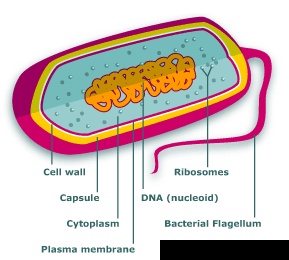
Has membrane bound organelles
a)
Prokaryote
b)
Eukaryote
c)
both
65.
One example of a prokaryote is a...
a)
fungus
b)
bacteria
c)
animal
d)
plant
66.
Which type of cell?
a)
Prokaryote
b)
Eukaryote
67.
Which type of cell?
a)
Prokaryote
b)
Eukaryote
68.
Which type of cell?
a)
Prokaryote
b)
Eukaryote
69.
Where is the DNA found in a eukaryotic cell? 
a)
floating around in the cytoplasm 
b)
in the nucleus 
70.
Bacteria are a type of...
a)
Prokaryote
b)
Eukaryote
c)
both
71.
Bacteria
a)
Prokaryote
b)
Eukaryote
c)
both
72.
Has nucleus
a)
Prokaryote
b)
Eukaryote
c)
both
73.
more complex
a)
Prokaryote
b)
Eukaryote
c)
both
d)
both
74.
plants
a)
Prokaryote
b)
Eukaryote
c)
both
75.
This is a picture of:
a)
Prokaryote
b)
Eukaryote
76.
DNA is found in the nucleus
a)
Prokaryote
b)
Eukaryote
77.
Contain membrane-bound organelles such as mitochondria, endoplasmic reticulum, and vacuoles
a)
Prokaryote
b)
Eukaryote
78.
Include kingdoms: Bacteria and Archaea
a)
Prokaryote
b)
Eukaryote
79.
No membrane-bound organelles
a)
Prokaryote
b)
Eukaryote
80.
Include kingdoms: Protist, Animal, Fungi, and Plant
a)
Prokaryote
b)
Eukaryote
81.

Living things are made up of units called

a)

DNA

b)

Cells

c)

Homeostasis

d)

Seeds

82.

If an organism is made entirely of one cell it is called...

a)

Multicellular

b)

Prokaryotic

c)

Unicellular

d)

Eukaryotic

83.

Living things are based on a universal genetic

code. What molecule is responsible for that code?

a)

RNA

b)

Lipid

c)

Protein

d)

DNA

84.

A stimulus can be external or internal.

a)

False

b)

True

85.

Maintaining a stable internal

environment is called

a)

homeostasis

b)

equilibrium

c)

balance

d)

evenness

86.
When you step out into the cold, your body shivers in order to keep its temperature at 98.6F.
a)
All living things use energy
b)
All living things contain cells
c)
All living things maintain homeostasis
d)
All living things grow
87.
Green plants produce their own food through the process of photosynthesis.
a)
All living things use energy
b)
All living things contain cells
c)
All living things maintain homeostasis
d)
All living things grow
88.
A baby song bird hatches from its egg with both parent songbirds watching.
a)
All living things reproduce
b)
All living things maintain homeostasis
c)
All living things use energy
d)
All living things grow
89.
A camel has eyelashes that work to keep the dust and sand out of its eyes.
a)
All living things adapt to their environment
b)
All living things grow
c)
All living things have cells
d)
All living things use energy
90.
Rocks are not living because
a)
they never move
b)
they aren't needed for humans
c)
they are not made of cells
d)
they don't break down
91.
A worm turns away from light is an example of a worm
a)
reproducing
b)
doing cellular respiration
c)
having cells
d)
responding to its environment
92.
Which is the most complex of the choices below?
a)
cell
b)
tissue
c)
organ
d)
organ system
93.
Pick the true statement about cellular organization:
a)
cells working together make tissues
b)
cells working together make organs
c)
tissues working together make organ systems
d)
organs working together make cells
94.
What is the most basic unit of life?
a)
cell
b)
tissue
c)
organ
d)
organ system
95.
A _____ is something in the environment that causes an organism to respond.
a)
stimulus
b)
response
c)
cause
d)
effect
96.
It is hot outside. You start sweating. In this case, the hot weather is the...
a)
stimulus
b)
response
c)
cause and effect
d)
responder
97.
Which of these is not true about all organisms?
a)
all living things have many cells
b)
all living things need water
c)
all living things respond to stimuli
d)
all living things reproduce
98.
Which choice shows the levels of organization in order from LARGEST to smallest.
a)
organism, organ system, organ, tissue, cell
b)
cell, tissue, organ, organ system, organism
c)
organism, cell, organ system, tissue, organ
d)
cell, cell, cell, cell, cell
99.
When a baby kitten becomes an adult cat, this is an example of...
a)
energy metabolism
b)
growth and development
c)
response to stimuli
d)
having cells
100.
Which of the following is an observation of the picture?
a)
The person is wearing a T-shirt
b)
It is a sunny day
c)
The person is going to a birthday party
d)
The gift is a DVD player
101.
What is an inference? 
a)
Just a guess.
b)
A statement based off of your observations. 
c)
The same as an observation. 
d)
Examples of something. 
102.
Which statement is an inference about this picture?
a)
The van is tan.
b)
The  van ran into KFC. 
c)
The driver was hungry. 
d)
An ambulance may be on the way. 
103.
A seedling was planted in a pot of soil and placed on a sunny windowsill. According to the chart above, the plant most likely - 
a)
received the sunlight and water it needed to grow
b)
was replanted in a new pot in Week 3
c)
did not receive what it needed to grow
d)
grew 5 cm in six weeks
104.
Which of the following statements is an inference of the picture?
a)
A student is roasting a marshmallow
b)
Two students are listening through cups
c)
The teacher is not in the classroom
d)
A student is setting off a rocket
105.
Which of the following statements is an inference of the graph?
a)
Tom had $60 in his account in January
b)
More money was in the account in July than October
c)
Tom worked extra hours to earn more money between April and July
d)
The amount of money increased from January to July
106.
She is holding an umbrella
a)
observation
b)
inference
107.
It is raining outside
a)
observation
b)
inference
108.
Which of the following is NOT an inference about the man in this picture:
a)
The man hates his purple shirt.
b)
The man has a purple shirt.
c)
The man is having a bad day.
d)
This man is upset because he's hungry
109.
The boy is not going to school today
a)
observation
b)
inference
110.
The boy has a green blanket
a)
observation
b)
inference
111.
New York had more snow in January than Chicago
a)
observation
b)
inference
112.
The least amount of students like red juice
a)
observation
b)
inference
113.
There must be a lot of birthday parties in June
a)
observation
b)
inference
114.
The person was too tired to do pushups on Friday
a)
observation
b)
inference
115.
There are 8 birthdays in October
a)
observation
b)
Inference