wayground logo

Free Printable Worksheets

Font size

S
M
L
XL
Worksheets

1st NWA Review

Total questions: 100

Worksheet time: 50mins

Name
Class
Date
1.

What is made up of all the living and nonliving things which an organism interacts with?

a)

Atmosphere

b)

Water Supply

c)

Environment

d)

Soil

2.

Environmental science applies to all of the following EXCEPT...

a)

How the natural world works

b)

How much greenhouse gas is produced

c)

How our environment affects us

d)

How we affect our environment

3.

Which is a social movement dedicated to protecting the natural world from human actions

a)

Environmental Science

b)

Environmental Policy

c)

Environmental Ethics

d)

Environmentalism

4.

Sustainability is defined as…

a)

Consuming at a rate to satisfy the current generation.

b)

Rapidly increasing resource consumption over time.

c)

Maintaining a rate of resource consumption that will allow the population to survive indefinitely.

d)

Not consuming any resources at all.

5.

Which country would you expect to experience the most severe short-term problems like overpopulation, deforestation, poverty, and disease?

a)

Japan

b)

Pakistan

c)

Peru

d)

Mexico

6.

Environmental science is an interdisciplinary field of study. This means that…

a)

It is limited to only one branch of science; ecology.

b)

Each environmental issue is specific to only one type of science.

c)

Multiple branches of science only (biology, chemistry, etc) are covered.

d)

Many science and non-science fields of study, such as economics and politics, are included.

7.

An average person from _______________ would be expected to have a higher ecological footprint than the other two countries.

a)

Country "A"

b)

Country "B"

c)

Country "C"

d)

None of the above; They would have roughly equal ecological footprints.

8.

One of the three major environmental problems is resource depletion. Which is a major contributing factor to this problem?

a)

Developing countries have a much higher rate of resource consumption than others.

b)

Developed countries have a much higher rate of resource consumption than others.

c)

The human population overall is too small.

d)

Each country uses approximately the same amount of resources.

9.

Trees are considered ________________ resources because they will eventually regrow, given enough time.

a)

Renewable

b)

Nonrenewable

c)

Inexhaustible

d)

Recyclable

10.

Which example best illustrates the point behind the Tragedy of the Commons essay?

a)

Various nations overfishing in international waters, leading to a collapse of fish stocks.

b)

A property owner clear-cutting all of the trees on his land to sell for timber

c)

A farmer that overplants his fields one year, leading to a poor harvest

d)

One country declaring war on another

11.

Which of the following types of environmental ethics places an emphasis on human interests?

a)

Ecocentric

b)

Anthropocentric

c)

Biocentric

d)

None of these

12.

A natural resource that is naturally formed much more slowly than we use it is called

a)

renewable

b)

ecological

c)

non-renewable

d)

sustainable

13.

Global population is projected to be about ________in 2050

a)

7 billion

b)

8 billion

c)

9 billion

d)

10 billiion

14.

Which of the following is NOT a MAIN environmental problem?

a)

Resource Depletion

b)

Pollution

c)

Climate Change

d)

Poverty

15.

Which of the following is an example of a renewable natural resource?

a)

Copper

b)

Crude Oil

c)

Coal

d)

Wave Energy

16.

Which of the following is a nonrenewable resource?

a)

Wind

b)

Sunlight

c)

Water

d)

Coal

17.

As the human population grows, resources

a)

decrease

b)

increase

c)

stay the same

d)

increase, then decrease

18.

Which policy requires government agencies to evaluate the impacts of a project on the environment before proceeding with a design?

a)

Environmental Protection Agency (EPA)

b)

Clean Water Act

c)

Environmental Impact Statement (EIS)

d)

Clean Air Act

19.

Which ethical attitude believes 'bigger is better?'

a)

The Business Ethic

b)

The Development Ethic

c)

The Conservation Ethic

d)

The Preservation Ethic

20.

What is perhaps the biggest environmental issue we are faced with today is

a)

Empathy

b)

Sympathy

c)

Telepathy

d)

Apathy

21.
____________________ is a branch of philosophy that involves the study of good and bad, right and wrong.
a)
Ecology
b)
Environmental
c)
Ethics
d)
Biology
22.
The ______ was the time period when humans began to farm and raise animals.
a)
hunter-gathering period
b)
Industrial Revolution
c)
Agricultural Revolution
23.
The ______ was the time when humans started using machines to produce goods.
a)
scientific period
b)
Agricultural Revolution
c)
Industrial Revolution
24.

Which term is synonymous with an anthropocentric worldview?

a)

self-centered

b)

life-centered

c)

human-centered

d)

ecosystem-centered

e)

earth-centered

25.
Which of the following are environmental worldviews?
a)
Anthropocentric worldview
b)
Biocentric worldview 
c)
ecocentric worldview 
d)
All of the above
26.
This part of the Earth System includes the crust, mantle, and core.
a)
Geosphere
b)
Atmosphere
c)
Hydrosphere
d)
Biosphere
27.
This part of the Earth System includes the gases that surround the earth.
a)
Geosphere
b)
Atmosphere
c)
Hydrosphere
d)
Biosphere
28.
This part of the Earth System includes all living things, including plants and animals.
a)
Geosphere
b)
Atmosphere
c)
Hydrosphere
d)
Biosphere
29.
This part of the Earth System includes the planet's water, including the oceans, lakes, rivers, ground water, ice, and vapor.
a)
Geosphere
b)
Atmosphere
c)
Hydrosphere
d)
Biosphere
30.
Mount Everest is:
a)
Geosphere
b)
Biosphere
c)
Hydrosphere
d)
Atmosphere
31.
A monkey is:
a)
Atmosphere
b)
Biosphere
c)
Geosphere
d)
Hydrosphere
32.
This picture shows:
a)
Biosphere
b)
Atmosphere
c)
Geosphere
d)
Hydrosphere
33.
This picture best describes which connection?
a)
Atmosphere-Biosphere
b)
Atmosphere-Biosphere
c)
Hydrosphere-Geosphere
d)
Geosphere-Biosphere
34.
Which of the following does NOT belong in the atmosphere?
a)
Rain
b)
Winds
c)
Clouds
d)
Helium
35.
Which of the following does NOT belong in the hydrosphere?
a)
Lakes 
b)
Rivers
c)
Fish 
d)
Rain
36.
Which of the following does NOT belong in the biosphere?
a)
Coral 
b)
Grass
c)
Starfish
d)
Clouds
37.
Bats find shelter in caves:
a)
Atmosphere-Biosphere
b)
Biosphere-Geosphere
c)
Geosphere-Hydrosphere
d)
Atmosphere-Hydrosphere
38.
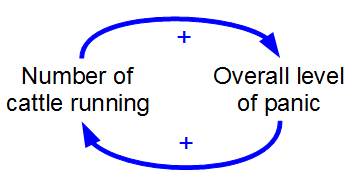
The following is an example of what type of feedback loop?
a)
Negative Feedback Loop
b)
Neutral Feedback Loop
c)
Positive Feedback Loop
d)
Cowboy Feedback Loop
39.
The following is an example of what type of feedback loop?
a)
Negative Feedback Loop
b)
Neutral Feedback Loop
c)
Positive Feedback Loop
d)
Cowboy Feedback Loop
40.
The following is an example of what type of feedback loop?
a)
Negative Feedback Loop
b)
Neutral Feedback Loop
c)
Positive Feedback Loop
d)
Hypothermia Feedback Loop
41.
The following is an example of what type of feedback loop?
a)
Negative Feedback Loop
b)
Neutral Feedback Loop
c)
Positive Feedback Loop
d)
Animal Feedback Loop
42.
Which of the following contains the genetic code for protein synthesis?
a)
carbohydrate
b)
lipid
c)
protein
d)
nucleic acid
43.
Why are lipids insoluble in water?  
a)
lipids are polar
b)
lipids are non-polar
c)
lipids have a negative charge
d)
lipids are building blocks of protiens
44.
Which of the four major biological macromolecules can be easily identified by the nitrogen base and phosphate found in its structure?
a)
carbohydrate
b)
lipid
c)
protein
d)
nucleic acid
45.
Fats, oils and cholesterol are all types of what?
a)
cell membranes
b)
hormones
hormones
c)
lipids
d)
fatty acids
46.
RNA and DNA are which type of macromolecules?
a)
carbohydrate
b)
lipid
c)
nucleic acid
d)
protein
47.
Nucleotides are monomers of
a)
Carbohydrates
b)
Lipids
c)
Proteins
d)
Nucleic Acids
48.
Which of the following organic compounds is the main source of energy for living things?
a)
carbohydrates
b)
lipids
c)
nucleic acids
d)
proteins
49.
All polymers are made up of...
a)
monosaccharides
b)
monomers
c)
proteins
d)
None of these
50.
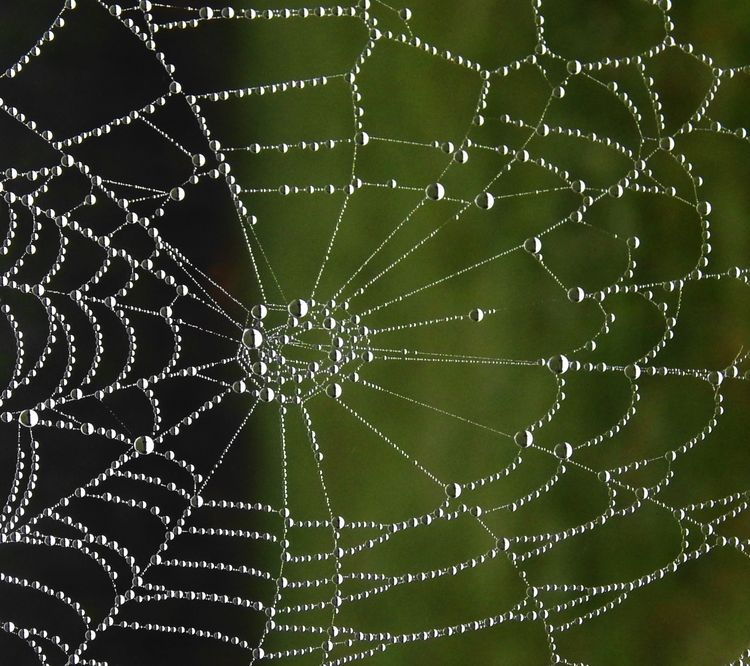
A water strider can skate along the top of a pond because:
a)
covalent bonds result in water cohesion
b)
hydrogen bonds result in water cohesion (surface tension)
c)
water striders have adapted to take advantage of water cohesion
d)
low surface tension of water
51.
What word describes when water is attracted to other substances?
a)
cohesion
b)
adhesion
c)
capillary action
d)
surface tension
52.
What two elements make up water?
a)
Helium and oxygen
b)
Hydrogen and oxygen
c)
helium and carbon
d)
oxygen and carbon
53.
Why can water have no net charge but have slight charges in different parts of the molecule?
a)
The oxygen end is slightly negative and the hydrogen end is slightly positive
b)
The hydrogen end is slightly negative and the oxygen end is slightly positive
c)
The hydrogen and oxygen ends change in polarity
d)
Because it is hydrophobic
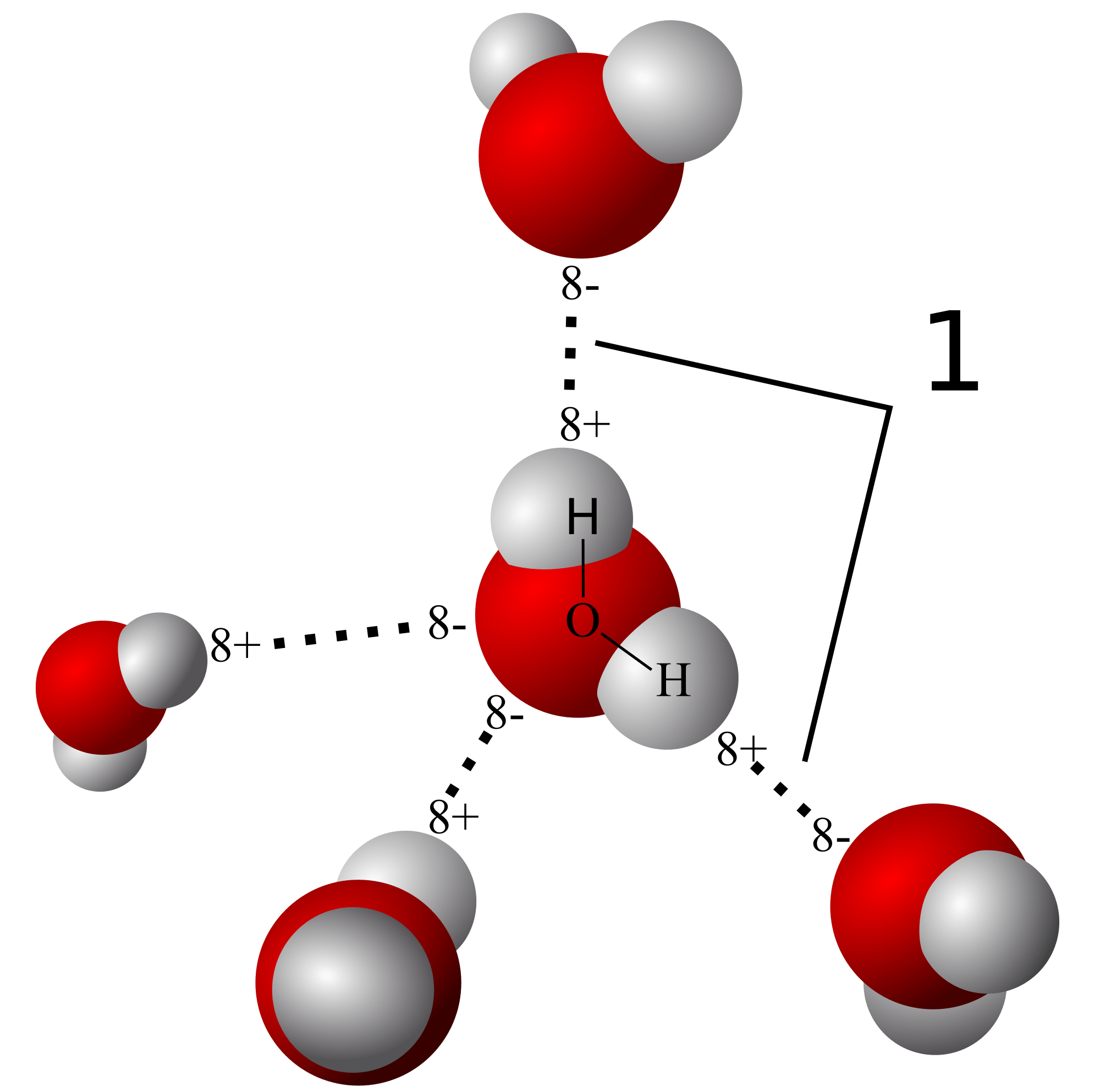
54.
Attractions between water molecules are called
a)
Covalent bonds
b)
Ionic bonds
c)
Polar bonds
d)
Hydrogen bonds
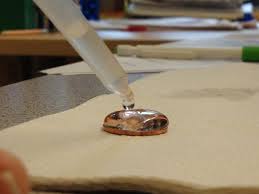
55.
The attraction that causes water and other liquids to form drops on thin films is called ________________. This is also water’s ability to be attraction to other water molecules.
a)
adhesion
b)
capillary action
c)
cohesion
d)
surface tension
56.
Which is NOT a unique property of water?
a)
Frozen water floats on liquid water.
b)
Water covers most of the Earth’s surface and retains a large amount of heat.
c)
Water molecules stick to each other through hydrogen bonds.
d)
Water cools very rapidly.
57.
Why does ice float?
a)
As water freezes, it expands and its density decreases.
b)
As water freezes, it takes up more hydrogen from the atmosphere, causing it to have a greater buoyancy.
c)
As water freezes, air becomes trapped between the hydrogen bonds of water molecules.
d)
As water freezes, it takes up more oxygen from the atmosphere, causing it to have a greater buoyancy.
58.
Water is a universal solvent because it...
a)
It can be found anywhere
b)
It freezes when it gets cold
c)
floats when frozen
d)
Dissolves most substances
59.
Which of the following is LEAST likely to dissolve in water?
a)
nonpolar fats and oils
b)
polar sugar molecules
c)
salt made of a positive sodium ion and a negative chloride ion
d)
all of the substances will dissolve easily in water
60.
The pH scale is a range from:
a)
1-7
b)
0-14
c)
1-5
d)
1-20
61.
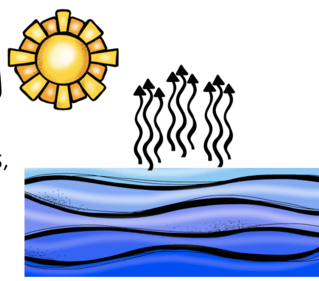
What part of the water cycle does this picture show?
a)
condensation
b)
precipitation
c)
evaporation
d)
transpiration
62.
Which of these is an example of precipitation?
a)
snow
b)
air
c)
clouds
d)
vapor
63.
What is it called when plants give off water vapor as a waste product?
a)
condensation
b)
evaporation
c)
sublimation
d)
transpiration
64.
Evaporation happens when the sun ___________ water and turns it into vapor.
a)
cools
b)
heats up
c)
freezes
d)
lights up
65.
What is the water cycle?
a)
the 3 forms of water
b)
the movement of water on, above, or below the surface of the Earth
c)
when water melts
d)
when clouds form
66.
Precipitation happens when clouds of water droplets are too ______________.
a)
cold
b)
light
c)
heavy
d)
hot
67.
What is water that flows in rivers and streams into the oceans and lakes?
a)
evaporating
b)
condensing
c)
precipitating
d)
runoff
68.
Where is most water found on Earth?
a)
glaciers
b)
lakes
c)
rivers
d)
oceans
69.
What source of energy evaporates the most water from Earth’s surface?
a)
volcanoes
b)
the sun
c)
lightning
d)
wind
70.
What does NOT produce carbon dioxide?
a)
Photosynthesis
b)
Burning Fossil Fuels
c)
Animal respiration
d)
Plants decaying
71.
Combustion is another word for __________.
a)
Transportation
b)
Respiration
c)
Fossil Fuels
d)
Burning
72.
TRUE or FALSE?
All of the carbon in existence is continually recycled in the carbon cycle.
a)
True
b)
False
73.
Organisms that do not decompose can be buried and become what?
a)
water
b)
nutrients
c)
air
d)
fossil fuels
74.
Carbon can be found in...
a)
The atmosphere
b)
Soil
c)
Fossil fuels
d)
All of the above
75.
Which of the following removes carbon from the atmosphere?
a)
Combustion
b)
Respiration
c)
Photosynthesis
d)
Death
76.
Respiration is the process by which animals take in _____ and release _____. 
a)
photosynthesis, air
b)
carbon, oxygen
c)
oxygen
d)
oxygen, carbon dioxide
77.
How do living organisms return carbon to the atmosphere in the carbon cycle?
a)
respiration and photosynthesis
b)
 decomposition and respiration
78.
What is the process of combining nitrogen gas with other elements to make nitrogen into usable compounds?
a)
nitrogen composition
b)
ammonia 
c)
nitrogen fixation
d)
denitrification
79.
How much of the atmosphere is composed of nitrogen gas?
a)
87%
b)
38%
c)
78%
d)
21%
80.
Organisms that break down dead plants & animals and release nitrogen back into atmosphere...
a)
bacteria
b)
plants
c)
animals
d)
producers
81.
Organisms that need nitrogen to survive
a)
only plants
b)
only animals
c)
only bacteria
d)
all living organisms
82.

What process occurs when dead plant and animal matter decomposes and nitrogen is released back into the atmosphere?

a)

Assimilation

b)

Fixation

c)

Ammonification

d)

Denitrification

83.
The step in the nitrogen cycle where bacteria convert ammonia (NH3) to nitrate (NO3-) is:
a)
nitrification
b)
ammonification
c)
nitrogen fixation
d)
assimilation
84.
This is released by the weathering of rocks.
a)
Carbon
b)
Oxygen
c)
Phosphorus
d)
Nitrogen
85.

Too much phosphorus in waterways (rivers, lakes) can lead to___________.

a)

eutrophication

b)

Nothing

c)

Death

d)

diseases

86.
Which nutrient is not cycled through the atmosphere and stays only on ground level?
a)
carbon
b)
nitrogen
c)
phosphorus
d)
water
87.

In general, algal blooms occur when

a)

toxins accumulate in shellfish.

b)

nutrients decrease in the water.

c)

nutrients increase in the water.

88.

The scientists measured hypoxia levels. What is hypoxia?

a)

a fish

b)

oxygen deficiency

c)

rainfall

d)

carbon dioxide deficiency

89.
Which of the following statements is true of the phosphorus cycle?
a)
Phosphorus enters the atmosphere as phosphates.
b)
The phosphorus cycle utilizes the processes of erosion, and weathering.
c)
Phosphates are used in carbohydrate and glucose storage.
d)
The phosphorus cycle utilizes bacteria to breakdown phosphates and make them available for plants.
90.

What are biogeochemical cycles?

a)

The movement of nutrients through chemical processes only

b)

The movement of nutrients through geological processes only

c)

The movement of nutrients through earth

d)

The movement of nutrients through geological, biological, & chemical

91.
Why do living things need nitrogen?
a)
To get energy
b)
To make amino acids
c)
To make proteins
d)
To make proteins AND amino acids
92.
These gases, such as carbon dioxide, trap heat in the Earth's atmosphere causing global warming
a)
Global warming gases
b)
Hot House gases
c)
Green House gases
d)
Thermal pollution
93.
The substances in food that your body needs to grow, have energy, and stay healthy are called?
a)
Nutrients
b)
Proteins
c)
Vitamins
d)
Carbohydrates
94.
Which elements are in fertilizer?
a)
Nitrogen and Oxygen
b)
Phosphorous and Hydrogen
c)
Nitrogen and Phosphorous
95.

Why do plants and animals need nitrogen?

a)

To produce proteins

b)

To store energy

c)

To digest food

d)

To conduct photosynthesis

96.

How do decomposers help the carbon cycle?

a)

Carbon is leaked into the atmosphere when fossil fuels are burned.

b)

Dead, organic matter is broken down and release carbon dioxide into the air

c)

Volcanoes and fires release large amounts of carbon dioxide.

d)

Decaying organisms are needed for carbon to be released

97.
An underground layer of rocks or sand that can hold groundwater.
a)
watershed
b)
levee
c)
aquifer
d)
erosion
98.
What are the four most important materials needed by living organisms?
a)
water, carbon, oxygen, nitrogen
b)
water, food, oxygen, carbon
c)
water, carbon, nitrogen, phosphorous
d)
water, carbon, food, phosphorous
99.
How much of the Earth's water is stored in the oceans?
a)
50%
b)
67%
c)
97%
d)
85%
100.
This is essential to living organisms, it is found in nucleic acid and amino acids.
a)
Nitrogen
b)
Carbon
c)
Water
d)
Phosphorous