wayground logo

Free Printable Worksheets

NEW

Font size

S
M
L
XL
Worksheets

APES Chapter 6 - Community Ecology

Total questions: 72

Worksheet time: 56mins
Name
Class
Date
1.
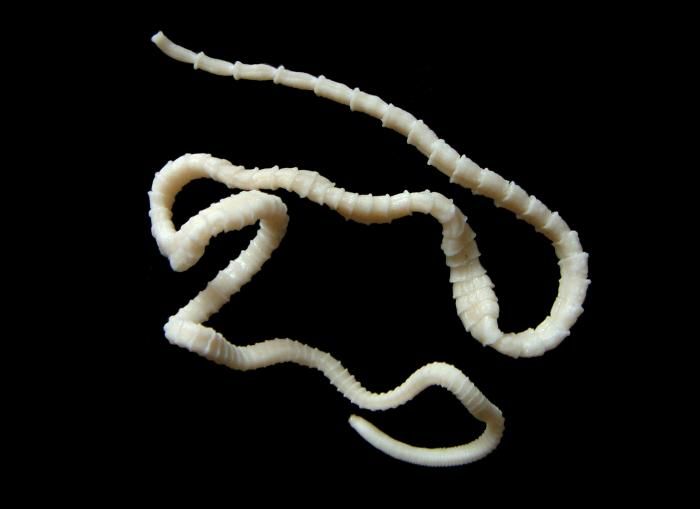
A tapeworm and a cat have this type of relationship.
a)
mutualism
b)
parasitism
c)
commensalism
d)
competition
2.

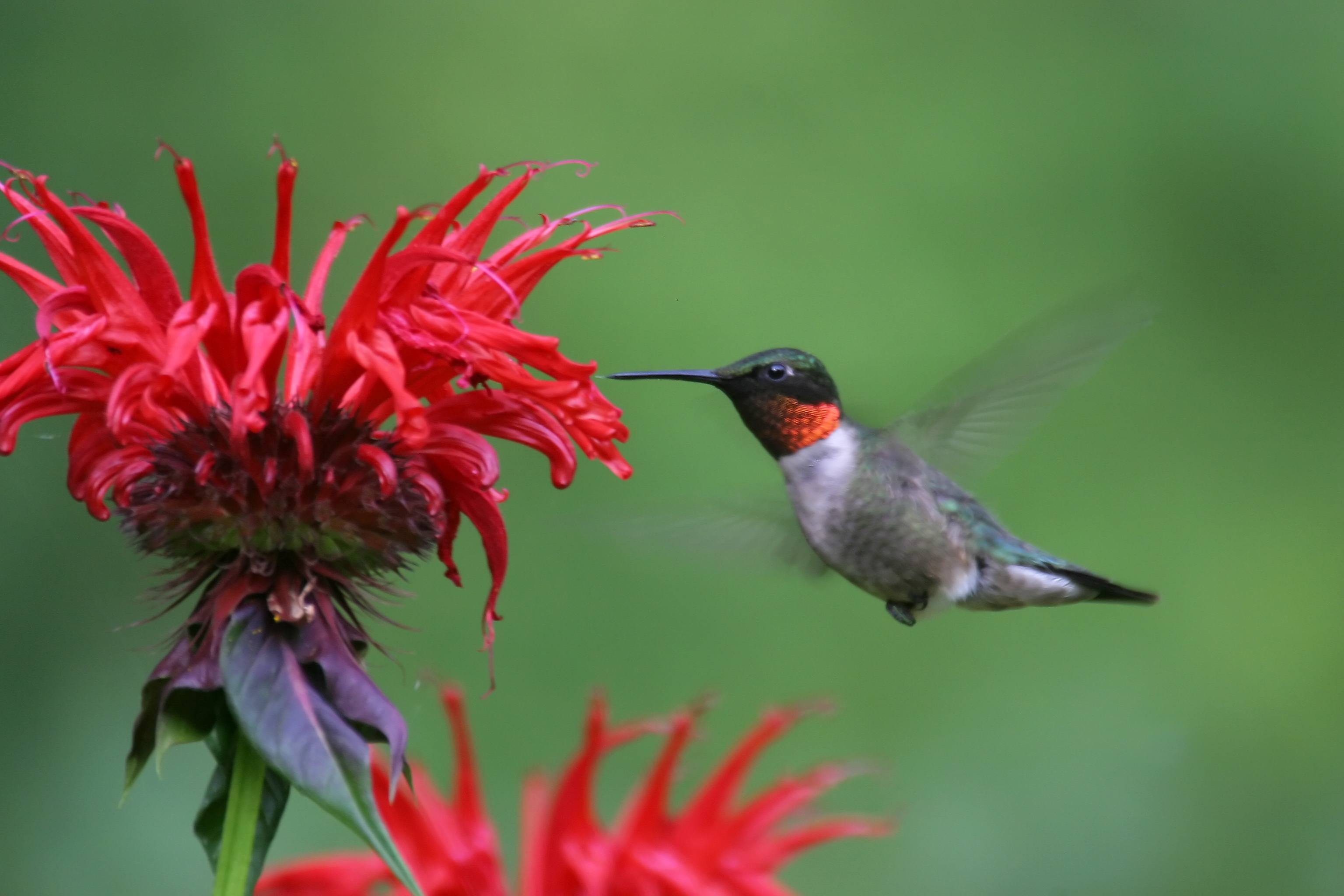
Type of symbiosis: Hummingbirds feed on nectar from flowers. The flowers are pollinated by hummingbirds as they move from flower to flower.

a)

commensalism

b)

mutualism

c)

parasitism

d)

predation

3.

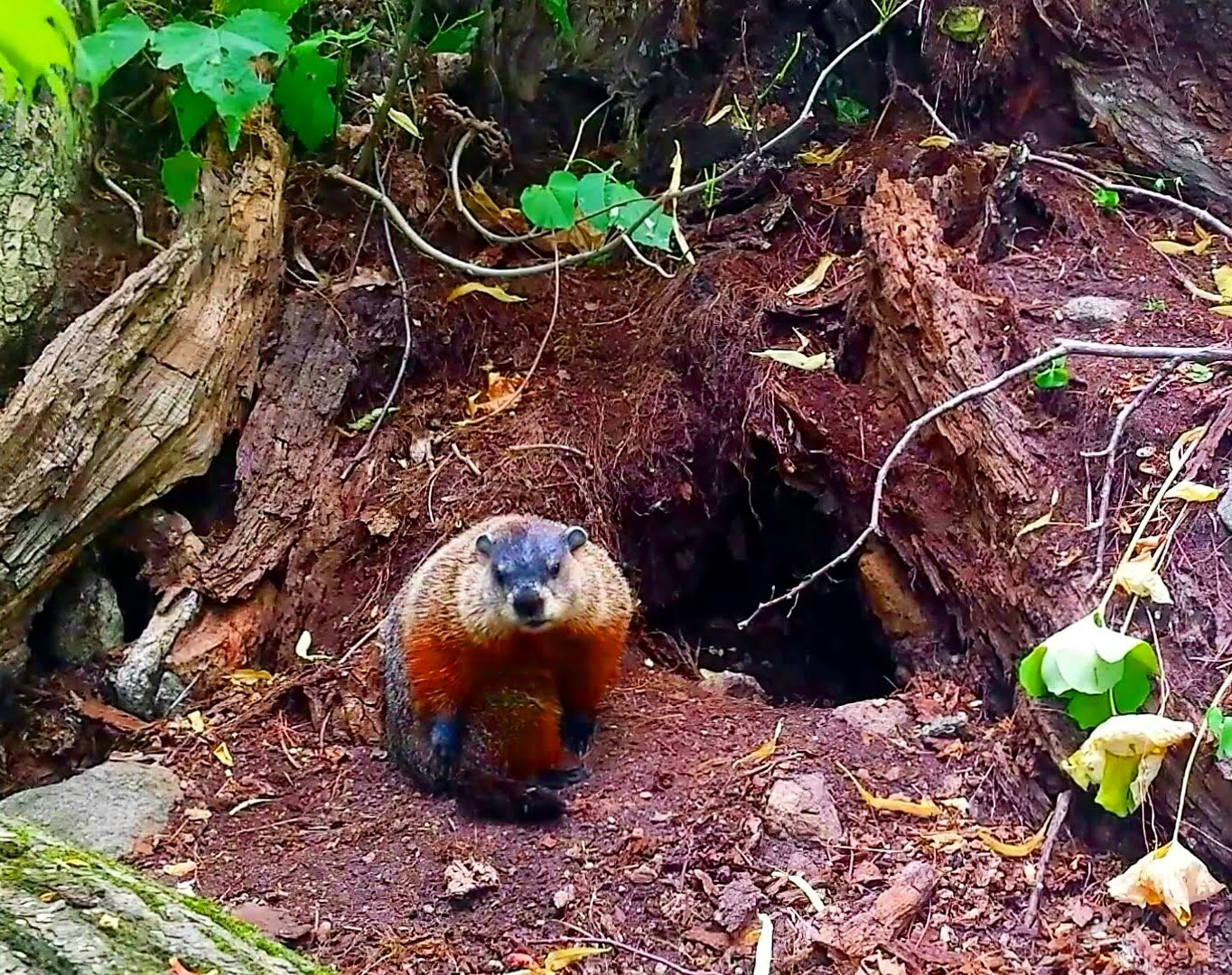
Type of symbiosis: Skunks often live in burrows that have been dug and abandoned by woodchucks.

a)

commensalism

b)

mutualism

c)

parasitism

d)

predation

4.

Bird & Tree: A bird builds a nest in a hole in the trunk of the tree. It is protected from the rain and predators. The tree is not harmed or helped by the bird.

a)

Mutualism

b)

Commensalism

c)

Parasitism

d)

Competition

5.
Bees use flower nectar for food, and they carry flower pollen to other flowers, allowing the flower to reproduce.
a)
Mutualism
b)
Commensalism
c)
Parasitism
6.
Starfish are probably the most important predator in the shallow ecosystem because they eat basically anything that they can come across. Their feeding activities control the whole ecosystem. This is an example of the starfish ___.
a)
habitat
b)
biotic factors
c)
tolerance level
d)
niche
7.
Tree kangaroos live in the upper branches of trees in the rainforests of Queensland, as well as on the island of New Guinea. This is an example of the tree kangaroos ___.
a)
niche
b)
habitat
c)
community
d)
population
8.
A relationship in which two species live closely together.
a)
resource
b)
mutualism
c)
succession
d)
symbiosis
9.
What is the name of an animal that is hunted and eaten by other animals?
a)
producer
b)
prey
c)
predator
d)
decomposer
10.

What level of ecological organization would include all squirrels that live in the same area?

a)

biome

b)

community

c)

ecosystem

d)

population

11.
All the different populations that live together in an area make up a(n)
a)
community.
b)
ecosystem.
c)
organism.
d)
species.
12.
Several species of warblers can live in the same spruce tree ONLY because they
a)
have different habitats within the tree.
b)
don’t eat food from the tree.
c)
occupy different niches within the tree.
d)
can find different temperatures within the tree.
13.

A symbiotic relationship in which one organism is harmed and another benefits is

a)

mutualism

b)

parasitism.

c)

commensalism.

d)

predation.

14.
Is a concentrated area with abundant populations of one plant, animal or other living organism (where something lives)
a)
Habitat
b)
Niche
c)
Ecosystem
d)
Ecology
15.
Are unique relationships developed over time by organisms needing to adapt to  various ecosystems within their habitat
a)
Habitat
b)
Niche
c)
Ecosystem
d)
Ecology
16.
All of the following statements concerning characteristics of predator-prey relationship are correct EXCEPT:
a)
Camouflage is an adaptation that protects prey.
b)
A rise in the population of predators is followed by a decreased in the population of prey.
c)
A rise in the population of prey is often followed by a rise in the population of predators.
d)
The population of predators most often eliminates the population of prey
17.
When two species of cattails are grown together, they grow at different water depths and coexist.  When grown alone, they grow at similar water depths.  Which of the following is best demonstrated by the data?
a)
natural selection
b)
character displacement
c)
resource partitioning
d)
ecological succession
18.

Many poisonous animals are brightly colored (red or orange) as a warning to predators. The special coloration is called

a)

mimicry

b)

Batesian mimicry

c)

warning coloration

d)

mutualistic coloration

19.

Which of the following represents several species of brightly colored, harmless snakes looking like poisonous coral snakes?

a)

commensalism

b)

mutualism

c)

batesian mimicry

d)

incognito

20.
Members of a species in a defined area
a)
Ecosystem
b)
community
c)
biodiversity
d)
population
21.
All the organisms in a particular location, including their nonliving environment
a)
ecosystem
b)
carnivore
c)
niche
d)
population
22.
When all vegetation is removed from a site by human activity or by natural forces such as volcanic activity, __________ species are the first to colonize the site.
a)
prokaryotic
b)
pioneer
c)
climax
d)
deciduous
e)
eukaryotic
23.
Which of the following is NOT true of the general pattern of succession, from a recently disturbed terrestrial site to stable, self-sustaining forest community?
a)
A decrease in the number of grass species occurs.
b)
Shade-loving trree species become dominant in the climax community.
c)
Pioneer species give way to perennial, long-lived species.
d)
Carbon that is involved in photosynthesis increases.
e)
Total biomass tends to decrease.
24.
__________ succession begins on bare rock after glaciers have passed, or on newly formed volcanic islands.
a)
Primary
b)
Secondary
c)
Climax
d)
Pioneer
e)
Tertiary
25.
The first plant community that forms on bare rock often includes organisms such as
a)
herbs and conifers.
b)
grasses and weeds.
c)
broad-leaf trees and conifers.
d)
lichens and mosses
e)
woody shrubs and conifers.
26.
After a forested area is clear-cut, what type of succession occurs?
a)
Primary
b)
Secondary
c)
Pioneer
d)
Climax
e)
Biome
27.
Which is NOT likely to characterize pioneer plant species involved in primary succession?
a)
Able to tolerate intense sunlight
b)
Able to tolerate low nutrient levels
c)
Produces many small seeds that can travel great distances
d)
Glows slowly, lives a long time
e)
Remains small
28.
Over 12,000 years ago at the end of the last ice age, the Laurentide Ice Sheet began melting and retreating in North America. The melt water and glacial erosion created glacial lakes across the northern half of the United States. Following the formation of a glacial lake, algae and phytoplankton in the lake begin to grow and reproduce rapidly. This is an example of
a)
biodiversity
b)
primary succession
c)
secondary succession
d)
tertiary succession
e)
biogeography
29.
You are on a town committee formed to determine the borders for a new local nature park. You explain that according to the theory of island biogeography, if the committee wishes to promote species richness it should
I. increase the size of the park.
II. decrease the distance between the park and a nearby protected forest.
III. isolate the park by building a wall around its borders.
a)
I only
b)
II only
c)
III only
d)
I and II
e)
I, II, and III
30.

A rhino is an example of an

a)

R- Selected Species

b)

K - Selected Species

c)

Somewhere in-between

31.

Kangaroos are an example of which type of species?

a)

r - Selected

b)

K - Selected

c)

Somewhere in-between

32.

Frogs are an example of which type of species?

a)

r - Selected

b)

K - Selected

c)

Somewhere in-between

33.
What do you call a period of rapid growth?
a)
exponential growth
b)
logistic growth
c)
emigration
d)
predator-prey cycle
34.
Which type of growth is best illustrated by this rabbit population?
a)
exponential
b)
logistic
c)
S-shaped
d)
predator-prey
35.
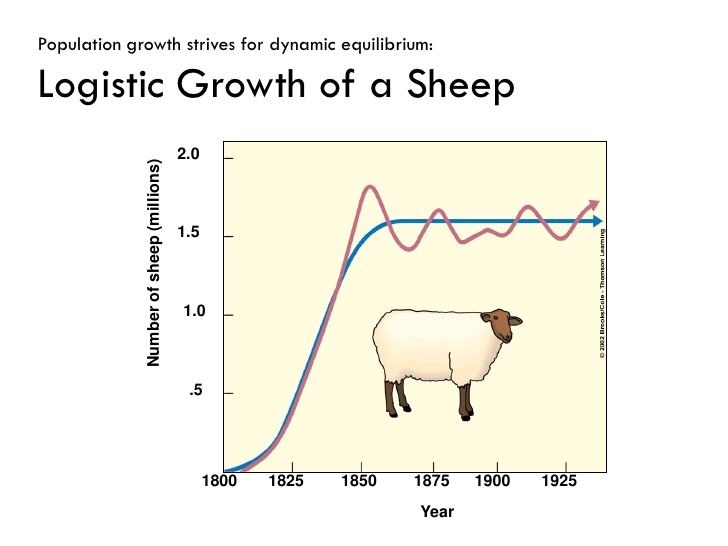
What is the carrying capacity for this sheep population?
a)
1.8 million
b)
1.25 million
c)
1.6 million
d)
1.o million
36.
Type of growth that occurs under ideal conditions?
a)
predator-prey cycle
b)
logistic
c)
exponential
37.
Type of growth that occurs when disease and parasites are present...
a)
exponential
b)
J-shaped
c)
predator-prey
d)
logistic
38.
What type of species interaction is the following: a killer whale kills and eats a seal. 
a)
commensalism 
b)
predation 
c)
mutualism 
d)
competition 
39.
What type of species interaction is the following: two bears fighting over the same mate. 
a)
predation 
b)
mutualism 
c)
competition 
d)
parasitism 
40.
Name the species interaction: a bee and flower both benefit from their relationship. 
a)
commensalism 
b)
mutualism 
c)
parasitism 
d)
competition 
41.
Name the species interaction: a mosquito feeds on human blood & transfers a disease. 
a)
competition
b)
parasitism 
c)
predation
d)
mutualism 
42.
Name the species interaction: A decorator crab camouflages itself with sponges. Sponges are unaffected. 
a)
competition 
b)
predation
c)
commensalism
d)
mutualism 
43.
—______ is a series of changes that occur in a community over time after disturbances. 
a)
community succession 
b)
ecological succession 
c)
population succession 
d)
tertiary succession 
44.
Name the type of succession in which some life is left after a disturbance. 
a)
primary sucession
b)
secondary succession
c)
tertiary succession
d)
quaternary succession 
45.
According to the competitive exclusion principle, two species cannot continue to occupy the same:
a)
Habitat
b)
Niche
c)
Territory
d)
Range
46.
An animal with bright coloration is likely to be:
a)
A predator
b)
Poisonous
c)
A competitor
d)
A prey organism
47.
Evidence shows that some grasses benefit from being grazed. Which of the following terms would best describe this plant-herbivore interaction?
a)
Mutualism
b)
Commensalism
c)
Parasitism
d)
Competition
48.
Commensalism is a relationship where
a)
One is harmed, one benefits 
b)
Both organisms benefit 
c)
One benefits, one is unharmed
d)
One dies, one gets energy/food
49.
A collection of organisms that belong to different populations but all live in the same area and interact with one another.
a)
Population
b)
Ecosystem
c)
Community
d)
Ecosphere
50.
Name that interaction! When you eat a piece a piece of celery!
a)
Herbivory
b)
Parasitism
c)
Mutualism
d)
Competition
51.
This outcome of competition often leads to the extinction of one of the competing species
a)
Character Displacement
b)
Competitive Exclusion
c)
Resource Partitioning 
d)
Brood Parasitism
52.

What is a keystone species?

a)

A species that helps to hold an ecosystem together

b)

A species that lives in or around rocks

c)

Keys and stones have nothing to do with ecology

d)

A keystone isn't a living thing, it's just a stone

53.
An ecological process in which top-level predators (like wolves) keep lower-level species (like deer) in check?
a)
trophic cascade
b)
trophic level
c)
food cascade
54.
Which of the following is an example of secondary succession?
a)
new islands created by volcanic eruption
b)
areas exposed when a glacier retreats
c)
regrowth after wildfire in California
55.
The final, stable community in balance with the environment is a ________?
a)
climax community
b)
perfect community
c)
pioneer community
56.
Type of species that is not native to an area, but thrives due to a lack of limiting resources.
a)
introduced species
b)
invasive species
c)
unusual species
57.
What does the graph represent?
a)
Emigration
b)
Exponential growth
c)
Immigration
d)
Logistic Growth
58.

What point on the graph represents the carrying capacity?

a)

A

b)

B

c)

C

d)

D

59.

A population is...

a)

All members of one species in one area

b)

All members of all species that live in one area

c)

All of the living and nonliving things in an area

d)

None of these

60.

What is happening at the 'A' on the graph?

a)

the population overshoots above the carrying capacity

b)

the population stops growing

c)

growth begins to slow down due to limited resources

d)

growth is speeding up due to an abundance of resources
61.
To measure population density, you must divide the number of individuals living in a defined space by the
a)
area of the space
b)
birth and death rates
c)
carrying capacity
d)
height of the space
62.
An inbreeding depression can lead to
a)
an increase in the expression of harmful genetic mutations.
b)
a decrease in unviable offspring.
c)
an increase in gene flow.
d)
a decrease in species extinction.
e)
an increase in disease resistance.
63.
To measure population density, you must divide the number of individuals living in a defined space by the
a)
area of the space
b)
birth and death rates
c)
carrying capacity
d)
height of the space
64.
Nesting birds often space themselves evenly from other nests. This pattern is called
a)
clumped dispersion.
b)
uniform dispersion.
c)
random dispersion
d)
scatter dispersion
65.
Which of the following is a density-dependent limiting factor?
a)
human activities 
b)
unusual weather
c)
competition
d)
natural disaster
66.
What type of growth is shown on this graph?
a)
logistic
b)
exponential
c)
average
d)
density-independent
67.
What type of population growth is shown in the graph?  
a)
logistic growth
b)
logical growth
c)
exponential growth
d)
density-dependent growth
68.
Lichens and mosses that first live in uninhabited areas are examples of
a)
secondary species
b)
non-native species
c)
pioneer species
d)
climax species
69.
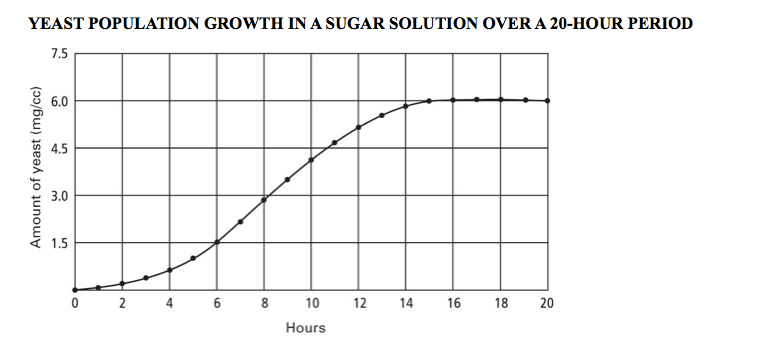
 What is the name for this leveling off shown in the graph?
a)
logistic line
b)
carrying capacity
c)
climax point
d)
mediocre
70.

Which of the following images best depicts a clumped population distribution?

a)
b)
c)
71.

What is the population density of the pictured enclosure if its perimeter is 10 m X 10 m?

a)

0.09 per m

b)

9 per m2

c)

0.09 per m2

d)

9/10

72.

Which of the following organisms would you expected to follow the pictured survivorship curve?

a)

Humans

b)

Sea turtles

c)

Mice