wayground logo

Free Printable Worksheets

Font size

S
M
L
XL
Worksheets

Final Exam Practice

Total questions: 85

Worksheet time: 2hrs 53mins

Name
Class
Date
1.
How many significant figures: 216 m
a)
1
b)
2
c)
3
d)
0
2.
How many significant figures: 153.0 mL
a)
1
b)
2
c)
3
d)
4
3.
How many significant figures: 0.012 km
a)
1
b)
2
c)
3
d)
4
4.
How many significant figures: 1000 mL
a)
1
b)
2
c)
3
d)
4
5.
Calculate 1.23 m x 0.89 m and give your answer with the appropriate number of significant figures.
a)
1.0 m2
b)
1.1 m2
c)
1.0947 m2
d)
1.09 m2
6.
Calculate 5.50 cm + 5.50 cm and give your answer with the appropriate number of significant figures.
a)
11 cm
b)
11.0 cm
c)
11.00 cm
d)
11.000 cm
7.

Write 7.113 x 10⁷ in standard form.

a)

71,130,000

b)

7,113,000

c)

0.0000007113

d)

7,113

8.
Write 2.08 x 10²  in standard form.
a)
208
b)
0.0208
c)
20,800
d)
0.208
9.
Write 0.00000707 in scientific notation.
a)
7.07 x 10⁻⁶
b)
7.07 x 10⁶
c)
707 x 108
d)
707 x 10-8
10.

The students measured length during a science experiment, they got 12 cm. But the actual measurement was 14.25 cm. What was the percent error?

a)

15.79%

b)

18.75%

c)

2.25%

d)

18%

11.
Zed went to the store and bought a bag of chips.  He estimated there would be 350 chips in the package, but realized there were only 210 chips in that package.  What was his percent error?
a)
35%
b)
67%
c)
85%
d)
92%
12.
?
a)
High Accuracy & High Precision
b)
High Accuracy & Low Precision
c)
Low Accuracy & High Precision
d)
Low Accuracy & Low Precision
13.
A set of data are all close to each other, and they are close to the actual value.  This set of data can be described as...
a)
accurate
b)
precise
c)
both precise and accurate
14.
all matter is made of what 
a)
energy 
b)
atoms 
c)
electrons 
d)
compounds 
15.
The positive particles of an atom are 
a)
electrons 
b)
positrons 
c)
neutrons 
d)
protons 
16.
the central region of an atom where its neutrons and protons are is its 
a)
nucleus 
b)
electron cloud
c)
core 
d)
center 
17.
an atom with atomic number 6 would have how many protons 
a)
6
b)
12
c)
3
d)
cannot be determined 
18.
Which subatomic particles are NOT located in the nucleus?
a)
Protons
b)
Neutrons
c)
Electrons
19.

To calculate average atomic mass, you need

a)

the atomic mass of each isotope

b)

the percent abundance of each isotope

c)

the atomic mass and percent abundance of each isotope

d)

to find the average of the atomic masses of each isotope

20.

An element has two isotopes, one with a mass of 39 and one with a mass of 41. If the average mass is 40.6, which isotope is more abundant?

a)

mass of 39

b)

mass of 41

c)

they are both equally abundant

21.
Do the following atoms belong to the same element? Explain
       Aluminum-27
       An atom with 14 protons and 13 neutrons
a)
Yes because they have the same number of protons
b)
Yes because they have the same mass
c)
No because they have different number of protons
d)
No because they have different number of neutrons
22.
Nitrogen has three occurring isotopes: Nitrogen-13, Nitrogen-14, Nitrogen-15. Which isotope is the most abundant?
a)
Nitrogen-13
b)
Nitrogen-14
c)
Nitrogen-15
d)
Based on the information given, it cannot be determined
23.
An element has two naturally occurring isotopes. One is 10.013 amu and is 19.9% abundant. The other is 11.01 amu and is 80.1% abundant. What is the average atomic mass? What element is it?
a)
9.012, Beryllium
b)
12.011, Carbon
c)
6.941, Lithium
d)
10.812, Boron
24.
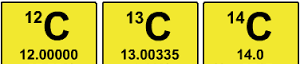
What do these isotopes of carbon all have in common?
a)
neutrons & mass number
b)
atomic number and neutrons
c)
atomic number and electrons
d)
protons, atomic number, and mass number
25.
How many neutrons does the isotope of lithium have?
a)
8
b)
3
c)
4
d)
5
26.
Which particle does not contribute mass to the atom?
a)
Proton
b)
Neutron
c)
Electron
d)
Nucleus
27.

All of the following are alkali metals except ______.

a)

Cesium

b)

Potassium

c)

Hydrogen

d)

Lithium

28.

Which of the following is not a metal?

a)

silicon

b)

manganese

c)

sodium

d)

aluminum

29.

Halogens are elements that will easily bond with an alkaline earth metal to form a salt.

a)

True

b)

False

30.

Noble gases are stable (non-reactive) because they have 8 valence electrons (a full shell).

a)

True

b)

False

31.
Which of the following is a halogen?
a)
Krypton
b)
Bromine
c)
Potassium
d)
Bismuth
32.
All of the following are metals EXCEPT:
a)
Cu (Copper)
b)
Pb (Lead)
c)
Br (Bromine)
d)
Na (Sodium)
33.
Based on the organization of the periodic table, periods:
a)
Contain A and B designations
b)
are vertical columns
c)
contain elements with similar behaviors
d)
are horizontal rows
34.
Elements in group 2 are also known as:
a)
Alkaline Earth Metals
b)
Halogens
c)
Noble Gases
d)
Alkali Metals
35.
Elements that are between metals and nonmetals, and have characteristics of both are called?
a)
Metals
b)
Metalloids
c)
Nonmetals
d)
Halogens
36.
Elements that are shiny and conduct heat and electricity are called:
a)
Nonmetals
b)
Metals
c)
Halogens
d)
Metalloids
37.
An atom becomes _________ when it gains electrons.
a)
Positive
b)
Negative
c)
Neutral
d)
Invinsible
38.
Why are ions formed?
a)
To make our lives difficult
b)
Because atoms want 8 valence electrons
c)
Because atoms have the same number of protons and electrons
d)
Because atoms gained neutrons
39.

What is the charge of a sodium ion?

a)

+2

b)

+1

c)

-1

d)

-2

40.
What charge will an Oxygen ion have? 
a)
+1
b)
-1
c)
+2
d)
-2
41.
Elements on the LEFT side of the periodic table will most likely form:
a)
Positive ions
b)
Negative ions
c)
Neutral Ions
d)
None of these
42.
What is the ionic symbol for a Caesium atom?
a)
Cs+
b)
Cs-
c)
Cs+2
d)
Cs-2
43.
Cations are
a)
negative ions
b)
gained electrons
c)
positive ions
d)
inner shell electrons
44.
Valence electrons are
a)
outer shell electrons
b)
electrons involved in reactions
c)
s and p orbital electrons
d)
all of these
45.
a)
2
b)
8
c)
3
d)
13
46.
a)
12
b)
7
c)
8
d)
14
47.
a)
7
b)
8
c)
9
d)
10
48.

USE THE PERIODIC TABLE

Find the element that has 5 Valence Electrons and 4 energy levels.

a)

Arsenic - As

b)

Selenium - Se

c)

Calcium - Ca

d)

Vanadium - V

49.

USE THE PERIODIC TABLE

Find the element that has 3 Valence Electrons and 2 energy levels.

a)

Magnesium - Mg

b)

Lithium - Li

c)

Aluminum - Al

d)

Boron - B

50.

Is this the correct Lewis Dot Structure for Boron?

a)

Yes

b)

No, missing electrons

c)

No, too many electrons

d)

No, dots are in wrong place.

51.

This could be the dot diagram of

a)

Mg

b)

Cl

c)

C

d)

O

52.

Longest Wavelengths and Lowest Frequencies?

a)

Visible Light

b)

Microwaves

c)

X-Rays

d)

Radio Waves

53.

Shorter Waves have ____Energy,Longer Waves___Energy?

a)

Lower,Higher

b)

Higher,Lower

54.

Shortest Wavelength=_____

a)

Purple

b)

Red

c)

Violet

55.
A certain photon of light has a wavelength of 4.22x10⁻⁷nm. What is the frequency? (v=c/λ)
a)
7.11x10¹⁴ Hz
b)
7.11Hz
c)
1.41x10⁻¹⁵
d)
-1.41x10¹⁵
56.
What is the energy of a quantum of light with a frequency of 7.39x10¹⁴Hz.(E=Hv)
a)
4.88x10¹⁹
b)
4.88x10⁻¹⁹
c)
2.22x10²³
d)
2.22x10⁻²³
57.
Certain blue lights have a frequencey of 6.91x10¹⁴Hz. What is the wavelength? (λ=c/v)
a)
4.34x10²¹
b)
4.34x10⁻²¹
c)
4.34x10⁻⁷
d)
2.07x10²³
58.
Which is the electron configuration for an oxygen atom?
a)
1s22s22p63s23p64s2
b)
1s22s22p4
c)
1s22s22p6
d)
1s22s22p63s23p6
59.
What is the maximum number of electrons that an orbital can have?
a)
1 electron
b)
2 electrons
c)
3 electrons
d)
4 electrons
60.
What atom matches this electron configuration?
1s2s2p3s2
a)
Neon
b)
Magnesium
c)
Aluminum
d)
Potassium
61.
Which element is pictured?
a)
neon
b)
fluorine
c)
magnesium
d)
argon
62.
Identify the element in Period 5 that has 1 valence electron?
a)
Rb
b)
Nb
c)
Ag
d)
Sb
63.
What element in Period 4 has 5 valence electrons?
a)
Zr
b)
As
c)
V
d)
Sb
64.
How many valence electrons does Calcium have? How many energy levels does Calcium have?
a)
2 valence: 4 energy levels 
b)
20 valence:  4 energy levels 
c)
4 valence: 2 energy levels 
d)
2 valence: 3 energy levels 
65.
What is the electron configuration for this atom?
a)
1s22s22p6
b)
1s22s22p5
c)
1s22s22p3
d)
2s22p3
66.
What is the noble gas shorthand electron for Sulfur atom?
a)
[Ar] 3p4
b)
[He] 3s23p4
c)
[Ne] 3s23p4
d)
[Na] 3s23p4
67.
Atomic Radius is...
a)
the relative size of the atom's nucleus
b)
the relative size of the atom's electron cloud
c)
the energy required to shield the outer electrons from the nucleus
d)
a measure of the ability of an atom to attract electrons
68.
As you move down the periodic table atoms get bigger.  This is because ____________.
a)
The atoms have more mass.
b)
The atoms have more protons.
c)
The atoms have more energy levels
d)
The atoms have more nuetrons
69.
The atom with the largest atomic radius in Group 18 is - 
a)
Ar
b)
He
c)
Kr
d)
Rn
70.
Which of the following will have a higher ionization energy than arsenic (As)?
a)
Gallium (Ga)
b)
Neon (Ne)
c)
Antimony (Sb)
d)
Germanium (Ge)
71.
Electronegativity is...
a)
how good an atom is at attracting electrons
b)
the ability of an atom to lose electrons
c)
the energy required to remove an electron from a specific atom
d)
how easy it is to make friends. 
72.
Which of the following will have a higher electronegativity than arsenic (As)?
a)
Carbon (C)
b)
Neon (Ne)
c)
Antimony (Sb)
d)
Germanium (Ge)
73.
What term is used to describe "an atom's tendency to attract electrons to itself when is is chemically combined with another element"
a)
electronation
b)
electron affinity
c)
electronegativity
d)
electrolysis
74.
What term is used to describe "A measure of the size of an atom"
a)
chemical reactivity
b)
atomic radius
c)
energy levels
d)
orbit
75.
If my charge becomes 2+ what does that say about me?
a)
I am stealing 2 electrons
b)
I am losing 2 electrons
c)
I am in period 2
d)
I have an atomic # of 2
76.
How do the following two elements bond together?
Na1+  F1-         
a)
NaF
b)
NaF3
c)
Na3F
d)
Na1F2
77.
How do the following two elements bond together?
Al3+  O2-         
a)
AlO
b)
Al2O3
c)
Al3O6
d)
Al3O2
78.
How do the following two elements bond together?
K1+  S2- 
a)
KS
b)
K8S
c)
K6S3
d)
K2S
79.
What is the formula for magnesium chloride?
a)
MgCl
b)
Mg2Cl
c)
MgCl2
d)
Mg(ClO3)2
80.
When a metal loses electrons, it becomes this type of ion.
a)
anion
b)
cation
81.
The first step in naming an ionic compound is always...
a)
Naming the anion
b)
Changing the ending to -ide
c)
Naming the cation
d)
Writing the cation charge
82.
What is the formula for the compound formed by magnesium ions and nitrogen ions?
a)
MgN
b)
Mg2N3
c)
Mg3N2
d)
MgN3
83.
What is the charge on the simple (single atom) ion that sulfur forms?
a)
1-
b)
2+
c)
3+
d)
2-
84.
When metals bond with non-metals they form what type of bonds
a)
covalent
b)
ionic
c)
cooperative
d)
lewis
85.
If I gain electrons I become
a)
Positive because I've added to my atom
b)
negative because I've added electrons
c)
same because i'm balanced
d)
equal because now I have electrons