Wayground logo

Free Printable Worksheets

Font size

S
M
L
XL
Worksheets

Semester 1 Exam Review

Total questions: 82

Worksheet time: 1hrs 10mins

Name
Class
Date
1.

On the graph what axis is the independent variable located?

a)

X-axis

b)

Y-axis

2.

What is the independent variable on the graph?

a)

Types of music

b)

Number of students

3.

Which of the following characteristics of living things best explains why your legs and arms get longer and stronger as you get older?

a)

Living things respond to their environment

b)

Living things maintain internal balance

c)

Living things grow and develop

d)

Living things evolve

4.

Before a big soccer game Charlie always eats a big dinner. Which of the Characteristics of Life is Charlie demonstrating?

a)

Living things respond to their environment

b)

Living things grow and develop

c)

Living things reproduce

d)

Living things use energy

5.

What is the smallest unit of life?

a)

Atom

b)

Organ

c)

Molecule

d)

Cell

6.

What does it abiotic mean?

a)

Living

b)

Non-living

7.

Which organelle is responsible making food (Glucose) using sunlight?

a)

Cell Membrane

b)

Nucleus

c)

Chloroplast

d)

Mitochondria

8.

Select all that are products of Photosynthesis.

a)

Water

b)

Carbon Dioxide

c)

Oxygen

d)

Sunlight (Light Energy)

e)

Glucose (Sugar/food)

9.

Select all that are raw materials for Photosynthesis.

a)

Water

b)

Carbon Dioxide

c)

Oxygen

d)

Sunlight (Light Energy)

e)

Glucose (Sugar/food)

10.

Which of the following is the correct equation for PHOTOSYNTHESIS?

a)

light + carbon dioxide + water --> glucose + oxygen

b)

carbon dioxide + sugar + water --> oxygen + light

c)

oxygen + light + water --> carbon dioxide + sugar

d)

carbon dioxide + oxygen + water --> Light+ Sugar

11.

What is the green pigment that "traps" sunlight?

a)

Chlorophyll

b)

Chloroplasts

c)

Photosynthesis

d)

ATP

12.

Plants need ________ to conduct photosynthesis

a)

Oxygen

b)

Soil

c)

Carbon dioxide

d)

Sugar

13.
Which organelle in the plant cell performs photosynthesis?
a)
Chloroplast
b)
Mitochondria
c)
Nucleus
d)
Cytoplasm
14.
What are the reactants of cellular respiration?
a)
glucose & carbon dioxide
b)
glucose & oxygen
c)
water & oxygen
d)
water & carbon dioxide
15.
The purpose of cellular respiration is to 
a)
make water
b)
make ATP
c)
make glucose
d)
make  oxygen
16.
What is the correct equation for cellular respiration?
a)
6O2 + C6H12O6 -> 6CO2 + 6H2O + Energy
b)
6O2 + C6H12O6 + Energy -> 6CO2 + 6H2O
c)
6CO2 + 6H2O -> 6O2 + C6H12O6 + Energy
d)
6CO2 + 6H2O + Energy -> 6O2 + C6H12O6
17.
What does metabolism mean?
a)
Converting energy into food
b)
Making light reactions happen
c)
Converting food into energy
18.

Which of these is a product of cellular respiration?

a)

ATP

b)

Carbon dioxide

c)

Water

d)

All of these are a product of cellular respiration

19.
When a phosphate group is removed from an ATP molecule, 
a)
a substantial amount of energy is released
b)
an enzyme is formed
c)
energy is stored
d)
activation energy is increased
20.
Where does cellular respiration occur?
a)
Nucleus
b)
Mitochondria
c)
Vacuole
d)
Chloroplast
21.
This means that oxygen is needed
a)
anaerobic 
b)
aerobic
22.
Anaerobic respiration.....
a)
doesn't require CO2
b)
requires CO2
c)
doesn't require oxygen
d)
requires oxygen
23.
What is cellular respiration?
a)
the breakdown of glucose  to release ATP
b)
the breakdown of glucose to release NADH
c)
the breakdown of glucose to release FADH
d)
the breakdown of glucose to release carbon
24.
Organisms that relies on other organisms for food; consumer
a)
herbivore
b)
decomposer
c)
heterotroph
d)
species
25.
In the energy pyramid here, how much of the energy in the producers gets passed to the herbivores?
a)
10%
b)
20%
c)
80%
d)
90%
26.
In the food web shown, the snail would be considered...
a)
primary consumer
b)
secondary consumer
c)
tertiary consumer
d)
producer
27.
What is a producer?
a)
an organism that gets energy from eating other organisms
b)
an organisms that uses sunlight to make its own food
c)
an organism that gets energy from eating dead organisms, non-living material or waste
d)
an organism that uses chemical energy to make its own food
28.
The shrew provides energy for the _______?
a)
cricket
b)
grasshopper
c)
frog
d)
snake
29.
Where do all life forms get their energy?
a)
Earth's Core
b)
Water
c)
Plants
d)
The Sun
30.
What is this called?
a)
Food Web
b)
Food Chain
c)
Abiotic Factors
31.
What is this called?
a)
Food Web
b)
Food Chain
c)
Abiotic Factors
32.
A producer is a (n) ______________.
a)
heterotroph
b)
omnitroph
c)
autotroph
d)
oscartroph
33.
Which best describes what a food chain shows you?
a)
Energy flow through an ecosystem
b)
Food flowing through an ecosystem
c)
Consumers going into other consumers
d)
Who eats who
34.

What is the role of the pioneer species in Primary Succession?

a)

To kill any remaining organisms from before the disturbance

b)

To break down rock and rebuild soil

c)

To provide food for large animals

d)

To put fresh oxygen into the air

35.
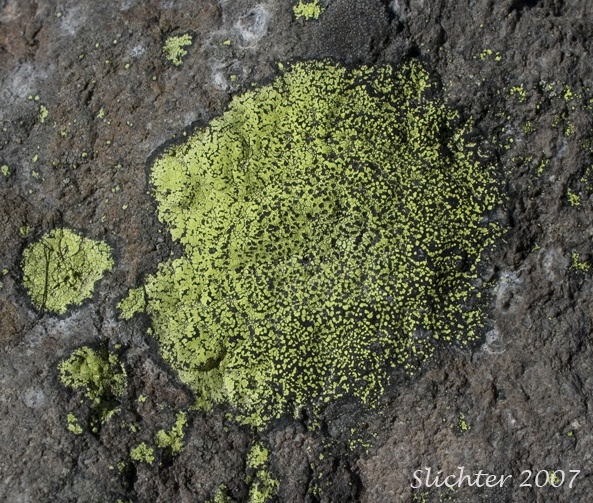
What is the name given to lichen or algae after a primary succession?
a)
pioneer species
b)
volunteer species
c)
founder species
d)
conqueror species
36.

Starts with BARE ROCK followed by lichen

a)

primary succession

b)

secondary succession

c)

both types of succession

37.
What is formed during primary succession that doesn't need to be formed during secondary succession?
a)
pioneer species
b)
soil
c)
climax community
d)
lichens
38.
After a forest fire, an ecosystem would start regrowth through -
a)
primary succession
b)
secondary succession
c)
climax community
d)
limiting factors
39.
When a specific population grows past the ecosystem's carrying capacity, what happens to the population?
a)
Density Independent limiting factors start to occur resulting in the population going farther above carrying capacity.
b)
Density Dependent limiting factors start to occur resulting in the population going back below carrying capacity.
c)
The population will go extinct due to lack of resources
d)
The population grows then finds a new carrying capacity
40.
The total number of individuals a habitat can survive with the resources it has available.
a)
Carrying capacity
b)
Limiting factors
c)
Resources
d)
Population
41.
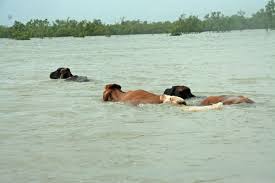
Excessive amounts of rain caused a flood in the southwest United States that resulted in substantial amounts of deaths in the rabbit population? This situation is an example of a density _____________ limiting factor.
a)
density-independent
b)
density-dependent
c)
density- too high
d)
density- too low
42.

Natural disasters can be considered limiting factors.

a)

true: density independent limiting factors

b)

false; natural disasters are not limiting factors

c)

true: density dependent limiting factors

d)

false: because Ms. White said

43.
Limiting factors which impact the size of a population no matter how large that population is.
a)
Density Independent Limiting Factors
b)
Density Dependent Limiting Factors
c)
Carrying Capacity
d)
Exponential Growth
44.

A lion and a cheetah attempt to occupy the same niche. The more aggressive lion survives; the cheetah does not.

a)

Density-Dependent: Competition

b)

Density-Independent: Competition

c)

Density-Dependent: Predator-Prey

d)

Density-Independent: Predator-Prey

45.

Coyotes cross the winter pack ice and enter Newfoundland. The moose population starts to decline.

a)

Density-Dependent: Competition

b)

Density-Independent: Competition

c)

Density-Dependent: Predator-Prey

d)

Density-Independent: Predator-Prey

46.

A severe frost wipes out 50% of the coffee crop in Brazil.

a)

Density-Dependent

b)

Density-Independent

47.
In cells a large oval organelle that contains the cells genetic material in the form of DNA and controls many of the cells activities
a)
organelle
b)
ribosome
c)
cell wall
d)
nucleus
48.
the thick fluid region of a cell located inside the cell membrane or between the cell membrane and nucleus
a)
cytoplasm
b)
cell wall
c)
organelle
d)
golgi apparatus
49.
an organelle in a cell that receives proteins and other newly formed materials from the endoplasmic retiulum packages them and distributes them to other parts of the cell
a)
vacuole
b)
chloroplast 
c)
ribosome
d)
golgi apparatus
50.
a cell organelle which contains chemicals that break down large food particles into smaller ones and that can be used by the rest of the cell
a)
chloroplasts
b)
ribosomes
c)
lysosomes
d)
cell membrane
51.
an organelle in the cells of plants and some other organisms that captures energy from sunlight and changes it to an energy from that cells can use in making food
a)
vacuole
b)
chloroplasts
c)
cytoplasm
d)
mitochondria
52.
Directs all cell activities through the DNA located there.
a)
Lysosomes
b)
Nucleus
c)
ribosomes
d)
Mitochondria
53.
What makes the endoplasmic reticulum rough?
a)
Vessicles
b)
Vacuoles
c)
Ribosomes
d)
Chromosomes
54.

The cell membrane is _______________ permeable.

a)

selectively

b)

somewhat

c)

physically

d)

ionically

55.

The cell membrane is mostly made of what?

a)

Membrane-spanning Proteins

b)

Surface Proteins

c)

Phospholipids

d)

Carbohydrates

56.

What are the two parts of a phospholipid?

a)

head

b)

enzyme

c)

tail

d)

hormone

57.

The phospholipid head is _____________ & _____________

a)

Hydrophilic

b)

Hydrophobic

c)

Polar (+)

d)

Uncharged

58.

The phospholipid tail is _____________ & _____________

a)

Hydrophilic

b)

Hydrophobic

c)

Polar (+)

d)

Uncharged

59.
What is the most basic unit of life?
a)
cell
b)
tissue
c)
organ
d)
organ system
60.
How do consumers get the energy they need to survive?
a)
photosynthesis
b)
eating other organisms
c)
decomposing dead materials
d)
chemosynthesis
61.
A _____ is something in the environment that causes an organism to respond.
a)
stimulus
b)
response
c)
cause
d)
effect
62.
When you step out into the cold, your body shivers in order to keep its temperature at 98.6F.
a)
All living things use energy
b)
All living things contain cells
c)
All living things maintain homeostasis
d)
All living things grow
63.
Green plants produce their own food through the process of photosynthesis.
a)
All living things use energy
b)
All living things contain cells
c)
All living things maintain homeostasis
d)
All living things grow
64.
A baby song bird hatches from its egg with both parent songbirds watching.
a)
All living things reproduce
b)
All living things maintain homeostasis
c)
All living things use energy
d)
All living things grow
65.
A pill bug (roly poly) eats a carrot.
a)
All living things contain cells
b)
All living things use energy
c)
All living things maintain homeostasis
d)
All living things grow
66.
A camel has eyelashes that work to keep the dust and sand out of its eyes.
a)
All living things adapt to their environment
b)
All living things grow
c)
All living things have cells
d)
All living things use energy
67.
A caterpillar hibernates in a cocoon and emerges as a butterfly.
a)
All living things adapt to their environment
b)
All living things use energy
c)
All living things respond to their environment
d)
All living things grow
68.
An amoeba is a unicellular organism. Which characteristic of life is this?
a)
All living things use energy
b)
All living things contain cells
c)
All living things respond to their environment
d)
All living things grow
69.
Over three years, Tim's height has increased from 5'4" to 5'11".
a)
All living things contain cells
b)
All living things maintain homeostasis
c)
All living things use energy
d)
All living things grow
70.
Which process converts carbon in the form of sugar into carbon dioxide gas?
a)
Bioremediation
b)
Photosynthesis
c)
Respiration
d)
Transpiration
71.
When humans burn fossil fuels, most of the carbon quickly enters the                       as carbon dioxide.
a)
Water
b)
Atmosphere
c)
Sun
d)
Air
72.
Combustion is another word for __________.
a)
Transportation
b)
Respiration
c)
Fossil Fuels
d)
Burning
73.
What word describes when water is attracted to other substances?
a)
cohesion
b)
adhesion
c)
capillary action
d)
surface tension
74.

When water and other liquids stick together to form drops or thin films called ________________.

a)

adhesion

b)

capillary action

c)

cohesion

d)

surface tension

75.
molecule in which opposite ends have opposite electric charges
a)
cohesion
b)
polar molecule
c)
hydrogen bond
d)
solution
76.
Water is a universal solvent because it...
a)
It can be found anywhere
b)
It freezes when it gets cold
c)
floats when frozen
d)
Dissolves most substances
77.
Which term refers to water having partial positive and a partial negative charge?
a)
cohesion
b)
surface tension
c)
polarity
d)
adhesion
78.

Capillary Action

a)

The property of water that allows ice to float on the surface of liquid water

b)

The property of water that allows it to dissolve polar substances

c)

When water molecules stick to other surfaces

d)

The property of water that allows water to move up a thin tube (or the stem of a plant) by itself

79.
Cattle egrets forage (feed) in fields among cattle. The egret gets easy access to flying insects stirred up by the cattle, and the cattle don't care if they are there or not.
a)
mutualism
b)
commensalism
c)
competition
d)
parasitism
80.
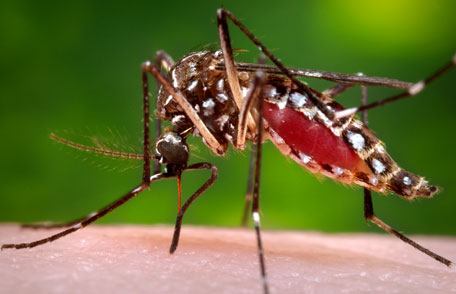
When a mosquito bites you, you are the __________ and the mosquito is the  ____________.
a)
host, hostess
b)
parasite, host
c)
host, parasite
d)
prey, predator
81.
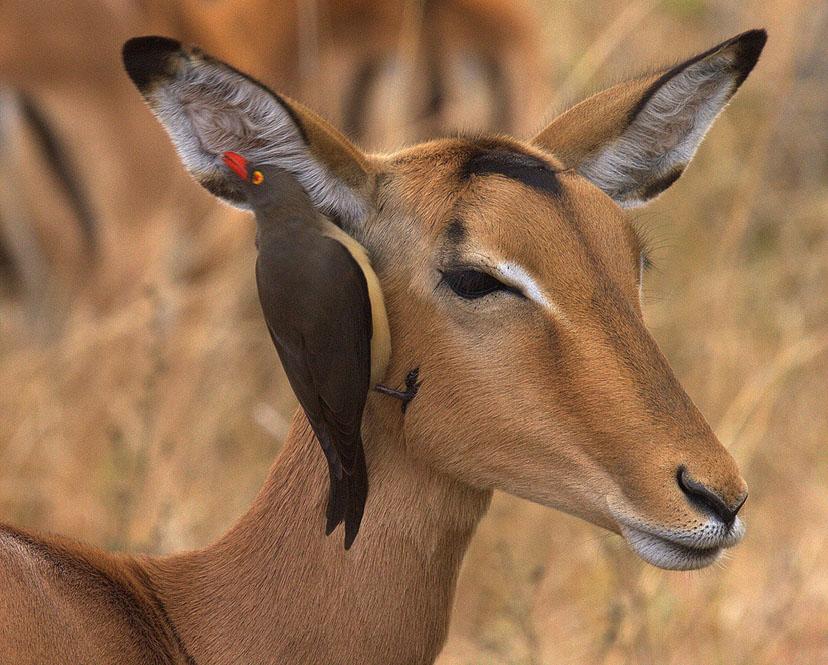
Red-billed oxpeckers are birds that often feed on parasites that infest impala.  This is an example of _______.
a)
commensalism
b)
mutualism
c)
neutralism
d)
competition
82.
Barnacles create home sites by attaching themselves to whales. This relationship neither harms nor benefits the whales. 
a)
parasitism
b)
commensalism
c)
mutualism