Wayground logo

Free Printable Worksheets

Font size

S
M
L
XL
Worksheets

Midterm Review

Total questions: 98

Worksheet time: 2hrs 3mins

Name
Class
Date
1.

Smallest living unit of a living organism

a)

Cells

b)

Reproduce

c)

Genetic code

d)

Homeostasis

2.
Which is NOT a characteristic that all living organisms share? 
a)
Ability to reproduce 
b)
Ability to grow 
c)
Ability to respond to their environment 
d)
Ability to dominate an ecosystem 
3.
When you step out into the cold, your body shivers in order to keep its temperature at 98.6F. 
a)
All living things have a metabolism 
b)
All living things have an internal structure of cells
c)
All living things respond to their environment 
d)
All living things grow
4.
All living things are composed of cells. 
a)
True
b)
False
5.
Rocks are not living because
a)
they never move
b)
they aren't needed for humans
c)
they are not made of cells
d)
they don't break down
6.
Living things need energy to survive?
a)
True
b)
False
7.
Fire is living because it has 6 of the 8 characteristics of life. 
a)
True 
b)
False
8.
This part of the experiment serves as a basis of comparison; the one variable being tested has been omitted. 
a)
experimental group
b)
control group
c)
data
d)
variables
9.
This variable in an experiment is the one being deliberately changed by the scientist. 
a)
dependent variable
b)
independent variable
c)
data
d)
control group
10.
An experiment is performed on plants to see how different liquids affect plant growth. Each plant in the experiment is given a different liquid; water, apple juice, or milk. Each plant has the same amount of soil, sunlight, and listens to the same music. In this investigation, the independent variable is ...
a)
The type of plant
b)
The amount of sunlight
c)
The type of music
d)
The type of liquid
11.
A student wants to test the effects of type of exercise on heart rate.  What is the dependent variable?
a)
heart rate
b)
type of exercise
c)
amount of exercise
d)
time of day exercise occurs
12.
Which is NOT a step in the scientific method?
a)
Make observation
b)
Form a theory
c)
Collect data
d)
Form a hypothesis
13.

The 3 parts of the Cell Theory are...?

a)

All living things are composed of cells

Cells are the basic units of structure and function in living things

All cells are produced from other cells

b)

All living things are composed of cells

Cells are the basic units of dance and vibes in living things

All cells are destroyed from other aliens

c)

All living things are composed of Jell-O

Cells are the basic units of structure and function in living things

All cells are produced from factories in Canada

d)

All living things are composed of cells

Cells do karate and practice eating whole pies in their free time

All cells are produced from other cells

14.

Which type of cell is this?

a)

Prokaryote

b)

Eukaryote

15.
What type of cell has a nucleus? 
a)
eukaryotic
b)
prokaryotic 
16.
Plants and animal cells are examples of ___ cells 
a)
prokaryotic cells 
b)
eukaryotic cells 
17.
Which is true of prokaryotic and eukaryotic cells?
a)
Prokaryotic cells are larger than eukaryotic cells.
b)
Eukaryotic cells do not have nuclei, and prokaryotic cells do have nuclei.
c)
Prokaryotic cells lack membrane-bound organelles, and eukaryotic cells contain membrane-bound organelles.
d)
Eukaryotic cells are simpler than prokaryotic cells.
18.

All of the following contain a cell wall except:

a)

prokaryotes

b)

animal cells

c)

plant cells

d)

bacteria

19.

Which do BOTH prokaryotes and eukaryotes contain?

a)

nucleus

b)

mitochondria

c)

ribosomes

d)

cell wall

20.

Prokaryotic cells do not have…….

a)

membrane bound organelles

b)

cell membrane

c)

DNA or RNA

d)

life

21.
Which kingdoms are prokaryotic?
a)
Archaebacteria and Animalia
b)
Eubacteria and Archaebacteria
c)
Fungi and Protista
d)
Plantae and Eubacteria
22.
This domain is characterized by bacteria that can live in extreme environments, such as hot springs.
a)
Archaea
b)
Bacteria
c)
Eukarya
d)
Prokarya
23.
 You would find mushrooms and molds in which kingdom?
a)
Plantae
b)
Protists
c)
Fungi
d)
Animalia
24.
In which kingdom do I belong if I am unicellular, autotrophic, and eukaryotic?
a)
Archaebacteria
b)
Protista
c)
Animalia
d)
Plantae
25.
All of the following have a nucleus except...
a)
bacteria
b)
animals
c)
plants
d)
protists
26.
Animals must eat other organisms for food, so they are classified as...
a)
heterotrophs
b)
autotrophs
c)
eukaryotic
d)
prokaryotic
27.
What do viruses need to reproduce?
a)
they need genetic material
b)
They need a host cell
c)
They need  bacteria
d)
They need insulin
28.
A(n) _____ is a virus that enters a bacterial cell.
a)
endospore
b)
decomposer
c)
plasmid
d)
bacteriophage
29.
Antibiotics kill viruses
a)
True
b)
False
30.
Which of the following organisms are LEAST closely related?
a)
organisms that share a domain
b)
organisms that share a family 
c)
organisms that share a genus 
d)
organisms that share a species 
31.
The scientific name for an organism is made from the:
a)
class and family name
b)
genus and species name
c)
domain and kingdom name
d)
kingdom and phylum name
32.
The 8 levels of classification, most broad to most specific.
a)
Domain, Genus, Family, Order, Class, Phylum, Kingdom, Species
b)
Domain, Species, Kingdom, Genus, Phylum, Family, Class, Order
c)
Domain, Kingdom, Phylum, Class, Order, Family, Genus, Species
d)
Order, Kingdom, Species, Domain, Phylum, Family, Class, Genus
33.
Who first proposed binomial nomenclature as a way of classifying organisms?
a)
Carl Linnaeus
b)
Carl's Jr.
c)
Charles Darwin
d)
Henry Groseclose
34.
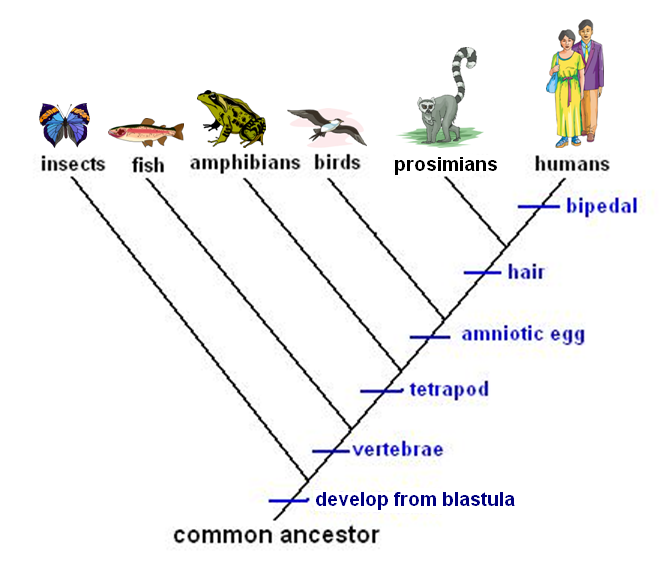
Which organisms pictured on the cladogram have hair?
a)
prosimians only
b)
prosimians and humans
c)
humans only
d)
prosimians and birds
35.
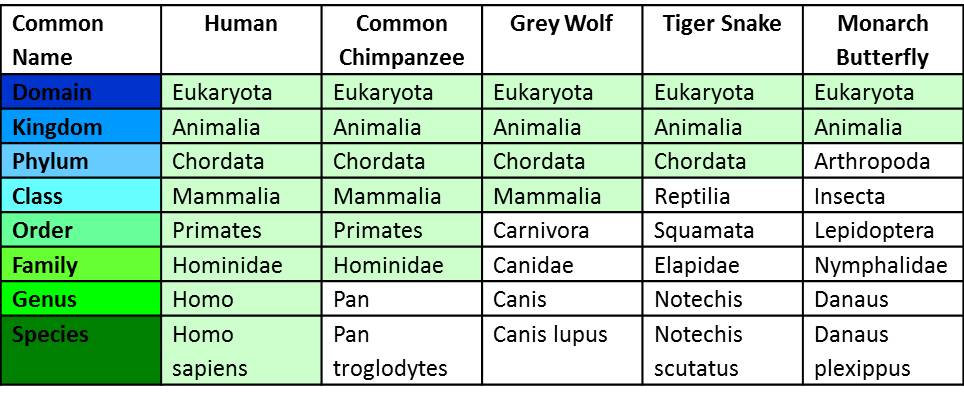
Which organism in the table is least closely related to the chimpanzee?
a)
human
b)
grey wolf
c)
tiger snake
d)
monarch butterfly
36.
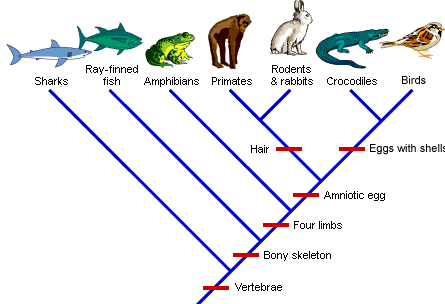
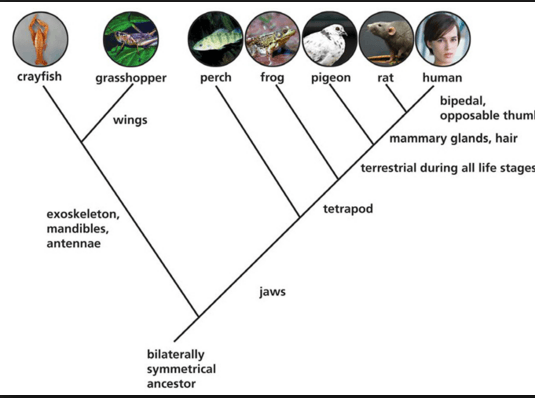
According to this cladogram, birds are LEAST related to: 
a)
Amphibians
b)
Sharks
c)
Ray Finned Fish
d)
Crocodiles
37.
Which trait do only humans have, according to the cladogram?
a)
jaws
b)
mammary glands & hair
c)
terrestrial during all life stages
d)
bipedal & opposable thumbs
38.

What 2 systems: Absorb and deliver the digested nutrients to the cells

a)

Digestive and muscular

b)

Muscular and lymphatic

c)

Digestive and circulatory

d)

Nervous and skeletal

39.

What 2 systems: Allows for movement

a)

Muscular and Skeletal

b)

Endocrine and Skeletal

c)

Nervous and Circulatory

d)

Integumentary and Reproductive

40.

What 2 systems: Allow organs to contract and push food through

a)

Muscular and Skeletal

b)

Excretory and Muscular

c)

Endocrine and Muscular

d)

Muscular and Digestive

41.

What 2 systems: Controls the production of sex cells

a)

Excretory and Reproductive

b)

Endocrine and Reproductive

c)

Endocrine and Muscular

d)

Endocrine and Respiratory

42.

What 2 systems: Uterus contracts to give birth

a)

Reproductive and Integumentary

b)

Reproductive and Skeletal

c)

Reproductive and Muscular

d)

Reproductive and Excretory

43.
Diseases are passed from human to human by these four types of germs: 
a)
Viruses, influenza, HIV, and vaccines
b)
Viruses, bacteria, fungi, and parasites
c)
Viruses, cancers, mutagens, and DNA
d)
Viruses, blood, pollutants, and symptoms
44.
What is one of the reactants of cellular respiration?
a)
energy
b)
glucose
c)
carbon dioxide
d)
water
45.
What is the purpose of photosynthesis?
a)
make glucose
b)
make ATP
c)
make light
d)
release carbon dioxide
46.
In which organelle (part of the cell) does photosynthesis take place?
a)
mitochondria
b)
chloroplast
c)
nucleus
d)
cell membrane
47.
Which of the following is the correct equation for PHOTOSYNTHESIS?
a)
CO2 + light + H2O --> O2 + Sugar
b)
CO2 + sugar + H2O --> O2 + light
c)
O2 + light + H2O --> CO2 + Sugar
d)
CO2 + O2 + H2O --> Light+ Sugar
48.
Cellular Respiration's goal is to
a)
make water
b)
make ATP
c)
make glucose
d)
make  oxygen
49.
Cellular respiration occurs in both plants and animals.
a)
true
b)
false
50.
Where are proteins made?
a)
Golgi body
b)
Mitoichondrion
c)
Chromosomes
d)
Ribosomes
51.
The ______________ is the brain of the cell.
a)
Vacuole
b)
Nucleus
c)
Chromosomes
d)
60 W light bulb
52.
The image is an example of ..... 
a)
Animal Cell
b)
Plant Cell 
53.
Name the organelle that controls the moment of substances in and out off the cell? 
a)
Ribosomes 
b)
Cell Membrane
c)
Cell Security 
54.
What is the function of the vacuole?
a)
Sac that stores water, nutrients, and waste products
b)
Sac filled with digestive chemicals
c)
Jelly-like substance within the plasma membrane
d)
stack of membranes that packages chemicals
55.
You might think of me as the trash collector or recycler. What am I?
a)
cytoplasm
b)
lysosme
c)
vacuole
d)
ribosome
56.

The tubes and support that transport water

and nutrients up, down and around in plants

a)

Vascular System

b)

Shoot System

c)

Root System

d)

Reproductive System

57.

The outer layer of plants which protects the plants and regulates water levels inside the plant.

a)

Shoot System

b)

Root System

c)

Dermal System

d)

Reproductive System

58.

In general, leaves, roots, stems and flowers

a)

Plant Systems

b)

Plant Cells

c)

Plant Organs

d)

Plant Organisms

59.

Vascular tissue (tubes) responsible for the transportation of water and minerals up from the roots and around the plant.

a)

Stomata

b)

Transpiration

c)

Phloem

d)

Xylem

60.

Vascular tissue (tubes) responsible for the transportation of glucose down and around in a plant.

a)

Transpiration

b)

Xylem

c)

Phloem

d)

Root Hairs

61.

The process of water movement in plants

due to evaporation out the stomata

and absorption of water through the root hairs

a)

Active Transport

b)

Transpiration

c)

Stomata

d)

Guard Cells

62.

Pores under leaves

that allow for transpiration

and gas exchange

a)

Xylem

b)

Stomata

c)

Phloem

d)

Transpiration

63.

Two cells that regulate the size of the stomata depending on temperature and

water conditions

a)

Phloem

b)

Xylem

c)

Stomata

d)

Guard Cells

64.

A large number of elongated cells that

grow out from the roots. They absorb water and minerals from the soil

via osmosis.

a)

Root Hairs

b)

Stomata

c)

Guard Cells

d)

Pholem

65.

The parts of the plant (angiosperms) involved in producing gametes (pollen and eggs) and seeds (fertilized eggs)

a)

Shoot System

b)

Phloem

c)

Xylem

d)

Reproductive System

66.

The plant hormone response to the

force of gravity

a)

Phototropism

b)

Geotropism

c)

Thigmotropism

d)

Transpiration

67.

The plant hormone response to light

a)

Transpiration

b)

Thigmotropism

c)

Geotropism

d)

Phototropism

68.

The plant hormone response to touch

a)

Thigmotropism

b)

Geotropism

c)

Phototropism

d)

Transpiration

69.
The male part of the flower is________
a)
pistil
b)
sepal
c)
ovaries
d)
stamen
70.
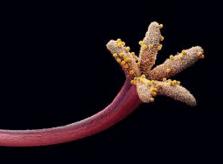
The pollen grains are found in this part of the stamen.
a)
anther
b)
style
c)
pistil
71.
The part of the flower on which the pollen grains land.
a)
pistil
b)
stamen
c)
sepals
d)
stigma
72.
Small grains that contain a plant's male reproductive cells.
a)
stamen
b)
pollen
c)
pistil
d)
stigma
73.
The enlarged base of the pistil that stores the eggs of the plant is the ___.
a)
ovary
b)
ovule
c)
stigma
d)
style
74.
C, D , and E are collectively known as the ______.
a)
stamen
b)
anther
c)
sepal
d)
pistil
75.
Fertilization is the process by which an 
a)
egg and pollen combine
b)
embryo grows into a plant
c)
animal carries pollen between plants
76.

Flowering plants reproduce...

a)

Sexually

b)

Asexually

77.
Which biomolecule is made of nucleotides and contain you DNA?
a)
Carbohydrate
b)
Lipids
c)
Protein
d)
Nucleic Acid
78.
Which biomolecule has sugars and starches?
a)
Lipids
b)
Proteins
c)
Carbohydrates
d)
Nucleic Acid
79.
What biomolecule do enzymes belong to? 
a)
Carbohydrate
b)
Lipid
c)
Nucleic Acid
d)
Protein
80.
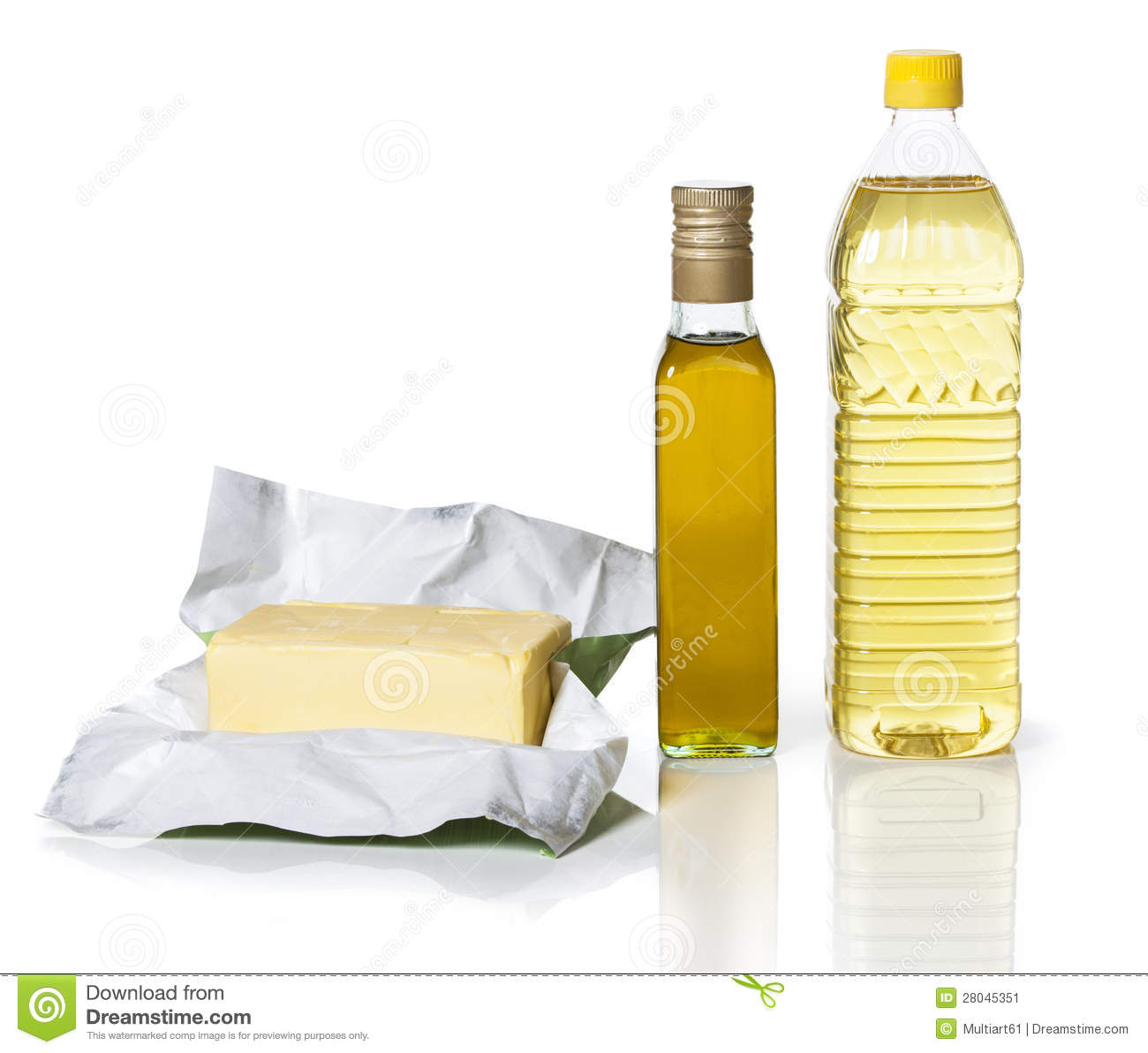
Which biomolecule is found in fats, oils, and waxes and is a source of long-term energy? 
a)
Proteins
b)
Nucleic Acid
c)
Lipids
d)
Carbohydrate
81.
What is the purpose  of an enzyme?
a)
give permission for the reaction
b)
raise activation energy
c)
speed up reactions
d)
control how many reactions occur
82.
The monomers of proteins are called _________________.
a)
fatty acids
b)
amino acids
c)
monosaccharides
d)
nucleotides
83.
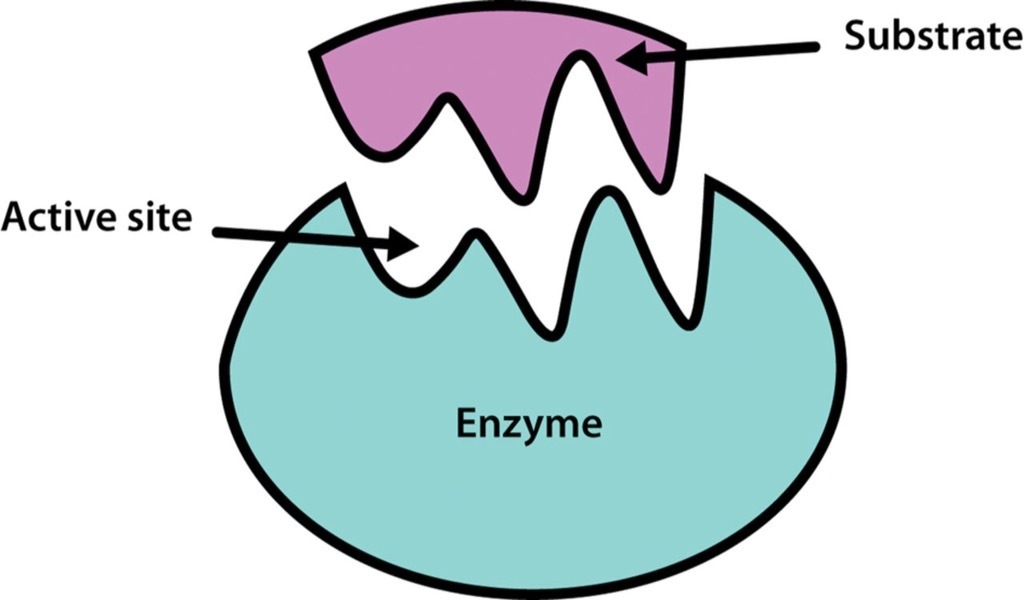
Where do substrates bind on an enzyme?
a)
voltage-gated channels
b)
surface receptor
c)
calcium channels
d)
active site
84.
How do enzymes increase the speed of chemical reactions?
a)
reducing the number of products   
b)
reducing the activation energy
c)
increasing the temperature of the cell
d)
increasing the concentration of reactants 
85.
Which of these is NOT true?
a)
Enzymes can denature (change shape) when the temperature gets too high.
b)
Enzymes can only be used once in a chemical reaction. 
c)
Extreme pH can denature enzymes.
d)
Enzymes speed up chemical reactions. 
86.
What happens when enzymes are heated to a high temperature?
a)
The enzymes die.
b)
The shapes of the enzyme are altered or denatured
c)
The enzymes' amino acid sequence changes.
d)
The enzymes remain the same
87.
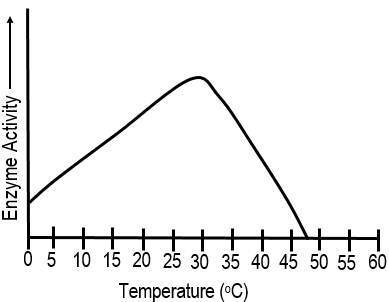
Based on the graph, what temperature does this enzyme work best? 
a)
15 C
b)
40 C
c)
30 C
d)
47 C
88.
With what 3 letters do enzymes typically end?
a)
-ose
b)
-ase
c)
-ese
d)
-tic
89.
Which of these is most likely an enzyme?  
a)
Sucrose
b)
Galactose
c)
Fructose
d)
Amylase
90.
Which enzyme is most efficient in a basic solution?
a)
A
b)
B
91.
The type of cellular transport that requires no energy.
a)
Active Transport
b)
Protein Pumps
c)
Passive Transport
d)
Endocytosis
92.
Which type of cellular transport moves molecules from low concentrations to high concentrations?
a)
Osmosis
b)
Diffusion
c)
Passive Transport
d)
Protein Pumps
93.
What type of transport involves the movement of water from high to low concentrations?
a)
Diffusion
b)
Active Transport
c)
Facilitated Diffusion
d)
Osmosis
94.
What happens to a plant cell that is placed into a hypotonic solution?
a)
It shrinks
b)
Plasmolysis
c)
It swells
d)
Cytolysis
95.
A cell with a 10% salt solution is placed into a beaker with a 40% salt solution.  How will water move?
a)
It will leave the cell
b)
It will enter the cell
c)
It will move in and out equally
d)
There will be no movement
96.
This picture represents what type of cell transport?
a)
endocytosis
b)
exocytosis
c)
osmosis
d)
passive transport
97.
Molecules diffusing with the concentration gradient through a protein channel is...
a)
Facilitated Diffusion
b)
Simple Diffusion
c)
Active Transport
d)
Osmosis
98.
Two examples of passive transport are
a)
Earth and Sun
b)
Diffusion and Osmosis
c)
Energy and Wind
d)
None of the above