wayground logo

Free Printable Worksheets

Font size

S
M
L
XL
Worksheets

Dynamic Planet

Total questions: 87

Worksheet time: 1hrs 25mins

Name
Class
Date
1.
Where are most divergent boundaries located?
a)
Along the middle of most ocean floors
b)
Along the margins of most continents
c)
Across the middle of many continents
d)
All the above options are correct
2.
What type of rock makes most of the oceanic crust
a)
Sedimentary
b)
Basalt
c)
Metamorphic
d)
Limestone
3.
What is the only part of the ocean floor without tectonic activity?
a)
continental slope
b)
continental margin
c)
seamount
d)
abyssal plain
4.
Why is there high salinity in the Mediterranean Ocean?
a)
precipitation
b)
evaporation
c)
volcanoes
d)
deposition
5.
Sea levels rise when glacial ice caps-
a)
grow
b)
melt
c)
migrate
d)
hit the Titanic
6.
Ocean currents are caused by-
a)
underwater earthquakes
b)
human influence
c)
sun moon and Earth interaction
d)
density differences
7.
Upwelling is most likely to occur in what area?
a)
in a deep sea trench
b)
in a shallow gulf
c)
along a coastline
d)
in open ocean
8.
Continental shorelines generally have a milder climate than locations inland at the same latitude due to-
a)
ocean water acting as a conductor of heat
b)
land is a greater storage of heat
c)
ocean water stores and releases heat more slowly than land
d)
land masses release hear slower than land
9.
What part of the ocean floor would be the most difficult to explore due to pressure?
a)
continental slope
b)
sea mount
c)
trench
d)
abyssal plain
10.
What sea floor feature is created by erosion and deposition?
a)
continental rise
b)
submarine canyon
c)
Marianas trench
d)
seamount
11.
What major feature of the ocean floor circumnavigates the Earth?
a)
mid oceanic ridge
b)
continental slope
c)
trench
d)
sea mount
12.
A trench is formed at what zone?
a)
subduction
b)
divergent
c)
convergent
d)
strike-slip
13.
The Chesapeake Bay is a(n)-
a)
estuary
b)
reservoir
c)
ocean front
d)
continental slope
14.
Estuaries are vital to the ecosystem because they have high amounts of-
a)
dissolved oxygen
b)
salinity
c)
algae blooms
d)
biological activity
15.
An estuary is an area where-
a)
there is only fresh water
b)
there is only salt water
c)
pond water and river water mix
d)
fresh water and salt water mix
16.
Salinity means
a)
how many fish are in the water
b)
how much salt is in the water
17.
The ocean floor 
a)
is always a flat bed of sand 
b)
has mountains, plains, and ridges like land surfaces
c)
is covered by the same amount of water everywhere
d)
covers less area than land
18.
The ocean covers 50% of Earth's surface.
a)
True
b)
False
19.
A coral reef is 
a)
a rock 
b)
an ecosystem
c)
an underground cave
d)
a hydro-thermal vent
20.
Where is the ocean deepest?
a)
ocean trench
b)
volcanic island
c)
abyssal plain 
d)
mid-ocean ridge
21.
The main difference between ocean water and lake water is that ocean water contains
a)
oxygen
b)
salt
c)
algae
d)
plants
22.
Which of these increases as a submarine dives deeper into the ocean?
a)
The number of plants in the water
b)
the freshness of the water
c)
the water temperature
d)
the water pressure
23.
As you go deeper in the ocean, the _______ decreases. 
a)
water
b)
salinity
c)
temperature
d)
water pressure 
24.
What do the arrows represent in the picture?
a)
waves
b)
currents
c)
tides
25.
What causes the tides to change?
a)
rotation of the Earth
b)
magic
c)
gravitational pull from the moon
d)
ocean currents
26.
The large flat region of the ocean floor is called the 
a)
ocean trench
b)
continental shelf
c)
abyssal plain
d)
seamount 
27.
The Gulf Stream is 
a)
a stream behind the school 
b)
a current in the Atlantic Ocean that flows on the eastern coast of North America 
c)
a boat 
d)
part of the ocean floor 
28.
Deep Ocean currents are a result of
a)
Global Wind Patterns
b)
Earth's Rotation
c)
Density
d)
All of the above
29.
The Coriolis Effect is caused by
a)
Earth rotating around the sun
b)
Earth rotating on its axis
c)
The tides
d)
Gravity
30.
Warm ocean currents generally come from
a)
The North Pole
b)
The South Pole
c)
The Equator
d)
Both A and B
31.
Two types of water currents are
a)
local and global
b)
sea and land
c)
surface and deep
d)
warm and cold
32.
Why are surface currents at the surface of the ocean?
a)
colder temperature
b)
colder temperature & more salinty
c)
warmer temperature & less salinty
d)
less salinty
33.
As you go deeper in the ocean, the water is colder and less salty.
a)
True
b)
False
34.
Sunlight strikes this planet most directly at the_____________.
a)
mesosphere
b)
tundra
c)
equator
d)
south pole
35.
Which of the following causes water from deep currents to rise to the surface to replace warm currents?
a)
evaporation
b)
freezing of the surface of the water
c)
upwelling
d)
squeezing solids out of the ice down into the water below
36.
What is the cause of rising surface temperatures of the Pacific Ocean, drought in the western United States, and flooding on the Pacific coast of South America?
a)
the Gulf Stream
b)
the Jet Stream
c)
La Nina
d)
El Nino
37.
The curving of air to the right in the Northern hemisphere is caused by ___________ and is called the _________ effect.
a)
Earth's rotation...Coriolis
b)
Earth's revolution...Coriolis
c)
Earth's rotation...Doppler
d)
Earth's revolution...Doppler
38.
Temperature and salinity affect the ______ of water.
a)
none of the other choices
b)
wave speed
c)
depth
d)
density
39.
Water that has greater density ______ .
a)
sinks
b)
rises
c)
spins clockwise
d)
is warmer
40.

These are created by the pull od the Sun's and Moon's gravity

a)

Waves

b)

Ocean

c)

Paper

d)

Tides

41.

These are created by tectonic plate activity on the ocean floor.

a)

Ocecan cuurents

b)

Tsunami

c)

Lake

d)

Ocean

42.

These tides are the biggest difference between high tide and low tide.

a)

Spring tides

b)

Neap tides

c)

Tide

d)

Ocean

43.

Seasonal directed movement of ocean water created by natural forces.

a)

Tsunami

b)

Spring tides

c)

Ocean currents

d)

Tides

44.

Sound waves used to map the ocean floor.

a)

Ocean Currents

b)

Waves

c)

Sonar

d)

Heat waves

45.

A boundary that collide, shrinking the ocean floor.

a)

Divergent

b)

Convergent

c)

Transform

d)

I HAVE NO IDEA

46.

What are trenches?

a)

the most shallow part of the ocean

b)

coats that spies wear

c)

the deepest parts of the ocean

d)

the scientific study of the ocean

47.
How many oceans are there in the world?
a)
7
b)
6
c)
5
d)
4
48.

The _________ surrounds the North Pole.

a)

Antarctic Ocean

b)

Southern Ocean

c)

Arctic Ocean

d)

Indian Ocean

49.

Smaller bodies of salt water are called

a)

seas

b)

lakes

c)

oceans

d)

rivers

50.
What ocean is between Africa and Australia?
a)
Pacific ocean
b)
Indian ocean
c)
Atlantic ocean
d)
Southern ocean
51.

Which of the following are the most abundant in ocean water?

a)

Sodium

b)

Chloride

c)

Magnesium

d)

Sulfates

52.

What amount of the ocean is salt?

a)

97.5%

b)

3.5%

c)

89%

53.

As seawater temperature decreases, its density:

a)

increases.

b)

decreases.

c)

remains the same.

d)

rises.

54.

What are the two factors that influence the temperature of seawater?

a)

latitude and depth

b)

salinity and density

c)

precipitation and river runoff

d)

currents and tides

55.

Wave is measured in which of the following ways?

a)

Wave length is the horizontal distance from a point on one wave to the same point on the next wave.

b)

Wave length is the distance from the trough of a wave to its crest.

c)

Wave length is how many wave crests pass a given point in a given length of time.

d)

Wave length is the distance from sea level to the crest of the wave.

56.

Which of the following determines wave height, length, and period?

a)

the wind speed

b)

the length of time the wind blows

c)

the distance that the wind travels

d)

the latitude of the area the wave is in

57.

Waves "break" because of which of the following?

a)

the wave base touches the sea floor

b)

the wave height decreases

c)

the wavelength increases

d)

the shoreline is at high tide

58.

A region that experiences semidiurnal tides would have which of the following conditions?

a)

two high and two low tides per day approximately equal in size

b)

two high and two low tides per day unequal in size

c)

one high and one low tide per day

d)

two high tides and one low tide per day

59.

Which location has the greatest tidal range in the world?

a)

the Bay of Fundy in Canada

b)

the Saltstraumen in Norway

c)

the English Channel in the United Kingdom

d)

the Panama Canal in Panama

60.

Which of the following best describes what you see in the graph?

a)

a mixed semi-diurnal tide

b)

a semi-diurnal tide

c)

a diurnal tide

d)

a tsunami wave

e)

the Gulf Stream

61.

Two factors influence a region’s photosynthetic productivity. Choose the pair that is most correct.

a)

availability of nutrients and amount of solar radiation received

b)

depth of the water and distance from the shore

c)

temperature of the water and salinity of the water

d)

latitude and density of the water

62.
The water layer within which the temperature decreases rapidly with depth.  This layer acts as a density barrier to vertical circulation.
a)
surface
b)
mixed layer
c)
Ekman Spiral 
d)
thermocline
63.
This layer of water is found at the surface, which has low density and warm.  
a)
thermocline
b)
isotherm
c)
mixed layer
d)
bottom water
64.
Rotary motion of water downward.
a)
Isobath
b)
Ekman spiral
c)
Coriolis Effect
65.

Which ocean floor feature is labeled "F"?

a)

Continental Shelf

b)

Abyssal Plain

c)

Ocean Trench

d)

Continental Slope

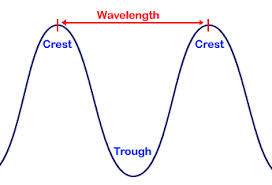
66.

The distance between two crests or two troughs on a wave is the...

a)

Crest

b)

Trough

c)

Wavelength

67.
Seamount is similiar to...
a)
a volcanic island
b)
a small mountain or volcano
c)
The Great Plains
d)
The Grand Canyon
68.
The place where new ocean floor forms is called the...
a)
mid ocean ridge
b)
abyssal plain
c)
trench
d)
continental shelf
69.
The shallowest(least deep) part of the ocean is the ____________________
a)
trench
b)
abyssal plain
c)
continental shelf
d)
continental slope
70.
Which island was formed by a hot spot? 
a)
Bahamas
b)
Fiji 
c)
Hawaii 
d)
The Philippians
71.
Which statement correctly describes the motion of water particles due to the action of waves?
a)
they travel from one crest to another
b)
they move in opposite direction of the wave
c)
they rise and fall in a circular motion
d)
they move back and forth
72.
What is a trough?
a)
highest point on a wave
b)
lowest point on a wave
c)
longest point on a wave
d)
shortest point on a wave
73.
Which of the following is not a cause of a tsunami? 
a)
Volcanic eruption
b)
Tornado
c)
Underwater earthquakes
d)
Landslide
74.
What is a subsurface current that is nearshore and that pulls objects out to sea?
a)
Undertow
b)
Longshore Current
c)
Tsunami
d)
Swells
75.
What is the increased tide that occurs two times in a month at the new and full moons?
a)
Tidal range
b)
Spring Tide
c)
Neap Tide
d)
Tide
76.
What is a tide of minimum range that occurs during the 1st and 3rd quarters of the moon?
a)
Tide
b)
Tidal range
c)
Spring tide
d)
Neap tide
77.

What percentage of the ocean's sea life lives in coral reefs?

a)

10 -15%

b)

20%

c)

45%

d)

25%

78.

Which of the following is NOT a type of coral reef?

a)

Fringing reefs

b)

Barrier reefs

c)

Atolls

d)

Crustacean

79.
Where is the Great Barrier Reef located?
a)
Puerto Rico
b)
Florida
c)
Indonisia
d)
Australia
80.
A ringed shaped reef
a)
fringing reef
b)
barrier reef
c)
atoll
d)
archipelago 
81.
What type of coral reef began as a volcanic island until the island sank?
a)
Frining
b)
Barrier
c)
Atoll
d)
Soft Coral
82.
What is the name of the layer of the ocean that has the most life? 
a)
Oceanic
b)
Twilight
c)
Sunlight
d)
Abyss
83.
Which of the following is the best answer based on this statement: This zone is the largest zone in the ocean.
a)
Neritic 
b)
Intertidal
c)
Oceanic
d)
Sunlight
84.
What are the two zones that distinguish between photosynthesis and chemo-synthesis? 
a)
aphotic and photic
b)
neritic and oceanic
c)
abyssal and midnight
d)
sunlight and twilight 
85.
This is the zone where the water is constantly changing. 
a)
Neritic 
b)
Intertidal
c)
Oceanic
d)
Abyssal
86.

Upwelling is common in these two places

a)

At the nothern and southern polar retions

b)

All coastlines and pelagic ecosystems

c)

In the Sargasso Sea and ocean currents

d)

Along coastlines and in northern boundary currents

87.
Due to the Coriolis Effect, water in the northern hemisphere moves
a)
clockwise
b)
counter clockwise
c)
both
d)
neither