
 Worksheets
Year 11 Chemistry Mock Close the Gap
Total questions: 132
Worksheet time: 1hrs 27mins
Who arranged the known elements into horizontal rows of increasing atomic mass leaving gaps for as yet undiscovered elements?
Mendeleev
Meyer
Newlands
Moseley


neutron
A subatomic particle that has a positive charge and that is found in the nucleus of an atom
not able to conduct heat or electricity, little to no metallic luster
A subatomic particle that has a negative charge
A small particle in the nucleus of the atom, with no electrical charge
A subatomic particle that has a positive charge and that is found in the nucleus of an atom
Proton
elecrtron
groups
neutrons
A subatomic particle that has a negative charge
nobles gases
protons
electrons
neutrons


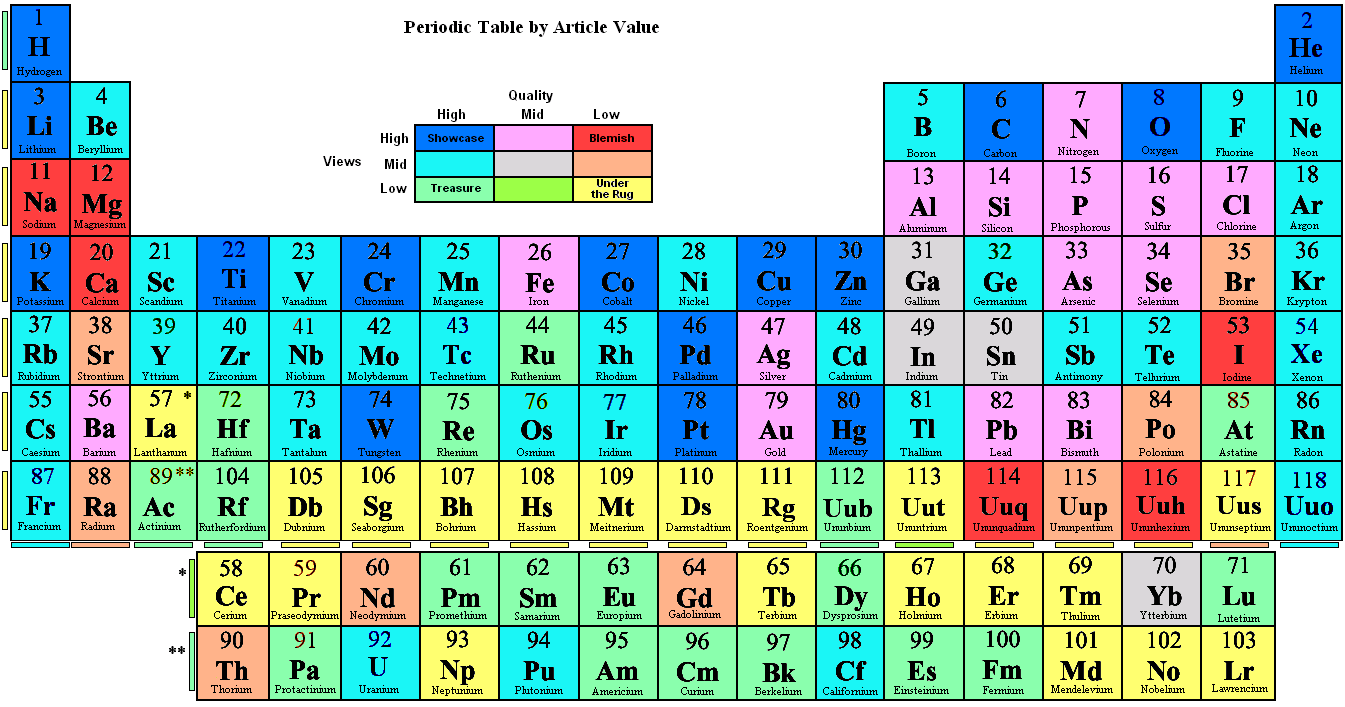
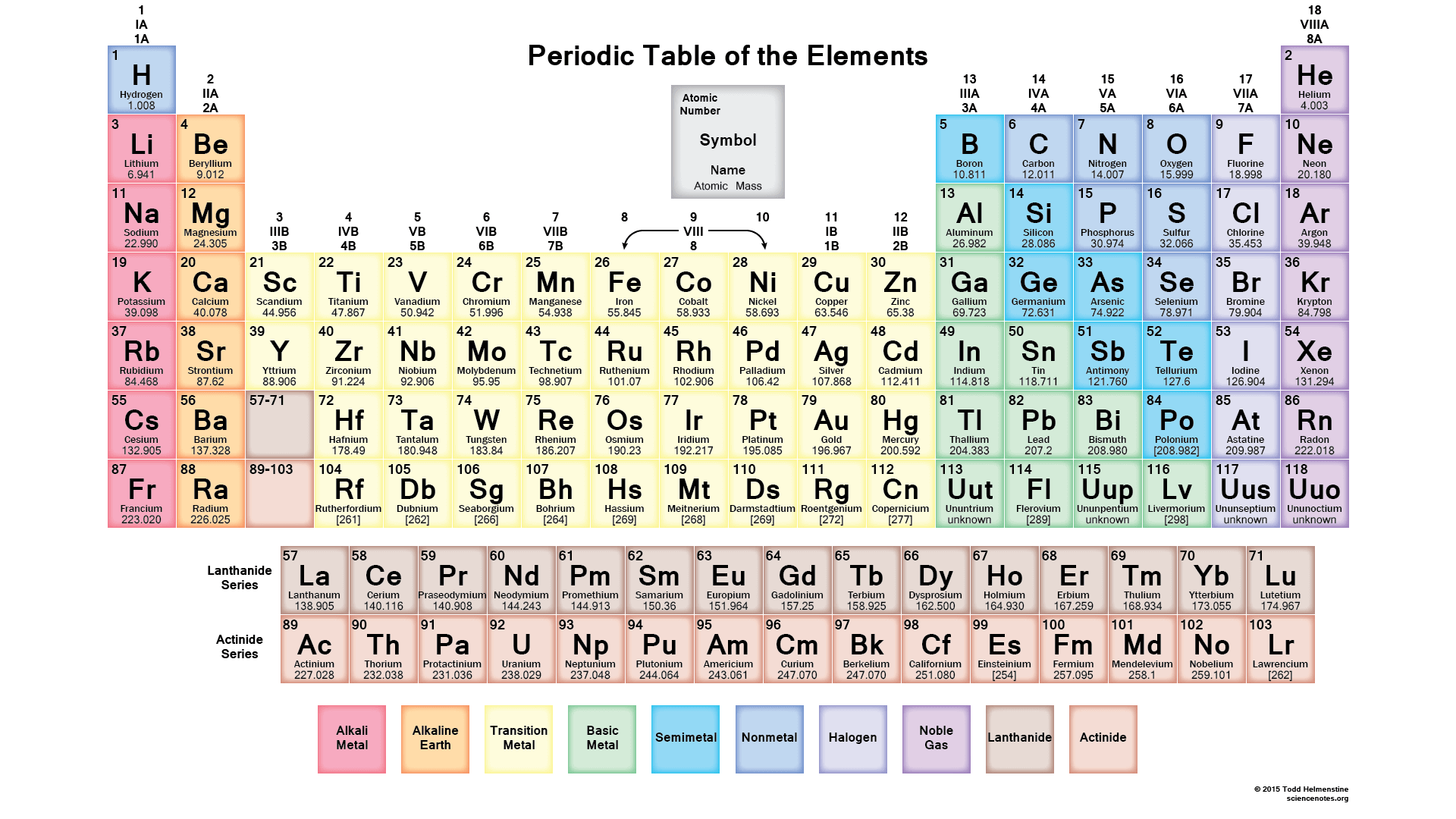
Which color on the image of the periodic table corresponds with the noble gases.
red
black
blue
orange
Which color on the image of the periodic table corresponds with the halogens.
red
black
blue
orange
Mendeleev first ordered the periodic table of elements by increasing
atomic number
atomic mass
atomic symbol
atomic weight
How are the elements arranged on the periodic table today?
By atomic mass
By number of electrons
By atomic number
By alphabetic order
What happens to the number of shells as you move down a group?
They decrease by 1
They increase by 1
Nothing
As you move left to right on a row or period what happens?
Atomic number increases by 1
Electrons decrease
Number of shells decrease
Nothing
Mendeleev's genius was his ability to
predict elements that were not discovered yet
organize elements by their mass
had an element named after himself
organize elements by properties
Elements in the same group have __________
Similar Properties
Same number of shells
Similar Mass
Who was the Greek philosopher who called the smallest particle of matter as "atom"?
Democritus
Aristotle
J.J Thompson
Einstein

Which of the following is/are conclusions based on Rutherford’s gold foil experiment?
Atom is mostly empty space
The nucleus is positively charged
The atom has a small dense nucleus
All answers are correct
Which scientist discovered the electrons?
Dalton
Thomson
Atristotle
Bohr


Which model of the atom is denoted as the "plum pudding" model?
A
B
C
D
E
What subatomic particle represents the "plums" in the "plum pudding" model?
neutrons
protons
electrons

Who is credited with developing model D?
Thomson
Dalton
Bohr
Rutherford
Which of the following statements are true about the nucleus?
It is neutrally charged
It is positively charged
It contains most of the mass of the atom
It is almost empty space


Which of the "Halogens" is found in liquid state at room temperature?
Flourine
Astatine
Iodine
Bromine
Which of the "Halogens" has yellowish green color?
Chlorine
Bromine
Flourine
Iodine
Which of the "Halogens" could able to make the strongest ionic bond with Sodium metal?
Iodine
Bromine
Chlorine
Flourine
Which "Halogen" can able to replace Chlorine in Sodium Chloride?
Flourine
Bromine
Iodine
Astatine
Which of the "Halogens" is produced in electrolysis of brine solution?
Chlorine
Flourine
Iodine
Bromine
Which of these elements are Halogens?
Fluorine
Helium
Zinc
Bromine
What group are the Halogens?
6.9
7
8
3
As you move down the group, halogens' reactivity...
increases
decreases
doesn't change
shows no trend.
The nucleus of which halogen is best at attracting electrons?
fluorine
iodine
bromine
chlorine
How could you test for chloride ions and what would the result be?
Add silver nitrate, obtain a cream precipitate.
Add silver carbonate, obtain a cream precipitate.
Add sodium hydroxide, obtain a white precipitate.
Add silver nitrate, obtain a white precipitate.
Which halogens can displace bromide ions to make bromine?
Fluorine and iodine.
Fluorine and bromine.
Fluorine and chlorine
Chlorine and iodine.
Would a displacement reaction occur for Bromine + Potassium Iodide?
Yes
No
Maybe
What is the trend for melting and boiling points of halogens?
Increases down the group.
Decreases down the group.
Increases up the group.
Decreases up the group.
There's no trend.
What happens at the anode during electrolysis?
Negative ions gain electrons
Positive ions gain electrons
Negative ions lose electrons
Positive ions lose electrons
In the electrolysis of molten lead bromide, what is the product at the anode?
Lead
Bromine
Oxygen
In the electrolysis of copper nitrate solution, what is the product at the cathode?
Oxygen
Hydrogen
Copper
In the electrolysis of a solution, which ions from water are attracted to the anode?
Hydroxide, OH-
Oxide, O2-
Hydrogen, H+
In the electrolysis of sodium chloride solution, what is the product at the cathode?
Hydrogen
Sodium
Chlorine
What is reduction?
Adding oxygen
Losing electrons
Gaining electrons
Which half equation represents the reaction at the cathode in the electrolysis of molten copper chloride?
2Cl- → Cl2 + 2e-
Cu2+ + 2e- → Cu
2H+ + 2e- → H2
Which half equation represents a reaction at the cathode in the electrolysis of aqueous sodium nitrate?
Na+ + e- → Na
2H+ + 2e- → H2
4OH- → 2H2O + O2 + 4e-
In electrolysis, what is the name of the positive electrode?
Electrolyte
Cathode
Anode
What happens at the cathode during electrolysis?
Negative ions gain electrons
Positive ions gain electrons
Negative ions lose electrons
Positive ions lose electrons
What type of compound are electrolytes?
Ionic compounds
Covalent compounds
Metallic compounds
Molten ionic compounds can be electrolysed because
The ions move freely
The atoms move freely
The ions cannot move freely
Bauxite contains:
Aluminium oxide
Copper oxide
Copper sulphate
Aluminium sulphate
Aluminium oxide is mixed with __________ to lower its melting point:
Bauxite
Cryolite
Carbon
Why is Aluminium oxide mixed with cryolite?
To lower its melting point
To help it dissolve
To increase its melting point
Aluminium ions gain _________ electrons to become aluminium atoms
1
2
3
The anode is made of carbon so needs to be replaced regularly as:
It reacts with aluminium to produce aluminium carbon
It reacts with oxygen to produce carbon dioxide
Metal ions lower in the reactivity series will form at the cathode first
True
False
Oxygen will form at the anode if halide (GRROUP 7) ions are NOT present
True
False
Test for hydrogen gas:
Relights glowing splint
Damp blue litmus paper goes white
Lit splint produces squeaky pop
Limewater goes cloudy
Test for oxygen gas:
Relights glowing splint
Damp blue litmus paper goes white
Lit splint produces squeaky pop
Limewater goes cloudy
Test for chlorine gas:
Relights glowing splint
Damp blue litmus paper goes white
Lit splint produces squeaky pop
Limewater goes cloudy
Test for carbon dioxide gas:
Relights glowing splint
Damp blue litmus paper goes white
Lit splint produces squeaky pop
Limewater goes cloudy
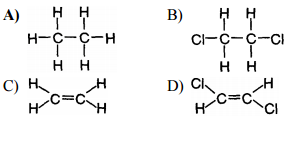

Conditions for cracking is...
High temperature
Low temperature
Catalyst and steam
catalyst or steam
Test for alkenes is
add acid
add water
Add bromine water
burn it
Bromine water with an alkene will
have no change
go clear
go orange to clear
go orange to colourless
fizz
Bromine water with an alkane will....
have no change/stay orange
go clear
go orange to clear
go orange to colourless
fizz
What colour does bromine water turn in the presence of an alkene
Orange
Blue
Colourless
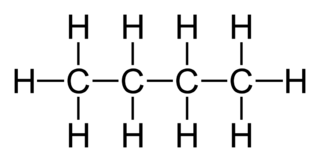
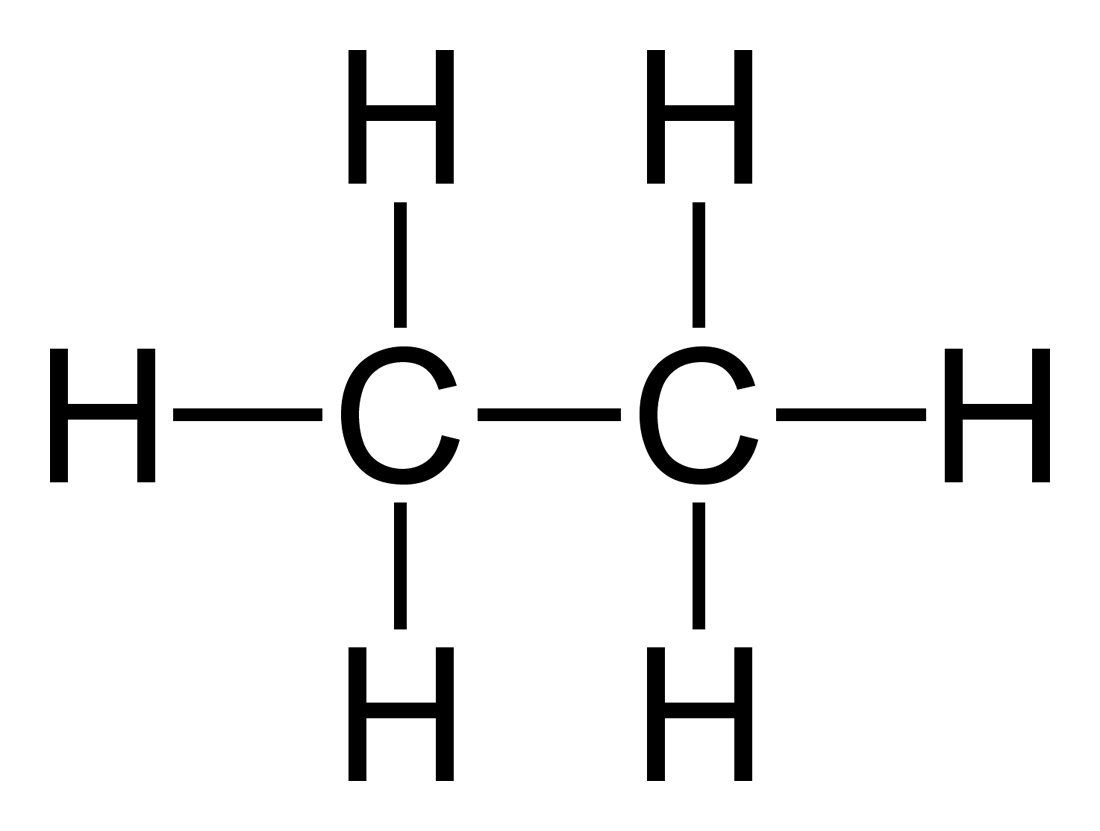
When this molecule is cracked, a C2H4 molecule, a C4H8 molecule and an unbranched alkane molecule are obtained.
What is the unbranched alkane molecule
Why can't you use hydrochloric or sulfuric acids to test for anions?
they don't react
you need to test for both chloride and sulfate ions so can't use an acid that contains these
they yield different products
the pH is too low
What is a positive test for a carbonate ion?
limewater turns cloudy
limewater goes clear
add barium sulfate
add silver nitrate
Silver nitrate and nitric acid are used to test for....
metals
noble gases
halogens
metal oxides
A yellow precipitate formed when an unknown solution is added to silver nitrate and nitric acid indicates the presence of which ion?
iodide
chloride
bromide
fluoride
A cream precipitate formed when an unknown solution is added to silver nitrate and nitric acid indicates the presence of which ion?
chloride
iodide
bromide
fluoride
A white precipitate formed when an unknown solution is added to silver nitrate and nitric acid indicates the presence of which ion?
bromide
iodide
fluoride
chloride
Adding barium nitrate to an unknown solution will indicate the presence of....
sulfate
phosphate
carbonate
sulfate & phosphate
A gas produced when nitric acid is added to an unknown solution indicates the presence of....
suulfate
carbonate
phosphate
nitrate
A substance that is soluble when both silver nitrate and nitric acid are added is...
sulfate
phosphate
a halogen
hydroxide
If a precipitate remains when nitric acid is added to a white precipitate, it indicates the presence of...
sulfate
phosphate
nitrate
carbonate
Which of the following will form an anion?
Titanium
Iron
Calcium
Sulfur
Which of the following elements will form a cation?
Arsenic
Copper
Bromine
Fluorine

See above
A
B
C
D

See above
A
B
C
D

See above
A
B
C
D
Why can't you use a flame test to distinguish between silver and lead?
silver is colourless
lead is toxic
they are the same colour
both 1 & 2 are correct
A light blue precipitate formed when sodium hydroxide is added to an unknown solution indicates the presence of.....
barium
calcium
copper
iron(II)
A green precipitate formed when sodium hydroxide is added to an unknown solution indicates the presence of.....
iron(III)
calcium
copper
iron(II)
Which metal produces a brick red flame?
barium
calcium
silver
lead

