wayground logo

Free Printable Worksheets

Font size

S
M
L
XL
Worksheets

Midterm Review

Total questions: 152

Worksheet time: 2hrs 5mins

Name
Class
Date
1.
What is the process that picks up and moves weathered rocks?
a)
Deposition
b)
Landslide
c)
Weathering
d)
Erosion
2.
Which of these is an example of erosion?
a)
Light shining onto a mountain.
b)
Rain breaking down rocks on a mountain into smaller pieces. 
c)
Wind blowing away sediment to a new place on the mountain.
d)
All of the above.
3.
This layer of Earth is the thickest part
a)
crust
b)
outer core
c)
mantle
d)
inner core
4.
Most volcanoes and earthquakes occur...
a)
along the coast
b)
along tectonic plate boundaries
c)
in the Arctic
d)
in the ocean
5.
Which layer of Earth is located above the outer core?
a)
crust
b)
inner core
c)
mantle
d)
lithosphere
6.
The _________ is the thinnest layer of Earth.
a)
outer core
b)
inner core
c)
mantle
d)
crust
7.
What is the correct order (starting from the surface) of Earth’s layers?
a)
mantle, outer core, inner core, crust
b)
crust, mantle, outer core, inner core
c)
outer core, inner core, crust, mantle
d)
crust, outer core, inner core, mantle
8.
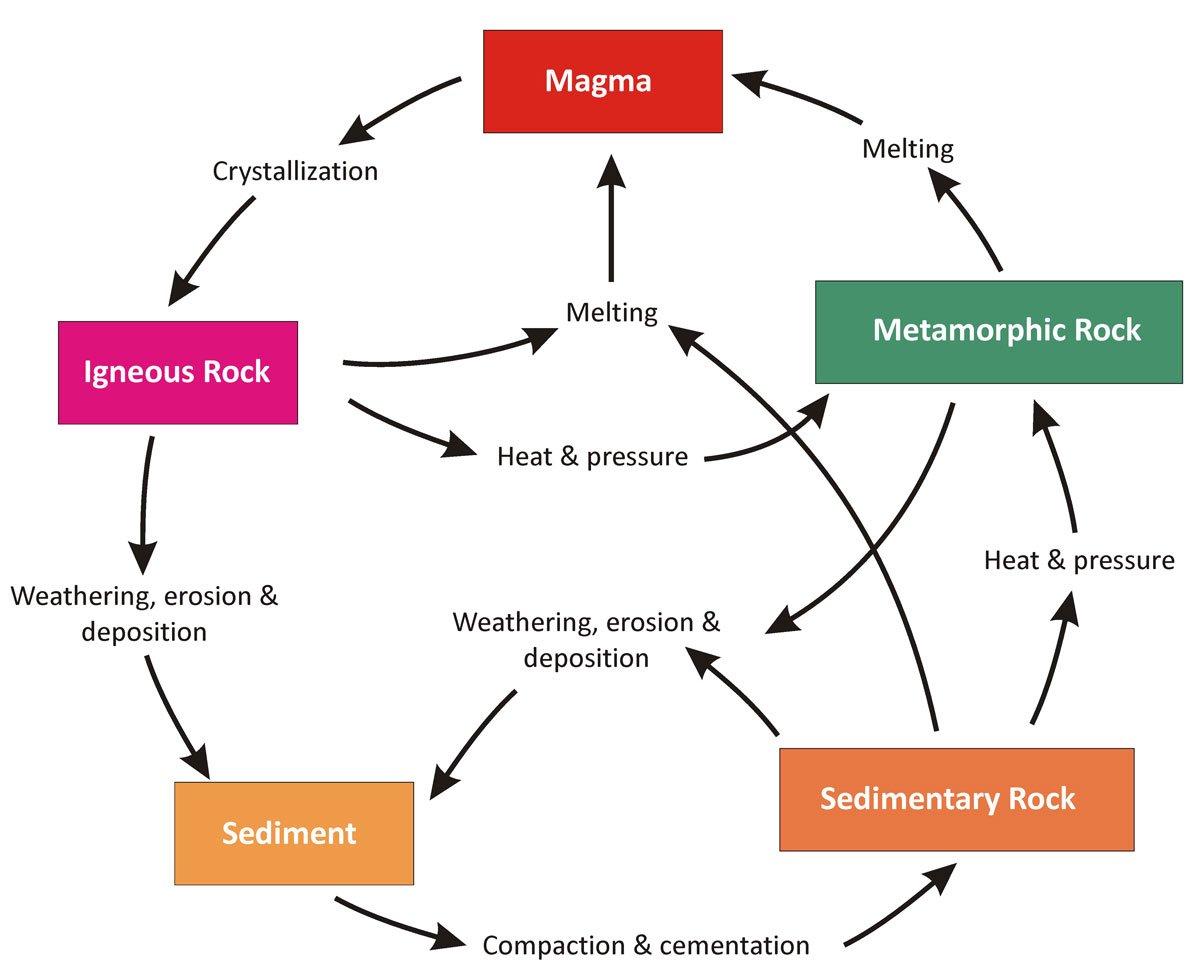
What type of rock is formed when magma and lava cools and hardens?
a)
minerals
b)
sedimentary
c)
igneous
d)
metamorphic
9.

Hot, molten rock inside the earth is called ...

a)

lava

b)

magma

c)

igneous rock

d)

minerals

10.

Once magma reaches the earth's surface, it is called __________.

a)

a vent

b)

minerals

c)

igneous rocks

d)

lava

11.

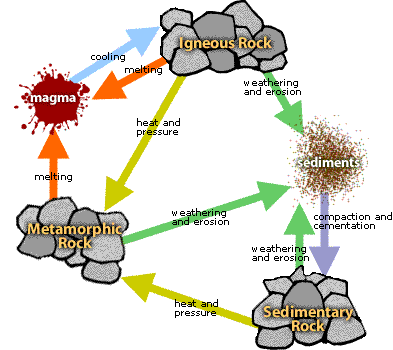
Series of natural processes by which rocks are slowly

changed from one kind of a rock to another.

a)

igneous rock

b)

metamorphic rock

c)

sedimentary rock

d)

rock cycle

12.

Rock particles carried and deposited by water, wind & ice.

a)

sedimentary rock

b)

sediment

c)

metamorphic rock

d)

igneous rock

13.

Rock formed when existing rock is changed by heat &

pressure.

a)

sedimentary rock

b)

texture

c)

metamorphic rock

d)

intrusive rock

14.

All rocks are made up of one or more.

a)

sediments

b)

minerals

c)

metals

d)

magma

15.

Not formed from living things or the remains of living things

a)

inorganic

b)

matter

c)

cells

d)

erosion

16.

A naturally occurring, inorganic solid that has a crystal structure and a definite chemical composition.

a)

deposit

b)

mineral

c)

weathering

d)

erosion

17.

The shaking that results from the movement of rock beneath Earth’s surface.

a)

erosion

b)

weathering

c)

volcano

d)

earthquake

18.

A weak spot in the crust where magma has come to the surface.

a)

motlen

b)

lava

c)

volcano

d)

plate

19.
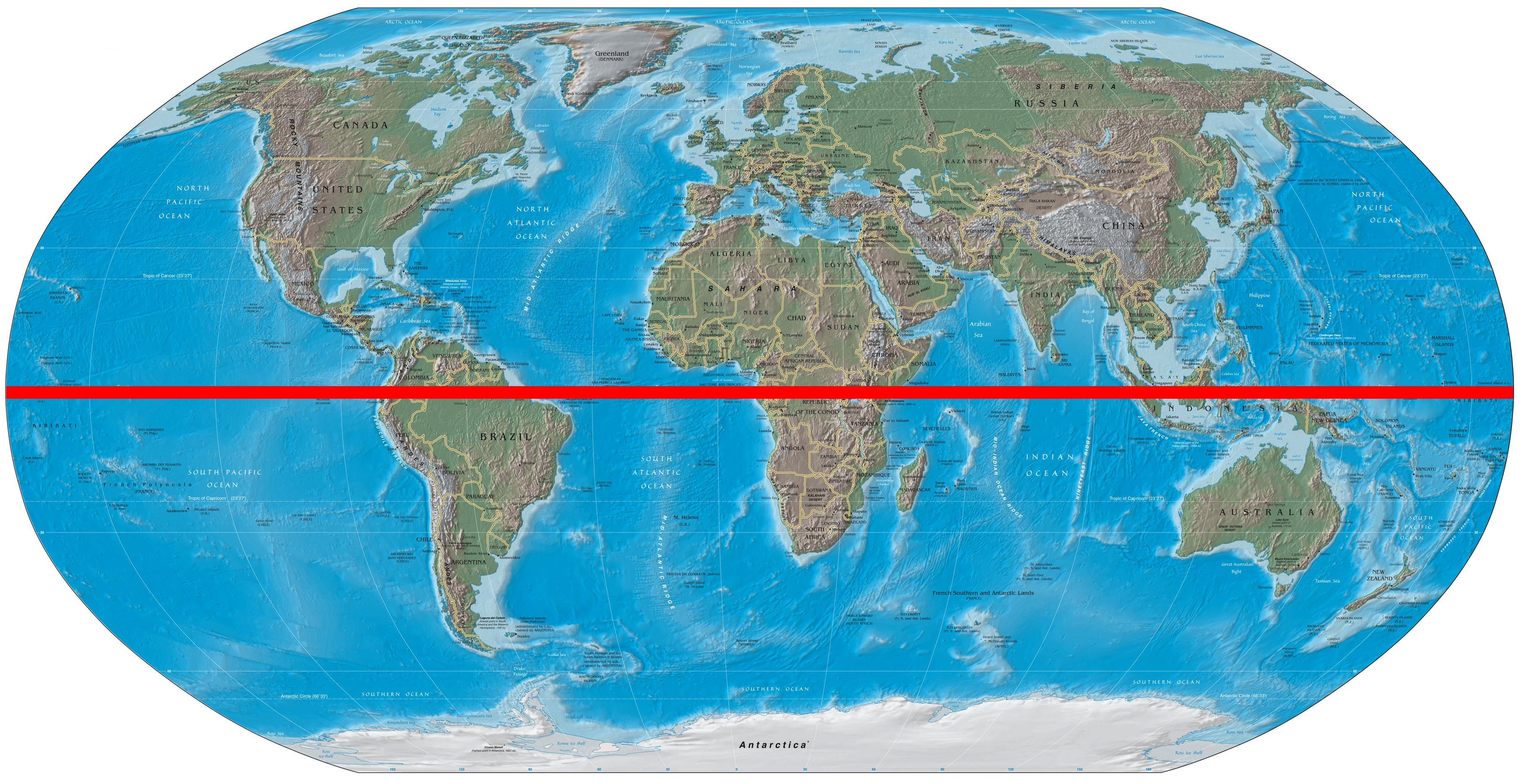
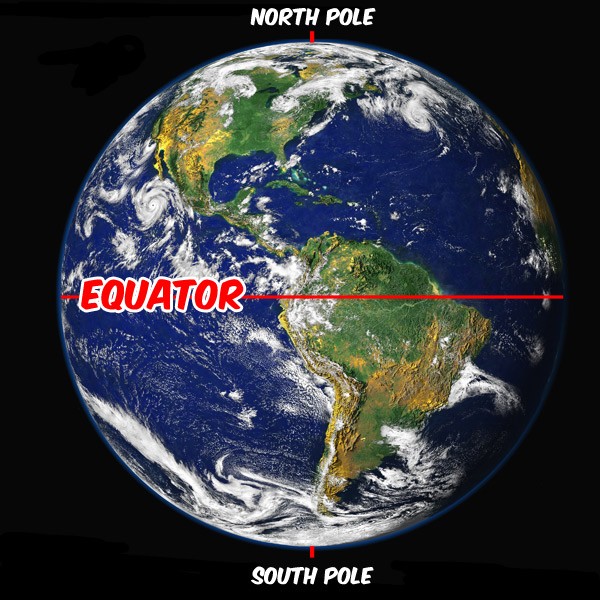
What is the name of this line at 0 degrees latitude?
a)
Prime Meridian
b)
Equator
c)
North Pole
d)
South Pole
20.
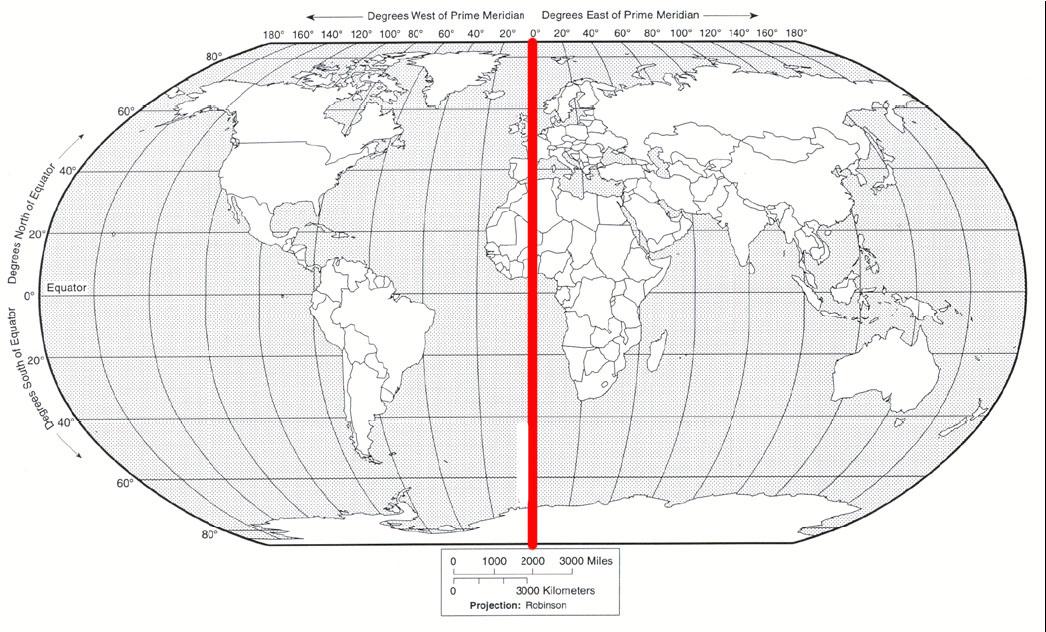
What is the name of the line at zero degrees longitude?
a)
Equator
b)
Prime Meridian
c)
North Pole
d)
South Pole
21.
To locate a place on the earth, you need to look at...
a)
where the lines of latitude and longitude meet
b)
the lines of latitude only
c)
the lines of longitude only
d)
the compass rose
22.

Which point is located at 30oN, 90oW?

a)

K

b)

D

c)

E

d)

G

23.
Europe, Asia and North America are in what hemisphere?
a)
Northern
b)
Southern
c)
Western
d)
Eastern
24.
North and South America are in what hemisphere?
a)
Northern
b)
Southern
c)
Western
d)
Eastern
25.
The pressure inside a hurricane is _______.
a)
High
b)
Low
26.
In order for a hurricane to form, the water must be ________.
a)
Cool
b)
Warm
c)
Cold
d)
Hot
27.

The center of a hurricane is called the ______.

a)

center

b)

brain

c)

eye

28.

The major difference between a tropical storm and a hurricane is __________.

a)

rainfall amounts

b)

wind speed

c)

air temperature

29.
What causes damage in a hurricane?
a)
Winds
b)
Flooding
c)
Storm Surge
d)
All of the above
30.
If contour lines are close together, then the slope is
a)
gentle
b)
steep
c)
flat
d)
going up and down
31.
When you move from one contour line to another, the elevation
a)
stays the same
b)
goes up or down
c)
disappears
d)
is below sea level
32.
On a topographic map of a mountain, you walk a longer distance to get to the top when the contour lines are
a)
spread out
b)
close together
c)
going down
d)
going up
33.
What are the curved lines on a topographic map called?
a)
contour lines
b)
contour intervals
c)
slope
d)
elevation
34.

In which direction is Mill River flowing?

a)

Southeast

b)

Southwest

c)

Northeast

d)

Northwest

35.
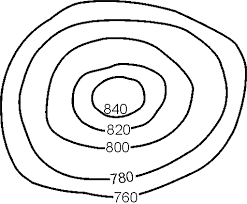
Determine the contour interval:
a)
5 m
b)
10 m
c)
15 m
d)
20 m
36.
How many mountain tops does this map have?
a)
one
b)
two
c)
three
d)
four
37.
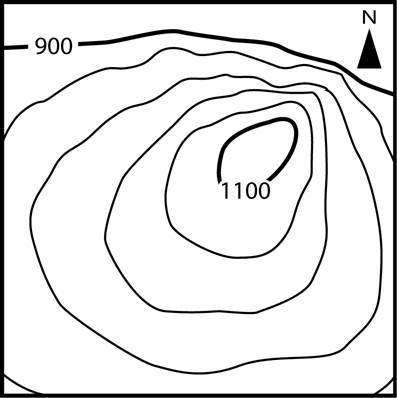
Provided is a topographic map of a hill with contour lines drawn showing elevation in meters.
The steepest slope on this hill can be found on the side that is facing which direction?
a)
Southwest
b)
Northeast
c)
Northwest
d)
Southeast
38.
A mineral's resistance to being scratched is called?
a)
streak
b)
luster
c)
hardness
d)
heft
39.

Which of the following properties of minerals is described with the Mohs scale?

a)

luster

b)

fracture

c)

fluorescence

d)

hardness

40.

Which of the following is NOT a property of minerals?

a)

ore

b)

luster

c)

fracture

d)

color

41.

The picture shows the mineral talc. Talc is often ground into dust and used in many types of powders. Which sentence is most likely true?

a)

Talc is easily stretched.

b)

Talc is easily scratched.

c)

Talc is very strong and hard.

d)

Talc is very flat and smooth.

42.

A mineral always contains certain elements in definite proportions. This is referring to its

a)

streak

b)

definite chemical composition

c)

luster

d)

inorganic

43.

The repeating pattern of a mineral's particles in a solid is known as

a)

crystal structure

b)

streak

c)

fracture

d)

luster

44.
Formed by heat and pressure
a)
Sedimentary
b)
Metamorphic
c)
Extrusive Igneous
d)
Intrusive Igneous
45.
Formed by cooling & solidification of lava
a)
Sedimentary
b)
Metamorphic
c)
Extrusive Igneous
d)
Intrusive Igneous
46.
Formed by cooling & solidification of magma
a)
Sedimentary
b)
Metamorphic
c)
Extrusive Igneous
d)
Intrusive Igneous
47.
Formed by compacting & cementing of sediments
a)
Sedimentary
b)
Metamorphic
c)
Extrusive Igneous
d)
Intrusive Igneous
48.
Formed by weathering & erosion
a)
magma
b)
sediments
c)
sedimentary rock
d)
intrusive igneous
49.
Formed by melting
a)
magma
b)
sediments
c)
sedimentary rock
d)
intrusive igneous
50.

What must happen to a metamorphic rock before it becomes a sedimentary rock rock?

a)

It must be broken down into sediment

b)

It must be melted into magma

c)

Its minerals must dissolve in water

d)

It must be exposed to high temperature and pressure

51.

A geologist is studying three layers of sedimentary rock in an area. The layers have not shifted from their original positions. The geologist records the relative ages of the rocks. What did the geologist use to determine the relative ages of the rocks?

a)

Radioactive dating

b)

Mineral content

c)

Absolute dating

d)

The Law of Superposition

52.

When sediments are DROPPED OFF at a new location.

a)

WEATHERING

b)

EROSION

c)

DEPOSITION

d)

MAILBOX

53.

When sediments are PICKED UP and moved to a new place.

a)

WEATHERING

b)

EROSION

c)

DEPOSITION

d)

SCHOOL BUS

54.

A natural process that slowly changes or breaks apart rocks.

a)

WEATHERING

b)

EROSION

c)

DEPOSITION

d)

FOSSIL

55.
States that younger rocks lie above older rocks if the layers have not been disturbed
a)
Law of crosscutting
b)
Law of superposition
c)
Relative Dating
d)
Unconformity
56.
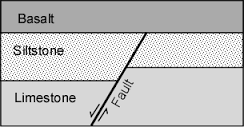
How does the law of crosscutting explain the age of a fault?
a)
The fault is younger than the rocks above it.
b)
The fault is younger than the rocks it cuts through.
c)
The fault is older than the rocks above it.
d)
The fault is older than the rocks it cuts through.
57.
What are the relative ages of the features in order from oldest to youngest?
a)
Limestone, Basalt, Fault, Siltstone
b)
Siltstone, Fault, Basalt, Limestone
c)
Limestone, Fault, Basalt, Siltstone
d)
Limestone, Siltstone, Fault, Basalt
58.
The length of time required for half of the radioactive atoms in a sample to decay is its...
a)
era
b)
age
c)
half-life
d)
eon
59.
How does absolute age differ from relative age?
a)
only absolute dating indicates which rock is older than another
b)
only absolute dating finds the age in years
c)
only relative dating finds the age in years
60.
According to the law of superposition, the oldest fossils are found 
a)
At the top of the rock layers
b)
Near the bottom of the rock layers
c)
In the middle of the rock layers
d)
Somewhat near the surface
61.

How can rain change a mountain?

a)

Rain causes flash flooding on mountains.

b)

Water erosion wears down the peaks of a mountain.

c)

Water can cause cracks in the mountainside.

62.
How does freezing water cause the weathering of rocks?  The freezing water—
a)
keeps the rocks in place
b)
makes the rocks last longer
c)
expands cracks and breaks rocks
d)
causes rocks to fall in landslides
63.
How does wind abrasion work?
a)
Sediment is blown off a surface from wind.
b)
Wind-blown sediment strikes a surface.
c)
Wind blows large chunks of rock off a surface.
d)
Sediment falls off of a surface on its own.
64.
What is mechanical weathering?
a)
Process through which rocks are physically broken into smaller pieces.
b)
Rocks are broken down through chemical changes.
c)
Rocks are worn away from acid in plant roots.
d)
Rocks broken down by machinery.
65.
What is mechanical weathering?
a)
Process through which rocks are physically broken into smaller pieces.
b)
Rocks are broken down through chemical changes.
c)
Rocks are worn away from acid in plant roots.
d)
Rocks broken down by machinery.
66.
During chemical weathering, what can happen to the type of rock that has undergone chemical weathering?
a)
a new rock is produced that is larger than the original rock
b)
a new rock is produced that is the same as the original rock
c)
a new rock is produced that is different from the original rock 
d)
no new rock is created - it is just smaller in size
67.
A marble statue is left exposed to the weather.  Within a few years, the details on the statue have begun to weather away.  This weathering probably is caused by...
a)
oxygen in the air
b)
carbonic acid in rainwater
c)
lichens
d)
abrasion
68.
What is the heat source for convection in the mantle?
a)
the Crust
b)
the Mantle
c)
the Core
69.
What is the cooling source for convection in the mantle?
a)
the Crust
b)
the Mantle
c)
the Core
70.
When molten  material is heated in the mantle it becomes
a)
more dense
b)
less dense 
71.
When molten  material is cooled in the mantle it becomes
a)
more dense
b)
less dense 
72.
Who is the scientist who proposed Continental Drift Theory?
a)
Albert Einstein
b)
Alfred Wegener
c)
Isaac Newton
d)
John Dalton
73.
What is the theory that states that parts of the Earth's crust slowly drift atop a liquid core.
a)
Theory of Evolution
b)
Heliocentric Theory
c)
Geocentric Theory
d)
Continental Drift Theory
74.
What do you call the supercontinent landmass formed million years ago?
a)
Pangea
b)
Asia
c)
Pantallasa
d)
Eurasi
75.
What are the two continents the fits together based on Wegener's Theory?
a)
Asia and Russia
b)
India and Asia
c)
South America and Africa
d)
Africa and Asia
76.
What are the remains of organism noticed by Wegener that are found the same in two continents?
a)
Leaves and flowers
b)
Ice and mountains
c)
Plants and animals
d)
Dinosaurs and reptiles
77.
Which type of wave arrives first during an earthquake?
a)
Primary (p-wave) waves
b)
Secondary (s-wave) waves
c)
Rayleigh Waves
d)
Love Waves
78.

Rank the seismic waves in order of appearance when an earthquake first occurs as measured by a seismograph.

a)

S waves, P waves, then surface waves

b)

P waves, S waves, then surface waves

c)

S and P waves at the same time, then surface waves

d)

Surface waves, then S and P waves at the same time

79.

These waves can travel through solid rock...

a)

P waves only

b)

S waves only

c)

P and S waves

d)

Neither P nor S waves

80.

If the Earth did NOT have a liquid outer core, how would earthquake waves travel differently.

a)

P and S waves would both be absorbed.

b)

Only S waves would travel through the Earth's core.

c)

Shadow zones would not exist.

d)

S waves would travel faster than P waves.

81.

These waves can travel through the inner core...

a)

P waves only

b)

S waves only

c)

P and S waves

d)

Neither P nor S waves

82.
Spinning of the Earth on its axis is called...
a)
rotation
b)
revolution
c)
orbit
d)
double axis
83.
The EARTH REVOLVES around the:
a)
Sun
b)
Moon
c)
The Earth doesn't revolve
d)
The sun rotates
84.
What motion of the Earth takes 365 days?
a)
Rotation
b)
Tilting 
c)
Revolution
d)
Spinning
85.
Rotation of the earth takes
a)
One day
b)
One year
c)
One summer
d)
One winter
86.
The MOON REVOLVES around the:
a)
Sun
b)
Earth
c)
The Moon doesn't revolve
d)
The Earth and Sun 
87.
How long is a day on earth?
a)
22 hours
b)
365 days
c)
12 hours
d)
24 hours
88.
What happens when the area in which you live tilts away from the sun?
a)
It is summer.
b)
It is spring.
c)
It is winter.
d)
It is fall.
89.
Why is it warmer in the summer?
a)
Closer to the sun
b)
More direct light from Earth's tilt
c)
Stronger light from the sun
d)
Earth spins slower
90.
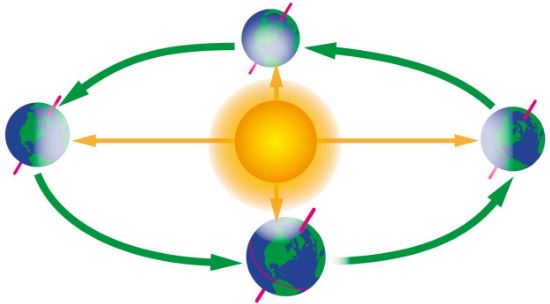
In spring/fall, the axis of the earth is pointed away or toward the sun?
a)
towards
b)
Neither away or toward
c)
away
91.
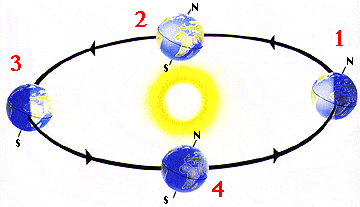
Which season is taking place in the Northern Hemisphere in Position 1?
a)
Winter
b)
Spring
c)
Summer
d)
Fall
92.
Which season is taking place in the Northern Hemisphere in Position 2?
a)
Winter
b)
Spring
c)
Summer
d)
Fall
93.
What causes the season to happen on earth?
a)
the sun
b)
the moon
c)
tilt of the earth on its axis
d)
the rotation around the sun
94.

Where is the sun directly overhead on December 21?

a)

The Tropic of Capricorn (23.5 degrees S)

b)

The south pole

c)

The Tropic of Cancer (23.5 degrees N)

d)

The equator

95.

Where is the sun directly overhead on June 21?

a)

The Tropic of Capricorn (23.5 degrees S)

b)

The north pole

c)

The Tropic of Cancer (23.5 degrees N)

d)

The equator

96.

Which date is represented by the diagram?

a)

March 21

b)

June 21

c)

September 21

d)

December 21

97.

Where is the sun directly overhead on March 21?

a)

The Tropic of Capricorn (23.5 degrees S)

b)

The north pole

c)

The Tropic of Cancer (23.5 degrees N)

d)

The equator

98.

What time is at position 1?

a)

12 p.m. (noon)

b)

9 a.m.

c)

3 p.m.

d)

6 a.m.

99.

Which date is represented by the diagram?

a)

March 21

b)

June 21

c)

September 21

d)

December 21

100.
Why do we experience the changing of the season on the earth?
a)
distance from the sun
b)
rotation of the earth
c)
change in solar output
d)
tilt of the earth's axix
101.
When are the equinoxes?
a)
June & December
b)
July & January
c)
April & October
d)
March & September
102.
Because of the direction that the Earth rotates on it's axis, what direction does the sun rise every day?
a)
north
b)
south
c)
east 
d)
west
103.
Very cold climates occur at Earth’s North and South Poles because the polar regions
a)
are usually farthest from the Sun
b)
absorb the greatest amount of insolation
c)
receive the most hours of daylight
d)
receive low-angle insolation
104.
Locations in the Northern Hemisphere are warmest in summer because sunlight in summer is
a)
least intense and of shortest duration
b)
least intense and of longest duration
c)
most intense and of shortest duration
d)
most intense and of longest duration
105.
In New York State, the risk of sunburn is greatest between 11 a.m. and 3 p.m. on summer days because
a)
The air temperature is hot
b)
The angle of insolation is high
c)
Earth's surface reflects most of the sunlight
d)
The Sun is closest to the Earth
106.
Why does the area around the equator stay the same temperature all year?
a)
The equator rotates slower than the poles.
b)
The equator remains the same distance from the sun.
c)
The equator always receives direct sunlight.
d)
The equator has 18 hour days.
107.
How does the Coriolis Effect influence hurricanes and cyclones
a)
determines how powerful they will be
b)
determines where they will go
c)
determines where they form
d)
determines the direction of the wind rotation
108.
As a result of the Coriolis effect in the northern hemisphere, winds are deflected:
a)
At a 45° angle from the original direction.
b)
At a 90° angle from the original direction.
c)
To the right of the original direction.
d)
To the left of the original direction.
109.
The Coriolis Effect is caused by
a)
Earth rotating around the sun
b)
Earth rotating on its axis
c)
The tides
d)
Gravity
110.

A swinging pendulum that appears to change direction in a predictable manner.

a)

Coriolis Effect

b)

Heliocentric

c)

Geocentric

d)

Foucault Pendulum

111.
During the phases of the Moon, the Moon appears to change shape.  This change in appearance is due to the Moon...
a)
physically changing size and shape.
b)
moving closer and then farther away from Earth.
c)
reflecting a different amount of light due to alignment with Earth and the Sun.
d)
having craters on its surface.
112.
What part of the moon do we see from Earth?
a)
all of it
b)
the same side
c)
none of it
d)
only one quarter
113.
About how long does it take the moon to make one complete cycle around the earth?
a)
65 days
b)
8 days
c)
365 days
d)
28 days
114.
As the moon's shape appears to get smaller, we say that the moon is _.
a)
swelling
b)
waxing
c)
waning
d)
disappearing
115.
Which moon phase is when you can't see the moon at all?
a)
Waning crescent
b)
Full moon
c)
Waxing gibbous
d)
New moon
116.
Phases of the moon in which the moon appears to be getting larger are referred to as _.
a)
waxing
b)
waning
c)
new
d)
eclipse
117.
Which of the following words describe the phases of the moon?
a)
none, quarter, half, three quarters, full
b)
new, crescent, quarter, gibbous, full
c)
dark, light, half, quarter, blue
d)
first quarter, second quarter, third quarter, fourth quarter
118.
Define Full Moon
a)
None of moon is visible
b)
Half moon phase is visible
c)
Complete moon face is visible
d)
Less Than half of moon is visible
119.
Name the phase of the moon for letter a
a)
First Quarter
b)
Last Quarter
c)
Waxing Gibbous
d)
Waning Gibbous
120.

Tides are caused by what force from the sun and moon?

a)

gravitational

b)

strong

c)

tidal force

d)

armed forces

121.

As the moon revolves around the earth, the water follows the motion and causes...

a)

sea levels

b)

waves and currents

c)

moon phases

d)

high tides and low tides

122.

Spring tides have the largest tidal ranges because...

a)

the earth, moon, and sun are aligned for greater gravitational force.

b)

the moon has the strongest gravitational force.

c)

the sun has the most gravitational force.

d)

none of the above

123.

Neap tides happen at _________ and _________ phases of the moon.

a)

first quarter and new moon

b)

last quarter and full moon

c)

waxing and waning

d)

1st quarter and 3rd quarter

124.

Neap tides happen at _________ and _________ phases of the moon.

a)

first quarter and new moon

b)

last quarter and full moon

c)

waxing and waning

d)

1st quarter and 3rd quarter

125.
A solar eclipse only happens during a ________ moon.
a)
New
b)
Cresent
c)
Gibbous
d)
Full
126.
A lunar eclipse only happens during a ________ moon.
a)
New
b)
Cresent
c)
Gibbous
d)
Full
127.
Where must you be to see a total solar eclipse?
a)
a corona
b)
an orbit
c)
the moon's shadow
d)
the earth's shadow
128.
What is the darkest inner part of the shadow cone called, where a total eclipse can be viewed.
a)
Total
b)
Umbra
c)
Penumbra
129.
What is the larger outer lighter part of the shadow cone called, where a partial eclipse can be viewed?
a)
Partial
b)
Umbra
c)
Penumbra
130.
In order to have an eclipse, the Moon, Sun and Earth have to be?
a)
Below each other
b)
Above each other
c)
In alignment
131.
Which type of eclipse occurs when the Moon comes directly between Earth and the Sun?
a)
Lunar eclipse
b)
Solar eclipse
132.
Which of the following is NOT true about a total solar eclipse?
a)
It can be viewed from every spot on earth
b)
It is dangerous to look at without the proper device
c)
When it happens, the moon blocks all of the sun except the corona
d)
You must be within the moon's umbra to see it
133.

The explosion that sent the universe flying out is called _____.

a)

The Big Bang

b)

The Milky Way

c)

The Solar System

d)

The Sun

134.

Since the Big Bang, and even today, the universe is still _____.

a)

Expanding

b)

Shrinking

c)

Cooking

d)

Spinning

135.

Which statement is true?

a)

The galaxies are moving toward us.

b)

The galaxies are moving away from us.

c)

The universe remains static or unchanged in motion.

d)

None of the above

136.

Light emitted from a star or galaxy can be separated into a band of colors, called a ________.

a)

Red Shift

b)

Wave Length

c)

Spectrum

d)

Microwave

137.

As galaxies move away from our galaxy

a shift on the electromagnetic spectrum

(EMS) is noticed. This phenomena is

called _____________.

a)

redshift

b)

blueshift

c)

unshift

d)

blackshift

138.
Why do stars in a constellation seem to stay in one position?
a)
The Stars orbit the sun like the Earth does
b)
The Stars do not orbit the sun or earth
c)
The Stars orbit the earth like the moon
139.

These are the 4 planets closest to the sun (Mercury, Venus, Earth, Mars).

a)

inner planets

b)

outer planets

c)

dwarf planets

d)

solar planets

140.

These are the four planets FARTHEST from the Sun; Jupiter, Saturn, Uranus, and Neptune.

a)

inner planets

b)

outer planets

c)

solar planets

d)

the best planets

141.

A group of stars that make a pattern in the night sky.

a)

planets

b)

comets

c)

asteroids

d)

constellation

142.

Where is the Asteroid Belt located in the Solar System?

a)

near Neptune

b)

between Mercury and Venus

c)

between Mars and Jupiter

d)

around the Sun

143.
What is the difference between the inner planets and the outer planets?
a)
The outer planets are smaller than the inner planets 
b)
The inner planets are smaller than the outer planets
c)
The outer planets have more rocks than the inner planets
d)
the inner planets are heavier than  the outer planets
144.
The inner planets are called terrestrial planets because they are composed of
a)
water
b)
gas
c)
frozen surfaces
d)
rocks
145.

vibrations in the earth caused by the sudden release of energy, usually as a result of the movement of rocks along a fault

a)

earthquake

b)

epicenter

c)

focus

d)

surface waves

146.

the location where the rupture of an earthquake begins and energy is released

a)

epicenter

b)

focus

c)

seismogram

d)

energy release center

147.

a scientist who studies earthquakes

a)

seimology

b)

seismologist

c)

seismogram

d)

seismograph

148.

an instrument that detects, records, and measures the vibrations produced by an earthquake

a)

seismology

b)

seismologist

c)

seismogram

d)

seismograph

149.

the measurement of the total amount of energy released at the focus of an earthquake (measured by Richter Scale)

a)

intensity

b)

magnitude

c)

greatness

d)

epicenter

150.

the time between the arrival of P Waves and S Waves at a location where an earthquake occurs

a)

time-distance graph

b)

seismograph station

c)

lag time

d)

focus

151.

the measure of damage done by an earthquake including its effect on people, structures, and the natural environment (measured by Modified Mercalli Scale)

a)

magnitude

b)

intensity

c)

greatness

d)

damage rate

152.

the point on the surface of the earth directly above the focus of an earthquake

a)

focus

b)

energy release center

c)

surface wave

d)

epicenter