wayground logo

Free Printable Worksheets

Font size

S
M
L
XL
Worksheets

review 1/29/2020

Total questions: 84

Worksheet time: 2hrs 36mins

Name
Class
Date
1.
Which of the following alleles is homozygous (purebred) recessive?
a)
Tt
b)
tt
c)
TT
d)
t
2.
Which of the following is a phenotype?
a)
Aa
b)
red hair
c)
heterozygous genes
d)
mutated DNA
3.
Aa is
a)
homozygous (purebred)
b)
heterozygous (hybrid)
4.
In a heterozygous genotype, the ___________ allele takes over in the phenotype.
a)
recessive
b)
dominant
c)
lower case letter
d)
both 
5.
G = green, g = yellow
The genotype for a yellow plant is...
a)
GG
b)
Gg
c)
gg
d)
all of the choices result in yellow
6.
Who is considered the "father of genetics"?
a)
Gregor Mendel
b)
Reginald Punnett
c)
James Watson
d)
Justin Bieber
7.
T = tall an t = short
What is the phenotype for Tt?
a)
short
b)
tall
c)
medium sized
d)
neither tall or short
8.
How many alleles (letters) do each person carry for a trait?
a)
1
b)
2
c)
3
d)
4
9.
How many alleles (letters) does a child get from each parent for each trait?
a)
1
b)
2
c)
3
d)
4
10.
T - tall and t = short
In the punnett square below, what belongs in the missing square
a)
tt
b)
Tt
c)
Bb
d)
TT
11.
Which of the following is homozygous dominant?
a)
Yy
b)
Y
c)
yy
d)
YY
12.
In a Punnett square each box represents a(n)....
a)
offspring
b)
parent
c)
gene
d)
trait
13.
The passing of physical characteristics from parent to offspring is __________.
a)
genetics
b)
heredity
c)
genes
d)
traits
14.
When two identical alleles for a trait are in an organism, the organism is said to be ____________?
a)
Heterozygous
b)
Homozygous
c)
allele
d)
resseive
15.
characteristic that is inherited; can be either dominant or recessive
a)
genes
b)
allele
c)
chromosome
d)
trait
16.
outward appearance of an organism, regardless of its genes.
a)
phenotype
b)
genotype
c)
haploid
d)
deploid
17.
The genetic characteristics of recessive genes
a)
tend to mask the characteristics of dominant genes.
b)
are always expressed in the phenotype.
c)
are usually codominant.
d)
tend to be masked by the characteristics of dominant genes.
18.
Which of the following is a phenotype?
a)
BB
b)
Bb
c)
bb
d)
Blue eyes
19.
What is a phenotype
a)
The genetic make up (code)
b)
The physical trait
20.
having two different genes for a trait (sometimes called hybrid).
a)
protein
b)
homozygous
c)
heterozygous
d)
genotype
21.

Plants and animal cells have...

a)

Mitochondria and chloroplasts

b)

Nucleus and chloroplast

c)

Cell wall and chloroplast

d)

Mitchochodria and cytoplasm

22.

Which organelle is the command center for eukaryotic (plant and animal) cells?

a)

Cell wall

b)

Nucleus

c)

Mitochondria

d)

Lysosome

23.

what is the function of a lysosome?

a)

To create energy for the cell

b)

To command the cell what to do

c)

To remove waste using digestive enzymes from the cell

d)

To protect the cell

24.

Which of the following are prokaryotic cells?

a)

Plant

b)

Animal

c)

Bacteria

d)

Plant and Animal

25.

What is the difference between a prokaryotic cell and a eukaryotic cell?

a)

Prokaryotes do not have a nucleus or organelles, but a eukaryotic cell does

b)

Eukaryotic cells do not have a nucleus or organelles, but prokaryotes do

26.

Which of the following is a eukaryotic cell?

a)

Bacteria

b)

Plant

c)

Plant and animal

d)

Animal

27.

How can you tell that this is a prokaryote or eukaryote cell?

a)

It is a prokaryote because it doesn't have a nucleus

b)

It is a eukaryotic cell because it has a cell wall and a nucleus

c)

It is eukaryotic because it does not a nucleus nor a cell membrane

d)

It is prokaryote because it has a cell wall

28.

What is the purpose of the nucleus?

a)

It is the command center, contains DNA, and cell division

b)

It protects the cell

c)

It stores energy for the cell

d)

It gets rid of waste in the cell

29.

What is the difference between mitochondria and chloroplast?

a)

Mitochondria produces energy and chloroplasts breaks down energy

b)

There is no difference. They are the same.

c)

Mitochondria breaks down energy from food and chloroplasts produce energy from sunlight.

d)

Mitochondria contains DNA and chloroplasts are green

30.

The outermost layer of a plant cell and animal cell is...

a)

Plant cell - cell membrane, animal cell - cell wall

b)

Plant cell - cell wall; animal cell - cell membrane

c)

Plant and animal cell - cell wall

d)

Plant and animal cell - cell membrane

31.

"Post office" of the cell that packages proteins and fats:

a)

ER

b)

Golgi Body

c)

Nucleus

d)

Cytoplasm

32.

"Envelopes" of the cell, used for transporting material:

a)

ER

b)

Golgi Body

c)

Mitochondria

d)

Chloroplast

33.

What does a plant cell have that an animal cell doesn't have?

a)

Cell Membrane and Cell Wall

b)

Cell Wall and Mitochondria

c)

Cell Wall and Nucleus

d)

Cell Wall and Chloroplast

34.

What is the jelly-like substance that keeps the organelles floating?

a)

Cell Membrane

b)

Nucleus

c)

ER

d)

Cytoplasm

35.

Which organelle holds the cell together? (found in both an animal and plant cell)

a)

Cell Wall

b)

Nucleus

c)

Cell Membrane

d)

Ribosome

36.

What are the "protein-makers" of a cell?

a)

Ribosomes

b)

Mitochondria

c)

ER

d)

Golgi Body

37.
Which of the following organisms are LEAST closely related?
a)
organisms that share a domain
b)
organisms that share a family 
c)
organisms that share a genus 
d)
organisms that share a species 
38.
The scientific name for an organism is made from the:
a)
class and family name
b)
genus and species name
c)
domain and kingdom name
d)
kingdom and phylum name
39.

The 8 levels of classification, from most broad to most specific.

a)

Domain, Genus, Family, Order, Class, Phylum, Kingdom, Species

b)

Domain, Species, Kingdom, Genus, Phylum, Family, Class, Order

c)

Domain, Kingdom, Phylum, Class, Order, Family, Genus, Species

d)

Order, Kingdom, Species, Domain, Phylum, Family, Class, Genus

40.
Who first proposed binomial nomenclature as a way of classifying organisms?
a)
Carl Linnaeus
b)
Carl's Jr.
c)
Charles Darwin
d)
Henry Groseclose
41.
Cells that do not have a true nucleus are called....
a)
eukaryote
b)
prokaryote
c)
unicellular
d)
multicellular
42.
Cells that have a true nucleus are called....
a)
eukaryotes
b)
prokaryotes
c)
unicellular
d)
multicellular
43.
Which organisms are closely related? 
a)
American badger and leopard
b)
coyote and gray wolf
c)
european otter and leopard
d)
coyote and american badger
44.
Organisms in this smallest taxonomic group share many characteristics.
a)
domain
b)
kingdom
c)
species
d)
class
45.
Which organisms are most closely related?
a)
Equus caballas (Horse) & Equus burchellii (Zebra)
b)
Cyanea artica (Jellyfish) &
Ctenodiscus crispatus (Mud Starfish)
c)
Naja naja (cobra) & Glycine max (soya bean)
d)
Ophiocomina nigra (black brittle star) & Brassica nigra (black mustard)
46.
The science of describing, classifying, and naming living things is called:
a)
Geology
b)
Biology
c)
Taxonomy
d)
Chemistry
47.

Modern Classification (Phylogeny) adds what to Linnaeus's taxonomic criteria?

a)

evolutionary relationships & DNA (biochemical characters)

b)

habitat type

c)

fewer categories than Linnaeus

d)

a naming system called binomial nomenclature

48.

Linnaeus is known as the Father of Taxonomy because

a)

we still use his system today

b)

his system didn't work very well

c)

he was older than Aristotle

d)

he had many children

49.
Viruses are...
a)
prokaryotic
b)
eukaryotic
c)
non-living
d)
endospores
50.
Reasons that viruses are considered to be nonliving is because
a)
They are not cellular
b)
They cannot reproduce on their own
c)
They cannot make proteins
d)
all of the above
51.
What do viruses need to reproduce?
a)
they need genetic material
b)
They need a host cell
c)
They need  bacteria
d)
They need insulin
52.
This organism is multicellular, autotroph, that has a cell wall made of cellulose.
a)
animalia
b)
plantae
c)
fungi
d)
eubacteria
53.
This organism is found in pond water.  It has a nucleus, is microscopic, unicellular and can perform photosynthesis.  What kingdom does it belong in?
a)
protista
b)
eubacteria
c)
archaebacteria
d)
plantae
54.
This organism is multicellular, heterotroph, that has a cell wall made of chitin.  What kingdom does it belong in?
a)
fungi
b)
plantae
c)
animalia
d)
eubacteria
55.

I am prokaryotic and am found everywhere that's not extreme. What kingdom do I belong to?

a)

Eubacteria

b)

Archaebacteria

c)

Fungi

d)

Protista

56.
What kingdom do unicellular, prokaryotic organisms that live in extreme environments?
a)
Animal
b)
Archaebacteria
c)
Eubacteria
d)
Plant
57.

Members of this kingdom are always multicellular and heterotrophic.

a)

Plantae

b)

Protista

c)

Animalia

d)

Achaebacteria

58.
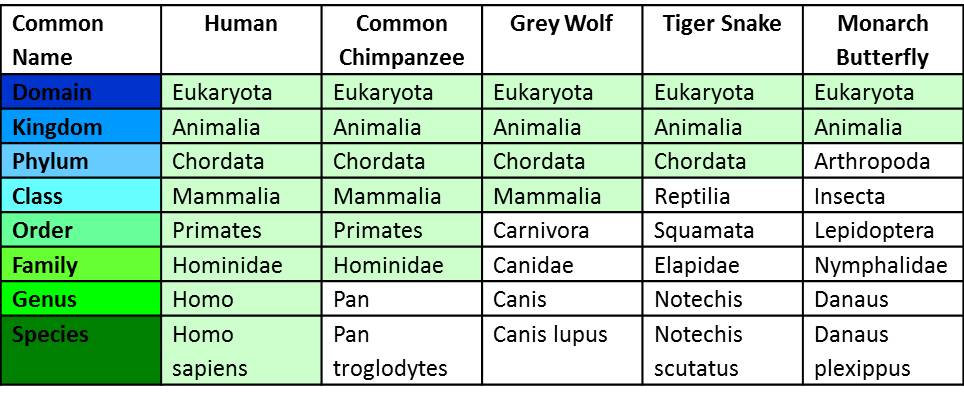
Which organism in the table is least closely related to the chimpanzee?
a)
human
b)
grey wolf
c)
tiger snake
d)
monarch butterfly
59.
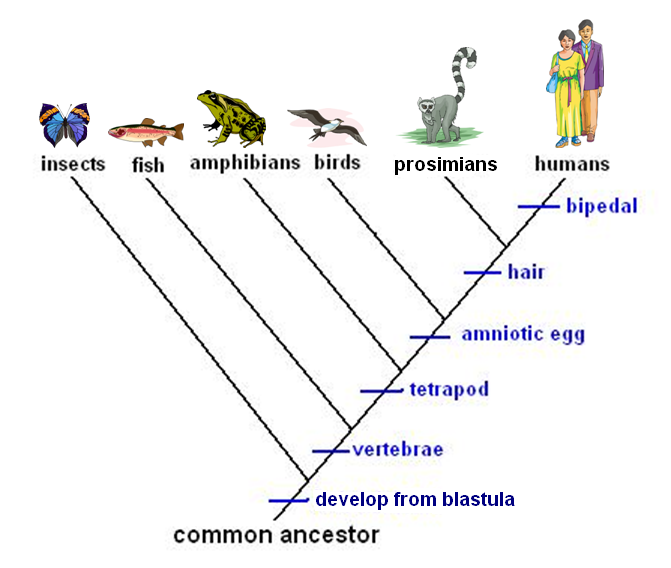
Which organisms pictured on the cladogram have hair?
a)
prosimians only
b)
prosimians and humans
c)
humans only
d)
prosimians and birds
60.
An example of an unicellular organism would be:
a)
monkey
b)
bacteria
c)
spider
d)
human
61.
An organism made up of more than one cell would be called:
a)
multicellular
b)
unicellular
c)
heterotroph
d)
autotroph
62.
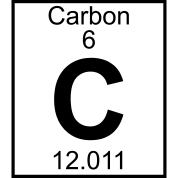
What does the 6 represent?
a)
atomic mass
b)
atomic number
c)
element name
d)
chemical symbol 
63.
What does 12.011 represent?
a)
atomic mass
b)
atomic number
c)
element name
d)
chemical symbol 
64.
What does the C represent?
a)
atomic mass
b)
atomic number
c)
element name
d)
chemical symbol 
65.
What does the atomic mass tell you? 
a)
Basically,the number of electrons and protons
b)
The number of neutrons
c)
Basically, the number of protons and neutrons
d)
The number of protons.
66.
The atomic number tells you what?  READ THE ANSWERS CAREFULLY
a)
only the number of electrons
b)
 only the number of protons
c)
only the number of neutrons
d)
the number of both electrons and protons in an atom.
67.
Is burning wood a chemical or physical change?
a)
chemical
b)
physical
68.
Which of the following is NOT an example of chemical change?
a)
sour milk
b)
burning wood
c)
breaking a pencil
d)
rust
69.
what is the definition of chemical change?
a)
any change that results in the formation of new chemical substances. 
b)
changing clothes
c)
matter cannot be created or destroyed, only change form
d)
changes affecting the form of a chemical substance, but not its chemical composition.
70.

Which subatomic particle has a negative charge?

a)

proton

b)

neutron

c)

electron

d)

cybertron

71.
Chicken noodle soup is an example of a
a)
homogeneous mixture
b)
heterogeneous mixture
72.
What cannot be broken down into other substances?
a)
Compound
b)
Mixture
c)
Solids
d)
Element
73.
Which of the following best describes a DNA molecule?
a)
double helix
b)
contains ribose
c)
made of amino acids
d)
contains Uracil
74.
Which of the following units are repeatedly joined together to form a strand of DNA? (This is the MONOMER of DNA.) 
a)
amino acids
b)
nucleotides
c)
fatty acids
d)
polysaccharides
75.
Adenine bonds with ______________.
a)
Guanine
b)
Thymine
c)
Cytosine
d)
Adenine
76.
Guanine bonds with ______________.
a)
Adenine
b)
Guanine
c)
Cytosine
d)
Thymine
77.
Why is DNA important?
a)
it is very small and very complicated
b)
it's in everything
c)
it serves as the blueprint for traits of all living things
d)
because we eat it every day for energy
78.
What are the 4 nitrogen bases?
a)
adenine, thymine, cytoplasm, and guanine
b)
adenine, thymine cytosine, and guanine
c)
adenine, thymine, cytosine, and gylcerol
d)
adenine, thymine, cytosine, and glucose
79.
Which organelle is DNA usually found in?
a)
cell membrane
b)
vacuole
c)
chloroplast
d)
nucleus
80.
Which shows the correct complementary base pairing for DNA?
a)
C-A, T-G
b)
A-G, C-T
c)
C-G, U-A
d)
T-A, G-C
81.
DNA codes for...
a)
cholesterol
b)
proteins
c)
fatty acids
d)
carbohydrates
82.
DNA is a polymer made of monomers called
a)
Nucleotides
b)
Proteins
c)
Amino Acids
d)
Lipids
83.
The sides of the double helix
a)
sugar phosphate
b)
nucleotides
c)
nitrogen bases
84.
What does DNA stand for?
a)
Deoxyribonucleic acid
b)
Denitrogenous acid
c)
Deribonucleic acid
d)
Diribonucleic acid