
 Worksheets
rc.EVOLUTION.review
Total questions: 47
Worksheet time: 1hrs 2mins

What is this a picture of?
Pedigree
Cladogram
Family Tree
Oak Tree
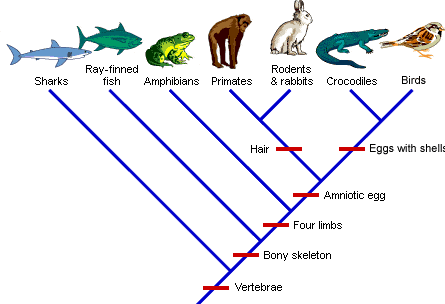
According to this cladogram, sharks are MOST closely related to which organism?
Amphibians
Ray finned fish
Crocodiles
Birds
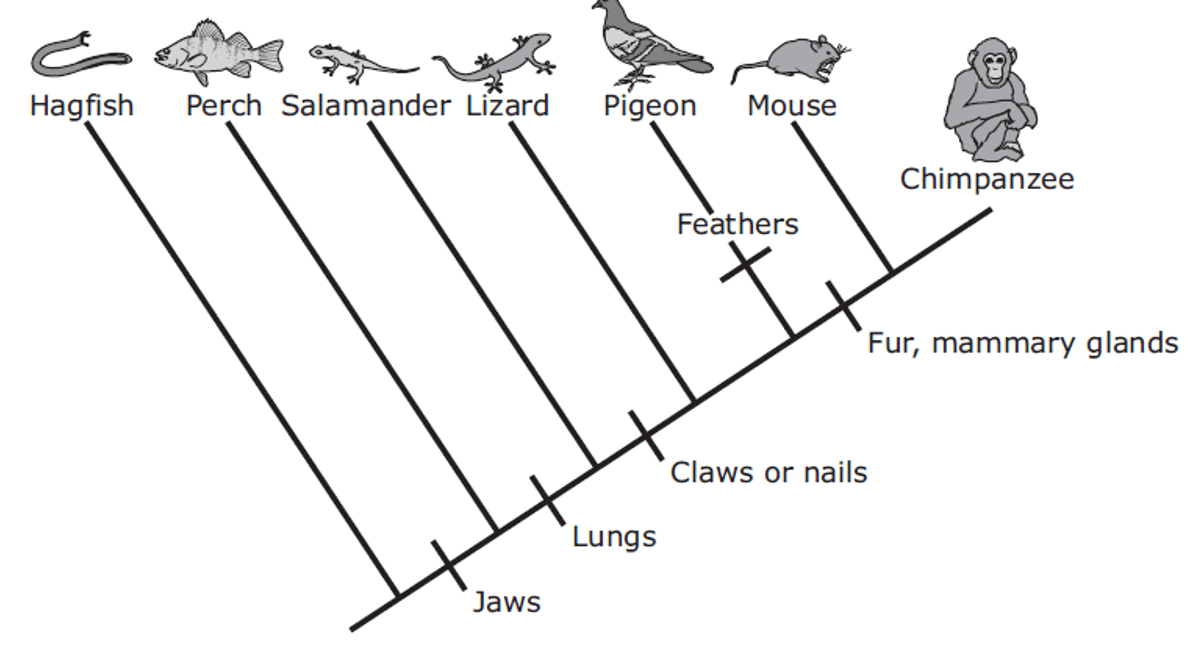
All the animals to the right of the salamander would have the common characteristic of...
Fur
Claws or nails
Lungs
Jaws

What characteristic do all the organisms on this cladogram share?
Being bi-pedal & having language
Complex brains
Fully binocular vision
Partial binocular vision & opposable thumbs

Genetic Mutations, which occur randomly, are important because they bring about
death of the organism in which they develop
genetic variation needed for a population to evolve
benefits for the individual, not for the population
Hardey-Weinberg equilibrium within a population
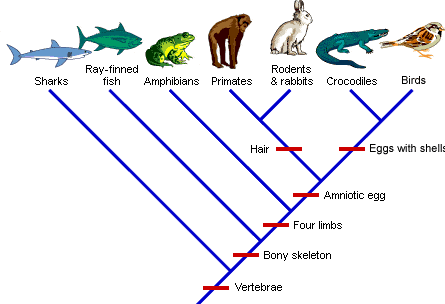
According to this cladogram, primates are most closely related to....
Amphibians
Rodents & rabbits
Crocodiles
Birds

Which trait do only humans have, according to the cladogram?
jaws
mammary glands & hair
terrestrial during all life stages
bipedal & opposable thumbs
What is the term for an inherited trait that is selected for over time, because it allows an organism to survive better in its environment?
variation
adaptation
homologous structure
vestigial structure
What is the process where nature provides the variation and humans choose to breed (select) variations that they find useful? (ex. "purebred" dogs)
natural selection
inheritance
artificial selection
descent withOUT modification
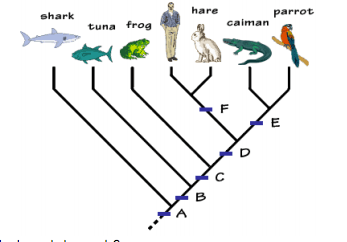
On the cladogram, which organism is the closest relative of the parrot?
Frog
Hare
Caiman
Parrot
Natural selection results in gradual change, over time, by acting on traits that are
heritable
new
mutated
better than the best


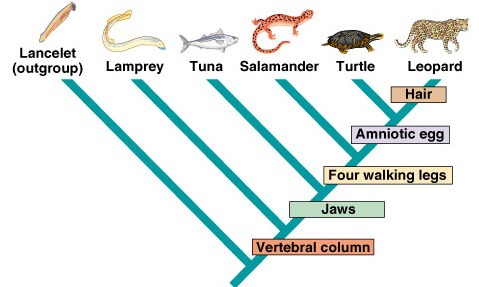
Which is the newest trait?
Amniotic egg
Walking legs
Jaws
Hair


A virus killed most of the seals in the North Sea (population dropped from 8,000 to 800). In an effort to help preserve the species, scientists caught 20 of the remaining seals and used them to start a new population in the northwest Pacific Ocean. Which of the following statements would accurately describe the new population?
The new seal population is genetically less diverse than the original population and potentially prone to extinction
The new seal population is genetically more diverse than the original population
There is equal genetic variety compared to the original population
None of the answers
GENETIC DRIFT is rapid change in the gene (allele) frequency of a population due to...
random chance
artificial selection
non-random mating (sexual selection)
artificial selection
GENETIC DRIFT is more likely to happen in...
aquatic populations
small populations
terrestrial populations
older populations
Happens only in small populations, and is the change in the gene (allele) frequency of a specific trait in a population due to random sampling of organisms.
Extinction
Genetic Drift
Bottleneck Effect
Founder Effect
This mechanism of evolution occurs when populations (genetic traits) migrate... to another physical location (ex. down the river, to another island or to the other side of a mountain).
Extinction
Gene flow
Genetic drift
Natural Selection

The model below shows a how populations of organisms can change. Which of the following concepts is best illustrated by this demonstration?
Evolution of a predatory species
Genetic drift
Environmentally induced genetic mutations
Gene flow
The model below shows a how populations of organisms can change. Which of the following concepts is best illustrated by this demonstration?
Evolution of a predatory species
Genetic drift
Environmentally induced genetic mutations
Gene flow
Which of the following is true?
Gene pool frequencies do not change as a result of migration in or out of a population.
Gene flow occurs only as a result of isolation of a small population.
Gene flow can cause new alleles to enter a population's gene pool... like migration.
Gene flow is due the the selection of the most favorable traits.


Genetic Mutations are RANDOM. Mutations are important because they bring about
death of the organism in which they develop
genetic variation needed for a population to evolve
benefits for the individual, not for the population
Hardey-Weinberg equilibrium within a population
Extinction can occur because of which of the following?
Lack of genetic diversity
Increased competition with other species
New predators within the environment
Loss of habitat and/or catastrophes
ALL can be causes of extinction.
INHERITED TRAIT VARIATION is important for Natural Selection and a news species to occur. Inherited Variation that helps an organism survive is a(n) __________.
Fossil
Adaptation
Ancestor
Natural selection
Missy is a tall, 11 year old drummer. She has a scar on her right cheek. She is good at swimming. Which of her traits did Missy most likely inherit?
height
the scar
ability to swim
ability to play drums

According to the diagram and relative dating, which organism is older?
ammonite
coral
gastropod
trilobite
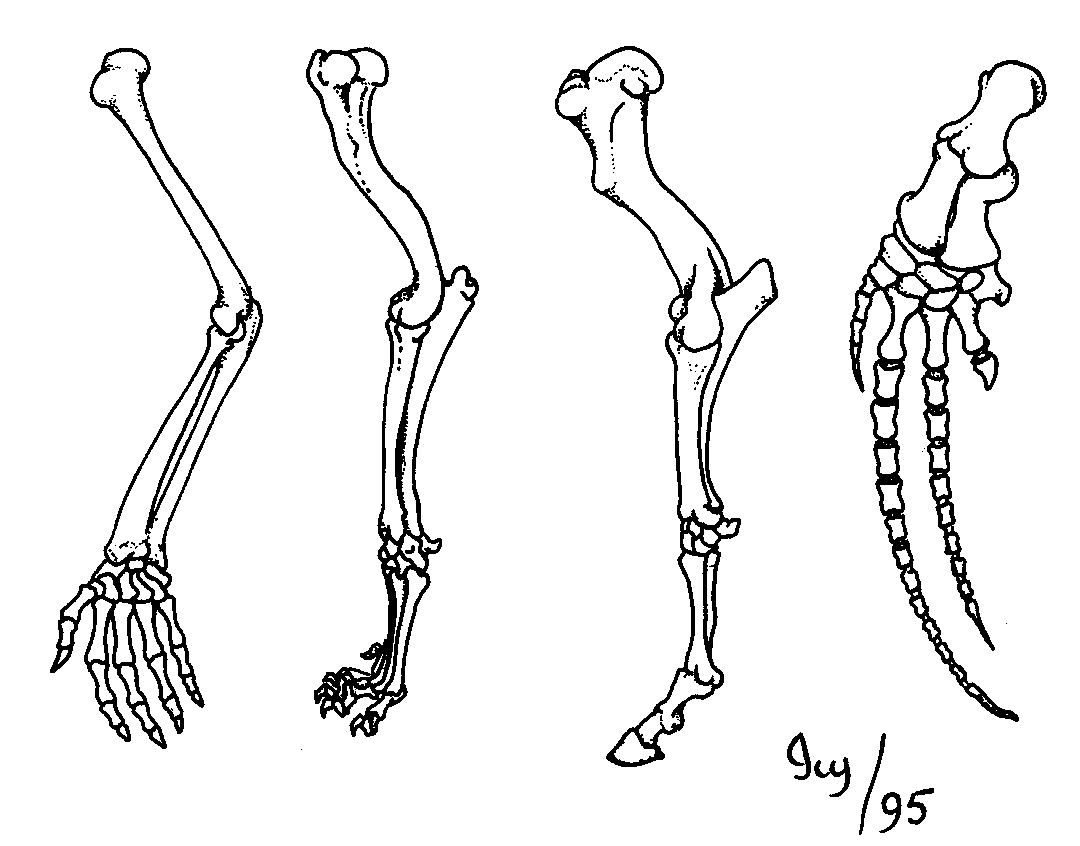
Structures with the same parts have different functions; suggests that organisms share a common ancestry
vestigial structures
homologous structures
adaptive radiation
fossil
If species A and B have very similar GENES (DNA) AND PROTEINS, what is probably TRUE?
species A and B share a relatively recent common ancestor
species A evolved independently of species B for a long period
species A is younger than species B
species A is older than species B
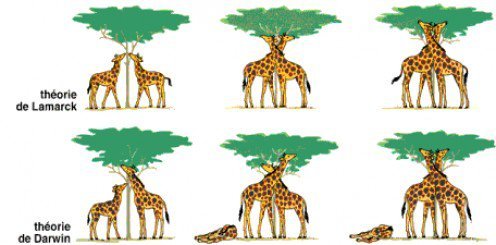
What would happen if the Giraffes never evolve?
they would survive
They would thrive
They would become extinct
They will find another source of food
The ability of an organism to survive and reproduce offspring in its specific environment is called __________.
diversity.
evolution
adaptation
fitness

Farmers breed cows to produce high amounts of milk. This is an example of...
Natural Selection
Variations in a species
Artificial Selection
inbreeding

