wayground logo

Free Printable Worksheets

Font size

S
M
L
XL
Worksheets

Science 9 Unit B review

Total questions: 110

Worksheet time: 1hrs 16mins

Name
Class
Date
1.

There are 3 sub atomic particles that we know of are...

a)

Proton, Neutron, electron

b)

Proton, electron, venton

c)

electron, Noltron, Kontron

d)

Noltron, kontromn, venton

2.

Name this element and identify its atomic number.

a)

Carbon, 12.01

b)

Calcium, 6

c)

Carbon, 6

d)

Calcium 12.01

3.

Name this element.

a)

Litanium

b)

Lithium

c)

Aluminium

d)

Alumium

4.

Identify the group number and family name of these elements.

a)

Group 1 - Hydrogen Family

b)

Group 2 - Hydrogen Family

c)

Group 8 Hydrogen Family

d)

Group 1 - Alkaline Metals Family

5.

Name this family and identify the correct characteristics.

a)

Noble Gases - Unreactive Non-Metals

b)

Halogens - Unreactive Non-Metals

c)

Halogens - Reactive Metals

d)

Halogens - Reactive Non-Metals

6.

Determine the number of neutrons.

a)

125

b)

82

c)

207

d)

207.2

7.

Determine the Atomic Number of this element:

a)

6

b)

7

c)

8

d)

5

8.
A change in temperature and color of a substance during a science experiment means that what took place?
a)
Physical Change
b)
Chemical Change
9.
Groups are vertical columns in the periodic table and share...
a)
the same number of protons
b)
similar physical and chemical properties
c)
the same number of neutrons
d)
the same atomic mass
10.
Which atomic particle has NO charge?
a)
Proton
b)
Neutron
c)
Electron
11.
Which atomic particle has a NEGATIVE charge?
a)
Proton
b)
Neutron
c)
Electron
12.
How many atoms of each element are found in this compound?  C2H3N5C
a)
2 Carbon, 3 Hydrogen, 5 Nitrogen
b)
1 Carbon, 2 Hydrogen, 3 Nitrogen
c)
3 Carbon, 3 Hydrogen, 5 Nitrogen
13.
Ice breaking, chocolate melting and sugar dissolving are examples of...
a)
chemical changes
b)
physical changes
14.
Which element has 10 protons?
a)
Carbon
b)
Neon
c)
Hydrogen
d)
Oxygen
15.
How many electrons does Lithium have?
a)
1
b)
2
c)
3
d)
4
16.
What has properties of both metals and nonmetals?
a)
Noble Gases
b)
Metalloids
c)
Halogens
d)
Acids
17.
When a gas is produced during a science experiment, which occurred?
a)
Physical change
b)
Chemical reaction
18.
Metalloids are located where on the Periodic Table?
a)
Far Left
b)
Far Right
c)
Bottom
d)
Along the stair step between the metals and non-metals
19.
Which of the following is a COMPOUND?
a)
CO2
b)
Na
c)
Br3
d)
Li2
20.
The characteristics or properties of metals include
a)
shiny and solid
b)
ductile and malleable
c)
lose electrons
d)
all of the above
21.
Each column in the periodic table is called a 
a)
period
b)
group
c)
cluster
d)
unit
22.
Which is a halogen?
a)
Helium
b)
Chlorine
c)
Oxygen
d)
Neptune
23.
Which is an alkali metal?
a)
Magnesium
b)
Iron
c)
Sodium
d)
Europium
24.
A horizontal row of elements in the periodic table.
a)
column
b)
group
c)
period
25.
Elements in a ..................have similar chemical properties.  
a)
period
b)
group
c)
row
26.
How did Mendeleev arrange the elements?
a)
alphabetical 
b)
density
c)
melting point
d)
atomic mass
27.
The yellow atoms are called 
a)
metals
b)
nonmetals
c)
metalloids
d)
noble gases
28.
Group 18 elements are known as the _____ _____ and have full valence shells.
a)
royal gases.
b)
supreme solids.
c)
noble gases.
d)
legit liquids.
29.
What period and group is Silver (Ag)? 
a)
Period 2, Group 1
b)
Period 3, Group 16
c)
Period 5, Group 11
d)
Period 2, 14
30.
Which of the following is not a property of metals?
a)
brittle
b)
malleable
c)
lustrous
d)
conductive
31.
What happens in ALL chemical changes?
a)
Change in state of matter
b)
A new substance is formed
c)
Bubbles are produced
d)
An explosion
32.
Which of the following is a sign that a chemical reaction has occurred?
a)
change in shape
b)
melting
c)
formation of a gas
d)
dissolving
33.
What is the number of protons that the element in this image contain?
a)
14
b)
7
c)
15
d)
18
34.
An element with a mass number of 11 and an atomic number of 5 has how many neutrons?
a)
11
b)
5
c)
6
d)
16
35.
An atom has 10 protons, 15 neutrons and 10 electrons what is its mass number.
a)
20
b)
10
c)
5
d)
25
36.
Which scientist discovered the electron, which helped him develop a model of the atom?
a)
Niels Bohr
b)
John Dalton
c)
Ernst Rutherford
d)
J.J Thompson
37.
What scientist is best known for his "Plum Pudding" model of the atom?
a)
J.J. Tomson
b)
Ernest Rutherford
c)
John Dalton
d)
Democritus
38.
Covalent compounds
a)
Share electrons
b)
transfer electrons
c)
contain a sea of electrons
d)
conduct electricity
39.
Flammability is an example of what property?
a)
Chemical property
b)
Physical property
40.
Which of the following is a chemical property?
a)
ability to rust
b)
ability to conduct heat
c)
volume
d)
magnetic
41.
What is the change of state from a solid straight to a gas called?
a)
melting
b)
evaporating
c)
freezing
d)
sublimation
42.

Which pictogram is for chemicals that could cause immediate and severe effects such as death?

a)
b)
c)
d)
43.
The following symbol is for ...
a)
Biohazardous materials
b)
Compressed gas
c)
Oxidizing material
d)
Dangerously reactive material
44.
The following symbol is for ...
a)
Materials causing immediate and serious toxic effects
b)
oxidizing material
c)
corrosive material
d)
materials causing other toxic effects
45.
The following WHMIS symbol represents ...
a)
corrosive material
b)
biohazardous infectious materal
c)
flammable & combustable material
d)
dangerously reactive material
46.
What two types of atoms make a covalent bond?
a)
2 Nonmetals
b)
1 Nonmetal and 1 Metal
c)
2 Metals
d)
2 Noble Gases
47.
Ionic Bonding involves...
a)
The transfer of protons
b)
The transfer of nuetrons 
c)
The transfer of electrons
d)
None Of the above
48.

In the compound MgCl2, the subscript 2 indicates that

a)

there are two magnesium ions for each ion of chlorine.

b)

the chloride ion is twice the size of the magnesium ion.

c)

magnesium and chlorine form a double covalent bond.

d)

there are two chloride ions for each magnesium ion.

49.

The proper formula for magnesium hydroxide:

a)

MgOH

b)

Mg2OH

c)

Mg(OH)2

d)

Mg2OH2

50.

How do the following two elements bond together?

Al3+ O2-

a)

AlO

b)

Al2O3

c)

Al3O6

d)

Al3O2

51.

Which best describes a chemical reaction?

a)

Products --> Reactants

b)

Reactants --> Products

52.
Which scientific law states that an atom cannot be created or destroyed:
a)
Law of Conservation of Matter
b)
Law of Gravity
c)
Law of Conservation of Mass
d)
Law of Motion
53.

Name the ionic compound, LiCl

a)

lithium chlorine

b)

lithium chloride

c)

lithium chlorate

d)

lithium monochloride

54.

An ionic compound forms between a _______ and _______.

a)

metal and non-metal

b)

two metals

c)

two non-metals

55.

Name the ionic compound, CaCO3

a)

calcium carbide

b)

calcium carbon trioxide

c)

calcium carbon oxide

d)

calcium carbonate

56.

Name the ionic compound, FeBr3

a)

Iron (II) bromide

b)

Iron (III) bromide

57.

Name the molecular compound CO

a)

carbon monoxide

b)

monocarbon monoxide

c)

carbide

d)

oxygen carbide

58.
K20 - name?
a)
potassium dioxide
b)
potassium oxide
c)
potassium oxygen
d)
dipotassium dioxide
59.

What is the correct name for CF4

a)

Carbon fluoride

b)

Carbon IV fluoride

c)

Carbon tetrafluoride

60.

What is the proper formula for copper II bromide?

a)

CuBr

b)

CuBr2

c)

Cu2Br

61.

What is the correct name of the compound P2O5

a)

phosphorous oxide

b)

diphosphorous pentoxide

c)

phosphorous pentoxide

62.

What formula represents dinitrogen trioxide?

a)

N3O2

b)

NO2

c)

N2O3

63.

What is the name of the compound P4S10

a)

phosphorous sulfide

b)

tetraphosphide decasulfate

c)

phosphorous decasulfate

d)

tetraphosphorous decasulfide

64.

What is the name of Al2O3

a)

aluminum oxide

b)

dialuminum trioxide

c)

aluminum III oxide

65.

Which of these combinations is an ionic compound made of?

a)

Metal and Metal

b)

Nonmetal and Nonmetal

c)

Metal and Nonmetal

d)

Cation and Cation

66.

Name the following ionic compound: Cs2S

a)

cesium sulfide

b)

cesium sulfate

c)

cesium II sulfate

d)

cesium II sulfide

67.

When naming ionic compounds with transition metals you need to include roman numerals to show the _____ of the metal..

a)

atomic number

b)

mass number

c)

charge

d)

ionization energy

68.

What is the name of the compound Na2(SO4)?

a)

Sodium sulfate

b)

Sodium sulfide

c)

Sodium sulfite

d)

Sodium sulfuroxide

69.
Name this compound: 
KF
a)
Potassium fluoride
b)
Potassium fluorite
c)
Fluorine potasside 
d)
Potassium fluorate
70.
The chemical formula of carbon tetrachloride is
a)
CCl
b)
C₄Cl
c)
CCl₄
d)
C(IV)Cl
71.
name the following ionic compound: NaF
a)
nitrogen fluorine
b)
sodium fluoride
c)
nitrogen fluoride
d)
sodium fluorine
72.
The chemical formula of dinitrogen textroxide is
a)
Ni₂O₄
b)
NiO
c)
N₂O₄
d)
NiO₂
73.

Name for NaH

a)

sodium hydrogen

b)

potassium hydride

c)

sodium hydride

d)

potassium hydrogen

74.

Formula for barium sulfide

a)

B2S3

b)

BaS

c)

Ba2S

d)

BaS2

75.

Name for Hg2S

a)

mercury (IV) sulfide

b)

mercury (III) sulfide

c)

mercury (II) sulfide

d)

mercury (I) sulfide

76.

Formula for lead (II) chloride

a)

PbCl2

b)

Pb2Cl

c)

Pb2Cl3

d)

Pb3Cl2

77.

Name for PBr2

a)

phosphorus bromide

b)

phosphorus dibromide

c)

phosphorus dibromine

d)

phosphorus bromine

78.

Name for LiOH

a)

lithium hydrogen oxide

b)

lithium hydroxide

c)

lithium (II) hydroxide

d)

lithium (I) hydroxide

79.

Name for H3P

a)

Trihydrogen phosphoride

b)

Trihydrophosphoric acid

c)

Hydrophosphoric acid

d)

Hydrogen phosphoride

80.

Formula for iron (II) carbonate

a)

FeCO3

b)

Fe2CO3

c)

FeCO2

d)

Fe2CO2

81.

Name for BaO

a)

Barium oxide

b)

Barium monoxide

c)

Monobarium oxide

d)

Monobarium monoxide

82.

Na2SO4- name?

a)

sulfur sulfate

b)

sodium sulfide

c)

sodium sulfate

d)

sodium oxygenate

83.
What is not an indication of a chemical change?
a)
smell produced
b)
heat produced
c)
solid produced
d)
melting
84.
Which of the following is not an example of a chemical reaction
a)
burning of wood
b)
freezing of water
c)
rotting of fruit
d)
explosion of dynamite
85.
The amount of reactants should equal the amount of products.  This is the rule for
a)
chemical reactions
b)
acid base reactions
c)
conservation of mass
d)
neutralisation reactions
86.
Exothermic reactions
a)
happen on the outside
b)
take in heat
c)
give off heat
d)
happen on the inside
87.

A catalyst

a)

Increases the activation energy

b)

speeds up a chemical reaction

c)

Makes a reaction more difficult

d)

Slows a reaction down

88.
Which is an example of a chemical property?
a)
state
b)
colour
c)
luster
d)
all of the above 
89.
Which of the following is an example of a mechanical mixture?
a)
Water
b)
cereal and milk 
c)
brass
d)
salt water 
90.
Which of the following is not one of the 4 statements that make up Dalton's Atomic Theory?
a)
All matter is made up of small particles called atoms
b)
Atoms cannot be created or destroyed by ordinary means
c)
Atoms combine with other atoms to form larger particles called molecules
d)
The entropy of an isolated system will increase 
91.
Adding hydrochloric acid (HCl) to a magnesium ribbon strip is an example of what type of change?
a)
Physical Change 
b)
Chemical Change 
c)
No Change 
d)
Mechanical Change
92.
When heat is given off during a reaction, this is an example of:
a)
Endothermic Reaction 
b)
Sublimation 
c)
Exothermic Reaction 
d)
Evaporation 
93.
who developed the modern day periodic table of elements?
a)
Darwin
b)
Shultz
c)
Hooke
d)
Mendeleev
94.
Which group of the periodic table is composed of inert (not reactive)  gases?
a)
alkali metals
b)
alkaline earth metals
c)
halogens
d)
noble gases
95.
Elements which are shiny, conduct electricity and heat are called
a)
metal
b)
nonmetal
c)
metalloid
d)
nonexistent
96.
The yellow atoms are called 
a)
metals
b)
nonmetals
c)
metalloids
d)
noble gases
97.

Which best describes a chemical reaction?

a)

Products --> Reactants

b)

Reactants --> Products

98.
A change in temperature and color of a substance during a science experiment means that what took place?
a)
Physical Change
b)
Chemical Change
99.
Matter can not be created nor destroyed: it can only be
a)
Destroyed a little bit
b)
Invisible
c)
Transformed, changed
d)
None of the above
100.

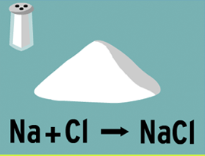
When sodium and chlorine combine to form sodium chloride, sodium chloride is the:

a)

Originator

b)

Reactant

c)

Product

d)

Produce

101.
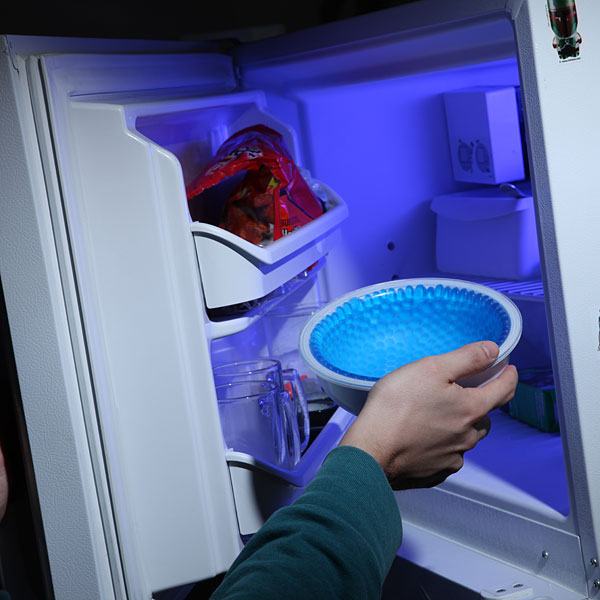
Maria fills a bowl with 200 g of water. She puts the bowl of water in the freezer, and the water freezes. Which will most likely be the mass of the frozen water?
a)
50 g
b)
100 g
c)
200 g
d)
400 g
102.

Law of conservation of mass states the amounts of atoms in the reactants and the products...

a)

Increase

b)

Decrease

c)

Stay the same

d)

No correct answer

103.

Does the equation H2+O2 →H2O follow the Law of Conservation of Mass?

a)

Yes, because the atoms are equal.

b)

No, because more info is needed.

c)

No, because there are more atoms in the product.

d)

No, because there are more atoms in the reactant.

104.
A precipitate is a 
a)
liquid that forms when two solids are reacted
b)
a solid that forms when two liquids are mixed
c)
a gas that forms when vinegar and baking soda react
d)
a change of color in a solution
105.
If reaction starts with 20g of reactants it should produce 
a)
a total of 40g of products
b)
a total of 10g of products
c)
a total of 80 g of products
d)
a total of 20g of products
106.
In a reaction A + B ----> C,  reactant A has 5g and product  C has 9g. How many grams does reactant B should have? 
a)
4g
b)
5g
c)
9g
d)
14g
107.
This type of system allows matter to flow freely in and out...
a)
Closed System
b)
Open System
108.
A boiling pot with a lid on it to keep in the energy is what type of system?
a)
Closed System
b)
Open System
109.
Which are the reactants in the following reaction?
2Mg + O2 ---> 2MgO 
a)
Mg and O
b)
MgO
c)
Mg and MgO
d)
O and MgO
110.

Iron rusts in the presence of:

a)

Vacuum

b)

Moisture

c)

Oxygen

d)

Moisture and Oxygen