
 Worksheets
Gable's 3rd 9 wks. EXAM
Total questions: 60
Worksheet time: 1hrs 19mins
The molecules of a substance SLOW DOWN when . . .
energy is added.
energy is taken away.
nothing changes.
Sublimation is _____________ .
a phase change from a solid to liquid to a gas.
a phase change from a solid to a liquid.
a phase change from a gas to a solid.
a phase change from a solid to a gas.
The type of energy which has the GREATEST IMPACT on the state of matter is _________________ energy.
gravitational
sound
radiant
thermal
When molecules are heated the atoms move _____________.
SLOWER
FASTER
they atoms DON'T move.
When molecules are COOLED the atoms move ___________.
SLOWER
FASTER
the atoms DON'T move AT ALL
The molecules of a substance SPEED UP when . . .
energy is added.
energy is taken away.
nothing changes.
A substance that has NO definite shape, but DOES HAVE a definite volume is a _____________.
Gas
Liquid
Solid

Here are 5 cubic centimeters (cm3) (volume) . All together they have a mass of 20 g what is the density?
20 g/cm3
100 grams
4 g/cm3
5 g/cm3
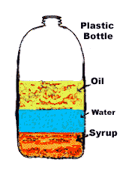
Why do objects sink or float in H2O?
Because their mass and volumes are equal
Because their densities are using gravity to pull down
Because their densities are heavier or lighter
Because their densities are higher or lower than compared to the density of water

As air pressure DECREASES, density _____________?
INCREASES
DECREASES
As air pressure INCREASES, density _____________?
INCREASES
DECREASES
As temperature heats up, density __________ and volume ______________?
increases,decreases
decreases, increases
increases, increases
decreases, decreases
As temperature gets colder, density __________ and volume ______________?
increases, increases
decreases, increases
increases, decreases
decreases, decreases
What is the Law of Conservation of Mass?
mass of reactants > mass of products
mass of reactants < mass of products
mass of reactants = mass of products

Which is the name of the kind of solid substance formed when 2 liquids are combined shown in this figure?
aqueous
precipitate
acid
synthesis
A chemical reaction that gives OFF heat
Exothermic
Endothermic
If two substances react and the temperature of the mixture decreases. Example the athletic trainer gives you a pack that gets cold when you shake it.
Exothermic reaction
Endothermic reaction

This red piece of pH paper has been dipped into ________ :
An acid
A base
A pH-neutral substance
A buffer


What is the range of pH values in an acidic solution?
0 - 7.0
7.1 - 14
15-239
pH = 7


Which chemical reacts strongly with most metals?
Acid
Base
Which chemical produces a hydroxide ion (OH-) when mixed with water?
Acid
Base
Which chemical produces hydrogen ions (H+) when mixed with water?
Acid
Base

The two main factors that determine the climate of a region are _____________ and ______________.
altitude and pressure
pressure and temperature
temperature and precipitation
altitude and precipitation
What are isobars?
lines connecting places of equal temperature
lines drawn connecting places of equal pressure
lines drawn to places of different temperatures
lines drawn to places of different pressures
This is when the rotation of the Earth deflects the direction of the wind.
convergent effect
marginal effect
Coriolis effect
Mariolis effect
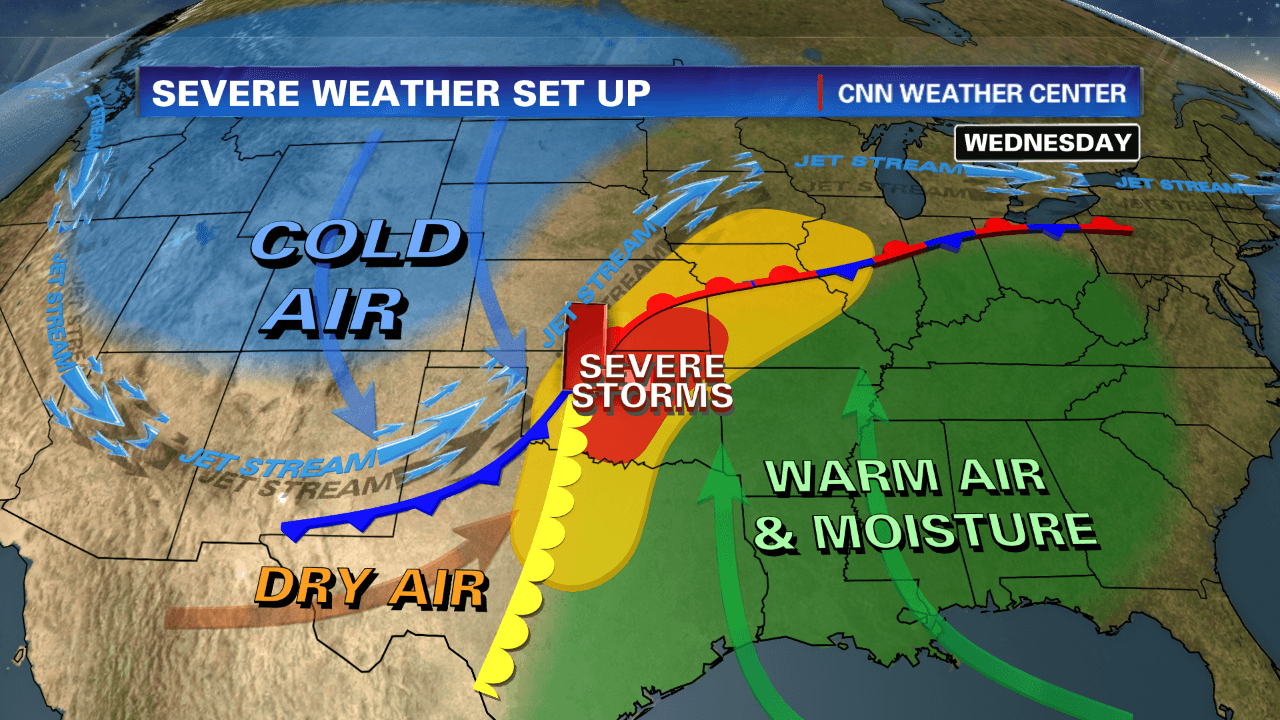
Of the six factors, which has the biggest effect on climate?
Relief
Ocean currents
Near water
Elevation
Latitude
Where do MARITIME air masses form?
Over water
Over land
Where do CONTINENTAL air masses form?
Over water
Over land

Which type of air mass is pictured in letter "B" (Montana - considered midwest US )?
Continental polar
Continental tropical
Maritime polar
Maritime tropical
A(n) _____________ is the boundary where two air masses meet.
air mass
storm
collision
front
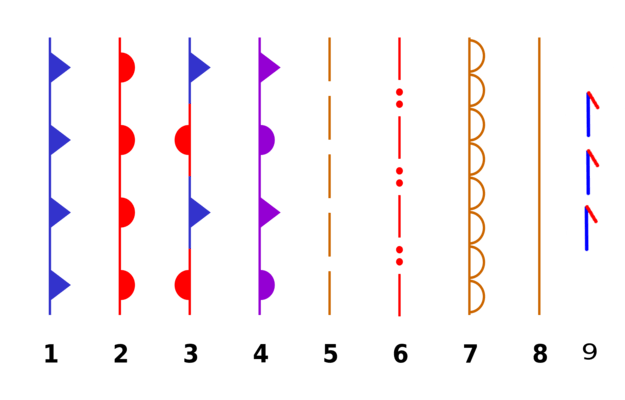
What does symbol # 4 mean?
stationary front
occluded front
warm front
cold front
The average barometric pressure at sea level is ________.
29.92 mb
24.93 in of Hg
29.92 in of Hg
29.99 mb
Earth's ozone layer _____________________________.
has been thickening over the past several years
filters harmful ultraviolet radiation from the sun
exists only over Antarctica
exist only over the Arctic circle
Which of the following gases found in our atmosphere is NOT a greenhouse gas?
carbon dioxide
water vapor
methane
nitrogen
The primary gases in our atmosphere are:
carbon dioxide and oxygen
nitrogen and oxygen
carbon dioxide and nitrogen
hydrogen and oxygen
The greeenhouse gas that is released when fossil fuels are burned for energy are:
nitrogen
oxygen
hydrogen
carbon dioxide
Greenhouse gases in the atmosphere _______ Earth's outgoing infrared radiation.
release
trap
What is a group of atoms joined together called?
an atom
an element
matter
molecule &/ or compound
The scientific principal that states all matter is made up of molecular particles that are in constant motion is _____________.
Synthetic Theory of Matter
Kinetic Theory of Matter
Magnetic Theory of Matter
Kinetic Theory of Motion

