wayground logo

Free Printable Worksheets

Font size

S
M
L
XL
Worksheets

Genetics

Total questions: 146

Worksheet time: 3hrs 49mins

Name
Class
Date
1.
Genotype refers to the ...
a)
physical expression of the genes
b)
the possible combination of alleles in a gene
c)
whether an allele is dominant or recessive
d)
how an organism will appear
2.
What is a phenotype
a)
The genetic make up (code)
b)
The physical trait
3.
having two of the same genes for the trait (sometimes called purebred).
a)
homozygous
b)
hetrozygous
c)
protein
d)
chromosome
4.
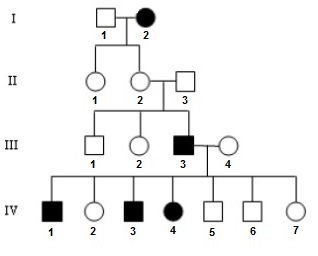
having two different genes for a trait (sometimes called hybrid).
a)
protein
b)
homozygous
c)
heterozygous
d)
genotype
5.
G = green, g = yellow
The genotype for a yellow plant is...
a)
GG
b)
Gg
c)
gg
d)
all of the choices result in yellow
6.
Where, in the eukaryotic cell, is DNA located?
a)
ribosomes
b)
nucleus
c)
E.R.
d)
cytoplasm
7.
Term for an organism that display two dominant phenotypes at the same time
a)
codominance
b)
incomplete dominance
c)
multiple alleles
d)
linked genes
8.
Sex cells are produced through the process of
a)
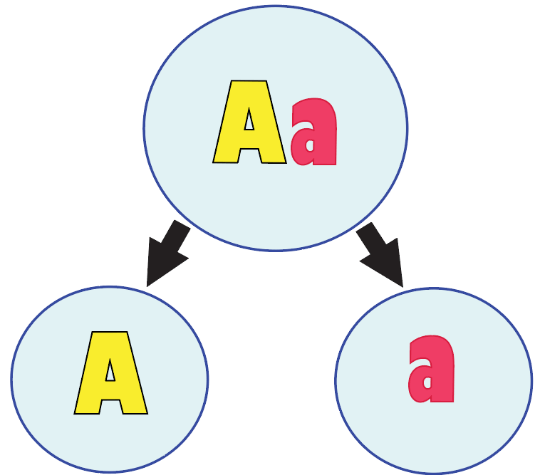
mitosis
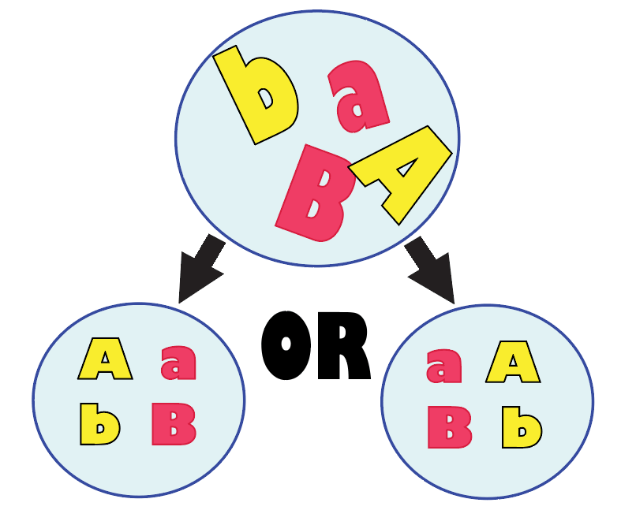
b)
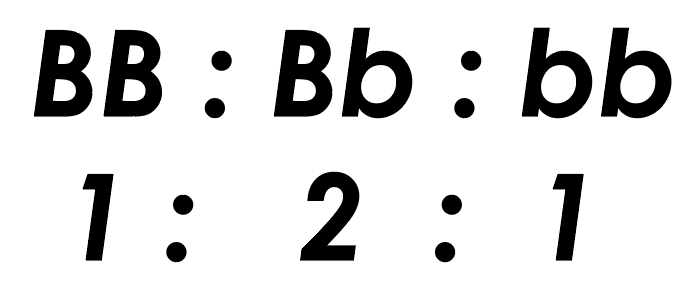
cytokinesis
c)
binary fission
d)
meiosis
9.
What does heterozygous mean?
a)
An organism that has the same genes for a trait (TT or tt)
b)
An organism that has different genes for a trait (Tt)
c)
When neither gene is fully dominant; offspring is a mixture of both
d)
the different forms of a trait (hair color--> brown, blonde, red
10.
Incomplete dominance means that the traits are
a)
expressed equally
b)
dominant
c)
recessive
d)
blended
11.
Which of the following is homozygous dominant?
a)
Yy
b)
Y
c)
yy
d)
YY
12.
An allele whose trait only shows up when no dominant allele is present.
a)
hidden allele
b)
dominant allele
c)
recessive allele
d)
present allele
13.
A single cross such as flower color.
a)
mono hybrid
b)
dihybrid
c)
crossing over
d)
homozygous
14.
What type of "square" helps us solve genetic problems?
a)
carpenter square
b)
Mendel square
c)
Punnett square
d)
genetic square
15.
The exact genetic makeup of an organism, such as RR, Tt, PP is its?
a)
phenotype
b)
dominance
c)
genotype
d)
trait
16.
Y for yellow body is dominant over y for blue body.  What alleles would produce yellow bodies?
a)
YY,yy
b)
Yy,yy
c)
YY only
d)
YY,Yy
17.
Females-XX; MalesXY.  A couple has 4 girls.  What is the chance the next child will be a boy?
a)
75%
b)
100%
c)
25%
d)
50%
18.
A physical characteristic that can be passed from parent to offspring.
a)
behavior
b)
trait
c)
strong muscles
d)
ability to fly a plane.
19.
Which of the following is a phenotype?
a)
BB
b)
Bb
c)
bb
d)
Blue eyes
20.
the passing of genetic traits from parent to offspring.
a)
heredity
b)
trait
c)
gene
d)
allele
21.
Two brown eyed parents (Bb) have a baby. What is the chance the baby is blue eyed?
a)
0 %
b)
25%
c)
50%
d)
75%
22.
Snapdragon flowers come in red, pink and white.  What type of inheritance is this?
a)
Complete Dominance
b)
Incomplete Dominance
c)
Codominance
d)
Polygenic Inheritance
23.
One form of a gene is called_______________
a)
a DNA
b)
a Phenotype
c)
a trait
d)
an allele
24.
Brown fur color is dominant over black fur color. Which of the following is the actual genotype of ALL of the offspring in the next generation of this cross for fur color?
AA x aa
a)
AA
b)
Aa
c)
aa
d)
brown fur
25.
Which is the correct phenotype for this organism?
a)
BB
b)
blue
c)
green
d)
bb
26.
How many alleles (letters) do each person carry for a trait?
a)
1
b)
2
c)
3
d)
4
27.
W=white hair
w= non-white hair
If you cross a horse with WW and a horse with ww what fraction of the offspring would be expected to have white hair?
a)
none
b)
3/4
c)
1/2
d)
all
28.
The study of heredity and the variation of inherited characteristics 
a)
gene
b)
genetics 
c)
meiosis 
d)
hybrid 
29.
A dog gives birth to 5 puppies. What percentage of the chromosomes does each puppy share with the mother?
a)
25%
b)
50%
c)
75%
d)
100%
30.
this image is an example of
a)
codominance
b)
dominance
c)
incomplete dominance
31.
this image is an example of
a)
codominance
b)
dominance
c)
incomplete dominance
32.

has 3+ variations of the same gene. Blood type is an example of this.

a)

co-dominance

b)

multiple alleles

c)

mendelian inheritance

33.
rule where genes come in only dominant or recessive
a)
Regulatory Genes
b)
Mendelian Inheritance
c)
Incomplete Dominance
34.
Which of the following cell types is formed by meiosis?
a)
muscle cells
b)
skin cells
c)
sperm cells
d)
blood cells
35.
What is one advantage of sexual reproduction?
a)
offspring are identical to parents
b)
offspring are resistant to viruses
c)
offspring are born live, rather thna from eggs
d)
offspring inherit a wider variety of genetic information
36.
If T=Tall & t=short, what is the genotypic ratio?
a)
1:3
b)
3:1
c)
1:2:1
d)
2:2
37.
If a heterozygous tall pea plant is crossed with a short pea plant, what are the possible genotypes of the future offspring?
a)
100% Tt
b)
50% Tt, 50% tt
c)
75%Tt, 25%tt
d)
25%TT, 50%Tt, 25%tt
38.

Human gametes contain how many chromosomes?

a)

46

b)

23

c)

12

d)

28

39.

This picture shows what the red blood cell of someone with sickle cell anemia. This disorder is carried on the X chromosome and is most common in sub-saharan populations. What type of inheritance pattern must it follow?

a)

codominance

b)

sex-linked inheritance

c)

multiple allele inheritance

d)

incomplete dominance

40.
How many phenotypes are there in ABO blood types?
a)
3
b)
4
c)
6
d)
12
41.
What is this diagram called?  What do the circles represent?
a)
karyotype, males
b)
karyotype, females
c)
pedigree, females
d)
pedigree, males
42.
What is this tool used for?
a)
to compare DNA of two individuals
b)
read braille
c)
analyze genetic disorders in many generations of individuals
d)
analyze genetic disorders in one individual
43.
How many children do #5 & #6 have?
a)
1 male child
b)
2 male and 2 female children
c)
2 male children
d)
1 daughter and 1 son
44.
What do the shaded shapes represent?
a)
normal individuals
b)
individuals who have the trait
c)
carriers
d)
deceased
45.
ABO blood types are an example of what type of inheritance?
a)
multiple alleles
b)
incomplete dominance
c)
polygenic inheritance
d)
genetic mutations
46.
AB blood type is an example of what type of inheritance?
a)
complete dominance
b)
incomplete dominance
c)
codominance
d)
polygenic inheritance
47.
There are many variations in skin color that can be inherited based on the combination of alleles that you inherit from your mom and dad.  This bell curve distribution is an example of
a)
incomplete dominance
b)
codominance
c)
multiple alleles
d)
polygenic inheritance
48.
What gender of offspring are most often affected by sex-linked inheritance?  What gender are usually carriers of the trait?
a)
males, males
b)
females, males
c)
males, females
d)
females, females
49.
What is the disorder in this karyotype?
a)
this karyotype is normal
b)
deletion of #5
c)
trisomy 21, down syndrome
d)
Klinefelter's syndrome
50.
What gender is this individual?
a)
male
b)
female
c)
we cannot tell using a karyotype?
51.
Chromosome pairs #s 1-22 are called
a)
mutations
b)
genosomes
c)
sex chromosomes
d)
autosomes
52.
The image shows the pattern of inheritance for colorblindness.  From this diagram we can tell that colorblindness is
a)
a codominant trait
b)
a sex-linked trait
c)
carried on the Y chromosome
d)
is associated with a dominant allele
53.
A calico cat shows both the traits for orange fur and black fur. What kind of allele expression is this?
a)
Incomplete Dominance
b)
Co dominance
c)
Independent assortment
d)
Recessive inheritance
54.
In a Punnett square each box represents a(n)....
a)
offspring
b)
parent
c)
gene
d)
trait
55.
What type of inheritance is shown?
a)
complete
b)
incomplete
c)
codominance
d)
sex-linked
56.
A breed of chicken shows codominance for feather color. One allele codes for black feathers, another codes for white feathers. The feathers of heterozygous chickens of this breed will be:
a)
all black
b)
all white
c)
all gray
d)
speckled black and white
57.

O blood type is

a)

dominant

b)

recessive

58.

A and B blood types are

a)

sex linked

b)

incomplete alleles

c)

co dominant alleles

59.

An example of a trait determined by many alleles is

a)

baldness

b)

ABO Blood types

c)

foot size

d)

gender

60.
What percentage of the female offspring will be a carrier for this recessive disease?
a)
0%
b)
50%
c)
100%
d)
25%
61.
Looking at this pedigree, how many female family members are carriers?
a)
1
b)
3
c)
10
d)
7
62.
I have 2 X chromosomes. What am I?
a)
Male
b)
Female
63.
If a woman is a carrier for a sex linked recessive trait of hemophilia and her husband has hemophilia, which of the following is true? Make a punnett square!
a)
All sons will have hemophilia
b)
all daughters will have hemophilia
c)
50% of daughters and 50% of sons have hemophilia
d)
100% of sons have hemophilia and 100% of daughters are carriers
64.
In some carnations, flower color exhibits codominance. When crosses, Red (R) and white (W) flowers make speckled flowers (RW) that show both colors.
Complete a cross between A speckled flower and a red flower. Find the phenotype ratio.
a)
2 red: 2 speckled: 0 white
b)
4 red: 0 speckled: 0 white
c)
0 red: 4 speckled: 0 white
d)
0 red: 2 speckled: 2 white
65.
A roan cow shows co-dominance in fur color (orange and white). What is the phenotype ratio expected if a roan cow and a roan steer mate together?
a)
4: Orange and White
b)
1: Orange : 1 White
c)
2 Orange: 2 Orange and White: 0 White
d)
1: Orange: 2 Orange and White: 1 White
66.
What are the gametes for BbDd? 
(USE FOIL)
a)
B, b, D, d
b)
BD, bD, Bd, bd
c)
BD, BD, Bd, bd
d)
bD, bD, bd, bd
67.
Based off this punnett square, what fraction of the offspring will have wrinkled, yellow seeds?
a)
9/16
b)
3/16
c)
1/16
d)
16/16
68.
A male beetle has the genotype Ttbb. If this beetle mates with a female with genotype TTBb, what is the chance their offspring will have the genotype TtBb?
a)
3/16
b)
4/16
c)
8/16
d)
12/16
69.
Which of the following is homozygous dominant?
a)
Yy
b)
Y
c)
yy
d)
YY
70.
What percentage of the offspring will have this recessive disease?
a)
0%
b)
25%
c)
50%
d)
75%
71.
What percentage of the female offspring will be a carrier for this recessive disease (a)?
a)
0%
b)
50%
c)
100%
d)
25%
72.
What percentage of the offspring will have this recessive disease?
a)
0%
b)
25%
c)
50%
d)
75%
73.
I have 1 X chromosome and 1 Y chromosome. What am I?
a)
Male
b)
Female
74.

A woman is heterozygous for blood type A and a male is homozygous for blood type B- what blood types are possible in their children?

a)

A, B, AB, and O

b)

A, B, and AB

c)

AB and B

d)

Just B

75.

If a female fruit fly heterozygous for red eyes (XRXr) crossed with a white-eyed male (XrY), what percent of their offspring would have white eyes?

a)

0%

b)

25%

c)

50%

d)

75%

76.

PKU is a gene that winds up controlling multiple phenotypes such as tremors, stunted growth, seizures, and eczema. This is an example of

a)

epistasis

b)

pleiotropy

c)

sex-linked

d)

multiple alleles

77.

Which of the following inheritance patterns explains how a particular version of a regulatory gene can activate or deactivate a gene that controls a particular trait?

a)

codominance

b)

pleiotropy

c)

epistasis

d)

incomplete dominance

78.

Genes located on the same chromosome close together are called

a)

linked genes

b)

codominant genes

c)

inherited genes

d)

epistatic genes

79.
What gamete possibilities could come from this parent's genotype?
a)
AB, AB, aB, aB
b)
Ab, AB, Ab, ab
c)
Ab, Ab, Ab, Ab
d)
AB, aB, ab, aB
80.
A male beetle has the genotype Ttbb. If this beetle mates with a female with genotype TTBb, what is the chance their offspring will have the genotype TtBb?
a)
3/16
b)
4/16
c)
8/16
d)
12/16
81.

This image is an example of a _____________ cross.

a)

Monohybrid

b)

Dihybrid

c)

Purebred

d)

Pure Breeding

82.

A white mouse with red eyes is crossed with a black mouse with brown eyes. The white mouse is recessive for both of its traits. The black mouse is dominant for both of its traits.

This cross would be

a)

BBEE x bbee

b)

BBEe x BbEe

c)

BbEE x BbEe

d)

BBee x BBEE

83.
A red flower (Rr) is crossed with a white flower (rr). What is the genotypic ratio?
a)
0 RR; 0 Rr: 4 rr
b)
2 RR; 0 Rr: 2 rr
c)
4 RR; 0 Rr: 0 rr
d)
0 RR; 2 Rr: 2 rr
84.

During meiosis and gamete formation, homologous (paired up) alleles split up

a)

Phenotype

b)

Law of Segregation

c)

Genotype

d)

Dihybrid Cross

85.

During meiosis, the homologous pairs of chromosomes and the matching alleles are lined up independently.

Offspring are a mix of maternal genes and paternal genes.

This increases genetic variation.

a)

Homozygous Dominant

b)

Law of Segregation

c)

Crossing Over

d)

Independent Assortment

86.

The ratio of homozygous dominant to heterozygous

to homozygous recessive offspring

a)

Genotypic Ratio

b)

Phenotypic Ratio

c)

Monohybrid Cross

d)

Homologous Pair

87.

The ratio of phenotypes in a Punnett Square

a)

Phenotypic Ratio

b)

Genotypic Ratio

c)

Dihybrid Cross

d)

Independent Assortment

88.

Punnett Square #1

In plants tall is dominant to short.

Cross two heterozygous plants.

What is the genotypic ratio?

a)

1:2:1

b)

2:2

c)

3:1

89.

Punnett Square #1

In plants tall is dominant to short.

Cross two heterozygous plants.

What is the phenotypic ratio?

a)

1:2:1

b)

2:2

c)

3:1

90.

Punnett Square #3

In plants tall is dominant to short.

Cross one homozygous dominant with one heterozygous dominant plant.

What is the genotypic ratio?

a)

1:2:1

b)

2:2

c)

4

91.
How many generations are shown in this pedigree?
a)
1
b)
2
c)
3
d)
4
92.
This pedigree represents the inheritance of hemophilia in this family. How many of the females have the hemophilia trait?
a)
8
b)
5
c)
2
d)
3
93.
What does an open circle represent?
a)
Not Affected Male
b)
Not Affected Female
c)
Affected Male
d)
Affected Female
94.
What do half colored symbols represent?
a)
The individual is a carrier (heterozygous).
b)
The individual expresses the trait.
c)
The individual has both recessive alleles.
d)
The individual has both dominant alleles.
95.
Is this trait (the shaded individuals) dominant or recessive?
a)
dominant
b)
recessive
96.
In the second generation-how many people are carriers of the trait?
a)
2
b)
3
c)
5
d)
6
97.
How many people in this whole pedigree have the trait/disease?
a)
2
b)
3
c)
4
d)
6
98.
Which gender can be carriers of colorblindness and not have it?
a)
Just males
b)
Just females
c)
Both genders
99.
What is the mode of inheritance shown here?
a)
Autosomal Dominant
b)
Autosomal Recessive
c)
Sex Linked Recessive
100.
What is the mode of inheritance shown here?
a)
Sex Linked
b)
Autosomal Dominant
c)
Autosomal Recessive
101.
What is the mode of inheritance shown here?
a)
Autosomal Recessive
b)
Sex Linked
c)
Autosomal Dominant
102.
What is the mode of inheritance shown here?
a)
Autosomal Recessive
b)
Autosomal Dominant
c)
Sex Linked
103.
What is the mode of inheritance shown here?
a)
Autosomal Dominant
b)
Autosomal Recessive
c)
Sex Linked
104.
What is the mode of inheritance shown here?
a)
Autosomal Dominant
b)
Sex Linked
c)
Autosomal Recessive
105.
What is the mode of inheritance shown here?
a)
Autosomal Recessive
b)
Autosomal Dominant
c)
Sex Linked
106.
What is the relationship between person I 1 and III 2?
a)
Father and Son
b)
Father and Daughter
c)
Grandfather and Granddaughter
d)
Uncle and Niece 
107.
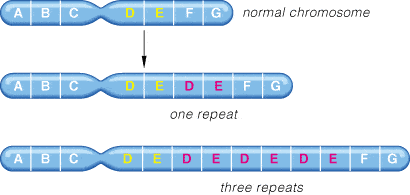
Identify the mutation in the picture.
a)
Inversion
b)
Deletion
c)
Duplication
d)
Translocation
108.
Identify the mutation in the picture.
a)
Inversion
b)
Duplication
c)
Deletion
d)
Translocation
109.
Identify the mutation in the picture.
a)
Deletion
b)
Inversion
c)
Duplication
d)
Translocation
110.
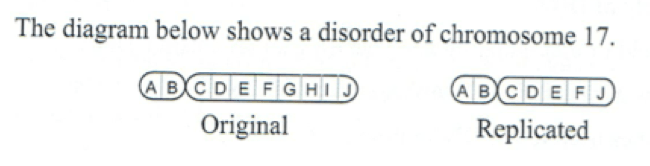
What type of chromosomal mutation has occurred?
a)
substitution
b)
insertion
c)
deletion
d)
nondisjunction
111.
What process occurs during meiosis that can result in chromosomal disorders?
a)
crossing over
b)
non-disjunction
c)
anaphase I
d)
prophase II
112.
A chromosome is found to be shorter than it's homologous match.  Which type of mutation would this most likely be?
a)
insertion
b)
deletion
c)
translocation
d)
inversion
113.
An example of a mutation where a piece of chromosome breaks off and attaches to another chromosome is called ___.
a)
trisomy
b)
translocation
c)
inversion
d)
deletion
114.

Notice the abnormal 23rd chromosome. This individual has an extra X chromosome. What type of mutation is this?

a)

Translocation

b)

Nondisjunction

c)

Dublication

d)

Inversion

e)

Deletion

115.

Deletion

a)

When a segment of a chromosome breaks off.

b)

When a segment of a chromosome breaks off, flips, and reattaches.

c)

When a segment of a chromosome is copied or doubles.

d)

When a segment of a chromosome breaks and attaches to a non homologous chromosome.

e)

When entire chromosomes don't separate evenly during meiosis.

116.

Inversion

a)

When a segment of a chromosome breaks off.

b)

When a segment of a chromosome breaks off, flips, and reattaches.

c)

When a segment of a chromosome is copied or doubles.

d)

When a segment of a chromosome breaks and attaches to a non homologous chromosome.

e)

When entire chromosomes don't separate evenly during meiosis.

117.

Duplication

a)

When a segment of a chromosome breaks off.

b)

When a segment of a chromosome breaks off, flips, and reattaches.

c)

When a segment of a chromosome is copied or doubles.

d)

When a segment of a chromosome breaks and attaches to a non homologous chromosome.

e)

When entire chromosomes don't separate evenly during meiosis.

118.

Translocation

a)

When a segment of a chromosome breaks off.

b)

When a segment of a chromosome breaks off, flips, and reattaches.

c)

When a segment of a chromosome is copied or doubles.

d)

When a segment of a chromosome breaks and attaches to a non homologous chromosome.

e)

When entire chromosomes don't separate evenly during meiosis.

119.

Nondisjunction

a)

When a segment of a chromosome breaks off.

b)

When a segment of a chromosome breaks off, flips, and reattaches.

c)

When a segment of a chromosome is copied or doubles.

d)

When a segment of a chromosome breaks and attaches to a non homologous chromosome.

e)

When entire chromosomes don't separate evenly during meiosis.

120.

Someone with Type A blood also has...

a)

Type A antibodies

b)

Type B antibodies

c)

both Type A & B antibodies

d)

neither Type A nor B antibodies

121.

Someone with both Type A & B antibodies is which blood type?

a)

A

b)

B

c)

AB

d)

O

122.

Someone with Type A blood has...

a)

A antigens

b)

A antibodies

c)

B antigens

d)

A & B antigens

123.

A substance on the surface of red blood cells that can trigger the production of antibodies

a)

agglutinates

b)

antigens

c)

anemia

d)

Rh Factor

124.

Proteins produced by the immune system that destroy foreign substances...

a)

antigens

b)

agglutinates

c)

platelets

d)

antibodies

125.

This determines whether a person's blood type is positive or negative...

a)

Rh factor

b)

platelets

c)

D antibodies

d)

plasma

126.

Which blood type is known as the universal donor? (can be used by all)

a)

AB +

b)

AB -

c)

O+

d)

O-

127.

Which blood type is known as the universal recipient? (can receive all types)

a)

AB+

b)

AB-

c)

O+

d)

O-

128.

Someone with Type AB blood has...

a)

Both A & B antibodies

b)

No antibodies

c)

only A antigens

d)

only B antigens

129.

This test shows results for which blood type?

a)

B+

b)

B-

c)

A+

d)

A-

130.
What antigens are present in a person with type B- blood?
a)
B, only
b)
B and Rh
c)
A and Rh
d)
A, only
131.
What types of antigens are present in a person with O+ blood?
a)
A and B
b)
Rh, only
c)
A, B and Rh
d)
None
132.
What types of antibodies are found in a person with AB- blood?
a)
None
b)
Anti-Rh, only
c)
Anti-A and Anti-B
d)
Anti-A, 
133.
What type(s) of antibodies are in a person with A+ blood?
a)
Anti-A and Anti-Rh
b)
Anti-Rh, only
c)
Anti-B
d)
None
134.
Negative blood types can DONATE to what types of blood?
a)
Negative, only
b)
Positive, only
c)
Both Negative and Positive
135.
Positive blood types can DONATE to what type(s) of blood?
a)
Negative, only
b)
Positive, only
c)
Both Positive and Negative
136.

What is this blood type?

a)

A+

b)

AB+

c)

AB-

d)

A-

137.

What is the blood type?

a)

AB+

b)

AB-

c)

A+

d)

B-

138.

What is the blood type?

a)

O+

b)

B+

c)

AB-

d)

AB+

139.

What is the blood type?

a)

O+

b)

AB+

c)

AB-

d)

Not Valid

140.
The visual representation of an individual's chromosomes is a 
a)
phenotype
b)
genotype
c)
karyotype
d)
stereotype
141.
What does the variable q represent?
a)
Frequency of the heterozygote genotype
b)
Frequency of the homozygous recessive genotype
c)
The frequency of the recessive allele
d)
The frequency of the dominant allele 
142.
Which Hardy-Weinberg factor represents the frequency of heterozygous individuals in a population?
a)
p2
b)
2pq
c)
q2
d)
p2 + 2pq
143.

What variable represents the frequency of homozygous recessive for a given locus?

a)

q

b)

q2

c)

p

d)

p2

144.

What variable represents the frequency of the dominant allele for a given locus?

a)

q

b)

q2

c)

p

d)

p2

145.

If 49 out of 100 individuals in a population express the recessive phenotype, 49/100 or 0.49 would represent

a)

p

b)

p2

c)

q

d)

q2

146.

What variable represents the frequency of homozygous dominant for a given locus?

a)

q

b)

q2

c)

p

d)

p2