wayground logo

Free Printable Worksheets

Font size

S
M
L
XL
Worksheets

Unit 2 Review

Total questions: 107

Worksheet time: 3hrs 27mins

Name
Class
Date
1.
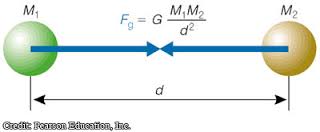
Two asteroids exert a gravitational force, F, on each other. Some time later, the asteroids are now three times as far from each other as before. Which of the following represents the gravitational force at this distance? 
a)
F/3
b)
F/2
c)
F/6
d)
F/9
2.
Force of gravity is inversely proportional to
a)
Mass
b)
Weight
c)
Distance
d)
Time
3.

Calculate the gravitational force between two objects when they are 0.750m apart. Each object has a mass of 5.00kg.

a)

2.96x10⁻⁷N

b)

3.00x10⁻⁶N

c)

2.22x10⁻⁹N

d)

2.23x10⁻⁸N

4.
Two objects are attracted to each other with 36 N of gravitational force.
What would the force between them be if the distance between them were doubled?
a)
9
b)
18
c)
72
d)
144
5.
What is the Universal law of gravitation equation? 
a)
G=F ⋅ m⋅m2/r2
b)
F=G ⋅ m⋅m2/(r)2
c)
F=G ⋅ r2/m⋅m2
d)
G=F ⋅ r2/m⋅m2
6.
The law of universal gravitation is credited to whom?
a)
Einstein
b)
Galileo
c)
Darwin
d)
Newton
7.
Two factors effecting the magnitude of the force of gravity between 2 objects are...
a)
mass and distance 
b)
mass and matter
c)
distance and weight 
d)
weight and mass
8.
Gravity attracts all objects towards one another.
a)
False
b)
True
c)
It depends
9.

What is the gravitational force between two identical 50,000 kg asteroids whose centers of mass are separated by 1000 m?

a)

2500 N

b)

3.3 x 10⁻¹² N

c)

1.67 x 10⁻⁴ N

d)

1.67 x 10⁻⁷ N

10.

Two spherical objects have masses of 8000 kg and 1500 kg. Their centers are separated by a distance of 1.5 m. Find the gravitational attraction between them

a)

5.4 X 10⁻⁴ N

b)

1.2 X 10⁷ N

c)

3.6 X 10⁻⁴ N

d)

5.33 N

11.
Complete the following statement: The farther away two planets are the _______ the gravitational force between them.
a)
more
b)
same
c)
dosen't matter
d)
less
12.
Gravity is the force objects put on each other because of their ______.
a)
Mass
b)
Friendliness
c)
Acceleration
d)
Speed
13.

Which configuration will result in the greatest gravitational force?

a)

small masses far apart

b)

large masses far apart

c)

small masses close together

d)

large masses close together

14.
Harry Potter waved his .23 m wand with .069 Nm of torque. How much force did Harry apply to rotate his wand?
a)
.4
b)
.5
c)
.3
d)
.16
15.
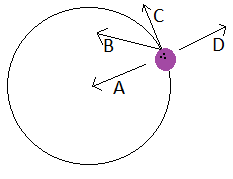
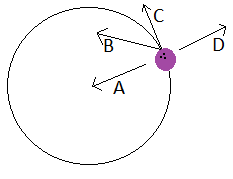
Which represents the acceleration of the ball?
a)
A
b)
B
c)
C
d)
D
16.
Which of the following depict the speed of the blowing ball?
a)
A
b)
B
c)
C
d)
D
17.
Two objects are attracted to each other with 36 N of gravitational force.
What would the force between them be if the distance between them were doubled?
a)
9
b)
18
c)
72
d)
144
18.
Two objects are attracted to each other with 36 N of gravitational force.
What would the force between them be if the distance between them were divided by 2?
a)
9
b)
18
c)
72
d)
144
19.
Two objects are attracted to each other with 36 N of gravitational force.
What would the force between them be if one of the masses were doubled?
a)
9
b)
18
c)
72
d)
144
20.
Two objects are attracted to each other with 36 N of gravitational force.
What would the force between them be if both of the masses were doubled?
a)
9
b)
18
c)
72
d)
144
21.
Two objects are attracted to each other with 36 N of gravitational force.
What would the force between them be if both of the masses were doubled?
a)
9
b)
18
c)
72
d)
144
22.
Calculate the velocity of an object moved around a circle with a radius of 1.65 m and an acceleration of 3.5 m/s2.
a)
2.4 m/s
b)
3.6 m/s
c)
3.9 m/s
d)
4.2 m/s
23.
Calculate the mass of an object if it took 20 N to rotate it in a circle with a radius of 2 meters with a velocity of 4 m/s
a)
4.1 kg
b)
3.6 kg
c)
2.5 kg
d)
1.8 kg
24.
Calculate the centripetal force required to make a 5 kg ball move 4 m/s in a circle with a radius of 2 m.
a)
10 N
b)
20 N
c)
30 N
d)
40  N
25.

You are moving a ball in a circle using 72 N of centripetal force. What would the force be if you doubled the radius of the circle.

a)

18 N

b)

36 N

c)

72 N

d)

144 N

26.

What's the acceleration of gravity of a planet with a mass of 1 x 1025 kg and a radius of 5x10⁶ meters?

a)

.267 m/s2

b)

2.67 m/s2

c)

26.7 m/s2

d)

267 m/s2

27.

What's the acceleration of gravity of a planet with a mass of 1 x 10²² kg and a radius of 5x10⁵ meters?

a)

.267 m/s2

b)

2.67 m/s2

c)

26.7 m/s2

d)

267 m/s2

28.

Two object each have masses of 9,000,000 kg and are 1 meter apart from each other. What's the force of gravity between them?

a)

5402 N

b)

6320 N

c)

7541 N

d)

7945 N

29.

Two objects each have masses of 4500 kg and are .03 meters apart from each other. What's their force of gravity?

a)

.3 N

b)

.7 N

c)

1.1 N

d)

1.5 N

30.

What's the centripetal acceleration of a .2 kg yoyo spun in a circle with a radius of .7 meters at a velocity of 3 m/s?

a)

8.23 m/s2

b)

10.54 m/s2

c)

12.86 m/s2

d)

17.39 m/s2

31.

What's the centripetal force of a .2 kg yoyo spun in a circle with a radius of .7 meters at a velocity of 3 m/s?

a)

2.05 N

b)

2.57 N

c)

2.90 N

d)

3.13 N

32.
What is the transfer of heat by movement of liquids or gases?
a)
Radiation
b)
Convection
c)
Conduction
d)
Heat
33.
What are waves that can transfer heat through the vacuum of empty space?
a)
Electromagnetic waves
b)
Convection
c)
Conduction
d)
Heat
34.
What is a transfer of heat energy by electromagnetic waves?
a)
Radiation
b)
Convection
c)
Conduction
d)
Heat
35.
What is the transfer of heat by direct contact?
a)
Convection
b)
Electromagnetic waves
c)
Radiation
d)
Conduction
36.
What is the measurement of the average kinetic energy of a substance?
a)
Kinetic energy
b)
Temperature
c)
Thermal energy
d)
Potential energy
37.
What is a substance that does NOT conduct heat well?
a)
Conductor
b)
Insulator
c)
Convector
d)
Radiator
38.
What is a substance that DOES conduct heat well?
a)
Conductor
b)
Insulator
c)
Convector
d)
Radiator
39.
What is the total amount of kinetic energy in a substance?
a)
Potential energy
b)
Kinetic energy
c)
Thermal energy
d)
Temperature
40.
What is the transfer of kinetic energy from one substance to another?
a)
Heat
b)
Energy
c)
Thermal energy
d)
Temperature
41.
What is the energy of the movement of particles in a substance?
a)
Potential energy
b)
Kinetic energy
c)
Thermal energy
d)
Temperature
42.

Boiling Water

a)

Conduction

b)

Convection

c)

Radiation

43.

Curling Iron

a)

Conduction

b)

Convection

c)

Radiation

44.

Weather Patterns

a)

Conduction

b)

Convection

c)

Radiation

45.

Sun Bathing

a)

Conduction

b)

Convection

c)

Radiation

46.

Mantle

a)

Conduction

b)

Convection

c)

Radiation

47.

Feet on Hot Sand

a)

Conduction

b)

Convection

c)

Radiation

48.

Lava Lamp

a)

Conduction

b)

Convection

c)

Radiation

49.

Hot Air in a Toaster

a)

Conduction

b)

Convection

c)

Radiation

50.

Microwaving Food

a)

Conduction

b)

Convection

c)

Radiation

51.

Heat Lamps

a)

Conduction

b)

Convection

c)

Radiation

52.

Cold Pack on Person

a)

Heat is transferred from the cold pack to the person.

b)

Heat is transferred from the person to the cold pack

c)

The cold pack is getting warmer. The person is getting colder.

d)

The cold pack is getting colder. The person is getting warmer.

53.

Hand Warmer in a Hand

a)

Heat is being transferred from the hand warmer to the hand.

b)

Heat is being transferred from the hand to the hand warmer.

c)

The hand is getting warmer. The hand warmer is getting cooler.

d)

The hand warmer is getting warmer. The hand is getting cooler.

54.
A(n) _____________ is a device for measuring temperature.
a)
thermometer
b)
barometer
c)
anemometer
d)
psychrometer 
55.
Temperature is a measure of the...
a)
total energy in a substance
b)
total kinetic energy in a substance
c)
average potential energy in a substance
d)
average kinetic energy of molecules in a substance
56.
A slower particle has a lower energy than an identical, faster particle.
a)
True
b)
False
57.
The transfer of thermal energy between objects of different temperatures is called...
a)
temperature
b)
heat
c)
internal energy
d)
none of these
58.
It is possible to reach absolute zero
a)
true
b)
false
59.
When thermal energy is added to a substance, the substance's particles move:
a)
More rapidly at an increased diestance from each other.
b)
More rapidly with less distance between each other.
c)
More slowly with a greater distance between each other.
d)
More slowly with a reduced distance between each other.
60.
Thermal energy always moves:
a)
From a high temperature object to a lower temperature object.
b)
From a lower temperature object to a higher temperature object.
c)
From an object with lower kinetic energy to an object with higher kinetic energy.
d)
From an object of higher mass to an object of lower mass.
61.
The second  law of thermodynamics states that entropy of a system  tends to ______________. 
a)
increase
b)
decrease
c)
stay constant
d)
fluctuate wildly
62.
The temperature of a glass of cold water will eventually...
a)
Match the temperature of the surrounding environment.
b)
Always be colder than the surrounding environment.
c)
Become warmer than the surrounding environment.
d)
Never change temperature.
63.
The first law of thermodynamics states that energy is
a)
created
b)
destroyed
c)
conserved
d)
created and destroyed
64.
Which law of thermodynamics states that absolute zero cannot be reached?
a)
1st
b)
2nd
c)
3rd
65.
What is the name of the particle that is being transferred?
a)
Proton
b)
Neutron
c)
Electron
d)
Positron
66.
How can objects become electrified?
a)
By plugging them in to a socket
b)
Adding acid to them
c)
Rubbing with flannel
d)
Shaking them in the air
67.
When a balloon is rubbed on a sweater in what direction do the electrons move?
a)
From the sweater to the balloon
b)
From the balloon to the sweater
c)
They do not move
d)
They travel to the groud
68.
Which of the following DOES NOT use electrostatics to work?
a)
Dryer sheets
b)
Electric Motor
c)
Photocopier
d)
Van de Graff Generator
69.
If you were to step out of a plane before it was grounded (discharged), what would happen?
a)
You would fall
b)
You would catch on fire
c)
You would receive a big shock
d)
Nothing
70.
If two balloons have the same charge, what will happen if you place them close to each other?
a)
Nothing
b)
They will be attracted
c)
They will pop
d)
They will push each other away.
71.
What is the overall charge on this balloon? (They are the same so look at either one!)
a)
+3
b)
-6
c)
+6
d)
-3
72.
Which of the following objects would be most likely to move the tissue after being rubbed with flannel?
a)
purple balloon
b)
wood stick
c)
metal fork
d)
binder clip
73.
When distance increases, electrostatic force ____________; we call this relationship ____________ proportional
a)
decreases;directly
b)
decreases;inversely
c)
increases;inversely
d)
increases;directly
74.
What variable is a Coulomb the unit for?
a)
Charge
b)
Force
c)
Distance
d)
Mass
75.
What variable do "Newtons" represent?
a)
Electrostatic Charge
b)
Force
c)
Distance
d)
Mass
76.
What variable do Coulombs represent?
a)
Electrostatic Charge
b)
Force
c)
Distance
d)
Mass
77.

Recap:

Coulomb’s law states that the force between two charged objects will __________ when the magnitude of the object’s charge increases.

Coulomb’s law also states that the force between two charged objects will __________ when the distance between objects increases.

a)

increase; increase

b)

increase; decrease

c)

decrease; increase

d)

decrease; decrease

78.
The plastic covering is there to:
a)
Provide a conductor for electrical energy to flow.
b)
Provide an insulator so that electrical energy will not pass outside of the wires.
c)
Provide a conductor so that electrical energy can NOT flow.
d)
Provide an insulator so that electrical energy can flow.
79.
A material in which electrons are not able to move easily 
a)
Circuit 
b)
Insulator 
c)
Resistance 
d)
Conductor
80.
Which of these substances conducts electricity the best?
a)
wood
b)
brick
c)
copper
d)
plastic
81.
The difference between attract and repel is that to attract is to pull something closer and repel is to push something away.
a)
True
b)
False
82.

The image shows two charged particles with a force of 2.4 N. What would you predict the force of interaction would be when the magnitude of charge on q2 doubles?

a)

9.6 N

b)

4.8 N

c)

1.2 N

d)

.6 N

83.

The image shows two charged particles with a force of 2.4 N. What would you predict the force of interaction would be when the distance doubles?

a)

4.8 N

b)

1.2 N

c)

.6 N

d)

.3 N

84.
The Electric Force is strongest when charges are...
a)
close together
b)
far apart
c)
the electric force is constant everywhere
85.
The picture shows an electrical circuit. This circuit is a series circuit because: 
a)
It has 3 light bulbs.
b)
The same current flows through all three light bulbs.
c)
It uses a single battery.
d)
The electrical current is divided between the three light bulbs.
86.
Which of the two circuits would have the brightest bulbs? 
a)
A
b)
B
87.
What kind of circuit is this?
a)
series
b)
parallel
88.
In a parallel circuit if one of the light bulbs burns out the rest _________.
a)
stop the flow of electricity
b)
 can still light up
c)
 will go out
d)
of the light bulbs burn out also
89.
A material which electrons are able to move through easily:
a)
Circuit
b)
Insulator 
c)
Resistance 
d)
Conductor 
90.
when the switch is closed.....
a)
both bulbs TURN ON
b)
both bulbs STAY ON
c)
both bulbs TURN OFF
d)
both bulbs STAY OFF
91.
If one light goes out in a parallel circuit what will happen to the rest?
a)
None will go out
b)
All will go out
c)
Two or more will go out
d)
They will look for a conductor
92.
If one light burns out in this parallel circuit what will happen to the rest?
a)
The others will stay lit
b)
All will go out
c)
Two or more will go out
d)
Check the battery
93.
Which one uses less wire? 
a)
Parallel circuit 
b)
Series Circuit 
94.
What kind of circuit is this?
a)
Series
b)
Consecutive
c)
Parallel
d)
Training
95.
What is one benefit of using a parallel circuit?  
a)
It gets confusing.
b)
If battery powered the battery will last longer.
c)
If one bulb goes out it does not  affect the others. 
d)
It is easier to set up
96.
Which of the following answer choices correctly describes the image? 
a)
Series circuit - Bulbs are lit
b)
Series circuit - Bulbs are off
c)
Parallel circuit - Bulbs are lit
d)
Parallel circuit - Bulbs are off
97.
What will happen if one light bulb is removed from this circuit?
a)
The other bulbs will go out.
b)
The other bulbs will stay on
c)
The other bulbs will get dimmer.
d)
The battery will become stronger.
98.
What is voltage measured in?
a)
Ω (Ohms)
b)
V (Volts)
c)
A (Amps)
d)
W (Watts)
99.
What is current measured in?
a)
Ω (Ohms)
b)
V (Volts)
c)
A (Amps)
d)
W (Watts)
100.
What is resistance measured in?
a)
Ω (Ohms)
b)
V (Volts)
c)
A (Amps)
d)
W (Watts)
101.
What voltage is needed to cause a 2A current flow through a 10Ω resistor?
a)
5V
b)
0.2V
c)
20V
d)
200V
102.
What voltage is needed to cause a 5A current flow through a 2Ω resistor?
a)
10V
b)
2.5V
c)
7V
d)
0.4V
103.
What voltage is needed to cause a 50A current flow through a 10Ω resistor?
a)
15V
b)
500V
c)
500 kV
d)
0.2V
104.
What word means how much energy is given to / removed from the electrons.
a)
Current
b)
Voltage
c)
Resistance
d)
Power
105.
What word means how hard it is for electrons to flow through.
a)
Current
b)
Voltage
c)
Resistance
d)
Power
106.
What word means how fast the electrons flow.
a)
Current
b)
Voltage
c)
Resistance
d)
Power
107.
If the battery produced 12.6 Volts and what would be the current flow be for a 6 Ohm resistor
a)
2.1 Amps
b)
2.4 Amps
c)
1.71 Amps
d)
15 Amps