wayground logo

Free Printable Worksheets

NEW

Font size

S
M
L
XL
Worksheets

Seasons & Eclipses

Total questions: 70

Worksheet time: 38mins

Name
Class
Date
1.
Which type of eclipse is shown in the diagram?
a)
solar eclipse
b)
lunar eclipse
2.
Which type of eclipse is shown in the diagram?
a)
solar eclipse
b)
lunar eclipse
3.
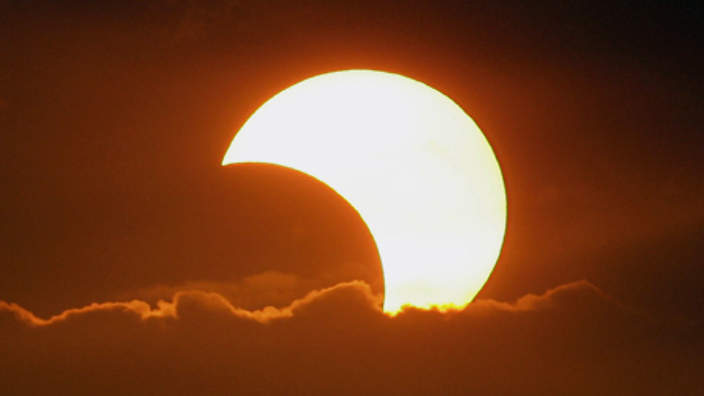
Which type of eclipse is shown in the image?
a)
solar eclipse
b)
lunar eclipse 
4.
Which type of eclipse is shown in the image?
a)
solar eclipse
b)
lunar eclipse 
5.
_______ means to spin on its axis.
a)
Revolve
b)
Rotate
c)
Orbit
6.
_______ is the movement of an object around another object.
a)
Revolve
b)
Rotate
c)
Orbit
7.
The path of an object in space is known as its ________.
a)
Revolve
b)
Rotate
c)
Orbit
8.
Which season is the northern hemisphere experiencing?
a)
Spring
b)
Summer
c)
Fall
d)
Winter
9.
Which season is the northern hemisphere experiencing?
a)
Spring
b)
Summer
c)
Fall
d)
Winter
10.
How many degrees is the Earth's axis tilted?
a)
0
b)
23.5
c)
50
d)
90
11.
What is the name of the shortest day of the year?
a)
vernal equinox
b)
autumnal equinox
c)
summer solstice
d)
winter solstice
12.
What is the name of the longest day of the year?
a)
vernal equinox
b)
autumnal equinox
c)
summer solstice
d)
winter solstice
13.
What is the name of a day in which day and night are of equal duration?
a)
solstice
b)
equinox
c)
axis
d)
hemisphere
14.

What is a solar eclipse?

a)

When the Moon covers the Sun from Earth's view

b)

When the Moon falls in the Earth's shadow

c)

When the Moon goes behind the Sun

15.

Which of the following best describes solar eclipses?

a)

The Earth's shadow falls on the Moon

b)

The Moon's shadow falls on Earth

c)

The Sun's shadow falls on Earth

16.

True/False. During a solar eclipse, it is safe to look at the Sun.

a)

False

b)

True

17.

You can see the sun's corona during ...

a)

a lunar eclipse

b)

a new moon

c)

a full moon

d)

a solar eclipse

18.

Solar eclipses occur...

a)

more often than lunar eclipses

b)

less often than lunar eclipses

c)

only during a full moon

d)

equally as often as lunar eclipses

19.

A solar eclipse can be seen by ...

a)

a small portion of the Earth

b)

everyone on Earth

c)

everyone experiencing night

20.

Which statement is true about a lunar eclipse?

a)

occurs during a new moon

b)

occurs during a full moon

c)

can cause eye damage

d)

only lasts a few minutes

21.

During a lunar eclipse ...

a)

the Sun is obscured

b)

the Moon is obscured

c)

you are obscured

d)

the Earth is obscured

22.

Which of the following statements best describes a lunar eclipse?

a)

the moon revolves into Earth's shadow

b)

the Earth moves into the Moon's shadow

c)

the Moon blocks light from the Sun

23.

What TWO things work together to cause Earth's seasons?

a)

Earth's tilt and rotation

b)

Earth's distance from the Sun

c)

Earth's tilt and revolution

d)

Earth's revolution and direction

24.

What season is the SOUTHERN HEMISPHERE experiencing at C?

a)

winter

b)

spring

c)

summer

d)

fall

25.

What season is the NORTHERN HEMISPHERE experiencing at A?

a)

winter

b)

summer

c)

fall

d)

spring

26.

Compare the position of the Sun in the summer to the position of the Sun during winter.

a)

Sun is lower in the sky in the winter than in the summer

b)

There is no difference in the Sun's position

c)

Sun is closer to Earth in the summer than in the winter

d)

Earth takes longer to rotate in winter than in the summer

27.

What evidence do we have that Earth's distance from the Sun DOES NOT cause our seasons?

a)

Earth is farther from the Sun in our winter

b)

Earth is always the same distance from the Sun

c)

Earth is closer to the Sun during our winter

d)

Earth is closer to the Sun during our summer

28.

True/False. It takes Earth 1 year, or 365 days, to revolve around the Sun once.

a)

True

b)

False

29.

What does the tilt of the Earth do?

a)

creates shallow angles in summer

b)

creates direct rays in winter

c)

it changes the angle the Sun's light hits the surface

d)

changes how much of the Moon we see

30.

What season is the NORTHERN HEMISPHERE experiencing at B?

a)

winter

b)

summer

c)

fall

d)

spring

31.

What season is the SOUTHERN HEMISPHERE experiencing at D?

a)

winter

b)

summer

c)

fall

d)

spring

32.

What is the position of the Earth during an equinox?

a)

The northern end of Earth's axis is pointed toward the sun.

b)

The southern end of Earth's axis is pointed away from the sun.

c)

Earth's axis is neither pointed toward or away from the sun.

33.

What causes seasons?

a)

Earth's tilted axis as it rotates on its axis.

b)

Earth's tilted axis as it revolves around the sun.

c)

Earth's distance from the sun in the summer.

d)

Earth's hemispheres receiving equal amounts of sunlight.

34.

Which of these describes the position of Earth at the northern hemisphere's winter solstice?

a)

The southern end of the Earth’s axis is pointed towards the sun.

b)

The northern end of the Earth’s axis is pointed towards the sun.

c)

The noon day sun is overhead at the Tropic of Cancer, 23.5 degrees N.

d)

Earth's axis is pointed toward the equator.

35.

Which statement is true based on the diagram?

a)

It is summer in the northern hemisphere.

b)

Its is winter in the southern hemisphere.

c)

It is an equinox.

d)

It is summer in the southern hemisphere and the northern hemisphere is receiving less direct sunlight.

36.

Which of the following is responsible for the changing of seasons on Earth?

a)

Orbit of Earth around the Sun and Rotation of Sun

b)

Tilt of the axis of Earth and orbit of Earth around the Sun

c)

Orbit of Earth around the Sun and Rotation of Earth

d)

Rotation of Earth and Rotation of Sun

37.

Some students are using objects to model the Earth-Sun-Moon system. They wish to represent the positions of these objects during a solar eclipse. To accurately model the solar eclipse, the golf ball should be placed in which labeled position?

a)

Position W

b)

Position Y

c)

Position Z

d)

Position X

38.
Which of the following best describes the tilt of the earth when it is summer in the southern hemisphere?
a)
The northern hemisphere is tilted toward the sun
b)
The northern hemisphere is tilted away from the sun
c)
The norther hemisphere is tilted neither toward or away from the sun
d)
Why are you talking about the northern hemisphere when you asked about the southern hemisphere?
39.
Which of the following best describes solstice.
a)
Either the longest or shortest day of the year for a hemisphere
b)
December 21 or 22
c)
June 21 or 22
d)
All of the above
40.
What does the earth's tilt cause?
a)
The seasons
b)
Day and Night
c)
Tsunamis
d)
Earthquakes
41.
This image is an example of
a)
Lunar Eclipse
b)
Full Moon
c)
New Moon
d)
Solar Eclipse
42.

Why don't we have eclipses every month?

a)

The Earth's orbit is tilted 5%.

b)

The Earth's axis is tilted 5%.

c)

The moon's orbit is tilted 5%.

d)

The moon's axis is tilted 5%.

43.

How does a solar eclipse occur?

a)

Part of the Earth is in the moon's shadow.

b)

All of the Earth is in the moon's shadow.

c)

The Earth moves between the sun and moon casting its shadow on the moon.

d)

The moon moves into the Earth's shadow.

44.

What type of eclipse is this?

a)

solar eclipse

b)

lunar eclipse

45.
About how long is a season?
a)
30 days
b)
60 days
c)
90 days
d)
365 days
46.
If the moon's orbit were not tilted, how often would we have eclipses?
a)
The number of eclipses would not change.
b)
Four times a month
c)
Three times a month
d)
Twice a month
47.

What is being shown in the diagram?

a)

A lunar eclipse

b)

A solar eclipse

c)

A new moon

d)

A neap tide

48.
How does the amount of daylight and darkness compare during an equinox?
a)
There are 12 hours of daylight and 12 hours of darkness during an equinox.
b)
There are more hours of daylight than darkness during an equinox.
c)
There are fewer hours of daylight than darkness during an equinox. 
d)
There is no daylight during an equinox. 
49.
Which description is true about Earth's revolution?
a)
This is Earth's movement around the sun once. 
b)
It takes Earth 365.25 days to complete one revolution around the sun. 
c)
One revolution around Earth gives Earth its year. 
d)
All of these statements describe Earth's revolution. 
50.
What phase must the moon be in for a solar eclipse to occur?
a)
new moon
b)
1st quarter moon
c)
full moon
d)
3rd quarter moon
51.

The Northern Hemisphere experiences ______ when neither of Earth's poles are tilted towards or away from the sun.

a)

spring or fall

b)

spring only

c)

summer or winter

d)

winter only

52.
What position do the Earth, moon, and sun need to be in for a LUNAR eclipse to occur?
a)
sun, moon, Earth
b)
Earth, sun, moon
c)
moon, sun, Earth
d)
sun, Earth, moon
53.
Which statement is true about position A?
a)
The Northern Hemisphere is having summer. 
b)
The Southern Hemisphere is having summer. 
c)
Both hemispheres are having summer. 
d)
The Northern Hemisphere is having winter. 
54.
Only a small portion of Earth witnesses a total solar eclipse. Why?
a)
The sun is too close to us to cast a big shadow.
b)
Earth's axis is slightly tilted and doesn't allow for large shadows to cover it.
c)
The moon is too small to cast a large enough shadow to cover Earth. 
d)
Earth is too far away from the sun to be covered by its shadow.
55.
What day has the SHORTEST amount of daylight in the Northern Hemisphere?
a)
June 21st
b)
September 21st
c)
December 21st
d)
March 21st
56.
What phase does the moon need to be in for a lunar eclipse to occur?
a)
3rd quarter
b)
new moon
c)
1st quarter
d)
full moon
57.
What date is being shown by the diagram?
a)
December 21st
b)
June 21st
c)
September 21st
d)
March 21st
58.
At what degree is Earth tilted on its axis?
a)
27.5°
b)
28°
c)
23.5°
d)
90°
59.
When the Northern Hemisphere is having summer, what season is the Southern Hemisphere having?
a)
summer
b)
fall
c)
spring
d)
winter
60.
When the North Pole is tilted towards the sun, what season is the Northern Hemisphere having?
a)
winter
b)
summer
c)
spring
d)
fall
61.

Why don't we experience a lunar eclipse every time there is a full moon?

a)

The moon's orbit is tilted at a 5º angle compared to Earth's orbit.

b)

Earth's axis is slightly tilted compared to Mars' axis.

c)

The moon's orbit is too elliptical compared to Earth's.

d)

Earth's rotation is too fast.

62.
What day has the longest amount of daylight in the Northern Hemisphere?
a)
March 21st
b)
December 21st
c)
September 21st
d)
June 21st
63.
When does the Vernal Equinox occur?
a)
March 21st
b)
September 21st
c)
June 21st
d)
December 21st
64.

What TWO things work together to cause Earth's seasons?

a)

Earth's tilt and rotation

b)

Earth's distance from the Sun

c)

Earth's tilt and revolution

d)

Earth's revolution and direction

65.

True/False. It takes Earth 1 year, or 365 days, to revolve around the Sun once.

a)

True

b)

False

66.
Why can we see the moon in the sky?
a)
The moon emits its own light
b)
The moon is a star
c)
The moon absorbs light from the Sun
d)
The moon reflects light from the Sun
67.
Which season is the Northern Hemisphere experiencing?
a)
It is summer.
b)
It is spring.
c)
It is winter.
d)
It is fall.
68.
What is the longest day of the year?
a)
Winter Solstice
b)
Summer Solstice
c)
Fall Equinox
d)
Spring Equinox
69.
Which season is taking place in the Northern Hemisphere in Position 1?
a)
Winter
b)
Spring
c)
Summer
d)
Fall
70.
Which statement best shows why the Moon seems to be producing light?
a)
The Moon is making its own light.
b)
The Moon is reflecting light from Earth.
c)
The Moon is reflecting light from the Sun.
d)
The Moon goes through eight phases.