
 Worksheets
SBI4U - Biochemistry
Total questions: 85
Worksheet time: 1hrs 7mins
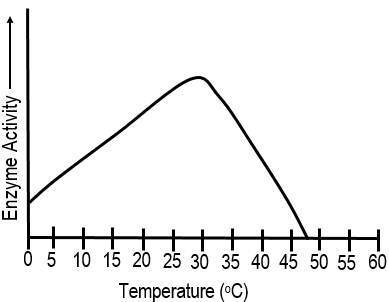


Changes in temperature and pH can decrease an enzyme’s activity by breaking
peptide bonds
hydrogen bonds
amino acids
sulfur bonds




Neither enzyme works at a pH of


The bond that joins two amino acids together
double bond
hydrogen bond
ionic bond
peptide bond

Define plasma membrane
lipid that helps minimize effects of temperature
only on the outer surface of the plasma membrane and are attached to proteins or lipids; form distinctive cellular markers
flexible boundary of a cell that separates a cell from its surroundings
may extend partway into the plasma membrane, cross the membrane entirely, or be loosely attached to its inside or outside face
Which type of biological macromolecule is the main component of the plasma membrane?
carbohydrate
lipid
protein
nucleic acid

This image is an example of a phospholipid. Which part of a phospholipid is HYDROPHOBIC?
the phosphate "head"
the lipid "tails"
This image is an example of a phospholipid. Which part of a phospholipid is HYDROPHILIC?
the phosphate "head"
the lipid "tails"

Where can carbohydrates be found when part of a plasma membrane?
On the outside of the membrane
On the inside of the membrane
Embedded part of the way into the membrane
Embedded the whole way through the membrane
All of the above
Where can PROTEINS be found when part of a plasma membrane?
On the outside of the membrane
On the inside of the membrane
Embedded part of the way into the membrane
Embedded the whole way through the membrane
All of the above
What is the function of cholesterol in a plasma membrane?
To make the membrane flexible
To control the effect of temperature changes
To attract water molecules
To allow nutrients and other essential molecules into the cell
What is the "big idea" of the fluid mosaic model of plasma membranes?
the plasma membrane creates a specialized FLUID that looks like a MOSAIC.
the plasma membrane is a MOSAIC.
the fluid mosaic model is NOT related to the plasma membrane.
a plasma membrane is a MOSAIC of components that move FREELY and FLUIDLY.
What does "hydrophobic" mean?
water loving, associates with water
water fearing, does not associate with water
a world war II submarine
an example would be solutes like sugar or salt
What does "hydrophilic" mean?
water loving, associates with water
water fearing, does not associate with water
a world war II submarine
an example would be solutes like oil or fat
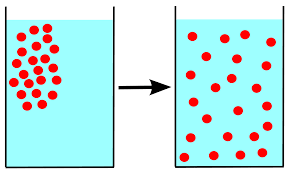
The diffusion of particles through the cell membrane from high to low concentration is called ....
exocytosis
active transport
passive transport
osmosis
What forms the channels and pumps in the phospholipid bilayer?
carbohydrates
proteins
hydrophilic heads
lipids
___________ form the two layers of the cell membrane.
Carbohydrates
Sugars
Phospholipids
Cholesterol

What will happen to the cell in the hypotonic solution?
Swell up
Shrink
Stay the same

The concentration of red molecules outside the cell is higher than the concentration inside the cell. The red molecules cannot penetrate the cell. The cell is inside a ______.
hypotonic solution
hypertonic solution

The membrane does not allow the green molecules to pass through it. What will happen next?
Water will flow into side A.
Water will flow into side B.
Water will stay still.

Which Type of solution is the middle cell placed in?
Hypertonic
Hypotonic
Isotonic
Robotonic
What would happen to a cell placed in a hypertonic solution
The cell would shrink
The cell would expand and possibly burst
The cell would remain the same
The cell would dance and do the Nay Nay!

What are the two types of cell transport?
Passive and Active
Active and Facilitated
Passive and Facilitated
None of the above

Which describes an isotonic environment?
Too much water in the cell will cause the cell to burst - the percentage of water is higher outside the cell than inside the cell
Too little water in the cell will cause the cell to shrink - the percentage of water is lower outside the cell than inside the cell
Concentrations of water are equal inside and outside the cell

The movement of materials that requires energy is called...
active transport
passive transport
massive transport
proactive transport

A process in which cells surround and engulf substances that are TOO BIG to enter the cell is known as...
Pinocytosis
Phagocytosis
Endocytosis
Receptor-mediated

When a cell forms a vesicle around unwanted particles and expels it OUT of the cell.
Pinocytosis
Endocytosis
Receptor-mediated
Exocytosis
What is a functional group?
Group of atoms that give specific characteristics to a molecule
Group of molecules that give specific characteristics to an atom
Group of molecules that make up a group of atoms
Group of atoms that give specific characteristics to an element
What functional group is -HC=O
Carbonyl Aldehyde
Carbonyl Ketone
Carboxyl
Methyl
What functional group is -OH
Hydroxyl
Carboxyl
Amino
Carbonyl Ketone

What functional group(s) is/are present on the molecule? (check all that apply)
Hydroxyl
Carboxyl
Methyl
Carbonyl Aldehyde

Classify the compound based on the functional group present.
ketone
ester
carboxylic acid

Classify the compound based on the functional group present.
alkane
alkene
alkyne

Carboxylic acids combined with alcohols in high temperature will form a(n)
ester
alcohol
amine

Name the compound based on the functional group present.
methanol
aldehyde
ethanol



