Wayground logo

Free Printable Worksheets

Font size

S
M
L
XL
Worksheets

Revision

Total questions: 101

Worksheet time: 8hrs 25mins
Name
Class
Date
1.

The horizontal rows on the periodic table are called

a)

groups

b)

families

c)

periods

d)

atomic numbers

2.

Each vertical column on the periodic table is called a...

a)

group

b)

tower

c)

period

d)

crew

3.
Most of the elements on the periodic table are classified as _____.
a)
Metals
b)
Nonmetals
c)
Metalloids
d)
Periods
4.

These elements located on the "stair-step" line are sometimes called "semiconductors."

a)

Metals

b)

Nonmetals

c)

Metalloids

d)

Groups

5.

On the periodic table, elements on the right side of the "stair-step" line are classified as:

a)

nonmetals

b)

metals

c)

gases

d)

Halogens

6.
In the modern periodic table elements are arranged by:
a)
atomic mass
b)
atomic number
c)
valence electrons
d)
number of isotopes
7.

How many Valance electrons does Iodine Have?

a)

6

b)

16

c)

7

d)

17

8.
Beryllium is in group number______.
a)
Group 2
b)
Group 3
c)
Group 4
d)
Group 7
9.
Which elements have the most similar chemical properties?
a)
K and Na
b)
K and Ca
c)
K and Cl
d)
K and S
10.

Elements in the same group or family have the same number of

a)

neutrons

b)

valence electrons

c)

electrons

d)

energy levels

11.

Electrons...

a)

are found in the nucleus

b)

give us the atomic number of an element

c)

are how we identify each elements

d)

have a negative charge

12.

found in group one of the periodic table; highly reactive

a)

Non-metals

b)

Transition Metals (Groups 3-12)

c)

alkali metals (group 1)

d)

metalloids (semimetals)

13.

The electrons in the outermost shell (main energy level) of an atom; these are the electrons involved in forming bonds

a)

alkali metals (group 1)

b)

Halogens (Group 17)

c)

atomic number

d)

valence electrons

14.

Halogens (Group 17)

a)

gas at room temperature, low boiling point.

b)

most reactive nonmetals

c)

The electrons in the outermost shell (main energy level) of an atom; these are the electrons involved in forming bonds

d)

Number of protons and neutrons

15.

Elements that occur in vertical columns on the periodic table.

a)

Neutron

b)

metalloids (semimetals)

c)

groups

d)

Proton

16.

metalloids (semimetals)

a)

Elements that occur in vertical columns on the periodic table.

b)

an element that has both metallic and nonmetallic properties

c)

not able to conduct heat or electricity, little to no metallic luster

d)

found in group one of the periodic table; highly reactive

17.
Which is an electron?
a)
A
b)
B
c)
C
18.
Which is a proton?
a)
A
b)
B
c)
C
19.
Which is a neutron?
a)
A
b)
B
c)
C
20.
Which of the following will have a larger radius than Zinc?
a)
Gallium
b)
Aluminum
c)
Magnesium
d)
Strontium
21.
Which of the following will have a higher electronegativity than arsenic (As)?
a)
Carbon (C)
b)
Neon (Ne)
c)
Antimony (Sb)
d)
Germanium (Ge)
22.
Which of the following will have a lower ionization energy than Scandium (Sc)?
a)
Helium (He)
b)
Titanium (Ti)
c)
Calcium (Ca)
d)
Magnesium (Mg)
23.
As atoms of elements in group 16 are considered in order from top to bottom, the electronegativity of each successive element....
a)
decreases
b)
increases
c)
remains the same
d)
none of the above
24.
Ionization energy is...
a)
the energy required to add an electron to a specific atom
b)
how much energy it takes to remove an electron from an atom
c)
the energy required to shield the outer electrons from the nucleus
d)
a measure of the ability of an atom to attract electrons
25.
The atom with the largest atomic radius in Group 18 is - 
a)
Ar
b)
He
c)
Kr
d)
Rn
26.
Which statement correctly and completely identifies a trend?
a)
Atomic radius decreases across a period and increases down a group.
b)
Electronegativity decreases across a period and decreases down a group.
c)
Ionization energy increases across a period and increases down a group.
d)
Ionic radius increases across a period and increases down a group.
27.
Electronegativity __________ from left to right within a period and __________ from top to bottom within a group.
a)
decreases, increases 
b)
increases, increases
c)
increases, decreases 
d)
stays the same, increases
28.
Atomic radius generally increases as we move __________.  
a)
down a group and from right to left across a period 
b)
up a group and from left to right across a period 
c)
down a group and from left to right across a period 
d)
up a group and from right to left across a period 
29.

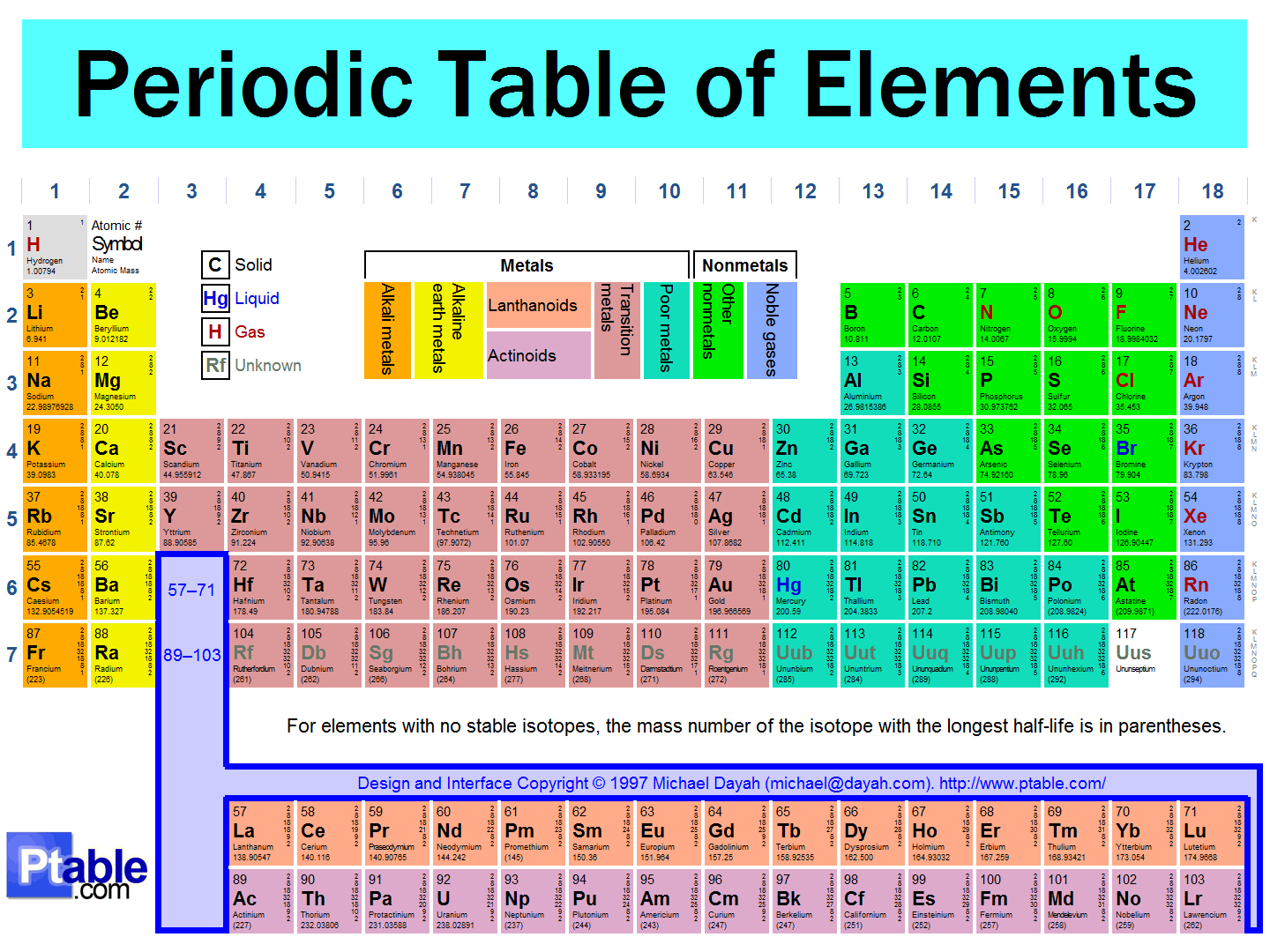
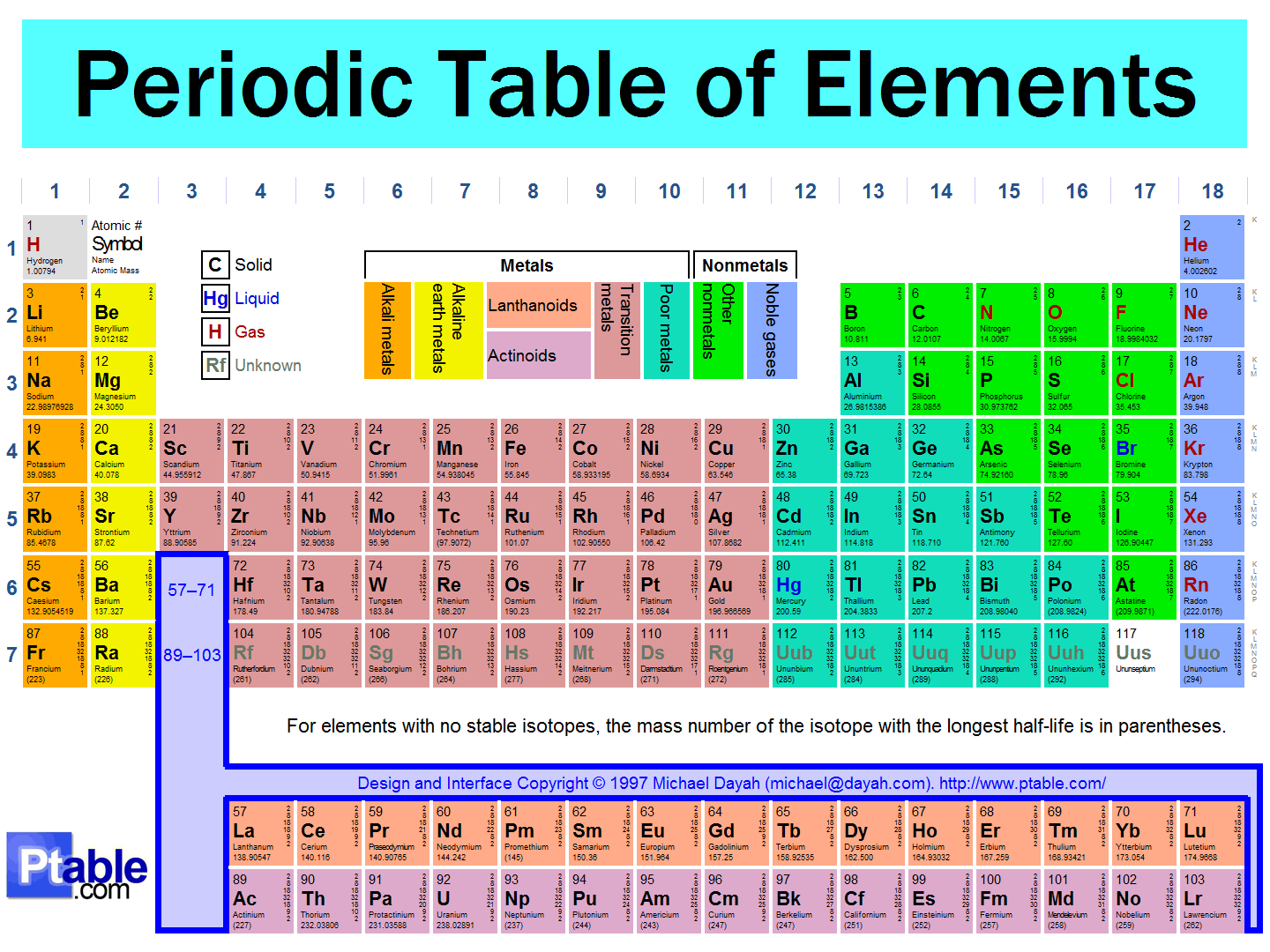
Which color on the image of the periodic table corresponds with the halogens.

a)

red

b)

black

c)

blue

d)

orange

30.

Which color on the image of the periodic table corresponds with the lanthanides.

a)

red

b)

black

c)

blue

d)

orange

31.

Which color on the image of the periodic table corresponds with the noble gases.

a)

red

b)

black

c)

blue

d)

orange

32.

Which color on the image of the periodic table corresponds with the transition metals.

a)

red

b)

black

c)

blue

d)

orange

33.

Which color on the image of the periodic table corresponds with the metalloids.

a)

bright yellow

b)

gold

c)

teal

d)

light blue

34.

Which color on the image of the periodic table corresponds with the alkaline earth metals.

a)

yellow

b)

dark yellow

c)

blue/green

d)

teal

35.

Horizontal rows on the periodic table are called ___?

a)

groups

b)

periods

c)

rows

d)

families

36.
What group on the Periodic Table contains the elements of the alkaline earth family?
a)
1
b)
2
c)
17
d)
18
37.
Gold (Au)
a)
Transition Metal
b)
Alkali Metal
c)
Alkaline Earth Metal
d)
Heavy Metal
38.
Which element is not in the Alkali metal family?
a)
Li
b)
H
c)
Fr
d)
Cs 
39.
Argon (Ar)
a)
alkali metal
b)
alkaline earth metal
c)
halogen
d)
noble gas
40.

The is family has properties of both metals and nonmetals.

a)

Alkali

b)

Halogens

c)

Nonmetals

d)

Metalloids

41.

Sulfur is a...

a)

metal

b)

nonmetal

c)

metalloid

42.
Which is an alkaline earth metal?
a)
Calcium
b)
Rubidium
c)
Carbon
d)
Iodine
43.
What's a valence electron?
a)
electrons in the second energy level
b)
electrons in the outermost energy level
c)
the atomic number
d)
electrons in the first level
44.

Traveling across a period to the right, the atomic radii ______________.

a)

Increases

b)

Decreases

c)

Stays the same

45.
Traveling down a family the atomic radii ______________.
a)
Increases
b)
Decreases
c)
Stays the same
46.

The elements in this group only have 1 valence electron.

a)

Noble Gases

b)

Alkali Metals

c)

Alkaline Earth Metals

d)

Halogens

47.

How many valence electrons are in the group that includes elements N, P, and As.

a)

5

b)

1

c)

8

d)

15

48.
How many valence electrons does nitrogen have?
a)
3
b)
2
c)
5
d)
1
49.
What can be generalized about covalent bonds?
a)
Electrons will be exchanged.
b)
Electrons will be transferred.
c)
Electrons will be given and taken.
d)
Electrons will be shared.
50.
How many electrons should Carbon have around its Lewis dot structure?
a)
1
b)
3
c)
4
d)
5
51.
What two types of atoms make a covalent bond?
a)
2 Nonmetals
b)
1 Nonmetal & 1 Metal
c)
2 Metals
d)
2 Noble Gases
52.

What bond is formed between a metal and a nonmetal?

a)

Covalent bond

b)

Ionic bond

c)

Hydrogen bond

d)

Metallic bond

53.
Which category of elements is commonly used to make computer chips and solar cells due to their ability to conduct electricity only under certain conditions?
a)
metals
b)
metalloids
c)
nonmetals
d)
noble gases
54.
Which category of elements have the property of being malleable and ductile?
a)
gases
b)
metals
c)
metalloids
d)
nonmetals
55.
An ionic bond results due to the __________ attraction between 2 oppositely charged ions.
a)
delocalized
b)
weird
c)
electrostatic
d)
ionization
56.
Conductors due to delocalised electrons
a)
simple covalent molecules
b)
metallic
c)
ionic
d)
giant covalent 
57.
Ionic Bonding involves...
a)
The transfer of protons
b)
The transfer of nuetrons 
c)
The transfer of electrons
d)
None Of the above
58.
Predict the bond that will form between Sr and S.
a)
Ionic
b)
Covalent
59.
Which elements tend to lose electrons?
a)
metals
b)
nonmetals
60.
In metals, the _______ electrons form a shared sea of electrons.
a)
Metallic
b)
Inner
c)
Outer
d)
Ionic
61.
What type of bond forms when 2 or more electrons are SHARED?
a)
Covalent bond
b)
Incomplete bond
c)
Ionic bond
d)
Metallic bond
62.
What type of bond forms between two or more atoms that are charged (+/-)?
a)
Covalent bond
b)
Incomplete bond
c)
Ionic bond
d)
Metallic bond
63.
Which of the following is an example of an IONIC COMPOUND?
a)
NaCl
b)
H2O
c)
CO2
d)
NO
64.
Which term means "can be shaped?"
a)
malleable 
b)
ductile 
c)
hard 
d)
soft
65.
Ionic bonds are between _______ and ________. 
a)
nonmetals and nonmetals 
b)
metals and metals 
c)
metals and nonmetals
d)
none
66.
How does a positively charged ion form?
a)
An atom loses an electron
b)
An atom gains an electron
c)
An atom gains a proton
d)
An ionic compound dissolves
67.
Covalent bonds tend to happen between two
a)
metals
b)
nonmetals
c)
metal and nonmetal
68.
Outer shell electrons are called
a)
outer electrons
b)
valence electrons
c)
negatives
69.
 A lone pair is defined as
a)
A pair of bonding electrons
b)
One non-bonding electron
c)
A pair of non-bonding electrons
d)
A pair of electrons on the central atom
70.
What is the VSEPR theory used to predict?
a)
Bond Strength
b)
Polarity
c)
Molecular Shape
d)
Electronegativity
71.

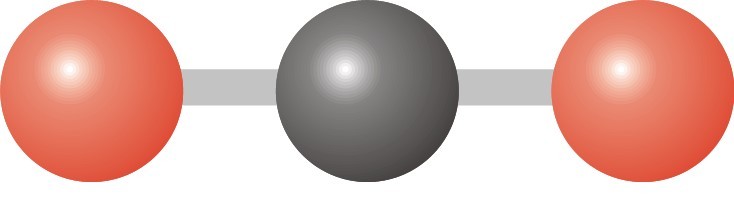
What 3-D VSEPR shape does this molecule exhibit?

a)

linear

b)

tetrahedral

c)

trigonal pyramidal

d)

trigonal planar

72.
What is the VSEPR shape of H2S?
a)
linear
b)
trigonal planar
c)
bent
d)
tetrahedral
73.

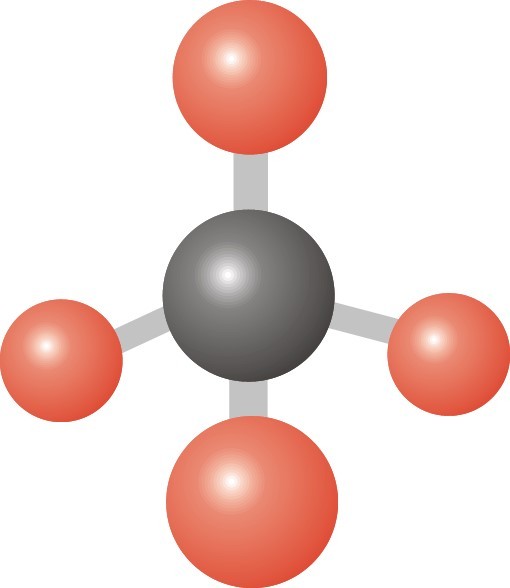
Which type of molecular shape is shown by this molecule?

a)

trigonal pyramidal

b)

tetrahedral

c)

bent

d)

trigonal planar

74.

Which of these Lewis structures is incorrect?

a)
b)
c)
d)
75.
Which molecule would have this molecular geometry?
a)
BF3
b)
CH4
c)
PCl5
d)
CO2
76.
Who could this molecule be?
a)
CH4
b)
CO2
c)
PCl5
d)
BF3
77.

What is a lone pair of electrons?

a)

Electron pairs that are lonely

b)

Electrons pairs that aren't bonded to another atom

c)

Electrons that have paired together

d)

When electricity has split atoms apart

78.

How many orbitals are available to hold electrons in the 6th energy level (n=6)?

a)

9

b)

16

c)

26

d)

36

79.
Identify the following element:
1s22s22p63s23p64s23d10
a)
nickel
b)
copper
c)
zinc
d)
gallium
80.
The second energy level (n=2) contains a total of 5 electrons...how many more electrons can fit in the 2nd energy level?
a)
0
b)
3
c)
5
d)
7
81.
Which of the following statements is true about the 3s and the 4s sublevels?
a)
These sublevels have the same energy
b)
These sublevels are the same distance from the nucleus
c)
These sublevels hold different amounts of electrons
d)
These sublevels have the same shape
82.

Principal Quantum Number

a)

Energy Level

b)

Sublevel

c)

Axis

d)

Spin

83.

Angular Momentum Quantum Number

a)

Energy Level

b)

Sublevel

c)

Axis

d)

Spin

84.

Spin Quantum Number

a)

Energy Level

b)

Sublevel

c)

Axis

d)

Spin

85.

Magnetic Quantum Number

a)

Energy Level

b)

Sublevel

c)

Axis

d)

Spin

86.

What is symbolized by the letter n, and can only be positive whole integers?

a)

Energy Level

b)

The Sublevel

c)

Orbital Orientation

d)

Spin of Electron

87.

How many orbitals are in energy level 1?

a)

1

b)

4

c)

9

d)

16

88.

How many orbitals are in energy level 2?

a)

1

b)

4

c)

9

d)

16

89.

How many orbitals are in energy level 3?

a)

1

b)

4

c)

9

d)

16

90.

How many orbitals are in energy level 4?

a)

1

b)

4

c)

9

d)

16

91.

Which sublevels are in energy level 1?

a)

s

b)

s, p

c)

s, p, d

d)

s, p, d, &f

92.

Which sublevels are in energy level 2?

a)

s

b)

s, p

c)

s, p, d

d)

s, p, d, &f

93.

Which sublevels are in energy level 3?

a)

s

b)

s, p

c)

s, p, d

d)

s, p, d, &f

94.
What atom matches this electron configuration?
1s2 2s2 2p6 3s2
a)
Neon
b)
Magnesium
c)
Aluminum
d)
Potassium
95.
Which is the electron configuration for an oxygen atom?
a)
1s22s22p63s23p64s2
b)
1s22s22p4
c)
1s22s22p6
d)
1s22s22p63s23p6
96.
What is the maximum number of electrons that an orbital can have?
a)
1 electron
b)
2 electrons
c)
3 electrons
d)
4 electrons
97.
How many valence electrons are represented here?
a)
7
b)
5
c)
2
d)
8
98.
What atom matches this electron configuration?
[Xe] 6s2 4f14 5d9
a)
Mercury
b)
Gold
c)
Platinum
d)
Thallium
99.
What is the shorthand electron configuration for Sulfur atom?
a)
[Ar] 3p4
b)
[He] 3s23p4
c)
[Ne] 3s23p4
d)
[Na] 3s23p3
100.
Which element is pictured?
a)
neon
b)
fluorine
c)
magnesium
d)
argon
101.
Which of the following is a p block element?
a)
Ca
b)
Ar
c)
Re
d)
Au