Worksheets
Review for Unit 2 Matter and Atomic Structure
Total questions: 139
Worksheet time: 2hrs 4mins
The smallest part of an element that has all the properties of that element.
PROTON
NEUTRON
ELECTRON
ATOM
Positively charged particle in the nucleus of an atom.
PROTON
NEUTRON
ELECTRON
ATOM
A subatomic particle that has no charge and that is found in the nucleus of an atom.
PROTON
NEUTRON
ELECTRON
ATOM
A subatomic particle that has a negative charge in the orbitals.
PROTON
NEUTRON
ELECTRON
ATOM
The simplest form of matter
Molecule
Compound
Element
Water
This is equal to the number of protons in the nucleus of an atom.
Atomic Mass
Atomic Number
Isotopic Number
Atomic Radius
Electrons located on the outermost energy level of an atom.
Protons
Valet Electrons
Valence Electrons
Orbital
The center of an atom that contains the protons and the neutrons.
NUCLEUS
ORBITAL
ENERGY LEVEL
CELL
The charge of the proton is
POSITIVE
NEGATIVE
NEUTRAL
The charge of the electron is
POSITIVE
NEGATIVE
NEUTRAL
The charge of the neutron is
POSITIVE
NEGATIVE
NEUTRAL

How many protons does the element gold have?
79
196.967
196
118
Adam analyses a sample of a substance. He concludes that it consists of more than one type of atom chemically combined. What does the substance represent
an element
a compound
a heterogeneous mixture
a homogeneous mixture
What composes an element?
atoms of the same structure
compounds of the same structure
mixtures of different substances
molecules of different structures
A student leaves a bowl of ice cream on a table, where it turns to a liquid. The student places the liquid ice cream back into the freezer overnight. How do the motion of the particles in the ice cream change when it is placed in the freezer?
the particles slow down and move closer together
the particles speed up and move closer together
The particles slow down and move farther apart
the particles speed up and move farther apart
Which statement best describes a gas?
a gas has particles that are close together but can slide past one another
a gas has particles that have large distances between them and move freely
a gas has particles that are close together but move freely
a gas has particles that have not space between them and do not move

A student sketches the particles of a particular substance in the three states of matter. Which state of matter is shown by each sketch.
A is solid, B is liquid, and C is gas
A is gas, B is solid, and C is liquid
A is liquid, B is gas, and C is solid
A is liquid, B is solid, and C is gas

A substance changed from one state to another. The image shows its particle motion in the first state and the second state. How is the transition between State 1 and State 2 best described?
solid state to liquid state
liquid state to solid state
liquid state to gaseous state
gaseous state to solid state
Which particle diagram can be classified as a compound?


What are the building blocks of matter?
Atoms
Molecules
Compounds
Cells
Legos
__ have a +1 charge.
Quarks
Protons
Gluons
Electrons
Neutrons
Which subatomic particle has the smallest mass?
protons
neutrons
electrons
Most of an atom is made up of...
energy
protons
empty space
neutrons
Electrons are located______.
outside the nucleus
inside the nucleus
Which two particles have about the same amount of mass (1amu)?
neutrons and protons
protons and electrons
electrons and neutrons
Neutrons are located______.
outside the nucleus
inside the nucleus
Elements are identified by the number of ___ it has.
neutrons
gluons
quarks
electrons
protons
The subatomic particles are:
neutrons, quarks, & electrons
gluons, electrons, & protons
quarks & gluons
electrons, neutrons, & protons
protons & neutrons
__ have a -1 charge.
Quarks
Protons
Gluons
Electrons
Neutrons
__ have a 0 charge (neutral).
Quarks
Protons
Gluons
Electrons
Neutrons
Three __ make up each particle inside the nucleus.
Quarks
Protons
Gluons
Electrons
Neutrons
The number of protons in an atom is called its ___. This is also unique for each element.
isotope
element symbol
Gluons
mass number
atomic number
Different ___ of an element have different mass numbers because they have different numbers of neutrons.
isotopes
ions
Gluons
mass numbers
atomic numbers
Atoms can gain or lose electrons and become ___, which are atoms that have a positive or negative charge because they have unequal numbers of protons and electrons.
isotopes
ions
Gluons
molecules
atomic numbers
Around 400 B.C.E., the philosopher ____ introduced the idea of the atom as the basic building block matter.
Democritus
John Dalton
JJ Thomson
Earnest Rutherford
Niels Bohr
Around 1800, the English chemist __ reintroduced the idea of the atom.
Democritus
John Dalton
JJ Thomson
Ernest Rutherford
Niels Bohr
In 1897, ____ discovered the first subatomic particle, the electron, while researching cathode rays.
Democritus
John Dalton
JJ Thomson
Ernest Rutherford
Niels Bohr
___ discovered the nucleus of the atom in 1911.
Erwin Schrödinger
John Dalton
JJ Thomson
Ernest Rutherford
Niels Bohr
Thomson's model of the atom could be described as follows:
nucleus in the center with regions around the nucleus, called orbitals, where electrons are most likely to be (Electron cloud model)
electrons move around the nucleus only at fixed distances from the nucleus based on the amount of energy they have.
negative electrons are scattered throughout a sphere of positive charge. (Plum pudding model)
the electrons move through empty space around the tiny positive nucleus like planets orbiting the sun. (Planetary model)
solid, hard spheres
____ proposed a model where electrons move around the nucleus only at fixed distances, called energy levels, from the nucleus based on the amount of energy they have.
Erwin Schrödinger
John Dalton
JJ Thomson
Ernest Rutherford
Niels Bohr
Bohr's model of the atom could be described as follows:
nucleus in the center with regions around the nucleus, called orbitals, where electrons are most likely to be (Electron Cloud Model)
electrons move around the nucleus only at fixed distances from the nucleus based on the amount of energy they have.
negative electrons are scattered throughout a sphere of positive charge. (Plum pudding model)
the electrons move through empty space around the tiny positive nucleus like planets orbiting the sun. (Planetary model)
solid, hard spheres
Which of the following is the description of the model is still accepted by scientists today and it is based on orbitals
nucleus in the center with regions around the nucleus, called orbitals, where electrons are most likely to be (Electron Cloud model)
electrons move around the nucleus only at fixed distances from the nucleus based on the amount of energy they have.
negative electrons are scattered throughout a sphere of positive charge. (Plum pudding model)
the electrons move through empty space around the tiny positive nucleus like planets orbiting the sun. (Planetary model)
solid, hard spheres
In the 1920s, ___ proposed that electrons travel in waves, which means their exact positions cannot be determined. He developed an equation to calculate the chances of an electron being in any given place. Using his equation, he identified regions around the nucleus, called orbitals, where electrons are most likely to be.
Erwin Schrödinger
John Dalton
JJ Thomson
Ernest Rutherford
Niels Bohr
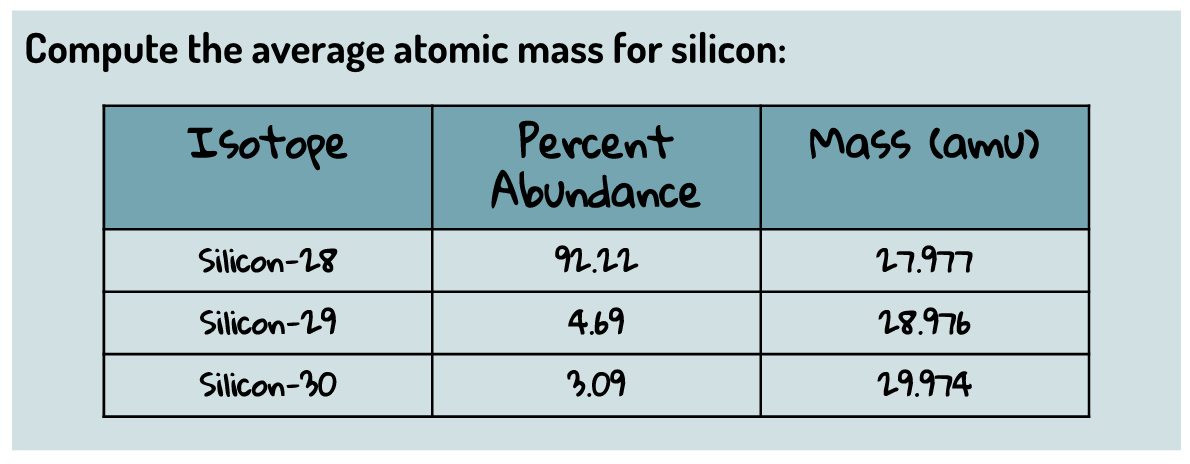
To calculate average atomic mass, you need
the atomic mass of each isotope
the percent abundance of each isotope
the atomic mass and percent abundance of each isotope
to find the average of the atomic masses of each isotope
What is the relative mass of an electron?
1 amu
0 amu
An element has two isotopes, one with a mass of 39 and one with a mass of 41. If the average mass is 40.6, which isotope is more abundant?
mass of 39
mass of 41
they are both equally abundant
A state of matter that has a definite volume and shape.
solid
liquid
gas
matter
Fourth state of matter plasma exists at
high temperature
low temperature
room temperature
Stainless steel is an example of
Element
Compound
Heterogeneous mixture
Homogeneous mixture
Boiling point is an example of extensive physical properties.
True
False


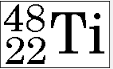


What is an isotope?
A charged atom
Two atoms of the same element with different amounts of neutrons
Two atoms of the same element with different amounts of protons
A neutral atom
how many electrons does an uncharged atom of Neon have?
8
9
10
11
Which two components of an atom contribute to the mass?
Protons and neutrons
Protons and electrons
neutrons and electrons
What has atoms arranged in an ordered pattern?
Protons
Crystals
Solids
Matter
Anything that takes up space is called WHAT?
Atoms
Crystals
Solids
Matter
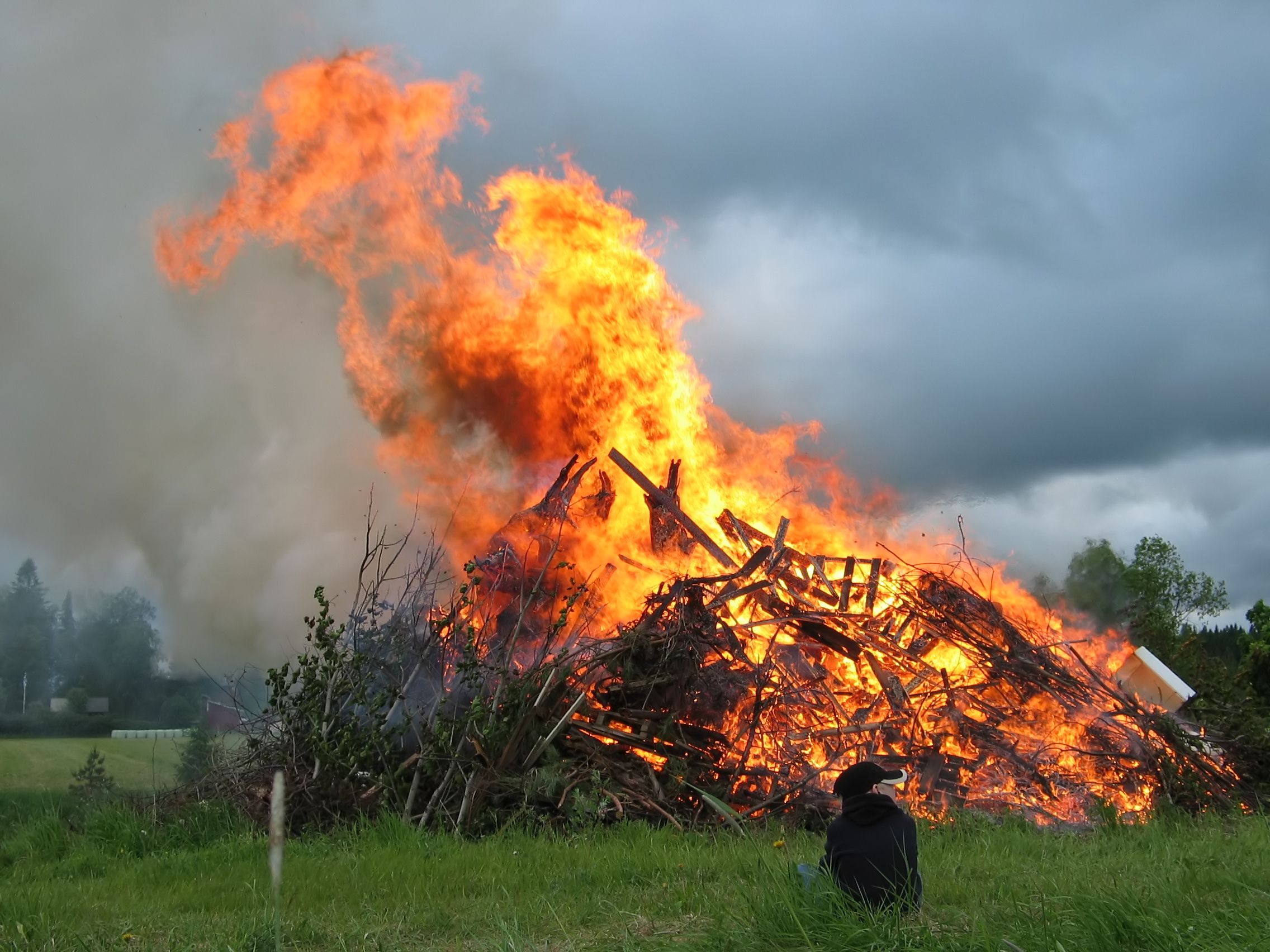


Which of the following is not a clue that a chemical reaction has taken place?
Changing size
Changing color
A gas being formed
Formation of a precipitate
An ice cream cone melts in a kid's hand while walking outside on a hot summer day. What is this an example of?
Physical property
Chemical property
Physical change
Chemical change
Water boils at 100˚C. What is this an example of?
Physical property
Chemical property
Physical change
Chemical change
Benzene is a compound that is highly flammable. What is this an example of?
Physical property
Chemical property
Physical change
Chemical change
Copper is a good conductor of heat and electricity. What is this an example of?
Physical property
Chemical property
Physical change
Chemical change
Melting point is...
The temperature at which a solid can change to a liquid
The temperature at which a solid can change to a gas
The temperature at which a gas can change to a liquid
The temperature at which a liquid can change to a solid
The melting point of water is...
100 degrees Celsius
14 degrees Celsius
32 degrees Celsius
0 degrees Celsius
The boiling point of water is...
32 degrees Celsius
109 degrees Celsius
100 degrees Celsius
-29 degrees Celsius
What word describes the relationship between the mass of a material and its volume?
Volume
Weight
Height
Density
The ability to be hammered into different shapes is __________.
ductility
malleability
density
volume
If a substance is ductile, it can be _______________.
very heavy for its size
easily breakable
used to insulate wires
rolled into thin wires
Which set of properties, intensive or extensive, are based on the size of a sample?
intensive
extensive
What kind of physical property is this? Color
intensive
extensive
What kind of physical property is this? Energy
intensive
extensive
What kind of physical property is this? Number of Atoms
intensive
extensive
What kind of physical property is this? Density
intensive
extensive
Melting point
Intensive Property
Extensive Property
Which instrument is used to measure an intensive property?


Which of the following properties is related to mass and volume, but not an extensive property?
Number of Atoms
Moles
Density
Potential Energy

Which Russian chemist is commonly considered to be the developer of the modern Periodic Table of the Elements?
Nikolay Basov
Pavel Cherenkov
Antoine Lavoisier
Dmitri Mendeleev

Which French nobleman is widely considered the "father of modern chemistry"?
Blaise Pascal
Dmitri Mendeleev
Antoine Lavoisier
Louis Pasteur
Who developed the Law of Conservation of Mass?
Amedeo Avogadro
Henri Becquerel
John Dalton
Demokritos
Antoine Lavoisier
Who discovered electrons?
Joseph Priestly
Henri Becquerel
John Dalton
Robert Millikan
J. J. Thomson
Who discovered protons?
Joseph Priestly
Ernest Rutherford
John Dalton
Robert Millikan
J. J. Thomson
Who developed the Atomic Theory?
Joseph Priestly
Ernest Rutherford
John Dalton
Robert Millikan
J. J. Thomson
Who developed the Law of Multiple Proportions?
Antoine Lavoisier
Robert Boyle
John Dalton
Robert Millikan
J. J. Thomson
Who developed the Law of Definite Proportions?
Antoine Lavoisier
Robert Boyle
John Dalton
Joseph Proust
J. J. Thomson
Who named atoms?
Antoine Lavoisier
Robert Boyle
John Dalton
Democritos
J. J. Thomson
Who discovered the charge/mass of an electron?
Joseph Priestly
Henri Becquerel
John Dalton
Robert Millikan
Antoine Lavoisier
What type of decay is shown here
23892U ---> 23490Th + 42He.
alpha
beta
gamma
What type of nuclear decay is shown here
13756Ba →→ 13756Ba + γ rays
alpha
beta
gamma
Finish this equation
20983Bi--> _______ + 20581Tl
42He
0-1e
y
Identify the type of nuclear decay shown here
21483Bi → 0-1e + 21484Po
alpha
beta
gamma
finish the equation
22688Ra --> ____ + 22688Ra
42He
0-1e
y
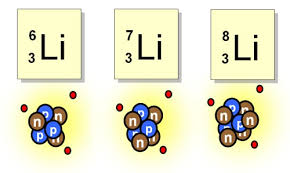
Carbon-14 and carbon-12 have the same number of protons but a different number of neutrons. These different forms of the same element are called
radioactive
isotopes
nuclei
tracers
The mass number of a nucleus is equal to ______.
the number of protons plus the number of neutrons
the number of electrons
the number of protons
the number of neutrons
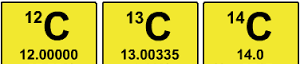
Rubidium has two common isotopes, 85Rb and 87Rb. If the abundance of 85Rb is 72.2% and the abundance of 87Rb is 27.8%, what is the average atomic mass of rubidium?
85.468 amu
37 amu
85.6 amu
86.4 amu
An atom of tin has an atomic number of 50 and a mass number of 119. How many protons, electrons, and neutrons are found in one neutral atom of tin?
50 protons, 69 electrons, 50 neutrons
50 protons, 50 electrons, 69 neutrons
69 protons, 50 electrons, 69 neutrons
69 protons, 69 electrons, 50 neutrons