wayground logo

Free Printable Worksheets

Font size

S
M
L
XL
Worksheets

Quiz #3 Topics for the First Quarter

Total questions: 100

Worksheet time: 1hrs 28mins

Name
Class
Date
1.

There are some similarities between prokaryotic and eukaryotic cells. Which of the following structures is found in both prokaryotic and eukaryotic cells?

a)

Lysosome

b)

Mitochondrion

c)

Nucleus

d)

Ribosome

2.

Cells need to bring in molecules to carry out cellular processes. Often, this requires moving the molecules across the cell membrane against the concentration gradient. How do these molecules get into the cell?

a)

passive transport by diffusion

b)

active transport using ATP

c)

passive transport by osmosis

d)

phagocytosis

3.

Which characteristic do most plants have in common?

a)

they are unicellular

b)

they are prokaryotic

c)

they produce seeds

d)

they are autotrophic

4.

Which cell structure is correctly paired with its primary function?

a)

ribosome - protein synthesis

b)

mitochondrion - movement

c)

vacuole - cell division

d)

nucleus - storage of nutrients

5.

Solar energy is used to produce energy-rich compounds in which structure?

a)

A

b)

B

c)

C

d)

D

6.

A person with swollen gums rinses his mouth with warm salt water, and the swelling decreases. Which of the following has occurred?

a)

The swollen gums have absorbed the saltwater solution.

b)

The saltwater solution lowers the temperature of the water in the gums.

c)

The salt in the solution has moved against the concentration gradient.

d)

The water in the gums has moved out due to the high concentration of salt in the solution.

7.

The diagram below represents a cell.


Which organelle is the site where amino acids are synthesized into proteins?

a)

1

b)

2

c)

3

d)

4

8.

Which of these best completes this concept map?

a)

an animal cell

b)

a prokaryotic cell

c)

a virus

d)

a plant cell

9.

The cell membrane of the red blood cell will allow water, oxygen, and carbon dioxide to pass through. Because other substances are blocked from entering, this membrane is called

a)

perforated

b)

semi-permeable

c)

non-conductive

d)

permeable

10.

Which type(s) of cells have genetic material that is contained in a nucleus?

a)

bacteria

b)

only animal cells

c)

protists

d)

both plant and animal cells

11.

Based on this experiment, which of the following should be inferred about cells with semipermeable membranes?

a)

Substances other than water may also cross the cell membrane.

b)

Substances other than water may block pores in the cell membrane.

c)

Water enters the cell when placed in environments of high water concentration.

d)

Water leaves the cell when placed in environments with a low concentration of solutes

12.

Carmen conducted an experiment to determine if listening to different types of music would affect a person’s pulse. Her hypothesis was that pulse rate would change with different types of music. Each person listened to seven different selections of music for 30 seconds each. Each person’s pulse was taken before the music and then after each 30-second interval of music. The pulses were taken again after the music selections were completed. Based on her experiment, Carmen concluded that a person’s pulse rate changed when the person listened to different types of music.


Which component is missing from Carmen’s experiment?

a)

a question

b)

a hypothesis

c)

a control group

d)

a description of the experiment

13.

The graph below shows atmospheric carbon dioxide levels since the year 1880.

a)

. Atmospheric carbon dioxide levels are responsible for global temperature change.

b)

Atmospheric carbon dioxide levels have been rising at about the same rate for the past century.

c)

Atmospheric carbon dioxide levels have remained the same over the past century.

d)

Atmospheric carbon dioxide levels have been rising at an increasingly higher rate as the past century has progressed.

14.

A scientist performs an experiment to see if acids have an effect on the health of a particular type of plant. Three sets of plants were treated with acidic solutions of known pH while the control set was treated with a solution of neutral pH 7.


Which is the best conclusion for this experiment?

a)

Acid has no effect on the health of this type of plant.

b)

High acidity is helpful to this type of plant.

c)

Low acidity is harmful to this type of plant.

d)

High acidity is harmful to this type of plant.

15.

Why can bacteria recognize a human gene and then produce a human protein?

a)

DNA replication in bacteria and humans is the same.

b)

Bacterial cells contain the same organelles as human cells.

c)

The basic components of DNA are the same in humans and bacteria.

d)

Bacterial cells and human cells contain the same kind of chromosomes.

16.

Which choice describes DNA after replication has taken place?

a)

one molecule with two original strands and one molecule with two new strands

b)

two molecules, each with one original and one new strand

c)

two molecules, each with two new strands

d)

two molecules, each with two old strands

17.

At what point in the cell cycle does DNA replication occur and why?

a)

before a cell divides, to provide each of the two resulting cells with a complete set of DNA instructions

b)

before a cell divides, to ensure that the DNA will fit into the resulting cells

c)

during cell division, to ensure that the DNA will fit into the resulting cells

d)

after a cell divides, to provide each of the two resulting cells with a complete set of DNA instructions

18.

A research group has discovered that damselflies, a type of dragonfly, are being infected by a particular type of aquatic protozoan. Both young and adult damselflies are not directly infected by the protozoan but contract the infection from the prey they eat. The graph shows the percentage of adult damselflies infected by protozoans during the summer and early fall.


Which of the following conclusions is supported by the graph?

a)

Infection in embanked ponds increased during the sampling period.

b)

Protozoans were more common in creek-fed ponds than embanked ponds.

c)

Protozoans reproduce more quickly in embanked ponds than creek-fed ponds

d)

Infection in creed-fed ponds remained constant throughout the sampling period.

19.
Water is essential for life. Its special properties make water the single most important molecule in plant life. Which of the following properties of water enables it to move from the roots to the leaves of plants?
a)
Water expands as it freezes.
b)
Water is an excellent solvent.
c)
Water exhibits cohesive behavior.
d)
Water is able to moderate temperature.
20.
Large bodies of water, such as lakes and oceans, do not quickly fluctuate in temperature. What is the reason for this phenomenon?
a)
Water is an acid.
b)
Water is a versatile solvent.
c)
Water has a high heat capacity.
d)
 Water acts as a buffer.
21.
Why does ice stay at the top of oceans instead of sinking to the bottom?
a)
 Ice is colder than liquid water.
b)
Ice is less dense than liquid water.
c)
Ice is more dense than liquid water.
d)
Ice is warmer than liquid water.
22.
Water is often called the "universal solvent" because many substances can be dissolved in water. What property of water allows it to be such a versatile solvent? 
a)
purity
b)
polarity and cohesion
c)
high heat capacity
d)
expansion upon freezing
23.
 Small insects can walk across the surface of calm water. Their feet push the surface of the water down slightly, somewhat like a person walking across a trampoline, but they do not break the surface. What is the best explanation for why this happens?
a)
The insects are light enough so that they do not break the hydrogen bonds holding the water molecules together
b)
The insects actually use their wings to hover slightly above the water's surface and they only skim it with their feet
c)
The insects' feet are non-polar, so they are repelled by the polar water molecules and are pushed away from the water's surface
d)
The insects are small enough to see the individual water molecules, so they are able to step carefully from one molecule to the next
24.
A florist places a bouquet of white carnations in water containing blue dye. After a time, the flowers turn blue. What process helped the carnations to change color?
a)
Specific heat 
b)
Surface tension
c)
Cohesion and adhesion of water molecules 
d)
Formation of covalent bonds between hydrogen and oxygen molecules
25.
Water makes up approximately 60% of the human body and plays a vital role in regulating body temperature. Which property of water makes it good at regulating temperature?
a)
Water is a good solvent.
b)
Water exhibits strong cohesion.
c)
. Water has an unusual crystalline structure.
d)
Water has a high capacity for heat.
26.
Water has a much higher specific heat than most other covalent compounds. What do you predict might happen if water had a low specific heat instead?
a)
Flooding would occur and animals would be forced to migrate
b)
 Harmful organisms living in water would reproduce at a rapid rate
c)
Organisms that are sensitive to changes in temperature would die
d)
Plants would not have enough water to effectively carry out photosynthesis
27.
 Many fish and aquatic plants can survive a cold winter because the layer of ice that forms at the top of the lake insulates the water below and prevents the lake from freezing solid. What unique property of water contributes to this effect? 
a)
Water absorbs heat when it evaporates and forms a gas 
b)
 Water expands and becomes less dense when it freezes.
c)
Water molecules completely separate into ions in solutions.
d)
 Water forms hydrogen bonds with ions and other polar substances. 
28.
 Which of the following characteristics of water is not a result of hydrogen bonding?
a)
adhesive strength
b)
capillarity
c)
cohesive strength
d)
All of the above are a result of hydrogen bonding.
29.
Which sequence of DNA bases would pair with this partial strand
CAT TCA CTG
a)
ATG TGA CAG
b)
TAC ACT GTC
c)
GTA AGT GAC
d)
CAT TCA CTG
30.
Which of the following units are repeatedly joined together to form a strand of DNA?
a)
amino acids
b)
nucleotides
c)
fatty acids
d)
polysaccharides
31.
The enzyme that unwinds the DNA to prepare for replication
a)
helicase
b)
replicase
c)
polymerase
d)
synthase
32.
DNA replication results in two DNA molecules,
a)
each one with two original strands
b)
each one with two new strands
c)
each one with one new strand and one original strand
d)
one with two new strands and the other with two original strands
33.
order of replication
a)
3, 4, 2, 1
b)
3, 1, 4, 2
c)
2, 1, 4, 3
d)
3, 4, 1, 2
34.
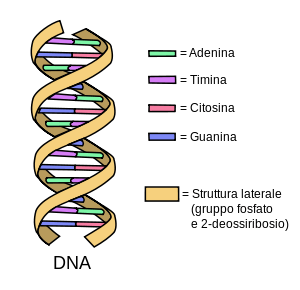
A process in which DNA has the unique ability to make an exact copy of itself.
a)
Replication
b)
Translation
c)
Transcription
35.
In what phase of the cell cycle does DNA replication take place?
a)
G1
b)
S
c)
G2
d)
M
36.
Which enzyme is responsible for adding nucleotides?
a)
Topoisomerase
b)
DNA Polymerase
c)
Ligase
d)
Primase
37.
The process of DNA replication is called semi conservative because it results in
a)
none of these
b)
Two DNA molecules.  One original molecule and one with two new strands
c)
two exact copies with new strands
d)
two identical molecules, each with 1 original strand and one new.
38.
Based on the diagram, how many origins of replication are represented?
a)
1
b)
2
c)
3
d)
4
39.
Place the following in sequential order
1. Recoil
2. Straightens the double helix
3. Breaks Hydrogen bonds
4. Adds Free nucleotides
a)
1, 2, 3, 4
b)
3, 4, 2, 1
c)
3, 2, 4, 1
d)
2, 3, 4, 1
40.
Based on the diagram, the enzyme (represented in gray) is most likely...
a)
DNA polymerase
b)
DNA Ligase
c)
Nuclease
d)
Helicase
41.
What will the first four bases of the new DNA strand look like if copying the template strand?
a)
TGGT
b)
ACCA
c)
GTTG
d)
CAAC
42.
Why does DNA replicate?
a)
To create another copy for the new cell
b)
To create a duplicate copy in case the original gets damaged
c)
To create a new copy to replace the damaged original
43.
Which of the following does DNA polymerase NOT do?
a)
connects nucleotides (in the new strand) through covalent bonds
b)
Matches the template nucleotides with free nucleotides
c)
proofreads
d)
It does all of these functions
44.
Which species’ DNA is most similar to the DNA of the toothed whale? 
a)
Hippopotamus 
b)
Baleen Whale
c)
Grazing Mammals
d)
Camels
45.
Some bacteria live in hot springs. Their cells contain enzymes that function best at temperatures of 70 °C or higher. At the temperature of 50 °C, how will the enzymes in these bacterial cells most likely be affected?
Enzymes work best at an optimal temperature.
a)
The enzymes will lose their bond structure and fall apart
b)
The enzymes will not increase the rate of reactions as much as they would at 70 °C. 
46.
Enzymes are composed of which macromolecule.
a)
lipids
b)
protein
47.
What is the relationship between enzymes and activation energy? 
a)
When an enzyme catalyzes a reaction, it decreases the activation energy of the reaction.
b)
When an enzyme catalyzes a reaction, it does not affect the activation energy of the reaction.
48.

As food travels through the digestive system, it is exposed to a variety of pH levels. The stomach has a pH of 2 due to the presence of hydrochloride acid (HCl), and the small intestine has a pH ranging from 7 to 9. HCl converts pepsinogen into pepsin, an enzyme that digests proteins in the stomach. Which of the following most likely happens to pepsin as it enters the small intestine?

a)

It becomes inactive.

b)

It begins to replicate.

c)

It's shape changes to engulf large proteins.

d)

It's activity increases to digest more proteins.

49.

In living cells, enzymes act as catalysts, which may reduce the amount of activation energy required for a chemical reaction to occur. In the graphs below, pathway x is a solid line representing the uncatalyzed reaction. The dotted line shows the catalyzed reaction. Which graph best illustrates the changes in a reaction when the catalyst reduces the amount of energy required?

a)
b)
c)
d)
50.

The diagram below shows the general structure of an amino acid. Which type of molecule is formed from amino acids?

a)

lipids

b)

proteins

c)

carbohydrates

d)

nucleic acids

51.

You are analyzing a compound in the laboratory. You find that it is made up of carbon, hydrogen, and oxygen in a ratio of two hydrogen atoms for each carbon atom. How will you classify the compound?

a)

lipid

b)

protein

c)

carbohydrate

d)

nucleic acid

52.

Fats, oils and cholesterol are all types of what?

a)

cell membranes

b)

hormones

c)

lipids

d)

fatty acids

53.

RNA and DNA are which type of macromolecules?

a)

Carbohydrate

b)

lipid

c)

nucleic acid

d)

protein

54.

What will most likely happen if an appropriate enzyme is added to a chemical reaction?

a)

The reaction rate will increase.

b)

The equilibrium of the reaction will be maintained.

c)

The reaction rate will decrease.

d)

The reaction will stop.

55.

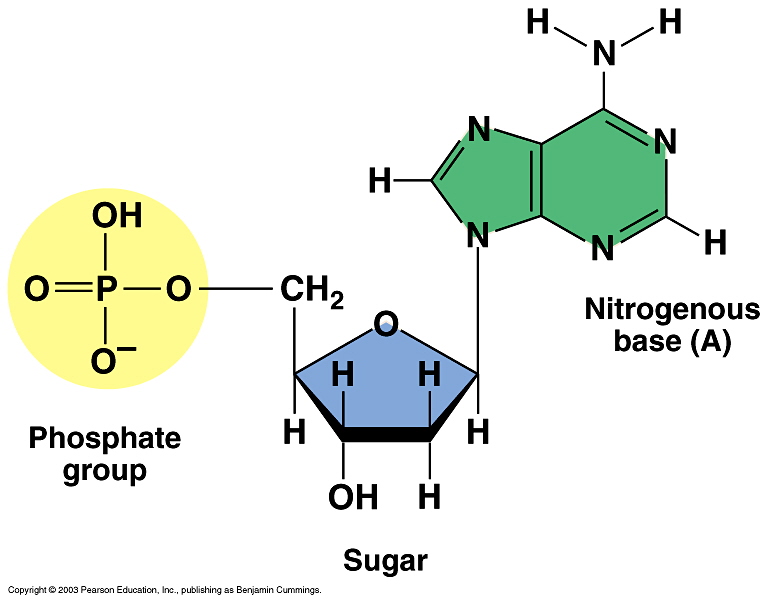
A sugar, a phosphate group, and a nitrogen base form the building blocks of which organic compound?

a)

carbohydrates

b)

lipids

c)

nucleic acids

d)

proteins

56.

The human body maintains a temperature of around 98.6 degrees at all times. Enzymes are involved in almost every chemical reaction in the body. Which of the following describes the connection between these two statements?

a)

Enzymes function best at a specific temperature.

b)

The body needs to be warm to prevent hypothermia.

c)

The body is kept relatively warm to prevent too much enzyme action.

d)

There is no connection between the two statements.

57.

The enzyme lactase will break down the sugar lactose into which of the following components?

a)

monosaccharides

b)

nucleic acids

c)

amino acids

d)

phospholipids

58.
Identify the biomolecule
a)
Carbohydrate
b)
Lipid
c)
Protein
d)
Nucleic Acid
59.
Identify the biomolecule
a)
Lipid
b)
Protein
c)
Carbohydrate
d)
Nucleic Acid
60.
What is the monomer for a protein?
a)
Monosaccharide
b)
Triglyceride
c)
Amino Acid
d)
Nucleotide
61.
What type of molecule is this?
a)
Nucleic acid
b)
Protein
c)
Carbohydrate
d)
Lipid
62.
If the enzyme has a pH ranging from 7 to 9 what effect would a pH of 3 have on the enzyme?
Enzymes work best at an optimal temperature and pH
a)
make it inactive
b)
no change
63.
The graph shows how the activity of an enzyme changes over a range of pH values. Which of the following conclusions can be drawn from this graph?
a)
pepsin works best at a pH near 2
b)
pepsin works best at a pH of 9
64.
The diagram below illustrates a biochemical process that occurs in organisms. What is another name for the substance labeled "catalyst"? 
a)
Enzyme
b)
Antibody
65.
The human body maintains a temperature of around 98.6 degrees at all times. Enzymes are involved in almost every chemical reaction in the body. Which of the following describes the connection between these two statements? 
a)
The body is kept relatively warm to prevent too much enzyme action
b)
Enzymes function best at a specific temperature.
66.
Which of the following best explains why enzymes are necessary for many cellular reactions? 
Enzymes speed up reactions
a)
The reactions are too slow to meet the needs of the cell if enzymes are missing.
b)
The reactions take up too much space in the cell if the enzymes are missing.
67.
Enzymes interact with the substrate at the 
a)
active site
b)
product
68.
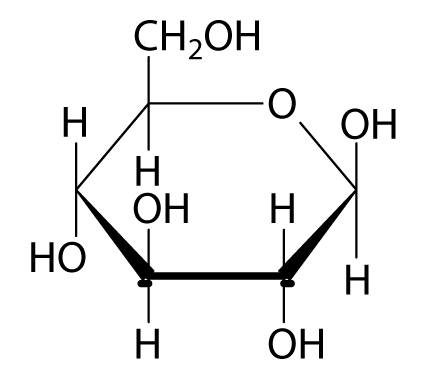
This macromolecule includes starches and sugary sacharides, such as glucose
a)
carbohydrates
b)
protein
c)
lipid
d)
nucleic acid
69.
This macromolecule is what we classify DNA and RNA as- it holds information!
a)
carbohydrate
b)
protein
c)
lipid
d)
nucleic acid
70.
This macromolecule includes fats and oils
a)
carbohydrate
b)
protein
c)
lipid
d)
nucleic acid
71.
This macromolecule is the main form of energy we consume.  We can find it in things like breads and pasta.
a)
carbohydrate
b)
protein
c)
lipid
d)
nucleic acid
72.
This macromolecule family is made by ribosomes and includes enzymes, cell protein channels, and many other structural function units.
a)
carbohydrate
b)
protein
c)
lipid
d)
nucleic acid
73.
This macromolecule is hydrophobic.  While not the main thing we get energy from, it also provides energy, and serves as a long-term energy storage.
a)
carbohydrate
b)
protein
c)
lipid
d)
nucleic acid
74.
This macromolecule is made out of amino acids.
a)
carbohydrate
b)
protein
c)
lipid
d)
nucleic acid
75.
This macromolecule family only contains the elements C,H, and O .
a)
carbohydrate
b)
protein
c)
lipid
d)
nucleic acid
76.
Which of the four major biological macromolecules can be easily identified by the nitrogen base found in its structure?
a)
DNA
b)
Protein
c)
Lipid
d)
Carbohydrate
77.
If a substance has a pH below a 7, it is considered a(n)
a)
acid
b)
base
c)
neutral
78.
If a substance has a pH above a 7, it is considered a(n)
a)
acid
b)
base
c)
neutral
79.
If a substance has a pH of exactly 7, it is considered a(n)
a)
acid
b)
base
c)
neutral
80.
If an enzyme is overheated or is placed in a pH outside of its normal range, what will happen?
a)
the enzyme will denature
b)
the enzyme will be activated
c)
the enzyme will become more active
d)
the enzyme will bond with other enzymes
81.
what happens when an enzyme denatures?
a)
it falls apart and is no longer effective
b)
it is finished being produced
c)
it will bond with other enzymes
d)
it will become a haberdasher
82.
This picture is an enzyme-substrate complex.  What is being shown at point A?
a)
substrate
b)
enzyme
c)
protein
d)
product
83.
Enzymes speed up chemical reactions by
a)
lowering activation energy needed for a chemical reaction to occur
b)
heating up the substrate
c)
creating more reactions
d)
increasing activation energy
84.

What organelle is called the "powerhouse" of a cell?

a)

mitochondria

b)

nucleus

c)

cell wall

d)

cell membrane

85.

What is the function of a chloroplast?

a)

makes proteins for animal cells

b)

allows materials in and out of the cell

c)

provides structure and support

d)

absorbs sunlight for photosynthesis

86.

What is the structure that contains DNA and directs the cell?

a)

endoplasmic reticulum

b)

central vacuole

c)

cell wall

d)

nucleus

87.

Looking in a microscope, you see cells that have rectangular shapes and a green color. What type of cells are you probably viewing?

a)

plant cells

b)

animals cells

c)

muscle cells

d)

blood cells

88.

Identify the structure that is indicated by the arrow in the image.

a)

cell wall

b)

central vacuole

c)

chloroplast

d)

nucleus

89.
Makes protein for the cell: 
a)
Nucleus
b)
Ribosomes
c)
Cytoplasm
d)
Cell Membrane
90.
What can only be found in plant cells?
a)
Cell membrane
b)
Vacuole
c)
Chloroplast
d)
Mitochondrion
91.
The ______________ is the brain of the cell.
a)
Vacuole
b)
Nucleus
c)
Chromosomes
d)
60 W light bulb
92.
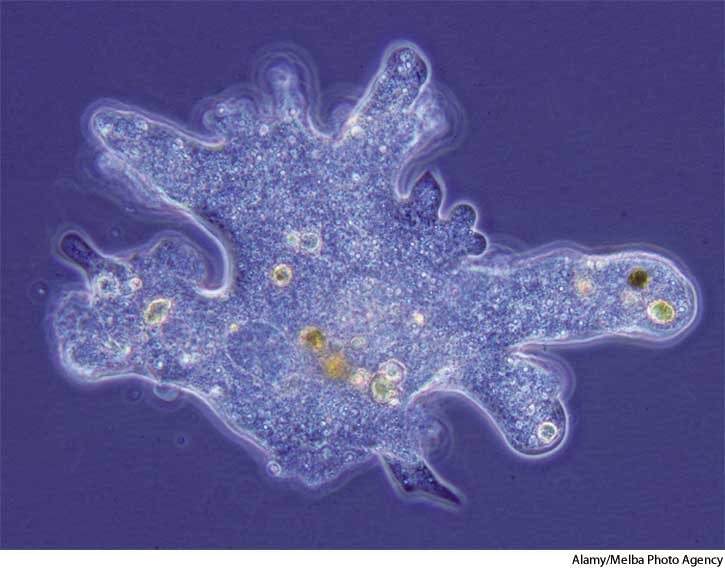
An Amoeba is a unicellular, animal-like protist that lives in ponds and streams. According to cell theory, where did this cell come from?
a)
another pre-existing amoeba cell.
b)
energy from sun that allowed the protist to reproduce.
c)
a multicellular organism.
d)
the nonliving environment.
93.
What tool do you use to view the cells?
a)
metric ruler
b)
centrifuge
c)
microscope
d)
telescope
94.
All cells come from___________ cells.
a)
pregnant
b)
pre-existing
c)
paternal
d)
pin size
95.
An organism made of one cell is called
a)
unicellular organism
b)
multicellular organism
96.
What is one way in which all living things on Earth are alike?
a)
All living things have hair.
b)
All living things are made of cells and come from other cells.
c)
The cells of all living things have chloroplast.
d)
All living things can move. 
97.
Which of the following scientists concluded that all animals are made of cells?
a)
Rudolf Virchow
b)
Matthais Schleiden
c)
Robert Hooke
d)
Theodor Schwann
98.
Which of the following scientists was the first to observe bacteria under a microscope?
a)
Anton van Leuwenhoek
b)
Matthais Schleiden
c)
Robert Hooke
d)
Theodor Schwann
99.
Which is NOT part of the Cell Theory
a)
New cells are produced from existing cells
b)
All living things are composed of cells
c)
Only eukaryotic cells have a nucleus
d)
Cells are the basic unit of structure & function in living things
100.

The most important difference between prokaryotic and eukaryotic cells is that eukaryotic cells contain:

a)

Membrane-bound organelles

b)

DNA

c)

Ribosomes

d)

Cytoplasm