
 Worksheets
INTEGRATED SEM 1 FINAL EXAM '20-21
Total questions: 120
Worksheet time: 2hrs 59mins
A push or a pull...
vector
net force
velocity
force
The force that results from combining all of the forces on an object...
net force
contact force
constant speed
balanced force
The net force is ZERO Newtons and the object will NOT change velocity...
contact force
balanced force
applied force
unbalanced force
Force that exists when object are touching...
non contact force
applied force
contact force
net force
Forces that exists when objects are not touching...
applied force
net force
contact force
non contact force
A vector that represents an object's speed and direction...
speed
force
average speed
velocity
The rate of changed of position with time...
average speed
velocity
speed
constant speed
A starting point used to describe the position of an object...
reference point
velocity
speed
average speed
To apply a force to something...
contact force
noncontact force
exert
net force
A force exerted by a material when it is stretched or compressed...
tension force
elastic force
compression force
net force
A pulling force exerted by a material when it is stretched...
elastic force
tension force
compression force
net force
The force exerted by an object that is perpendicular to the surface of the object...
applied force
friction
normal force
gravity
The force that causes motion of an object...
normal force
friction
gravity
applied force
Slows or stops rolling objects...
rolling friction
sliding friction
static friction
fluid friction
Slows or stops objects from sliding...
rolling friction
sliding friction
fluid friction
static friction
Slows or stops objects moving in a gas or liquid...
rolling friction
sliding friction
fluid friction
static friction
Forces that are equal in size but opposite in direction are _______________. *Select all that apply.
balanced forces
unbalanced forces
frictional forces
net forces
force pairs

Which pair of force vectors represents an object that is accelerating to the left?
pair A
pair B
pair C
pair D
The unit of force is _________.
m/s2
kg
n
N
m/s
When two birds are pulling on a worm and the worm moves toward the first bird, you know that the forces are ________.
long-range
force pairs
unbalanced
balanced


Calculate the Net Force.
6N right & 9N down
6N right & 9N up
15N up & right
3N up
6N left & 9N up

Calculate the Net Force.
0N horizontal & 82N down
140N left & 82N down
222N down
140N right & 82N down
12N right
At the top of a loop in a rollercoaster, there is more of this type of energy?
Potential
Kinetic

At which point is potential energy greatest?
W
X
Y
Z

The higher the acorn is hanging on a tree, the more ________ energy it will have.
Potential
Kinetic
both kinetic & potential
none of the above

At which point in the roller-coaster's journey along the track does it have the greatest kinetic energy?
W
X
Y
Z

At which point in the roller-coaster's journey along the track does it have the least kinetic energy?
W
X
Y
Z
Select all that apply to kinetic energy.
energy due to position
energy of motion
energy that is waiting
dependent on mass
dependent on velocity
Select all that apply to potential energy.
dependent on velocity
dependent on height
dependent on mass
energy of motion
energy due to position
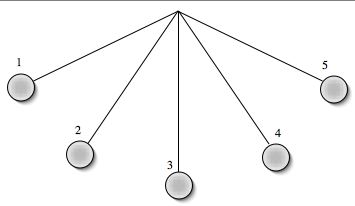
When a pendulum swings, at which point is kinetic energy lowest?
1
1 & 5
3
2 & 4
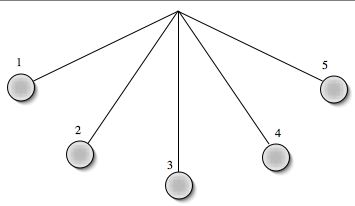
When a pendulum swings, at which point is potential energy at its lowest?
1 & 5
2 & 4
3
all of the above
A 0.7 kilogram bird is flying at a constant speed of 9.2 m/s. What is the bird's kinetic energy ?
42.32 J
59.248 J
3.22 J
29.624 J
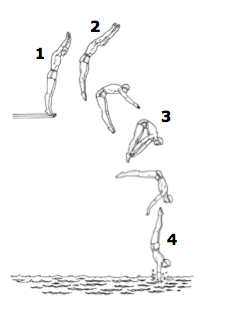
The diagram to the right represents a diver’s motion from the top of a high diving board into a pool of water. At what point does the diver have the greatest kinetic energy and the least potential energy?
1
2
3
4
A 45.3 kg person walks from the ground to the roof of a 67.9 m tall building. How much gravitational potential energy does she have at the top of the building?
30,143.526 J
3,075.87 J
443.94 J
665.42 J
How can I gain potential energy? (choose the best answer)
Run a mile
Walk on a relatively flat trail
Climb a mountain
Go down the stairs

How can we increase the gravitational potential energy of the car?
Strap a boulder to the car so that it weighs more.
Keep the length of the hill at 50 m but only 5 m tall.
Take the interior out of the car so that the car has less mass.
Keep the hill at 10 m tall but increase the length of the hill so that the car has farther to roll.


Kinetic energy depends on
mass and height
height and velocity
mass and velocity
mass and force

Potential energy depends on
mass and height
height and velocity
mass and velocity
height and force

At which position on the diagram would an apple have the relatively equal amounts of kinetic and potential energy?
Position 1
Position 2
Position 3
Position 4
As energy transformations occur within a system the total amount of energy in the system __________ even if some energy is "lost" to the environment as heat energy
increases
stays the same
decreases
is wasted


Which of the following is a conversion from chemical energy to thermal energy (Heat) ?
Wood being burned at a bonfire
Diesel is burned to power a semi truck
Food being digested and used as energy in your body
all the above
Particles with the _________ charge are attracted to each other.
same
opposite
________ electricity is the buildup of charged particles in a material.
current
charge
static
circuit

What does the following picture represent?
An electromagnet
A permanent magnet
A generator
A motor


Electric currents produce _____________
electron clouds
magnetic fields
sound waves
In magnets and electromagnets, dissimilar (opposite) poles attract
true
false
How can the strength of an electromagnet be increased? (mark all that apply)
increase the current flowing through the coil
increase the number of coils
add an amplifier to it
use an iron core instead of steel inside the coil
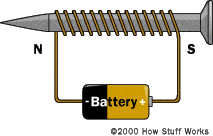
What kind of magnet can be turned on and off?
refrigerator magnet
electromagnet
magnetite
iron

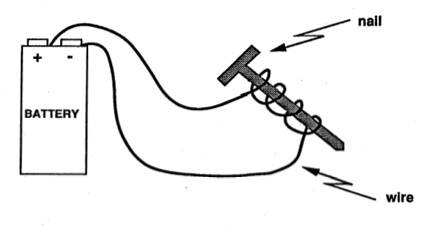
This is a picture of a simple electromagnet. How can the electromagnet be made stronger?
Add more voltage.
Use a smaller battery.
Reverse the poles of the magnet.
Remove all the coils and the nail.
Magnets on refrigerator cannot be turned off. Which type of magnets they belong?
electromagnets
battery
permanent magnets
copper wire
What are the components of the electromagnets?
battery, wire and bulb
battery , copper wire and plastic bottle
battery, copper wire and iron nail
battery, wire and aluminum
In NON-MAGNETIZED materials, the electrons...
all spin in the SAME direction and the charges cancel out
all spin in DIFFERENT directions and the charges cancel out
some electrons spin in the SAME direction and SOME electrons spin in DIFFERENT directions
all spin in the SAME direction and creates a charge
all spin in DIFFERENT directions and creates a charge
What is the difference between electric current and static electricity?
electric current has a moving charge and the charge is stationary in static electricity
static electricity has a moving charge and the charge is stationary in electric currents
nothing; they both have moving charges
nothing; they both have stationary charges
Select all that describe examples of static electricity.
electricity powering a lighbulb
shuffling your feet across the carpet
repeatedly running a plastic comb against your hair
rubbing a balloon on your hair
electricity powering a heater


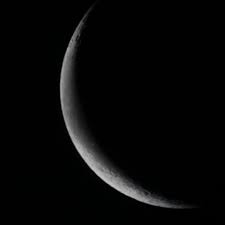
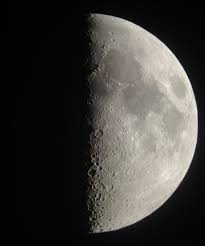
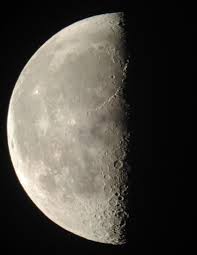


Which moon phases are "waning"? *Select all that apply.
3
8
2
5
7

Which moon phases are "waxing"? *Select all that apply.
4
5
7
3
1

Which lunar phase would be seen from Earth when the Moon is at position 7?
new moon
first quarter
full moon
third quarter

Which lunar phase would be visible when the Moon is at position 4?
waxing crescent
waxing gibbous
waning crescent
waning gibbous

When is a Spring Tide most likely to occur?
January 12th and 28th
January 6th and 20th
January 1st, 4th, and 9th
January 13th through the 16th

True or False? The Sun has a greater influence on Earth's tides than the moon.
TRUE
FALSE
A(n) ______________ tide occurs when the Sun is at right angles to the line between Earth and the Moon.
high
Neap
low
Spring
A(n) ___________ tide occurs when the Sun, Earth, and the Moon are nearly in a line.
Spring
high
low
Neap
The bulge of water on the side of the Earth closest to the Moon produces ___________.
high tide
low tide
neap tide
spring tide
As water flows toward the high tides, the water halfway between the high tides causes ____________.
neap tide
high tide
spring tide
low tides
What do we call tides that have a smaller range that happen when the Sun and Moon are at right angles to each other?
Neap Tide
Spring Tide
Larger Change
Smaller Change

We do NOT have a Solar or Lunar eclipse each month because...
The tilt of the moon's orbit is at 5 degrees
The moon is too small
The moon's orbital distance changes
All choices

Earth's rotation causes the APPARENT...
(select all that apply)
path of the Sun rising in the east and setting in the west
seasons
movement of stars from east to west
movement of the Earth revolving around the Moon
Earth rotates so quickly it causes the planet to bulge out slightly at the equator and shrink slightly at the poles causing its shape to be...
spherical
flat
oblate spheroid
elliptical
The Sun's rays hit the _________ most directly causing it to be __________.
The Sun's rays hit the _________ less directly causing it to be __________.
poles, warmer
equator, colder
equator, colder
poles, warmer
poles, colder
equator, warmer
equator, warmer
poles, colder

What is the SOUTHERN HEMISPHERE experiencing at Position B?
summer
winter
spring
autumn

What season is the NORTHERN HEMISPHERE experiencing at Position C?
summer
winter
spring
autumn
The longest day of the year...
(select all that apply)
lasts more than 12 hours
indicates the 1st day of winter
indicates the 1st day of summer
Winter Solstice
Summer Solstice
On which of the following days are the day and night of equal duration throughout the world?
28th March and 21st September
21st March and 23rd September
21st June and 23rd December
23rd March and 22nd December
The changes in the seasons is due to ________ & ________.
Rotation
Revolution
Tilt of the axis
none of the above

What do you call the days of the year when day and night are equal?
Solstices
Seasons
Daylight savings time
Equinoxes
What is the shortest day of the year?
winter solstice
summer solstice
fall equinox
spring equinox

This image is an example of a _________ that is in progress.
Lunar Eclipse
Full Moon
New Moon
Solar Eclipse
Planetary Eclipse
At which point is potential energy lowest?
W
X
Y
Z

