
 Worksheets
BIO 1st Benchmark Review
Total questions: 107
Worksheet time: 1hrs 4mins
Proteins that regulate the cell cycle are inactive when the is NOT dividing. They are turned on when the cell begins mitosis. What would happen if these proteins remained turned on indefinitely?
Cells would stop dividing and die.
Cells would divide uncontrollably and could become cancerous.
Cells would increase enormously in size and explode.
Cells would divide without replicating their DNA.
Which option accurately differentiates prokaryotes from eukaryotes?
Prokaryotes do not have cytoplasm
Prokaryotes do not undergo cell division
Prokaryotes do not synthesize proteins
Prokaryotes do not have membrane-bound organelles
Robert Hooke placed a thin cross section from a cork oak tree under a microscope. He observed walled squares packed tightly together.
Hooke's observation provides evidence for which principle of the cell theory?
All cells make energy from food
All living things originate from a single cell
All cell are physically and chemically identical
All living things are made of one or more cells
A slide contains a bacterial cell and a human skin cell. If the slide is viewed using a high-power microscope, which structures will be visible in the bacterial cell ONLY?
Membrane-bound structures that contain chlorophyll
Mitochondria that are scattered throughout the cell
Circular plasmid DNA that contains double stranded DNA
Multiple nuclei scattered throughout the cell
Expression of the genetic information contained in DNA molecules is directly dependent upon the interaction between the nucleus and which organelles?
Chloroplasts
Lysosomes
Ribosomes
Vacuoles

An amoeba undergoes cell division to produce two cells, as shown in the diagram.
A student concludes that this process is asexual reproduction in an amoeba. Which evidence supports the student's conclusion?
Creation of two genetically different cells
Replication of DNA before nuclear division
Separation of cytoplasm before division
Production of independently working cells
In an experiment, a student places a sample of healthy cheek cells in a solution with the same solute concentration as the internal cell environment.
He observes that after five minutes, the cheek cells appear unchanged. Which question can be answered by the experiment?
How will placement in an isotonic solution affect osmosis in cheek cells?
How will placement in a hypotonic solution affect osmosis in cheek cells?
How will placement in a hypotonic solution affect active transport in cheek cells?
How will placement in an isotonic solution affect active transport in cheek cells?
A student places 10 cockroaches and 10 stones in separate containers with mesh lids. The student adds food and water to each container.
After a few days, the student observes that the number of cockroaches has increased, while the number of stones has remained the same. The student concludes that cockroaches are living organisms.
Which criteria supports the conclusion that cockroaches are living?
Ability to breathe
Ability to move
Ability to grow
Ability to reproduce
A scientist wants to confirm if a disease is caused by a virus. Which observation will help confirm if the disease-causing agent is a virus?
It has a nucleus
It has ribosomes
It lacks genetic material
It lacks mitochondria
Which example correctly represents simple sugars interacting to form large, organic molecules?
Carbohydrates such as sucrose are complex molecules composed of long chains of simple sugars.
Lipids such as phospholipids have long tails composed of simple sugars and phosphate heads.
Proteins such as RNA and DNA are composed of long chains of simple sugars.
Nucleic acids such as enzymes and hormones are distinguished by the types of simple sugars present in their nucleotides.

A student collects data that compares the nutritional quality of genetically modified (GM) and non-GM foods. The graph shows the data.
Based on the graph, which argument should the student use to support the claim that GM foods do not have better nutritional quality than non-GM foods?
GM foods have more proteins and fats compared to non-GM foods.
Non-GM foods have more carbohydrates compared to GM foods.
GM foods and non-GM foods have a higher percentage of fat than fiber.
The nutrient contents of GM foods and non-GM foods are almost the same.

A student creates a model to show how red blood cells react when placed in solutions with differing solute concentrations.
Based on the arrows, into what type of solution is each red blood cell placed?
X: hypertonic; Y: isotonic; Z: hypotonic
X: hypotonic; Y: hypertonic; Z: isotonic
X: isotonic; Y: hypertonic; Z: hypotonic
X: isotonic; Y: hypotonic; Z: hypertonic

The model shows the interaction between the endoplasmic reticulum and the Golgi apparatus.
What can be inferred about the role of the endoplasmic reticulum (ER)?
The ER receives proteins for transport after they are packaged in the Golgi apparatus.
The ER digests proteins and transports their wastes to the Golgi apparatus.
The ER is primarily responsible for the transport of proteins to the cell membrane from the Golgi apparatus.
The ER is involved in the production, folding, and transport of proteins prior to transport to the Golgi apparatus.

The diagram shows the replication of DNA. What is the purpose of DNA replication in mitosis?
to produce proteins
to introduce mutations
to ensure each daughter cell has identical DNA
to ensure each daughter cell has unique DNA

The image shows the structure of a typical virus. On the basis of the structure, which statement justifies that viruses are nonliving?
Viruses lack cell organelles like cytoplasm and ribosomes
Viruses lack genetic material
Viruses lack structure for movement
Viruses lack membranes around their DNA
In which situation is a material transported across the cell membrane using energy to maintain homeostasis?
Water diffusing from high to low concentration
Small nutrient molecules crossing without using ATP
Carbon dioxide moving with the concentration gradient
toxins moving against the concentration gradient using ATP
Matthias Schleiden proposed that a plant grows by the division of cells and is composed entirely of cells. Which component of the cell theory is supported by Schleiden's contribution?
The activity of an organism depends on the energy it consumes.
All living organism are made up of one or many cells.
All cells are physically and chemically similar.
Energy flow occurs within cells.

Students examine onion root tip cells under a compound light microscope and count the number of cells in each phase of the cell cycle. The graph shows the data.
Based on the data, what can the students conclude about cells?
Most of the time, cells are dividing the cytoplasm
Most of the time, cells are existing in the first stage of mitosis
Most of the time, cells are separating chromosomes to form new daughter cells
Most of the time, cells are growing, replicating DNA, and carrying out life processes.

The diagram shows the structures of a virus and a bacterium. How are the virus and the bacterium similar?
They have flagella for locomotion.
They have organelles for making proteins.
They have outer, protective cell membranes.
They have DNA not enclosed by membranes.

The data shows the percentage changes in the masses of two potato cubes of equal dimensions when placed in solutions of varying concentrations of solute.
What can be interpreted from the data?
As solute concentration increases, more water enters the potato, increasing its mass.
As solute concentration increases, more water leaves the potato, reducing its mass.
As solute concentration decreases, more water enters the potato, reducing its mass.
As solute concentration decreases, more water leaves the potato, increasing its mass.

The image shows binary fission in an organism. Which statement is true about the process of binary fission?
The process is a form of meiosis.
The mechanism involves two sets of parents.
The daughter cells share the same genetic material.
The DNA replicates after the division of the cytoplasm.
Scientists claim that viruses are not living. Which evidence supports the classification of viruses as nonliving?
Viruses are unable to change or evolve over time.
Viruses must use their host's cellular machinery in order to reproduce.
Viruses cause many different types of diseases.
Viruses lack genetic material that can be passed to future generations.

The chart lists several cell structures.
Which structures are found in eukaryotic cells only.
Structures 1 and 5
Structures 2 and 3
Structures 3 and 5
Structures 4 and 6
A student places a small bowl of water in two identical containers. The student then puts two live guinea pigs in one container and two toy guinea pigs in the second container. The student covers both containers with identical lids but puts several small holes in the lid placed over the live guinea pigs.
Which statement correctly explains the reason for the difference in the lid types used?
Live guinea pigs require food to eat, while toy animals do not require food to eat.
Live guinea pigs require oxygen to breathe, while toy animals do not require oxygen to breathe.
Live guinea pigs do not have the ability to respond to heat, while toy animals can respond to heat.
Live guinea pigs do not have the ability to regulate their body temperatures, while toy animals can regulate their body temperatures.
Almost every function in the human body involves proteins. How does the structure of proteins enable them to be involved in such a variety of functions?
Proteins are composed of chains of nucleotides that encode and transmit genetic information.
Proteins are composed of chains of simple sugars that store energy in their carbon-hydrogen bonds.
Proteins are composed of glycerol and chains of non-polar fatty acids that makes them insoluble in water.
Proteins are composed of chains of amino acids that form a variety of shapes and structures.

The image shows the structure of a virus. Based on the information, a student claims that a virus is a living organism. Is the claim made by the student correct?
No. A virus lacks cell organelles such as mitochondria.
Yes. A virus is extremely small in size.
No. A virus lacks DNA or RNA in its genome.
Yes. A virus has a genome and proteins.
Which component of the cell theory was contributed in part by Rudolf Virchow?
All living organisms are made of many cells.
All cells originate from pre-existing cells.
All living organisms divide and reproduce.
All cells require oxygen to grow.
A student fills a beaker with 50 mL of water and pours 10 mL of glucose solution into dialysis tubing. Dialysis tubing is a type of artificial, semipermeable membrane.
After sealing the tubing at each end, the student places it in the beaker of water and leaves it undisturbed for 24 hours. After 24 hours, the student observes that the amount of solution inside the dialysis tube has increased.
Which statement explains this observation?
The concentration of water is higher in the beaker, so water moves across the membrane into the dialysis tubing by passive transport.
The concentration of water is higher in the beaker, so water moves across the membrane into the dialysis tubing by active transport.
The concentration of glucose is higher in the beaker, so glucose moves across the membrane into the dialysis tubing by passive transport.
The concentration of glucose is higher in the beaker, so glucose moves across the membrane into the dialysis tubing by active transport.

A student draws a diagram to show the basic structure of a phospholipid molecule, as shown.
The student labels all of the diagram parts except the circle. What label should the student add to the circular structure?
Amino acid head
Glycerol head
Magnesium head
Phosphate head

The model shows the differentiation of a stem cell into different types of cells.
Why do stem cells differentiate?
to create more cells
to reduce the number of stem cells
to produce identical daughter cells
to create division of labor in cells
A student investigates the characteristics of living and nonliving things. The student waters a picnic table and a plant each day for one month. The picnic table and plant are kept outside in the Sun. After one month, the student observes that the height of the plant increases, and the picnic table height remains the same. Which characteristic is the student investigating?
ability to breathe
ability to move
ability to grow
ability to reproduce

The diagram shows the process of budding in yeast. A student claims that budding is similar to mitosis. Which evidence supports the student's claim?
The new cells are genetically identical to the parent cell.
The cytoplasm is divided equally in the new cells.
The DNA replicates at the end of both processes.
The processes increase genetic variation.
Tumors are cancerous growths. Which process does a cell undergo to become cancerous?
The cell divides by mitosis, producing two new cells that undergo the same process, and the process continues in an uncontrolled manner to form a tumor.
The cell divides by meiosis, producing two new cells that undergo the same process, and the process continues in an uncontrolled manner to form a tumor.
The cell divides by mitosis, producing four new cells that undergo the same process, and the process continues in an uncontrolled manner to form a tumor.
The cell divides by meiosis, producing four new cells that undergo the same process, and the process continues in an uncontrolled manner to form a tumor.

Students study biological molecules and enzymes in biology class. The teacher provides a diagram of an enzyme-driven reaction and asks each student to write a sentence describing what is happening in the reaction. Which sentence represents the correct description written by one of the students?
Both the enzyme and the substrate change during the chemical reaction.
The enzyme changes during the chemical reaction, and the substrate does not.
The substrate changes during the chemical reaction, and the enzyme does not.
Neither the substrate nor the enzyme changes during the chemical reaction.
Microscopic evidence shows that viruses lack organelles needed to carry out essential life processes. Based on this evidence, what can be concluded about viruses?
Viruses are made from large cells.
Viruses are resistant to mutations.
Viruses are made from small tissues.
Viruses are nonliving.
Which sequence correctly shows the organizational levels of organisms?


Blood, which contains different types of cells like red blood cells, white blood cells, and platelets suspended in an extracellular matrix called plasma, is pumped by the heart to different parts of the body. Blood unites each body system together for the overall normal functioning of the organism. In what category is blood classified?
tissue
organ
organism
organ system

When a plant cell is placed in a hypotonic solution, water moves into the cell, where it is stored in a vacuole. This causes the cell to swell, which puts pressure on the cell wall.
Which statement best describes the result of similar conditions on a human red blood cell?
Water will enter the red blood cell, which will cause the red blood cell to swell and burst since it lacks a cell wall.
Water will enter and leave the red blood cell at equal rates, which maintains the structure of the red blood cell.
Water will leave the red blood cell since it does not have a cell wall, which will cause the cell to shrivel.
Water will neither enter nor leave the red blood cell due to its lack of a vacuole for water storage.
Which statement is a tenet of the cell theory?
All cells are too small to be seen without a microscope.
All plant and animal cells are identical.
Cells are only made from preexisting cells.
Cells are only alive if they contain a nucleus.

The Venn diagram compares and contrasts viruses and cells.
Which labels for X and Y accurately complete the Venn diagram?
X = contain organelles; Y = surrounded by a protein coat
X = surrounded by a cell membrane; Y = surrounded by a protein coat
X = contain genetic material; Y = contain organelles
X = surrounded by a protein coat; Y = contain genetic material

The model shows the relationships among the nucleus, a chromosome, and a DNA molecule.
Which statement is true about a chromosome?
A chromosome is another name for a gene.
A chromosome is present in the cytoplasm of the cell.
A chromosome is a tightly coiled structure composed of one gene.
A chromosome is a tightly coiled structure composed of a DNA molecule.

A student observes four cells under a microscope. The table summarizes the presence of structures in each cell.
Which cell is most likely a eukaryotic cell?
Cell W
Cell X
Cell Y
Cell Z

The illustration shows budding in a hydra, a freshwater organism.
What is true about the genetic material of the newly formed bud?
It will have a genome identical to the genome of the main hydra.
It will be composed of entirely different genetic material than the main hydra.
It will inherit only half of the genome from the main hydra.
It will be genetically similar to the hydra until it breaks away from the main hydra.

The image shows the growth of a tumor forming near normal, healthy human cells.
Which option best describes how cells become cancerous?
Bacterial cells infect healthy human tissue.
The immune system attacks the body cells.
Viral particles infect human cells.
A cell cycle error causes constant cell replication.

In an experiment, a student places a de-shelled egg into each of two beakers containing different solutions.
The first beaker contains vinegar, and the second beaker contains corn syrup. The student measures the circumferences of the eggs each day for three days. The graph shows the data that the student collects.
Which statement interprets the data correctly?
Corn syrup must have a higher concentration of water than the egg because the egg gets smaller in the corn syrup.
Corn syrup must have a lower concentration of water than the egg because the egg gets smaller in the corn syrup.
The egg gets larger in vinegar, so the original concentration of water in the vinegar must be lower than inside the egg.
The egg gets smaller in vinegar, so the original concentration of water in the vinegar must be lower than inside the egg.
Which characteristic can a nonliving thing share with a living thing?
the ability to grow and develop
the ability to maintain homeostasis
the ability to move
the ability to reproduce independently

Analyze the diagram that shows the formations of two types of cells in the human body.
Which process leads to the formations of neurons and epithelial cells from a common cell?
cell differentiation
cell fertilization
meiosis
mitosis

Pepsin is an enzyme found in the stomach that breaks down proteins.
A student fills three test tubes with equal amounts of pepsin solution. The student adds an acidic solution to Test Tube 1, distilled water to Test Tube 2, and a basic solution to Test Tube 3. The student tests the pH of each test tube and records the results in a table.
The student then adds equal amounts of protein to each test tube and keeps the test tubes undisturbed for 10 minutes. A Biuret test to identify the presence of proteins is conducted in each test tube. The student finds that only Test Tubes 2 and 3 test positive for protein.
What can the student conclude based on the results of this experiment?
Pepsin works best in a neutral solution.
Pepsin works best in an acidic solution.
The stomach has a basic pH.
The stomach has a neutral pH.

The flowchart is an example of multicellular organization in humans.
What should a student draw in the empty box to complete the flowchart correctly?
cardiac tissue
epithelial cells
genes that control digestion
organ of the digestive system

The table lists the chemical compositions of molecules found in the body.
Carbohydrates are good sources of energy. Which other molecule is the best at providing energy for the body?
lipid
nucleic acid
protein
water

The model shows the interaction between a lysosome and the Golgi apparatus.
What is the specialized function of the lysosome?
It transports molecules to the Golgi apparatus.
It uses enzymes to digest and recycle wastes.
It generates and transports ATP within the cell.
It packages the proteins made by the Golgi apparatus.
The movement of glucose from extracellular fluid into muscle cells takes place through carrier proteins that transport glucose into the cells without using cellular energy.
Which model correctly shows the process of glucose transport?


Which of the following is NOT a part of cell theory?
All cells are made up of various chemical compounds including proteins, carbohydrates, and lipids.
The cell is the basic unit of structure and function in all living things.
Living things are made up of one or more cells.
Cells come from the reproduction of pre-existing cells.
Which of the following scientists discovered that animals are made up of cells?
Theodor Schwann
Matthias Schleiden
Rudolf Virchow
Robert Hooke
Anton van Leeuwenhoek
Which of the following scientists discovered that plants are made up of cells?
Theodor Schwann
Matthias Schleiden
Rudolf Virchow
Robert Hooke
Anton van Leeuwenhoek
Which of the following scientists first observed cells under a microscope?
Theodor Schwann
Matthias Schleiden
Rudolf Virchow
Robert Hooke
Anton van Leeuwenhoek
Which of the following scientists first observed LIVING cells floating in pond water?
Theodor Schwann
Matthias Schleiden
Rudolf Virchow
Robert Hooke
Anton van Leeuwenhoek
Which of the following scientists first observed cells dividing under a microscope?
Theodor Schwann
Matthias Schleiden
Rudolf Virchow
Robert Hooke
Anton van Leeuwenhoek
Which part of cell theory did Theodor Schwann and Matthias Schleiden contribute to?
Cells are the most basic unit of structure and function in all living things.
All living things are made of 1 or more cells.
All living cells come from pre-existing cells.
Which part of cell theory did Robert Hooke and Anton van Leeuwenhoek contribute to?
Cells are the most basic unit of structure and function in all living things.
All living things are made of 1 or more cells.
All living cells come from pre-existing cells.
Which part of cell theory did Rudolf Virchow contribute to?
Cells are the most basic unit of structure and function in all living things.
All living things are made of 1 or more cells.
All living cells come from pre-existing cells.

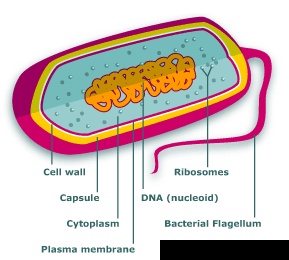
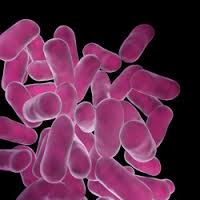
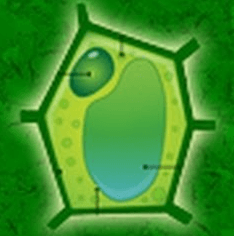
Which type of cell is this?
Prokaryote
Eukaryote
Which type of cells has a chloroplast?
Prokaryote
Plant Cell
Animal Cell
Which do BOTH prokaryotes and eukaryotes contain?
nucleus
mitochondria
ribosomes
cell wall
Which does only eukaryotic cells contain?
nucleus
DNA
cell membrane
ribosomes
Prokaryotic cells do not have…….
membrane bound organelles
cell membrane
DNA or RNA
life



A rigid structure that lies outside the cell's membrane and provides extra support for the cell is...
Cytoskeleton
Cilia
Cell Wall
Flagella
In passive transport, molecules move from an area of __________ concentration to an area of __________ concentration.
high, low
low, high
water, salt
active, passive
Which type of transport gets rid of cellular wastes?
Protein Pumps
Endocytosis
Exocytosis
Facilitated Diffusion


What type of transport is this?
Endocytosis
Facilitated Diffusion
Active Transport
Osmosis


Which two molecules are most likely to cross a cell's phospholipid bilayer by simple diffusion?
Sugar molecules
Water
Carbon dioxide (CO2)
Potassium ions
Oxygen (O2)
How is the plasma membrane best described?
A phospholipid monolayer with embedded proteins surrounding the cell.
A complex of small protein subunits surrounding the cell
a phospholipid bilayer with embedded and surface proteins surrounding the cell
A carbohydrate chain attached to a lipid layer surrounding the cell.

Look at the image of the cell membrane. What structure in the cell membrane is specialized for this type of transport?
Carrier protein
Cholesterol
Phospholipid
Receptor protein
When does diffusion occur across a cell membrane?
When the concentration of particles is different on each side of the membrane.
When the concentration of particles is equal on both sides of the membrane.
When there are no particles on either side of the membrane.
When water moves across the membrane.
Which of the following is the cell organelle most responsible for maintaining cellular homeostasis?
Golgi apparatus
Nucleus
Endoplasmic reticulum
Cell membrane
Which of the following is a requirement for simple diffusion to take place?
A transport protein
A carrier molecule
A transport carbohydrate
A concentration gradient

Examine the structure in the diagram. What is shown in the area labeled Z?
Carrier proteins
Phospholipid bilayer
Phosphorous bilayer
Receptor proteins



