wayground logo

Free Printable Worksheets

NEW

Font size

S
M
L
XL
Worksheets

APES CUA 1 REVIEW

Total questions: 65

Worksheet time: 3hrs 12mins
Name
Class
Date
1.
This is the side of the mountain that is often drier and warmer.
a)
Leeward Side
b)
Wet Lapse Rate
c)
Windward Side
d)
Wild Side
2.
What is "upwelling"?
a)
when wind near a shore pushes surface water away, nutrient rich cold water rises from the depths
b)
water rises from springs at the bottom of lakes
c)
it is when cold water sinks in the Norwegian Sea
d)
It is when the Coriolis effect makes currents go around in a circle
3.
During __________ upwelling occurs off the coast of Peru.
a)
Normal Conditions
b)
El Nino
4.

The surface of the earth, otherwise known as the ______, is broken into seven major pieces and sits atop a liquid layer called the _______

a)

lithosphere, asthenosphere

b)

astenosphere, mantle

c)

crust, litosphere

d)

asthenosphere, lithosphere

5.
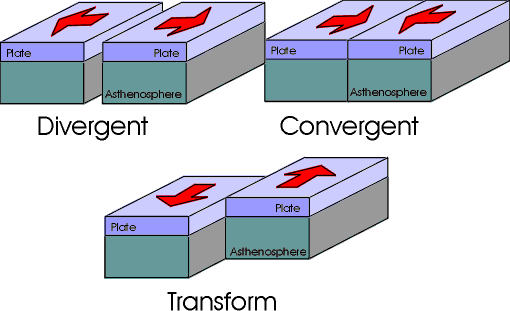
The San Andrea's Fault in California is which type of boundary?
a)
Convergent
b)
Divergent
c)
Subductive Zone
d)
Transform
6.
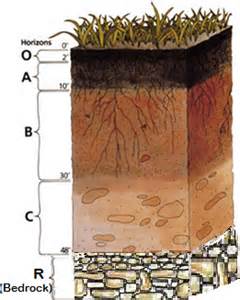
The layer of soil which the topsoil is found.
a)
Horizon A
b)
Horizon B
c)
Horizon C
d)
Horizon D or R
7.
Sea surface temperature changes great than .5oC for greater than 5 months across the centeral ropical Pacific OCean are known as
a)
the arctic effect
b)
the get stream 
c)
a typhoon
d)
El Nino-Southern Oscillation 
8.
Which of the following contributes to the unequal warming of earth?
I. variation in the angle of sunlight that reaches Earth
II. variation in the amount of surface area over which the Sun's rays are distributed
III. variation in the amount of sunlight reflected from clouds
a)
I only
b)
I and II only
c)
II and III only
d)
III only
9.
The Coriolis effect is responsible for
a)
the convergence of two ascending Hadley cells
b)
the location of atmospheric currents caused by the unequal heating of Earth
c)
the cooling effect of air as it rises and expands
d)
the deflection of atmospheric currents
10.
Which is the correct order of the convection cells starting from the equator?
a)
polar, ferrell, hadley
b)
ferrell, hadley, polar
c)
polar, hadley, ferrell
d)
hadley, ferrell, polar
11.

What type of event will occur at this boundary?

a)

Earthquake

b)

Volcano Eruption

c)

Tornado

d)

Mountain Building

12.

The type of plate boundary where two plates come together is a .....

a)

Convergent Boundary

b)

Divergent Boundary

c)

Transform Boundary

d)

Plate Boundary

13.

A divergent boundary occurs when plates ....

a)

Pull apart

b)

Come together

c)

Slide past each other

d)

subducting

14.

Mountains are created when....

a)

Two continental plates collide

b)

Two oceanic plates pull apart

c)

An Oceanic plate subducts under a Continental Plate

d)

Two continental plates pull apart

15.

The process by which the ocean floor sinks beneath a deep-ocean trench and back into the mantle is known as _______

a)

convection.

b)

continental drift.

c)

subduction.

d)

conduction.

16.
The process when rocks break into smaller pieces due to exposure to natural elements is called
a)
erosion
b)
weathering
c)
sediments
17.
Which horizon is made up of partially weathered rocks?
a)
Horizon A
b)
Horizon B
c)
Horizon C
d)
Horizon D or R
18.
Which of the following is NOT one of the three types of soil?
a)
clay
b)
sand
c)
silt
d)
mud
19.
_______ is the type of soil used most often with plants. It is a mixture of clay, sand, and silt.
a)
loam
b)
humus
c)
mud
d)
dirt
20.
The two main agents of erosion are...
a)
wind and flowing water
b)
gravity and frost wedging
c)
oxygen and water
d)
carbon dioxiede and wind
21.
Which of the following is the correct order of soil particles in order of increasing particle size?
a)
clay-sand-silt
b)
sand-clay-silt
c)
silt-clay-sand
d)
clay-silt-sand
22.
Soil sample that is 60% clay, 30% silt, and 10% sand has which texture? 
a)
clay
b)
clay loam
c)
sandy loam
d)
silt 
23.
Which is the correct order of soil horizons starting at the surface?
a)
A, B, E,C, O
b)
O, A, B, C, E
c)
O, E, A, B, C
d)
O, A, E, B, C
24.

The rate at which water flows through the soil is called soil percolation or ______.

a)

Groundwater

b)

Permeability

c)

Soil Pores

d)

Porosity

25.
Which soil component has the least capacity for holding water?
a)
silt
b)
clay
c)
sand
d)
humus
26.
You dig a small hole in the soil and the next day it rains. The hole fills with water, but does not empty even after several days of dry weather. What is the soil mostly made of?
a)
clay
b)
sand
c)
humus
d)
silt
27.
Water gets into the cracks of rock and freezes, causing the rock to break.  What is this an example of?
a)
erosion
b)
weathering
28.

The movement of the tectonic plates is caused by

a)

the rotation of the Earth.

b)

convection currents in the Asthenosphere

c)

the gravity of the iron-nickel core.

d)

the Moho discontinuity.

29.

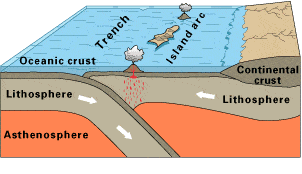
Observe this diagram of a plate boundary. One statement BEST describes what is happening. It is that

a)

the oceanic crust is melting.

b)

the denser ceanic crust is subducting under the less dense oceanic crust

c)

volcanic islands are forming.

d)

the tectonic plates are moving away from each other.

30.
Surface currents are a result of
a)
Global Wind Patterns
b)
Earth's Rotation
c)
Density
d)
All of the above
31.
Deep Ocean currents are a result of
a)
Global Wind Patterns
b)
Earth's Rotation
c)
Density
d)
All of the above
32.
The Coriolis Effect is caused by
a)
Earth rotating around the sun
b)
Earth rotating on its axis
c)
The tides
d)
Gravity
33.
The Gulf stream carries _____________ water from the east coast of The United States to the West coast of Europe.
a)
Cold
b)
Warm 
c)
Freezing
d)
Fresh
34.
Due to the Coriolis Effect, water in the northern hemisphere moves
a)
clockwise
b)
counter clockwise
c)
both
d)
neither
35.
Warm ocean currents generally come from
a)
The North Pole
b)
The South Pole
c)
The Equator
d)
Both A and B
36.
The California Current (west coast) carries _________ water from canada
a)
Cold 
b)
Warm
c)
Freezing
d)
Fresh
37.
The sun's rays are least direct
a)
near the poles
b)
near the equator
c)
at high altitudes
d)
far from the ocean
38.

In which layer of the atmosphere does ozone help block UV radiation from striking the Earth?

a)

troposphere

b)

mesosphere

c)

stratosphere

d)

thermosphere

39.

78% of atmosphere

a)

oxygen

b)

nitrogen

c)

helium

d)

CO2

40.

Where the naturally occuring good ozone layer is located

a)

troposphere

b)

mesosphere

c)

stratosphere

d)

thermosphere

41.
Temperature changes in adiabatic heating occurs due to 
a)
water vapor condensing
b)
a pressure increase
c)
absorption of sunlight
d)
a pressure decrease
42.
Which of the following does NOT contribute to atmospheric convection currents?
a)
Hadley cells
b)
westerlies
c)
gyres
d)
polar cells
43.
Which of the following does NOT play a role in causing a rain shadow?
a)
cold polar air
b)
prevailing trade winds
c)
mountain ranges
d)
adiabatic cooling
44.
Which of the following does NOT drive ocean currents?
a)
Precipitation
b)
salinity
c)
prevailing winds
d)
gravity
45.
climate change could potentially disrupt which one of the following phenomena?
a)
El Nino - southern oscillation (ENSO)
b)
thermohaline circulation
c)
rotation of southern hemisphere gyres
d)
upwelling off the coasts of Australia and New Zealand
46.

During a(n) ____ event, trade winds are much stronger than usual.

a)

El Nino

b)

La Nina

c)

Normal

d)

Partly sunny

47.

Both El Nino and La Nina have this in common

a)

Influence birds that migrate over the ocean

b)

Influence rainy / dry weather world wide

c)

The weather at the polar regions

d)

The directions that ships travel in the oceans

48.

During an El Nino, trade winds are typically...

a)

about average

b)

stronger

c)

weaker

49.

The layer(s) of soil in which most of the humus and soil organisms are contained:

1- leaf litter, horizon O

2- topsoil, horizon A

3- subsoil, horizons B and C

a)

1 only

b)

2 only

c)

1 and 2 only

d)

2 and 3 only

e)

1, 2, and 3

50.
When plants, animals, and other organisms die, they break down and become part of the soil. What is this part of the soil called?
a)
sand
b)
silt
c)
clay
d)
humus
51.
Soil formation begins with the weathering of_______.
a)
Humas
b)
Subsoil
c)
Litter
d)
Rock
52.

Which horizon contains clay, silt, and minerals, and is commonly referred to as subsoil?

a)

Horizon A

b)

Horizon B

c)

Horizon C

d)

Horizon D or R

53.
Which season is taking place in the Northern Hemisphere in Position 1?
a)
Winter
b)
Spring
c)
Summer
d)
Fall
54.
Which season is taking place in the Northern Hemisphere in Position 3?
a)
Winter
b)
Spring
c)
Summer
d)
Fall
55.
The term equinox means....
a)
equal amount of day light and equal amount of night
b)
Equal amount of winter and summer
c)
Equal amounts of hot dogs for everyone
d)
The longest day of the year
56.
The Earth's axis is tilted _____ degrees.
a)
23.5
b)
25.3
c)
30.2
d)
24
57.
If its ____ in the Northern hemisphere, then its summer in the Southern hemisphere. 
a)
spring
b)
summer
c)
fall
d)
winter
58.
What is the longest day of the year?
a)
winter solstice
b)
summer solstice
c)
fall equinox
d)
spring equinox
59.
Layer of Earth's atmosphere where most of the water vapor and carbon dioxide is found
a)
thermosphere
b)
mesosphere
c)
stratosphere
d)
troposphere
60.
Uppermost layer of Earth's atmosphere
a)
thermosphere
b)
mesosphere
c)
stratosphere
d)
troposphere
61.
This gas makes up 21% of the atmosphere
a)
ozone
b)
oxygen
c)
nitrogen
d)
water vapor
62.
As you go higher in the troposphere, the temperature _______________.
a)
decreases
b)
increases
c)
stays the same
d)
gets very hot
63.
In which layer do all the pressure, wind, and precipitation changes occur?
a)
Outer space 
b)
stratosphere
c)
troposphere
d)
mesosphere
64.
Which atmospheric circulation cell is between 0-30 degrees latitude lines?
a)
Hadley cell
b)
Polar cell
c)
Doldrums
d)
Ferrel cell
65.
Circulation that results from the uneven heating of a fluid; the warmer parts of the fluid expand and rise because of their buoyancy, and the cooler parts sink.
a)
Hadley Cell
b)
Westerlies
c)
Easterlies
d)
Convection Cell