Wayground logo

Free Printable Worksheets

Font size

S
M
L
XL
Worksheets

Biology 101 Unit 1: Graphs Biomolecules, Chemistry

Total questions: 64

Worksheet time: 51mins

Name
Class
Date
1.

What are the FOUR most common elements in living things?

a)

Carbon

b)

Silicon

c)

Nitrogen

d)

Hydrogen

e)

Oxygen

2.

What is the function of carbohydrates?

a)

Perform cell's functions/tasks

b)

Fast energy

c)

Energy storage

d)

Alter other biomolecules

e)

Store information for cells

3.

Carbohydrates are primarily made out of...

a)

Carbon

b)

Hydrogen

c)

Oxygen

d)

Nitrogen

e)

Phosphorus

4.

What is the function of proteins?

a)

Perform cell's functions/tasks

b)

Fast energy

c)

Energy storage

d)

Alter other biomolecules

e)

Store information for cells

5.

Proteins are primarily made out of... (and sometimes Sulfur)

a)

Carbon

b)

Hydrogen

c)

Oxygen

d)

Nitrogen

e)

Phosphorus

6.

What is the function of nucleic acids?

a)

Perform cell's functions/tasks

b)

Fast energy

c)

Energy storage

d)

Alter other biomolecules

e)

Store information for cells

7.

Nucleic acids are primarily made out of...

a)

Carbon

b)

Hydrogen

c)

Oxygen

d)

Nitrogen

e)

Phosphorus

8.

What is the function of lipids?

a)

Perform cell's functions/tasks

b)

Fast energy

c)

Energy storage

d)

Alter other biomolecules

e)

Store information for cells

9.

Lipids are primarily made out of...

a)

Carbon

b)

Hydrogen

c)

Oxygen

d)

Nitrogen

e)

Phosphorus

10.

There is a person with Albinism. This individual does not produce melanin. Melanin allows for people to be protected from the sun. Since Albinos do not produce this protein they are prone to getting sunburns.


What inferences are most realistic to make about the biomolecules in this individual's body?

a)

He is running low on fast sources of energy

b)

Proteins are being broken down or reshaped

c)

The coding information in the cell is incorrect or incomplete

d)

There is not enough insulation or energy storage

11.
What property of water makes it the 'universal solvent'?
a)
it is a polar molecule
b)
it is an ionic compound
c)
it contains hydrogen bonds
d)
it steals electrons from other atoms
12.
The type of polysaccharide which serves as a strengthening tissue in the cell wall of plants is 
a)
cellulose
b)
glucose
c)
lactose
d)
fructose
13.
Carbohydrates are made of... 
a)
C H O
b)
C H O N
c)
C H O N P
d)
C H O N S
14.
How many different amino acids are there?
a)
4
b)
20
c)
6
d)
46
15.
Glucose is a _____.
a)
carbohydrate
b)
lipid
c)
protein 
d)
nucleic acid
16.
Proteins are composed of what smaller building blocks?
a)
amino acids
b)
nucleic acids
c)
fatty acids
d)
nucleotides
17.
Which group of organic molecules serve as long-term energy storage and make the cell membrane is?
a)
proteins
b)
carbohydrates
c)
lipids
d)
nucleic acids
18.
The primary purpose the body uses monosaccharides for is?
a)
Building muscles
b)
Helping the Immune System
c)
Immediate Energy
d)
Generating Heat
19.
Which of the following is LEAST likely to dissolve in water?
a)
nonpolar fats and oils
b)
polar sugar molecules
c)
salt made of a positive sodium ion and a negative chloride ion
d)
all of the substances will dissolve easily in water
20.
True of False. Glycogen is a starch that is found in animals. 
a)
True
b)
False
21.
What do disaccharides, such as sucrose, and polysaccharides, such as starch, have in common?
a)
They are lipids made of fatty acids.
b)
They are proteins made of amino acids.
c)
They are nucleic acids made of nucleotides.
d)
They are carbohydrates made of simple sugars.
22.
Building blocks of polymers.
a)
monomer
b)
polypeptide
c)
monosaccharide
d)
glycerol
23.
Attractions between water molecules are called
a)
Covalent bonds
b)
Ionic bonds
c)
Polar bonds
d)
Hydrogen bonds
24.

Which graph represents histogram?

a)
b)
c)
d)
25.
Emily is making a histogram for the data 12, 24, 56, 7, 34, 75, 86, 78, and 96.  What is the most appropriate first interval? 
a)
0-5
b)
0-10
c)
0-50
d)
0-100
26.
This is a histogram
a)
true
b)
false
27.
Which scatter plot shows a linear relationship between x and y?
a)
Graph A
b)
Graph B
c)
Graph C
d)
Graph D
28.
The pH scale is a range from:
a)
1-7
b)
0-14
c)
1-5
d)
1-20
29.
A(n) ______ is a substance with a pH less than 7
a)
Acid
b)
Alkaline
c)
Base
d)
Buffer
30.
A(n) _______ is a substance with a pH greater than 7.
a)
Base
b)
Acid
c)
Buffer
d)
Water
31.

The picture below shows the relative concentrations of H+ and OH- in a solution. Is the solution an acid or a base?

a)

acid

b)

base

32.
According to the pH range which substance is more acidic than lemon juice
a)
Hydrochloric acid
b)
cabbage
c)
milk
33.

What is a mixture of chemicals that react with a base/acid to keep pH in a particular range?

a)

catalyst

b)

enzyme

c)

water

d)

buffer

34.
A  pH and a pOH will add up to:
a)
0
b)
7
c)
14
d)
1.0 x 10⁻¹⁴
35.
24.1% of all the isotopes of a an element have a mass of 75.23 amu, 48.7% have a mass of 74.61 amu, and 27.2% have a mass of 75.20 amu.
What is the average mass of this element?
a)
74.92 amu
b)
24.97 amu
c)
75.01 amu
d)
74.51 amu
36.

The atomic mass of an element is the ___.

a)

average of the mass number and the atomic number for the element

b)

weighted average of the masses of the isotopes of the element

c)

total mass of the isotopes of the element

d)

total number of subatomic particles in the nucleus

37.

Which of the following is one of the 3 domains?

a)

Animals

b)

Bacteria

c)

Prokaryote

d)

Fungi

38.

Are archaea multicellular or unicellular?

a)

Multicellular

b)

Unicellular

39.

Where can you find DNA (genetic material) inside a prokaryote?

a)

Nucleus

b)

Free Floating

c)

Mitochondria

d)

Endoplasmic Reticulum

40.

Are archaea prokaryotes or eukaryotes?

a)

Prokaryotes

b)

Eukaryotes

41.

Which domain has organisms that live in many environments (in normal conditions)?

a)

Archaea

b)

Bacteria

c)

Both

42.
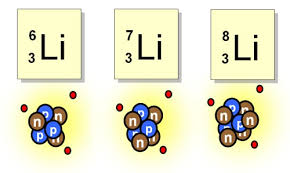
How many neutrons does the isotope of lithium have?
a)
8
b)
3
c)
4
d)
5
43.
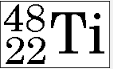
How many protons does this isotope of titanium have?
a)
48
b)
22
c)
26
d)
70
44.
which atom has  4 neutrons?
a)
Li-6
b)
Li-7
c)
Li-8
d)
they have the same # of neutrons
45.
What is a valence electron?
a)
The sum of neutrons and protons.
b)
The # of electrons in the last shell.
c)
A type of bond.
d)
A popular compound.
46.
Ionic bonds are between...
a)
Metal and Non-metal
b)
Non-metal and Non-metal
c)
Metal and Metal
47.
How are ionic bonds formed?
a)
Transfer of electrons
b)
Sharing of electrons
48.
Why do elements bond?
a)
To be friends
b)
To create a new element
c)
To become stable
49.
Which of these is not a real bond in chemistry?
a)
James
b)
Ionic
c)
Covalent
50.
Atoms that gain electrons become...
a)
negatively charged
b)
positively charged
c)
remain neutrally charged
d)
21
51.

Why do all bonds form?

a)

so the number of protons equals the number of electrons

b)

so an atom can become unstable

c)

to fill the outermost energy level

52.
Radiometric dating is possible because the rates of decay of radioactive isotopes _____.
a)
change over time
b)
change from place to place
c)
are constant
d)
vary widely
53.
Which has the greater EN: 
N or C?
a)
C
b)
N
54.
Put these in increasing order:
F, N, B
a)
B < N < F
b)
B < F < N
c)
N < F < B
d)
F < N < B
55.
Nucleotides are monomers of
a)
Carbohydrates
b)
Lipids
c)
Proteins
d)
Nucleic Acids
56.
Which major macromolecule is being represented in this image? 
a)
carbohydrate
b)
lipid
c)
protein
d)
nucleic acid
57.
What type of macromolecule is being represented in this image? 
a)
carbohydrate
b)
lipid
c)
protein
d)
nucleic acid
58.

Which macromolecule is shown?

a)

lipid

b)

protein

c)

nucleic acid

d)

carbohydrate

59.
Connects monomers to form a polymer
a)
Dehydration synthesis
b)
hydrolysis
60.
Produces water as a by-product
a)
Dehydration synthesis
b)
Hydolysis
61.
Breaks up polymers, forming monomers
a)
dehydration synthesis
b)
hydrolysis
62.
The following figure is illustrating
a)
Dehydration Synthesis
b)
Hydrolysis
63.
The following figure is illustrating
a)
Dehydration Synthesis
b)
Hydrolysis
64.
The following figure is illustrating
a)
Dehydration Synthesis
b)
Hydrolysis