
 Worksheets
Biology-Ch 4
Total questions: 71
Worksheet time: 52mins
Which contribute to a positive population growth?
immigration
positive birth rate
emigration
positive death rate
Which of the following is NOT an outcome of high population density?
mortality increase
predators tend to ignore prey that is overabundant
reduction in births
decreased resource availability

Which of the following describes the population of elephants in Kenya from 1973-1989?
(immigration + births) – (emigration + deaths) = 0
(immigration + births) – (emigration + deaths) = 1
(immigration + births) – (emigration + deaths) < 0
(immigration + births) – (emigration + deaths) > 0
A population’s emigration in one month totaled 2 individuals. During the same period, immigration was 12 individuals. Natality (births) was 8, and mortality was 15 due to a parasite infection. What was the net effect on the population size?
+5
+3
0
-4
What type of factor has an increasing impact as the population size increases?
density-independent
density-dependent
cohort effect
survivorship factor
Which of the following are density dependent factors?
competition for resources
predation
disease
natural disasters
Which of the following are examples of a density independent factors?
forest fire
seasonal cycles
storms
disease
Factors like predation can have a positive benefit to the population of prey organisms because predators tend to keep prey populations below their ___________.
carrying capacity
sustainibility number
exponential growth point
competition level
As a population of a species increases within a territory, which of the following most likely also increases?
Immigration
Food supply
Carrying capacity
Competition
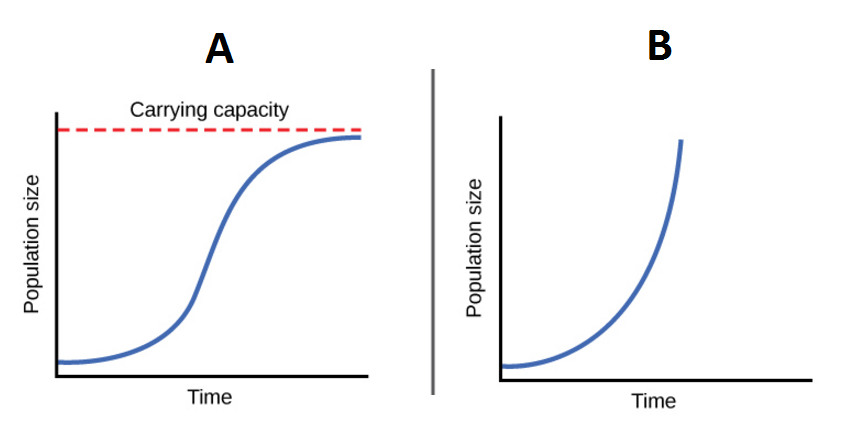
What type of growth model is shown in image A?
Exponential
Logistic
What type of growth model is shown in image B?
Exponential
Logistic
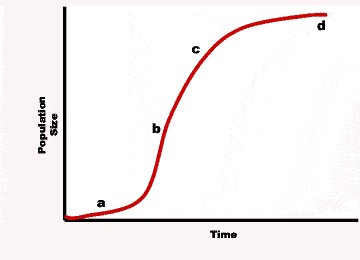
What point on the graph represents carrying capacity?
a
b
c
d
At carrying capacity, a population __________.
increases rapidly
increases slowly
decreases slowly
is in dynamic equilibrium
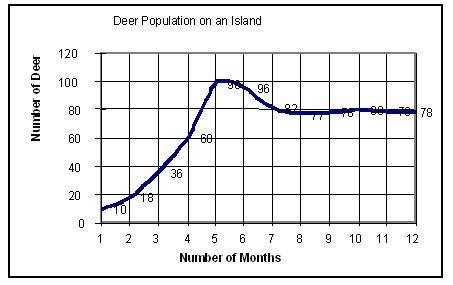
Which choice most closely approximates the deer population's carrying capacity based on the graph?
100
80
60
10
Which of the following populations is most likely to go extinct?
a very small population in an unstable environment
a moderate-sized population of r strategists
a large population with lots of genetic variability
all would be equally likely to go extinct
What is the the closest approximation of the size of the human population today?
850 million
7.8 billion
20.8 billion
1.7 trillion

Which population growth model most closely describes the human population in the modern age?
logistic growth
exponential growth
upward growth
tumor growth
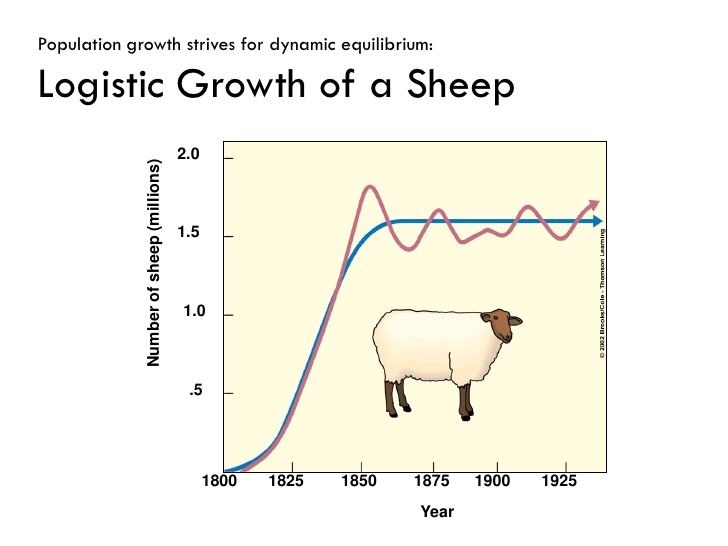


If a population grows larger than its environmental carrying capacity, then
death rate may rise.
death rate may fall significantly.
birth rate may rise significantly.
immigration rate may increase.
What does the term carrying capacity describe?
The maximum number of birth rates for a population.
The ability of a population to accept new immigrants.
The ratio of birth rates to death rates in a population.
The population size that the environment can sustain.

Which correctly describes the term demographic transition?
The transition from low birth rates and death rates to high birth rates and death rates as a country develops.
The transition from high birth rates and death rates to low birth rates and death rates as a country develops.
The transition from high birth rates to low death rates as a country develops.
The transition from low birth rates to high death rates as a country develops.
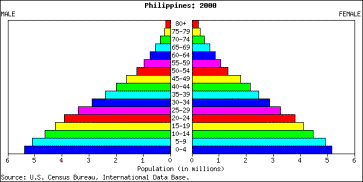

The population pyramid shown is most likely which country?
Nigeria
China
Germany
Japan
What is the amount of average children needed for a population to achieve ZPG?
2.1 per woman
1 per woman
3 per woman
2.5 per woman
The study of population is
survivorship
demography
age structure
migration
The distribution of ages in a specific population
age structure
infrastructure
life expectancy
demographic transition
Have the highest birth rates
urbanization
developed countries
least-developed countries
arable land
Movement of individuals into or out of a population.
demographic transition
infrastructure
urbanization
migration

Name the type of pyramid in the picture.
slow growth
rapid growth
zero growth
negative growth

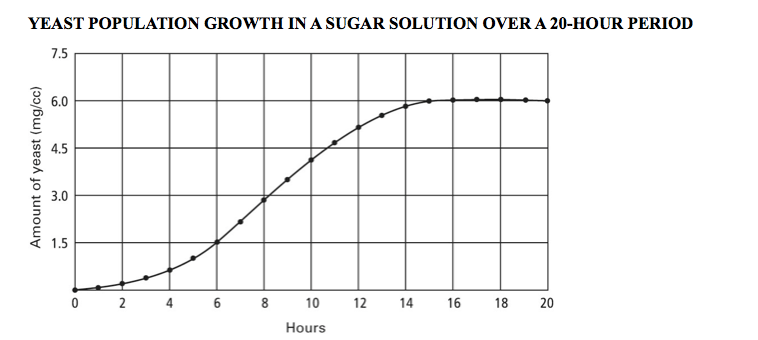

The Florida Panther is a large cat that is native to the southern parts of Florida. Recently, the panther's main food source, rabbits, have been infected with a deadly disease that only affects rabbits. How would this most likely affect the population of panthers in the coming years?
The panther population will decrease since they won't have access to as much food
The panther population will not be affected because they will adapt to eating other food
The panther population will increase because they will produce more offspring to make up the difference
The panther population will decrease because they will contract the disease.

Which kind of dispersion is #2?
clumped
random
uniform
Which kind of dispersion is #3?
clumped
random
uniform
Which of the following determines the carrying capacity of an ecosystem?
the most limited resources required for survival
the amount of disease affecting organisms in the ecosystem
the amount of rainfall the habitat receives
the number of predators in the area
Which of the following determines an environment's carrying capacity?
The most necessary resource that runs out first
The average rainfall of an ecosystem
The daily temperature of an ecosystem
The carnivores preying on the population
When an environment has reached its carrying capacity for a certain population, which of the following is true?
immigration and birth rates are higher than emigration and immigration rates.
immigration and birth rates are lower than emigration and immigration rates.
immigration and birth rates are equal to emigration and death rates.
Which choice most closely approximates the deer population's carrying capacity based on the graph?
100
80
60
10
What is the world's most populous country?
India
China
U.S.
Mexico
Which of the following is the world's fastest growing country?
India
China
U.S.
Mexico
One reason the world is growing so quickly is because...
The world has infinite resources for everyone
Birth rate is higher than death rate
There are more and more places for people to live
Death rate is higher than birth rate
What term describes the maximum number of individuals that an environment can support sustainably?
Carrying capacity
Population density
Exponential growth
Limiting factor
Which of the following factors is most likely to cause a population to decrease?
Increased birth rate
Increased immigration
Increased emigration
Decreased death rate
What is the term for the movement of individuals from one population to another?
Migration
Population density
Carrying capacity
Exponential growth
What happens to a population when it reaches its carrying capacity?
It continues to grow exponentially.
It stabilizes and fluctuates around the carrying capacity.
It decreases to zero.
It splits into multiple populations.
Which of the following is a density-independent factor affecting population size?
Food availability
Predation
Weather conditions
Competition
How does a logistic growth curve differ from an exponential growth curve?
Logistic growth has a constant growth rate.
Exponential growth levels off at carrying capacity.
Logistic growth includes a phase of rapid growth followed by stabilization.
Exponential growth decreases over time.
What is the term for the maximum number of individuals that an environment can sustain over time?
carrying capacity
population density
growth rate
birth rate
Which of the following factors is most likely to decrease as a population reaches its carrying capacity?
birth rate
death rate
immigration
emigration
What is the effect of a high birth rate on a population's growth curve?
It flattens the curve
It steepens the curve
It has no effect
It reverses the curve

