Worksheets
Unit 4: Atoms
Total questions: 65
Worksheet time: 3hrs 12mins
The atom is...
The basic building block of matter
Unimportant
Important in creating protons
I don't know
What are atoms composed of?
Mass, oxygen, matter
Protons, neutrons, electrons
Protons, mass, nuclei
Electrons, matter, neutrons
_____ orbit the atomic nucleus.
Protons
Matter
Electrons
Atoms
Protons have ____ charge.
no
a negative
a neutral
a positive
Electrons have ____ charge.
no
a negative
a positive
a neutral
What does the atomic number equal?
The number of electrons
The number of protons
The number of neutrons
The number of atoms.
An atomic model is NOT a reliable representation of an atom.
False
True
What is the nature of an element determined by?
The number of electrons
The number of neutrons
Nothing
The number of protons

What is the atomic number of this element?
6
12.011
C
None of the above
What is the atomic mass the sum of?
Only protons
Only electrons
Protons and electrons
Protons and neutrons

How many neutrons are in Neon
20
10
30
Cobalt has 27 protons, 32 neutrons, and 27 electrons. What is the atomic number?
32
59
27
5
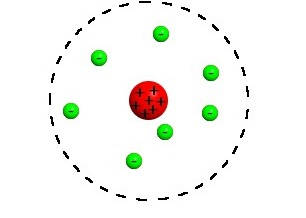


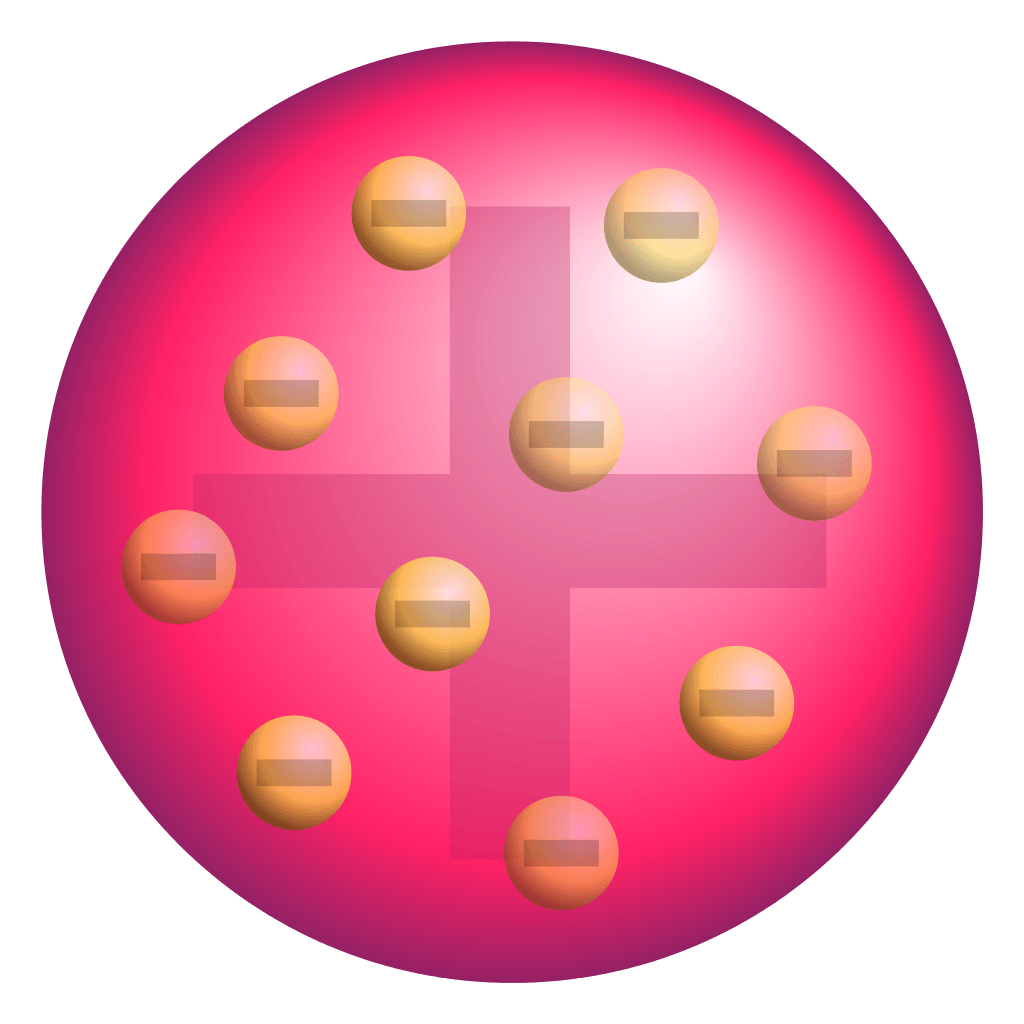


Place the following atomic models in order, from earliest to latest:
A) Rutherford B) Thomson C) Dalton
B, C, A
C, A, B
A, C, B
C, B, A
Which scientists believed an atom was indivisible? (Choose all correct responses.)
Democritus
Dalton
Thomson
Rutherford
Which scientist believed that elements differed from one another because their atoms had different mass?
Democritus
Dalton
Thomson
Rutherford
Dalton developed the first scientifically tested atomic theory.
True
False
Chadwick found the nucleus through the gold foil experiment.
True
False
Aristotle and other early Greek philosophers thought that matter was composed of four elements: air, earth, fire, and water.
True
False
Cathode rays contain a negative charge.
True
False
Which scientist measured the charge on an electron as 1.602 x 10⁻¹⁹ Coulombs?
Democritus
Millikan
Rutherford
Bohr
Researchers discovered a subatomic particle while working with the cathode ray tube. The particle is known as a(n) ____________________.
proton
neutron
electron
A ____________________ is a subatomic particle that has mass nearly equal to that of a proton, but it carries no electrical charge.
proton
neutron
electron
An alpha particle is _____________________ charged with two protons and neutrons.
positively
negatively
neutrally
James Chadwick showed that the nucleus also contained a neutral subatomic particle known as the ____________________.
proton
neutron
electron
What were the main flaws in Dalton’s atomic theory? (choose all that apply)
All elements are composed of tiny indivisible particles called atoms that cannot be broken down further.
Atoms of different elements differ in their physical and chemical properties.
All atoms of a given element are identical.
In chemical reactions, atoms are combined, separated or rearranged, but not created nor destroyed.
Atoms of different elements combine in simple, whole number ratios to form compounds.
How many neutrons are in an atom of carbon-14?
6
8
10
14

How many protons does this isotope of titanium have?
22
26
48
70
How many electrons are in an atom that has an atomic number of 34, an atomic mass of 74 and a charge of -2?
2
34
36
40
Write the hyphen notation for the isotope that has 39 protons and 50 neutrons.
Yttrium-11
Tin-39
Tin-89
Yttrium-89
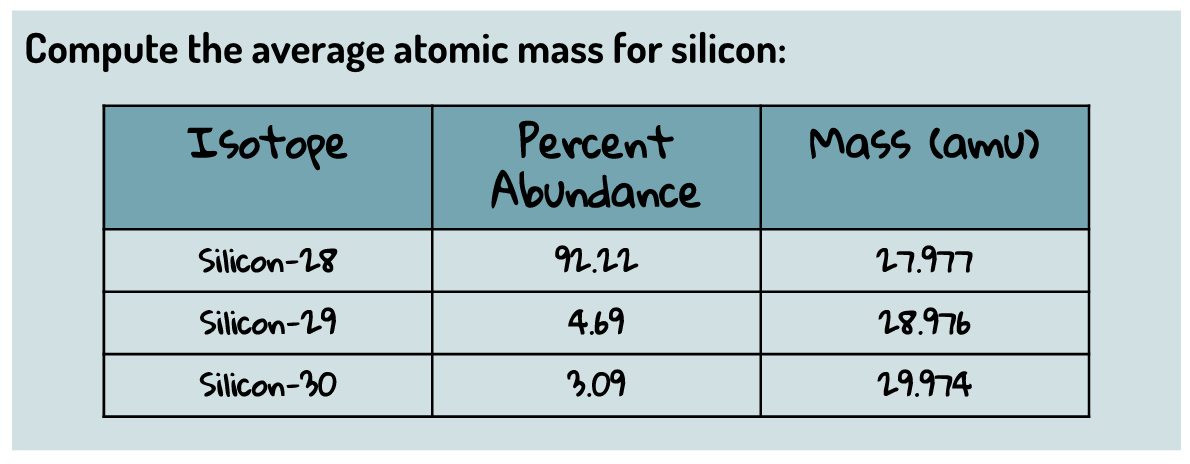
Chromium has four naturally occurring isotopes (chromium-50, chromium-52, chromium-53, and chromium-54). What is the average atomic mass of Chromium?
4
51.996
52.25
Not enough information was given.
An element has three isotopes. Given the abundances and relative masses, calculate the average atomic mass and determine (from the periodic table) which element it is.
Abundances | Relative masses
0.005% | 234.04 amu
0.720% | 235.04 amu
99.275% | 238.05 amu
Uranium (#92, Atomic Mass: 238.03 amu)
Fluorine (#9, Atomic Mass: 19.00 amu)
Mercury (#89, Atomic Mass: 200.59 amu)
Polonium (#84 209 amu)

Why are ions formed?
To make our lives difficult
Because atoms want to be stable
Because atoms have the same number of protons and electrons
Because atoms gained neutrons
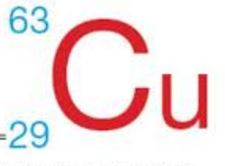

How many neutrons are in a Gold atom?
79
196
117
275
An atom with 10 protons, 8 neutrons, 8 electrons is a _______. (Choose all that apply)
cation
anion
neutral atom
ion
A negatively charged ion that has gained electrons to satisfy the octet rule
Anion
Cation
Neutral Atom
Isotope
Atoms of the same element that have different mass than expected because they have a different number of neutrons.
Neutral Atom
Ion
Isotope
Cation
If an ion has a negative charge you would __________ the charge number to the number of protons to figure out how many electrons there are.
Add
Subtract
Divide
Multiply

How many protons, neutrons, and electrons?
proton = 6, neutron = 4, electron = 1
proton = 4, neutron = 4, electron = 5
proton = 1, neutron = 6, electron = 10
proton = 4, neutron = 2, electron = 3

How many protons, neutrons, and electrons?
proton = 16, neutron = 8, electron = 10
proton = 8, neutron = 16, electron = 8
proton = 8, neutron = 8, electron = 10
proton = 6, neutron = 2, electron = 6
What is a representation of an ion?
Li
Na-22
O-2

What type of atom is this?
Neutral atom
Cation
Anion
Isotope
An atom with the same number of protons and electrons (no charge) and the expected atomic mass or number of neutrons from the periodic table.
Neutral/Normal Atom
Ion
Isotope


The atomic mass of an element is the ___.
average of the mass number and the atomic number for the element
weighted average of the masses of the isotopes of the element
total mass of the isotopes of the element
total number of subatomic particles in the nucleus