wayground logo

Free Printable Worksheets

NEW

Font size

S
M
L
XL
Worksheets

Meteorology

Total questions: 76

Worksheet time: 50mins

Name
Class
Date
1.
What does a barometer measure?
a)
temperature
b)
air pressure
c)
dew point
d)
humidity
2.
What is the 2nd most abundant gas in the atmosphere?
a)
Nitrogen
b)
Oxygen
c)
Argon
d)
Carbon Dioxide
3.
Practically all clouds & storms occur in this layer of the atmosphere.
a)
Stratosphere
b)
Thermosphere
c)
Troposphere
d)
Mesosphere
4.
Cloudy nights can be warmer than clear nights because clouds trap heat____
a)
produced by the friction of air particles
b)
generated from tropical winds
c)
released from Earth's interior
d)
absorbed by Earth during daylight hours
5.
The different layers of Earth's atmosphere can be categorized by variations in _____
a)
air pressure
b)
humidity
c)
temperature
d)
dew point
6.
Air that has a 100 percent relative humidity is said to be
a)
stable
b)
dry
c)
saturated
d)
unstable
7.
Compared to a warmer air mass, a colder air mass
a)
can hold more water
b)
can hold less water
c)
is less dense
d)
is lighter
8.
Which is likely to occur after moist air is cooled below its dew point?
a)
Evaporation increases
b)
Ice crystals melt
c)
Water condenses
d)
Winds are generated
9.

At what point do scientists classify an area's weather as its climate?

a)

1 year

b)

5 years

c)

15 years

d)

30 years

10.

The Coriolis effect is due to the __________ of Earth.

a)

revolution

b)

rotation

c)

shape

d)

density

11.

Current, short-term variations in the atmosphere are referred to as _________.

a)

humidiy

b)

lapse rate

c)

weather

d)

the ionosphere

12.

Low-pressure systems are usually associated with ________ weather.

a)

cold and dry

b)

cloudy and rainy

c)

sunny and dry

d)

warm and humid

13.

As you go higher in the atmosphere the molecules

a)

Are closer together

b)

Are farther apart

c)

Stop moving

14.

As you go higher in the troposphere (the layer of the atmosphere that is closest to Earth) the temperature

a)

Increases

b)

Decreases

c)

Stays the same

d)

first decreases then increases

15.

Which is caused by differences in air pressure?

a)

Snow

b)

Rain

c)

Clouds

d)

Wind

16.

Climate is different than weather because

a)

Weather is short term, climate is over long periods of time

b)

Weather deals with precipitations, climate with temperature

c)

Climate deals with precipitations, weather with temperature

d)

Weather and climate are the same

17.

What causes differences in air pressure?

a)

even heating of the Earth

b)

Even cooling of the earth

c)

uneven heating of the earth

d)

global warming

18.

What does the "L" on a weather map mean

a)

low pressure

b)

lonely pressure

c)

lumpy pressure

d)

lucky pressure

19.
Which layer of the atmosphere contains the ozone layer, which protects us from the sun's harmful rays?
a)
troposphere
b)
mesosphere
c)
stratosphere
d)
thermosphere
20.
What increases air's ability to hold more water vapor?
a)
increased wind speed
b)
decreased temperature
c)
increased temperature
d)
increased air pressure
21.
The phase change from water vapor to liquid water is known as:
a)
evaporation
b)
precipitation
c)
condensation
d)
sublimation
22.
Dew Point is the
a)
temperature air cools down to reach condensation (or turn into a liquid)
b)
temperature where ice melts to liquid water
c)
temperature where ice turns directly into water vapor
d)
time of day when dew on the ground disappears
23.
If the air is "saturated", that means:
a)
the air is full of water
b)
the air is partially full of water
c)
it's amount of water vapor in the atmosphere right now
d)
how much liquid water it potentially can hold
24.
Dew is most likely to form 
a)
after heavy rain on a humid day
b)
when humid air contacts cold ground
c)
when the snow on the ground melts
d)
during windy nights when it rains
25.
What is relative humidity?
a)
humidity that is related to other humidity
b)
condensation
c)
clouds
d)
the amount of water in the air compared to the amount of water the air can hold - a ratio
26.
A cold, dry air mass would be called - 
a)
continental tropic
b)
continental polar
c)
maritime polar
d)
continental maritime
27.
When a warm air mass and a cold air mass meet, but they push at each other and neither one can move, it is called a/an - 
a)
warm front
b)
cold front
c)
occluded front
d)
stationary front
28.
The boundary between two air masses is called a/an - 
a)
flood
b)
front
c)
climate
d)
storm
29.
When a fast moving cold air mass moves into a slower moving warm air mass, we may experience severe storms and we will have cooler weather. What type of front is this?
a)
warm front
b)
cold front
c)
occluded front
d)
stationary front
30.
When a warm air mass slides on top of a cold air mass, and you have drizzly rain and then warmer weather, what type of front is it?
a)
warm front
b)
cold front
c)
occluded front
d)
stationary front
31.
A/An ____ is a large body of air that has the same properties as the Earth's surface over which it develops.
a)
front
b)
air mass
c)
cloud
d)
tornado 
32.
What type of weather would a continental tropical air mass bring?
a)
dry and cold weather
b)
wet and cold weather
c)
dry and warm weather
d)
wet and warm weather
33.
An air mass that formed over the ocean near the equator would probably be - 
a)
maritime polar
b)
maritime tropical
c)
continental polar
d)
continental tropical
34.
A wet, cold air mass would be - 
a)
maritime tropical 
b)
maritime polar
c)
continental tropical 
d)
continental polar
35.
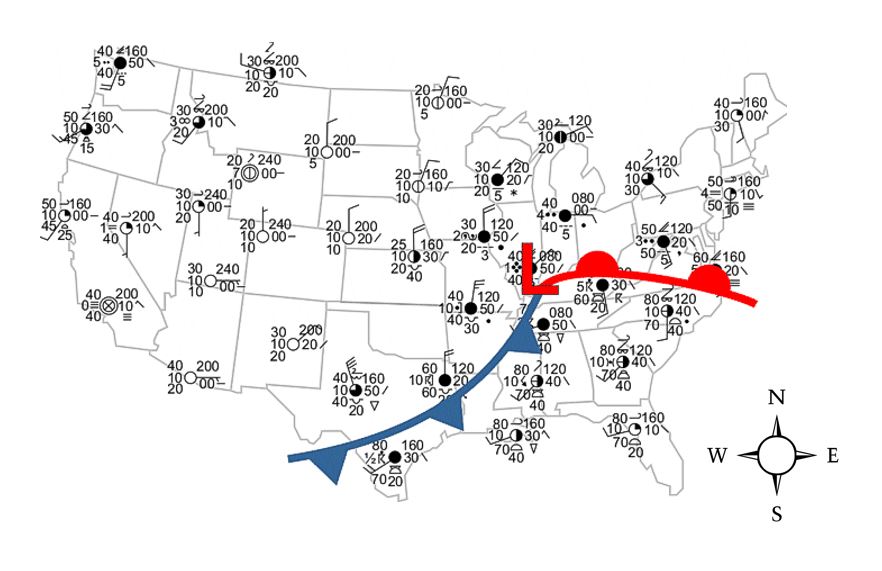
What type of front is this? 
a)
warm front
b)
cold front
c)
stationary front
d)
occluded front
36.
What type of storm front is this?
a)
warm front
b)
cold front
c)
stationary front
d)
occluded front
37.
What does symbol # 1 mean?
a)
stationary front
b)
occluded front
c)
warm front
d)
cold front
38.
What does symbol # 2 mean?
a)
stationary front
b)
occluded front
c)
warm front
d)
cold front
39.
What direction is the cold front moving on the map? 
a)
Southwest
b)
Northwest
c)
Southeast
d)
Northeast
40.
What direction is the warm front moving on the map? 
a)
North
b)
South
c)
East
d)
West
41.
What characteristics are used to classify air masses?
a)
temperature and humidity
b)
pressure and temperature
c)
latitude and longitude
d)
wind speed and location 
42.
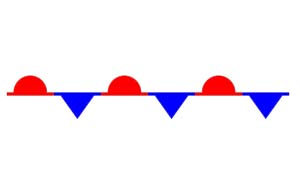
Which type of front is displayed?
a)
Cold
b)
Warm
c)
Stationary
d)
Occluded
43.
When a cold front is approaching, what happens?
a)
warm air is pushing under cold air causing humid weather and lower temperatures
b)
warm air is pushing under cold air causing humid weather and higher temperatures
c)
warm air rises, cools, and causes rain and thunderstorms
d)
cold air is pushed over warm air causing rain and thunderstorms
44.

Which is the correct symbol for a stationary front?

a)
b)
c)
d)
45.

Which is the correct symbol for an occluded front?

a)
b)
c)
d)
46.
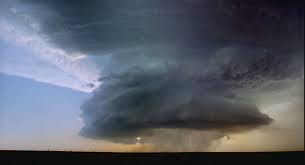
Thunderstorm clouds are called - 
a)
Cirrus
b)
Stratus
c)
Cumulus
d)
Cumulonimbus
47.
The most thunderstorms per year occur in which state?
a)
Montana
b)
Florida
c)
Texas
d)
Virginia
48.
When lightening heats the air around it, and the air expands quickly, what does this cause?
a)
Thunder
b)
Wind
c)
Precipitation
d)
Evaporation
49.
What happens during the cumulus stage of a thunderstorm?
a)
The storm begins to break up
b)
The storm creates lightning thunder and heavy rain
c)
The cool air rises and stratus clouds build
d)
The warm air rises and cumulus clouds build
50.
What happens during the mature stage of a thunderstorm?
a)
The storm begins to break up
b)
The storm creates lightning thunder and heavy rain
c)
The cool air rises and stratus clouds build
d)
The warm air rises and cumulus clouds build
51.
What happens during the dissipating stage of a thunderstorm?
a)
The storm begins to break up
b)
The storm creates lightning thunder and heavy rain
c)
The cool air rises and stratus clouds build
d)
The warm air rises and cumulus clouds build
52.

Thunderstorms are the result of which type of pressure system?

a)

Low

b)

High

53.

Which type of air creates cumulonimbus clouds?

a)

Hot, humid air

b)

Cold, humid air

c)

Hot, dry air

d)

Cold, dry air

54.
Collectively, the states of Texas, Oklahoma, Kansas and Nebraska, where tornadoes occur often, are all called
a)
Tornado towns
b)
Storm centers
c)
Tornado Alley
d)
Cyclone counties
55.
Where do tornadoes start?
a)
Over the ocean near the equator
b)
In the clouds that create blizzards
c)
In the clouds of severe thunderstorms
d)
Any time that it rains
56.

Tornadoes are measured using which type of scale?

a)

Richter scale

b)

Saffir Simpson scale

c)

Enhanced Fujita Scale

d)

Mercator Scale

57.
What happens in Tornado Alley to create so many tornadoes?
a)
The rate of condensation is higher than the rate of precipitation
b)
Warm air from Canada meets cold air from Virginia
c)
Cold, dry air from Canada meets warm dry air from Gulf of Mexico
d)
Warm air in Texas clashes with even warmer air in Texas
58.

During a tornado you should follow which of these precautions:

a)

If you are in a car, go inside a shelter

b)

If you are in a mobile home, get inside a sturdy building

c)

Stay away from windows

d)

Protect/cover your head

e)

all of the above

59.

What is the most powerful part of a hurricane?

a)

Eye

b)

Eye Wall

c)

Storm surge

d)

Edge

60.

What is the calmest part of a hurricane?

a)

Eye

b)

Eye Wall

c)

Storm surge

d)

Edge

61.

Why does a hurricane slow down when it hits land?

a)

The wind stops it

b)

It stops raining

c)

It loses its energy source

d)

The air is different

62.

The name of the system that causes the winds to spin in a hurricane

a)

The Coriolis Effect

b)

The Corleone Affect

c)

The Circular Wind Phenomenon

d)

The East-West Effect

63.
What do the wind speeds need to reach for a storm to be classified as a hurricane?
a)
23 - 39 mph
b)
40 - 73 mph
c)
74 mph
d)
600 mph
64.
When is Hurricane Season in the Atlantic Ocean?
a)
December 1st - July 4th
b)
March 21st - October 3rd
c)
May 15th - September 1st
d)
June 1st - November 30th
65.
In what direction do hurricanes rotate in the Northern Hemisphere?
a)
Clockwise
b)
Counterclockwise
c)
Up
d)
Down
66.

The scale used to measure the size of hurricanes is called the __________.

a)

Saffir-Simpson Scale

b)

Cal-Ripkin Scale

c)

Richter Scale

d)

Enhanced Fujita Scale

67.

What is true about all severe storms?

a)

All severe storms are low pressure systems

b)

All severe storms are high pressure systems

c)

All severe storms develop into tornadoes

d)

All severe storms occur in all 50 states

68.

What instrument measures wind speed?

a)

barometer

b)

thermometer

c)

anemometer

d)

wind vane

69.

Why does Wilmington have less fluctuation in temperature throughout the year compared to Charlotte?

a)

Because Charlotte experiences high pressure most of the time and Wilmington experience low pressure most of the time.

b)

Because Charlotte is closer to the mountains than Wilmington

c)

Because Wilmington is close to the ocean and the ocean doesn't fluctuate in temperature due to its low specific heat

d)

Because Wilmington is close to the ocean and the ocean doesn't fluctuate in temperature due to its high specific heat

70.

How can clouds impact temperature during the day and night?

a)

The presence of clouds during the day decreases the temperature; the presence of clouds during the night increases the temperature.

b)

The presence of clouds during the day increases the temperature; the presence of clouds during the night decreases the temperature.

c)

The presence of clouds during the day does not impact the temperature; the presence of clouds during the night increases the temperature.

d)

The presence of clouds during the day decreases the temperature; the presence of clouds during the night does not impact the temperature.

71.
Which atmospheric circulation cell is between 0-30 degrees latitude lines?
a)
Hadley cell
b)
Polar cell
c)
Doldrums
d)
Ferrel cell
72.
Which weather cell is between 60 degrees latitude and the poles?
a)
Hadley cell
b)
Polar cell
c)
Ferrel cell
d)
 ITCZ
73.
All air is under pressure but if it is rising then the air is said to be unstable and the pressure is _______
a)
higher
b)
lower
74.
Working in the direction from the North Pole to the equator, what is the correct sequence for the three cells.
a)
Hadley cell, Polar cell, Ferrel cell
b)
Polar cell, Hadley cell, Ferrel cell
c)
Polar cell, Ferrel cell, Hadley cell
d)
Hadley cell, Ferrell cell, Polar cell
75.
Air moves from high pressure to low pressure.
a)
True
b)
False
76.

Why do most deserts occur at 30° N and S latitudes?

a)

Because of the low pressure that exists there.

b)

Because of the high pressure that exists there.

c)

Because of the rising air that exists there

d)

Because of the strong ocean currents