wayground logo

Free Printable Worksheets

Font size

S
M
L
XL
Worksheets

Earth/Sun/Moon Unit Review

Total questions: 134

Worksheet time: 3hrs 41mins

Name
Class
Date
1.
What is the larger outer lighter part of the shadow cone called, where a partial eclipse can be viewed?
a)
Partial
b)
Umbra
c)
Penumbra
2.
What is the darkest inner part of the shadow cone called, where a total eclipse can be viewed.
a)
Total
b)
Umbra
c)
Penumbra
3.
A lunar eclipse can occur only during the _________________.
a)
Full moon
b)
New moon
c)
Waxing moon
4.
A solar eclipse can occur only during the _________________.
a)
Full moon
b)
New moon
c)
Quarter moon
5.
Which type of eclipse occurs when the Moon comes directly between Earth and the Sun?
a)
Lunar eclipse
b)
Solar eclipse
6.
Which type of eclipse occurs when the Earth comes directly between the Sun and Moon?
a)
Lunar eclipse
b)
Solar eclipse
7.
What does number 1 in the image to the left represent?
a)
Umbra
b)
Penumbra
8.
What does number 2 in the image to the left represent?
a)
Umbra
b)
Penumbra
9.

This image is showing us a.....

a)

solar eclipse

b)

lunar eclipse

c)

phases of the moon

d)

earth eclipse

10.
If a full moon occurs on August 10, the next full moon would occur on _
a)
September 10
b)
August 30
c)
July 10
d)
October 10
11.
Name the moon phase
a)
full moon
b)
waxing crescent
c)
waning gibbous
d)
waxing gibbous
12.
Name the moon phase
a)
waning crescent
b)
waxing crescent
c)
last quarter
d)
waxing gibbous
13.
Name the moon phase
a)
waning crescent
b)
first quarter
c)
waning gibbous
d)
waxing gibbous
14.
Name the moon phase
a)
waning crescent
b)
waxing crescent
c)
waning gibbous
d)
full moon
15.
Name the moon phase
a)
First Quarter
b)
Last Quarter
c)
New Moon
d)
Full Moon
16.
Name the moon phase
a)
First Quarter
b)
Last Quarter
c)
New Moon
d)
Full Moon
17.
Name the moon phase
a)
Waning Crescent
b)
Last Quarter or (third quarter)
c)
New Moon
d)
Full Moon
18.
Name the moon phase
a)
First Quarter
b)
Waxing Crescent
c)
New Moon
d)
Full Moon
19.
What is the difference between a gibbous moon and a crescent moon?
a)
The gibbous shows more than half of the bright side of the moon.
b)
The crescent shows more than half of the bright side of the moon.
c)
The gibbous shows less than half of the bright side of the moon. 
d)
There is no difference
20.
The cycle of the moon lasts about a _.
a)
day
b)
year
c)
week
d)
month
21.
The moon ____________ around the Earth.
a)
orbits
b)
rotates
c)
up
d)
down
22.
ROTATE vs REVOLVE
What causes the seasons? 
a)
The Earth spinning or rotating
b)
The Earth revolving around the Sun on its tilted axis.
23.
Phases of the moon in which the moon appears to be getting larger are referred to as _.
a)
waxing
b)
waning
c)
new
d)
eclipse
24.
Which moon phase is when you can't see the moon at all?
a)
Waning crescent
b)
Full moon
c)
Waxing gibbous
d)
New moon
25.
Which of the following words describe the phases of the moon?
a)
none, quarter, half, three quarters, full
b)
new, crescent, quarter, gibbous, full
c)
dark, light, half, quarter, blue
d)
first quarter, second quarter, third quarter, fourth quarter
26.
Changes in the moon's appearance are
a)
phases
b)
eclipses
c)
stages
d)
cycle
27.
The 1st Quarter moon is lit on the:
a)
Left Side
b)
Right Side
28.
Spinning of Earth on its axis.
a)
Rotation
b)
Revolution
29.
Movement of Earth around the sun.
a)
Rotation
b)
Revolution
30.
Earth has seasons because.....
a)
Its axis is tilted
b)
Revolves around Saturn
c)
The sun revolves around Earth
31.

The Earth is tilted at how many degrees?

a)

32.5

b)

22.3

c)

23.5

d)

53.3

32.

The imaginary line that runs from the North Pole to the South.

a)

Axis

b)

Equator

c)

Prime Meridian

33.
what causes day and night?
a)
rotation
b)
revolution
c)
solstice
d)
equinox
34.
Which location on Earth receives the most direct sunlight?
a)
The deserts
b)
The South Pole
c)
The Equator
d)
The Western Hemisphere
35.

The Sun is the nearest __ to the Earth

a)

Moon

b)

SAtellite

c)

Star

d)

Planet

36.

One revolution of the Earth takes

a)

24 hours

b)

365 days

c)

366 days

d)

365.25 days

37.

The Sun appears to rises in __ and set in the __

a)

West, East

b)

East, West

c)

East, North

d)

West, South

38.

When the Northern Hemisphere is tilted towards the sun it is experiencing what season

a)

Winter

b)

Spring

c)

Summer

d)

Fall

39.

is a day when the Earth’s axis is towards or away from the Sun.

a)

Solstice

b)

Equinox

c)

Equisox

d)

Solstwice

40.

is a day when the axis is leaning neither towards nor away from the Sun.

a)

Solstice

b)

Equinox

c)

Equisox

d)

Solstwice

41.
In winter, the axis of the earth is pointed away or toward the sun?
a)
towards
b)
up
c)
down
d)
away
42.
In summer, the axis of the earth is pointed away or toward the sun?
a)
towards
b)
up
c)
down
d)
away
43.
Why is the Equator warmest?
a)
Because it is closest to the sun.
b)
Because it receives the most direct sunlight
c)
Because no clouds form here.
d)
Because it is far from the sun
44.
Which season is taking place in the Northern Hemisphere in Position 1?
a)
Winter
b)
Spring
c)
Summer
d)
Fall
45.
Which season is taking place in the Northern Hemisphere in Position 3?
a)
Winter
b)
Spring
c)
Summer
d)
Fall
46.
The term equinox means....
a)
equal amount of day light and equal amount of night
b)
Equal amount of winter and summer
c)
Equal amounts of hot dogs for everyone
d)
The longest day of the year
47.
What happens when the area in which you live tilts away from the sun?
a)
It is summer.
b)
It is spring.
c)
It is winter.
d)
It is fall.
48.
One rotation of Earth is equal to
a)
a day.
b)
a year.
49.
Why do globes lean sideways?
a)
To allow them to spin easier.
b)
To demonstrate the tilt of Earth's axis.
c)
To demonstrate the effects of gravity.
d)
To demonstrate day and night.
50.
If its ____ in the Northern hemisphere, then its fall in the Southern hemisphere. 
a)
spring
b)
summer
c)
fall
d)
winter
51.
If its ____ in the Northern hemisphere, then its summer in the Southern hemisphere. 
a)
spring
b)
summer
c)
fall
d)
winter
52.
The earth orbits around...
a)
the sun.
b)
the moon
c)
other planets
d)
the Milky Way
53.
How long does earth's rotation last? 
a)
90 hours
b)
about 1 hour
c)
24 hours
d)
48 hours
54.
As the Earth orbits around the sun, the direction of the tilt of its axis changes.
a)
True
b)
False
55.
If Earth was NOT tilted on its axis, which of the following would no longer occur?
a)
Change between Day and Night
b)
Change of seasons
c)
Summer
d)
Earth's rotation
56.
The Earth orbits the Sun because of what?
a)
Friction
b)
Electromagnetic attraction
c)
Gravity
d)
Interia
57.
True or False:  On Earth, the sun appears to rise and set because of the Sun's rotation. 
a)
True
b)
False- it's because of Earth's rotation
c)
False- it's because of Earth's revolution
d)
False- it's because of the sun's revolution
58.
1 year = 1 ___________
a)
Revolution of Earth around the Sun
b)
Rotation of Earth in its orbit
c)
Rotation of the Sun around the Earth
d)
Rotation of the Moon around Earth
59.
When the Moon passes through Earth's shadow, which of the following occurs?
a)
 a solar eclipse
b)
an earthquake
c)
a lunar eclipse
d)
a change in seasons
60.
Which of the following would result in shorter days on Earth?
a)
The tilt of the Earth's axis DECREASED
b)
The Earth began to rotate FASTER
c)
The Earth began to rotate SLOWER
d)
The tilt of the Earth's axis INCREASED
61.
If you wanted to live where you could experience little or no change in the number of daylight hours throughout the year, where would you want to live?
a)
closer to one of the poles
b)
in the northern hemisphere
c)
closer to the equator
d)
in the southern hemisphere
62.
Why is a new moon not visible in the sky?
a)
No sunlight is reflected off the moon
b)
Sunlight is reflected off only a small portion   of the moon.
c)
The moon is on the opposite side of the Earth from the Sun.
d)
The moon is positioned between the Earth and the Sun
63.
Why is a new moon not visible in the sky?
a)
No sunlight is reflected off the moon
b)
Sunlight is reflected off only a small portion   of the moon.
c)
The moon is on the opposite side of the Earth from the Sun.
d)
The moon is positioned between the Earth and the Sun
64.
The Moon is visible to us on Earth because it:
a)
emits (gives off) its own light.
b)
reflects light from Earth.
c)
reflects light from the stars.
d)
reflects light from the Sun.
65.
Which statement best explains why a total lunar eclipse does not occur every time there is a full moon?
a)
Earth’s axis is tilted at a 23.5° angle.
b)
Earth is between the sun and the moon during a full moon.
c)
The moon is between Earth and the sun during a full moon.
d)
The moon’s orbit is tilted at a 5° angle in relation to Earth’s orbit around the sun.
66.

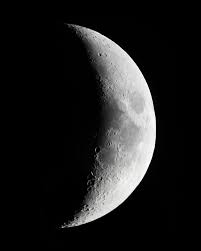
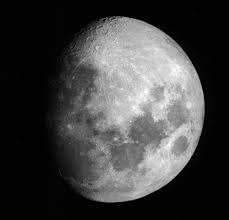
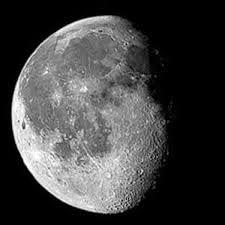
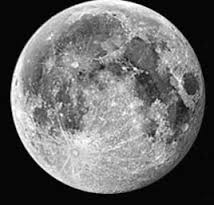
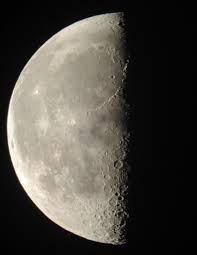
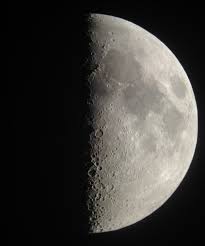
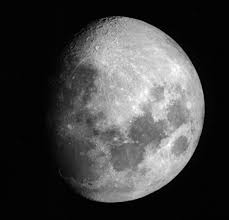
Which moon phase is in the picture?

a)

New moon

b)

Waxing gibbous

c)

Waning gibbous

d)

Full moon

67.

Which moon phase is shown in the picture?

a)

waxing crescent

b)

waning crescent

c)

waxing gibbous

d)

waning gibbous

68.

Which moon phase is shown in the picture?

a)

full moon

b)

new moon

c)

waning gibbous

d)

waxing crescent

69.

Which moon phase is shown in the picture?

a)

waxing gibbous

b)

waning gibbous

c)

waxing crescentg

d)

waning crescent

70.

Which moon phase is shown in the picture?

a)

Last/3rd quarter

b)

1st quarter

c)

waxing gibbous

d)

waning gibbous

71.
 True or False: The moon does not produce its own light.
a)
True
b)
False
72.

Which moon phase is shown in the picture?

a)

waning gibbous

b)

waxing gibbous

c)

full moon

d)

Last/3rd quarter

73.
What is a way of describing how the moon looks during the quarter phase?
(this is the tricky one)
a)
Invisible
b)
A Pizza Pie
c)
A Half
d)
A Thin Banana
74.

Which moon phase is shown in the picture?

a)

Last/3rd quarter

b)

1st quarter

c)

Waxing gibbous

d)

Waning gibbous

75.

Which moon phase is shown in the picture?

a)

waxing gibbous

b)

waning gibbous

c)

waxing crescent

d)

waning crescent

76.

What does it mean to be waxing?

a)

gaining light

b)

losing light

c)

no light

d)

full of light

77.

What does it mean to be waning?

a)

gaining light

b)

losing light

c)

no light

d)

full of light

78.
What happens right after the full moon phase?
a)
The moon becomes new.
b)
The moon goes through its phases in the reverse order.
c)
The moon seems to disappear in the sky.
d)
The moon starts to wax.
79.
What is the correct order of the first five phases of the moon?
a)
full, crescent, quarter, gibbous, new
b)
new, crescent, gibbous, quarter, full
c)
new, crescent, quarter, gibbous, full
d)
full, quarter, gibbous, crescent, new
80.
Name that phase!
a)
Waning Crescent 
b)
Waxing Crescent 
c)
New Moon 
d)
Full Moon 
81.
Name that phase!
a)
Waning Gibbous 
b)
Waxing Gibbous 
c)
Full Moon 
d)
Waning Crescent 
82.

Which moon phase is shown in this diagram?

a)

new moon

b)

first quarter

c)

full moon

d)

3rd quarter

83.

What phase is this?

a)

First Quarter Moon

b)

Third Quarter Moon

c)

Waxing Gibbous Moon

d)

Waning Gibbous Moon

84.

What phase is this?

a)

Full Moon

b)

First Quarter Moon

c)

Third Quarter Moon

d)

New Moon

85.
How long after a new moon will it take to see another new moon?
a)
12 days
b)
29.5 days
c)
27.3 days
d)
365 days
86.
What is illuminating the Moon?
a)
Nuclear Fusion
b)
Sunlight
c)
Mirrors
d)
Flood Lights
87.
What moon phase came right BEFORE this one?
a)
First Quarter
b)
Last Quarter
c)
New Moon
d)
Full Moon
88.
How many phases does the moon go through?
a)
4
b)
8
c)
10
d)
16
89.
Name the moon phase that would come AFTER this moon.
a)
waning crescent
b)
waxing crescent
c)
waning gibbous
d)
waxing gibbous
90.
What is the difference between a gibbous moon and a crescent moon?
a)
The gibbous shows more than half of the bright side of the moon.
b)
The crescent shows more than half of the bright side of the moon.
c)
The gibbous shows less than half of the bright side of the moon. 
91.
The moon ____________ around the Earth.
a)

revolves

b)
rotates
c)

goes clockwise

d)

pulls

92.
Name the moon phase that would come AFTER this moon.
a)
waning crescent
b)
waxing crescent
c)
waning gibbous
d)
waxing gibbous
93.
Name the moon phase
a)
waning crescent
b)
waxing crescent
c)
waning gibbous
d)
waxing gibbous
94.
Which moon phases are "waxing"?
a)
1 and 2
b)
2 and 4
c)
6 and 8
d)
1 and 5
95.
What does "waning" mean?
a)

decreasing light

b)

increasing light

c)

illuminating light

d)

growing light

96.
Which moon phases are "waning"?
a)
1 and 2
b)
2 and 4
c)
6 and 8
d)
1 and 5
97.
Which moon phases are "crescents"?
a)
1 and 5
b)
2 and 8
c)
4 and 6
d)
3 and 7
98.
What is the difference between a gibbous moon and a crescent moon?
a)
The gibbous shows more than half of the bright side of the moon.
b)
The crescent shows more than half of the bright side of the moon.
c)
The gibbous shows less than half of the bright side of the moon. 
99.
How much of the moon is always lit?
a)
can't tell
b)
always changes
c)
half
d)
3/4
100.
What is the closest planet to the sun?
a)
Jupiter
b)
Neptune
c)
Mars
d)
Mercury
101.
What is the fourth planet from the sun?
a)
Mercury
b)
Mars
c)
Earth
d)
Venus
102.
Which planet is not a terrestrial planet?
a)
Mars
b)
Neptune
c)
Earth
d)
Mercury
103.
Which planet is not a gas giant?
a)
Saturn
b)
Jupiter
c)
Neptune
d)
Venus
104.
Is this the correct order of the planets from smallest to largest: Mercury, Mars, Venus, Earth, Neptune, Uranus, Saturn, Jupiter?
a)
Yes
b)
No
105.
Planets that are closer to the sun
a)
take more time to orbit
b)
take less time to orbit
106.
The spinning of an object on its axis is called______
a)
orbit
b)
rotation
c)
revolution
d)
tide
107.
How long does it take the Earth to make one REVOLUTION around the Sun?
a)
12 hours
b)
24 hours
c)

365.25 days

d)
29.5 days
108.
True or False
The Earth is the center of the solar system.
a)
True
b)
False
109.
What is a common characteristic of the inner planets?
a)
Large
b)
Gaseous
c)
Rings
d)
Rocky Surface
110.
Which planet doesn't have a moon?
a)
Earth
b)
Mars
c)
Mercury
d)
Jupiter
111.
The inner and outer planets are divided by...
a)
The asteroid belt
b)
The oort cloud
c)
The kuiper belt
d)
a fraction
112.
Which planet has very visible rings?
a)
Jupiter
b)
Saturn
c)
Earth
d)
Neptune
113.
Which planet is known for it's red, rust covered surface?
a)
Venus
b)
Mercury
c)
Mars
d)
Jupiter
114.
Which is the hottest planet?
a)
Mercury
b)
Venus
c)
Earth
d)
Neptune
115.
How many planets are there?
a)
7
b)
8
c)
9
d)
10
116.
The difference between a moon and a planet is...
a)
A moon is made of rock, a planet is made of gas
b)
Moons can only be seen with a telescope
c)

Moons revolve around a planet, planets revolve around a sun

d)
That's no moon... ITS A SPACE STATION!
117.

Which planet has the longest year?

a)

Venus

b)

Mars

c)

Jupiter

d)

Neptune

118.

Which planet has the most moons?

a)

Mars

b)

Jupiter

c)

Saturn

d)

Neptune

119.
The greater mass a planet has, 
a)
the greater the gravitational force it has
b)
the less gravitational force it has
c)
gravitational force does not depend on mass
120.
Saturn's rings are made of chunks of 
a)
volcanoes
b)
ice and rock
c)
nitrogen and helium 
d)
ice and 
121.
Its largest moon is Titan.
a)
Saturn
b)
Jupiter
c)
Neptune
d)
Uranus
122.

This cold, blue planet has a moon that is the coldest object in the solar system called Triton

a)

Neptune

b)

Jupiter

c)

Mars

d)

Venus

123.
This is the only planet in the solar system with oceans of liquid water.
a)
Mercury
b)
Mars
c)
Venus
d)
Earth
124.

Most likely due to a massive collision, this planet rotates on its side

a)
Saturn
b)
Venus
c)
Neptune
d)
Uranus
125.
How many outer planets are there?
a)
4
b)
8
c)
9
d)
20
126.
Which planet is considered Earth's twin?
a)
Venus
b)
Sun
c)
Moon
d)
Mars
127.
What holds the planets in their orbits around the sun?
a)
gravity
b)
speed
c)
string
d)
air currents
128.
What does number 1 in the image to the left represent?
a)
Umbra
b)
Penumbra
129.
What does number 2 in the image to the left represent?
a)
Umbra
b)
Penumbra
130.
For a solar eclipse to occur, what has to happen?
a)
The sun must be directly between Earth and the moon.
b)
The moon must be directly between Earth and the Sun.
c)
Earth must be directly between the Sun and the moon.
131.
Why is a lunar eclipse very rare?
a)
Because it happens every new moon
b)
Because the moon's orbit is tilted, so the sun, moon and earth rarely line up
c)
because the moon isn't close enough to the earth
d)
because the earth isn't close enough to the sun
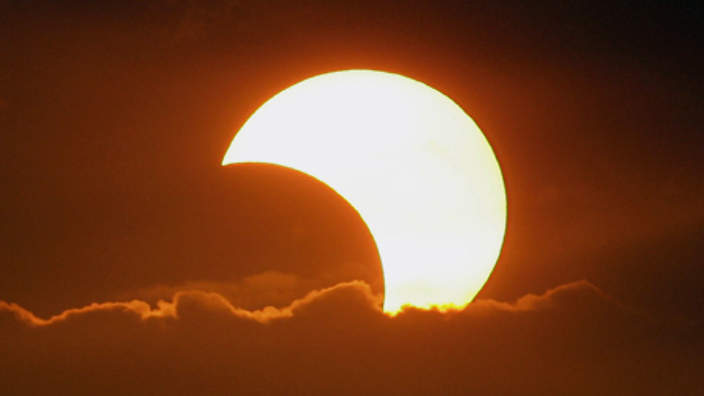
132.

This image is showing us a.....

a)

solar eclipse

b)

lunar eclipse

c)

phases of the moon

d)

earth eclipse

133.

This image is an example of

a)

Lunar Eclipse

b)

Full Moon

c)

New Moon

d)

Solar Eclipse

134.

If you look up at the sky and see this, you are witnessing a....

a)

solar eclipse

b)

total eclipse

c)

lunar eclipse

d)

jupiter