wayground logo

Free Printable Worksheets

Font size

S
M
L
XL
Worksheets

VL7: HW 12.06

Total questions: 85

Worksheet time: 40mins

Name
Class
Date
1.
A particle that moves around the nucleus is a(n)...
a)
Proton
b)
Neutron
c)
Electron
d)
Quark
2.

True/False: Neutrons have a negative charge

a)

True

b)

False

3.
Particles in an atom that are neutral and have no charge are 
a)
negatrons 
b)
electrons 
c)
neutrons 
d)
protons 
4.

Central region of an atom where its neutrons and protons are is its

a)

nucleus

b)

electron cloud

c)

core

d)

center

5.
The positive particles of an atom are 
a)
electrons 
b)
positrons 
c)
neutrons 
d)
protons 
6.
What does the nucleus of an atom contain?
a)
Electrons and neutrons
b)
Protons and neutrons
c)
Neutrinos and positrons
d)
DNA and RN
7.
Everything is made up of little tiny things called _____
a)
compounds
b)
molecules
c)
atoms
d)
solids
8.
In the center of the atom is something called _____
a)
the kernel
b)
the cell
c)
the nucleus
d)
the focal point
9.
What are the names of the particles in the nucleus?
a)
protons and neutrons
b)
protons and electrons
c)
photons and neutrons
d)
nucleons and protons
10.
Most of the mass in an atom is made up of _____________________?
a)
protons and electrons
b)
protons and neutrons
c)
neutrons and electrons
d)
electrons and quarks
11.
Choose the particle that has no charge.
a)
nucleus
b)
neutron
c)
proton
d)
electron
12.
An electron has a _____ charge.
a)
negative
b)
positive
c)
neutral
13.

Describe an Electron Cloud.

a)

the mist outside of an atom

b)

home of the protons

c)

where electrons are located

d)

nucleus

14.

What is the mass number of the atom pictured?

a)

11

b)

12

c)

22

d)

23

15.
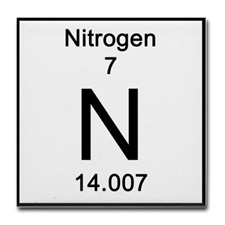
What is the number of protons that the element in this image contain?
a)
14
b)
7
c)
15
d)
18
16.

Atoms are made up of what?

a)

molecules

b)

compounds

c)

elements

d)

subatomic particles

17.

Which of the following are subatomic particles? (Check all that apply)

a)

protons

b)

neutrons

c)

megatrons

d)

electrons

18.

Which subatomic particle has a positive charge?

a)

proton

b)

neutron

c)

electron

d)

midichlorian

19.

Which material is a pure substance?

a)

alloy

b)

compound

c)

mixture

d)

solution

20.

When two or more substances combine, but each keeps its own properties, the new combination is called a (an)

a)

element

b)

mixture

c)

compound

d)

homogeneous mixture

21.

Which statement best describes an atom?

a)

Anything with mass and volume.

b)

The smallest unit of a substance that exhibits all of the properties characteristic of that substance.

c)

The substance that can not be broken down chemically into simpler substances.

d)

The smallest particle that has the properties of an element.

22.

Pure Aluminum Foil

Distille Water

NaCl (Table Salt)

Gold Bar (pure Au)


All of these may be classified as:

a)

elements

b)

compounds

c)

pure substances

d)

organic compounds

23.

Elements are composed of

a)

many types of atoms.

b)

the same type of atom.

c)

many different atoms.

d)

the same type of compound.

24.

One difference between mixtures and pure substances is that

a)

mixtures can be physically separated.

b)

mixtures are made of one type of atom.

c)

pure substances have no chemical bonds.

d)

pure substances can be physically separated.

25.

In the classification of matter chart, letter B, would be a(an)

a)

acid

b)

element

c)

compound

d)

solution

26.

In the classification of matter chart, letter C, would be a(an)

a)

acid

b)

element

c)

compound

d)

solution

27.

Ice cream in a bowl with whipped cream and sprinkles is best described as

a)

element

b)

compound

c)

heterogeneous mixture

d)

homogeneous mixture

28.

Which of these is a mixture?

a)

air

b)

water

c)

CO2

d)

HCl

29.

Which of the following is not a compound?

a)

HCl

b)

Cl

c)

NaCl

d)

CO2

30.
A combination of substances that are not chemically combined is called a(n)____________. 
a)
mixture
b)
compound
c)
physical
31.
This picture represents which of the following?
a)
element
b)
compound
c)
mixture
32.
This picture represents which of the following?
a)
element
b)
compound
c)
mixture
33.
Which of the following represents an element?
a)
H2O
b)
H2
c)
NaCl
d)
CaCO3
34.
Glucose (C6H12O6) is an example of a...
a)
Element
b)
Compound
c)
Mixture
35.
How many TOTAL atoms are in this compound?
H2C3O4N5
a)
5
b)
14
c)
15
d)
19
36.
How many elements are present in this compound?
Mg2As3COHNi2
a)
2
b)
4
c)
6
d)
10
37.
How many total atoms are in the compound C2H8O ?
a)
11
b)
2
c)
8
d)
1
38.
How many Aluminum are in Al2O3?
a)
3
b)
2
c)
5
39.
What is the mass of an atom if it has 11 protons, 12 neutrons, and 11 electrons?
a)
22
b)
11
c)
34
d)
23
40.
How many atoms are in the element Carbon in this compound?
H2C3O4N5
a)
2
b)
3
c)
4
d)
5
41.
What is a mixture?
a)
elements chemically combined
b)
a combination of different things
c)
it is found on the Periodic Table 
d)
it is made of chemical
42.
What type of mixture is this?
a)
heterogeneous 
b)
homogeneous
43.

Which statement below does NOT describe a colloid?

a)

A colloid is a type of heterogeneous mixture

b)

A colloid is a type of solution.

c)

The particles in a colloid do not settle like they do in a suspension.

d)

The particles in a colloid do not dissolve – they are just too small to be seen.

44.
Fog is an example of a ____. 
a)
colloid
b)
compound 
c)
solution
d)
substance
45.

The substances listed on the left side of a chemical equation

a)

Products

b)

Coefficients

c)

Precipitates

d)

Reactants

46.

Electrons occupying the outermost shell of an atom

a)

Ions

b)

Cation

c)

Valence Electrons

d)

Anion

47.

Valence electrons are

a)

Electrons farthest away from the nucleus

b)

Electrons closest to the nucleus

c)

Electrons that just come and go - they don't stay with the atom

d)

Electrons in the second shell

48.

Liquid particles have more energy than ___ particles.

a)

solid

b)

gas

49.
Which is an endothermic phase change?
a)
gas to solid
b)
liquid to solid
c)
gas to liquid
d)
liquid to gas
50.
Gas particles have the ________ kinetic energy because they move the fastest.
a)
least
b)
most
51.

According to the KMT, increasing the temperature of particles will

a)

give off energy

b)

increase motion

c)

decrease volume

d)

increase pressure

52.

What state of matter is pictured?

a)

Solid

b)

Liquid

c)

Gas

d)

Plasma

53.

An atoms overall charge

a)

positive

b)

depends on its mood

c)

neutral

d)

negative

54.

What subatomic particles would you find in the nucleus of an atom?

a)

Protons only

b)

Protons and Neutrons

c)

Neutrons and Electrons

d)

Protons and Electrons

55.
An atom becomes _______ when it loses electrons.
a)
Positive
b)
Negative
c)
Neutral
d)
Invinsible
56.
Isotopes are elements with a different amount of
a)
protons
b)
neutrons
c)
electrons
d)
atoms
57.

An element will always have the same number of

a)

neutrons

b)

protons

c)

isotopes

d)

atoms

58.

In the modern periodic table, elements are arranged by

a)

atomic mass

b)

atomic number

c)

valence electrons

d)

number of isotopes

59.

Number of VALENCE ELECTRONS: P (element #15)

a)

2-3

b)

5

c)

6

d)

4

e)

3

60.

Number of VALENCE ELECTRONS: Zn (element #30)

a)

2-3

b)

5

c)

6

d)

4

e)

3

61.

Number of VALENCE ELECTRONS: Xe (element #54)

a)

2-3

b)

2

c)

6

d)

4

e)

8

62.

Number of VALENCE ELECTRONS: Li (element #3)

a)

2-3

b)

2

c)

1

d)

4

e)

8

63.

Which family does Mg (element #12) belong?

4 lines
64.

Which family does Br (element #35) belong?

4 lines
65.

Which family does Ti (element #22) belong?

4 lines
66.

Which family does In (element #49) belong?

4 lines
67.

Which class of element is: F (element #9)?

a)

Metal

b)

Metalloid

c)

Non-Metal

68.
Cations are...
a)
Positive
b)
Negative
c)
Neutral
d)
Purring
69.
Anions are...
a)
Positive
b)
Negative
c)
Neutral
d)
Crying
70.
Ions are: 
a)
atoms with a positive or negative charge
b)
atoms with no charge
c)
atoms with ONLY a positive charge
d)
atoms with ONLY a negative charge
71.

Which part makes and transports proteins; contains ribosome?

a)

Cell Wall

b)

Cytosol

c)

Golgi Apparatus

d)

Rough endoplasmic Reticulum

72.

Whats is the function of the mitochondrion?

a)

Energy production

b)

Store water

c)

Conduct photosynthesis

d)

None of the above

73.

Which one is a chloroplast?

a)
b)
74.

Which part makes and transports proteins; and contains ribosomes?

a)

chloroplast

b)

ribosomes

c)

Rough Endoplasmic Reticulum

75.
Plant cell structures that turn energy from sunlight into food.
a)
Cell Wall
b)
Mitochondria
c)
Chloroplast
d)
Cytoplasm
76.
Additional layer around the outside of plant cells made from cellulose that protect and give shape
a)
Cell Wall
b)
Chloroplast
c)
Cell Membrane
d)
Golgi Complex
77.
Storage of food, water, wastes, and enzymes.
a)
Vacuole
b)
Mitochondria
c)
Cell Membrane
d)
Cytoplasm
78.
Converts stored food into energy.
a)
Mitochondria
b)
Cell Wall
c)
Chloroplast
d)
Ribosome
79.
Produces proteins
a)
Ribosome
b)
Nucleus
c)
Cytoplasm
d)
Endoplasmic Reticulum
80.
Controls what enters and leaves the cell
a)
Cell Membrane
b)
Ribosome
c)
Chloroplast
d)
Vacuole
81.
Control center of the cell (like a brain)
a)
Nucleus
b)
Nucleolus
c)
Cytoplasm
d)
Endoplasmic Reticulum
82.
Package and transport proteins from the cell
a)
Golgi Complex (body)
b)
Endoplasmic Reticulum
c)
Ribosome
d)
Mitochondria
83.
Transport system within the cell
a)
Endoplasmic Reticulum
b)
Nucleolus
c)
Cytoplasm
d)
Vacuole
84.

What makes plant vacuole different from an animal vacuole?

a)

plant vacuoles are small and animal vacuoles are large

b)

Plant vacuoles are large and and animal vacuoles are small

c)

plant vacuoles are specialized, such as contractile vacuoles

d)

Animal vacuoles store large amounts of water. Plant vacuoles store food.

85.
What is diffusion?
a)
when molecules move from a low concentration to a high concentration 
b)
when molecules move from a high concentration to a low concentration.
c)
no movement 
d)
molecules move everywhere