
 Worksheets
cell g9
Total questions: 78
Worksheet time: 3hrs 50mins
Plants and animal cells have...
Mitochondria and chloroplasts
Nucleus and chloroplast
Cell wall and chloroplast
Mitchochodria and cytoplasm
Which organelle is the command center for eukaryotic (plant and animal) cells?
Cell wall
Nucleus
Mitochondria
Lysosome
what is the function of a lysosome?
To create energy for the cell
To command the cell what to do
To remove waste using digestive enzymes from the cell
To protect the cell
What is the difference between a prokaryotic cell and a eukaryotic cell?
Prokaryotes do not have a nucleus or organelles, but a eukaryotic cell does
Eukaryotic cells do not have a nucleus or organelles, but prokaryotes do
What is the purpose of the nucleus?
It is the command center, contains DNA, and cell division
It protects the cell
It stores energy for the cell
It gets rid of waste in the cell
What is the difference between mitochondria and chloroplast?
Mitochondria produces energy and chloroplasts breaks down energy
There is no difference. They are the same.
Mitochondria breaks down energy from food and chloroplasts produce energy from sunlight.
Mitochondria contains DNA and chloroplasts are green
The outermost layer of a plant cell and animal cell is...
Plant cell - cell membrane, animal cell - cell wall
Plant cell - cell wall; animal cell - cell membrane
Plant and animal cell - cell wall
Plant and animal cell - cell membrane
"Post office" of the cell that packages proteins and fats:
ER
Golgi Body
Nucleus
Cytoplasm
What is the jelly-like substance that keeps the organelles floating?
Cell Membrane
Nucleus
ER
Cytoplasm
What are the "protein-makers" of a cell?
Ribosomes
Mitochondria
ER
Golgi Body
In PLANT cells, which part is the rigid outer layer that supports and protects the cell?
cell membrane
cell wall
chloroplast
nucleus

I am the "brain" of the cell or the "control center" for everything happening within the cell. I am a...
Golgi Body/Apparatus
Nucleus
Ribosome
Lysosome

Photosynthesis takes place within me. I am a...
Mitochondria
Cell Wall
Chlorine
Chloroplast

I am often referred to as the "packaging system" within a cell. I "package" proteins and ship them to the Golgi Body. I am a...
Cytoplasm
Endoplasmic Reticulum
Baconidis
Golgi Body

I provide structure from within the cell so it doesn't collapse inwards upon itself. I am made of micro-filaments. I am the...
Cytoskeleton
Cytoplasm
Baconidis
Cell Wall
The cell membrane...
is like a wall that blocks everything from going into the cell
controls what can go into or out of a cell
is hard and rigid, and gives the cell its shape, like an exoskeleton
Which part of the cell STORES water and minerals?
mitochondria
nucleus
cell membrane
vacuole
Chloroplasts...
are where plant cells do photosynthesis and make food
are where plant cells produce energy
are where both plant and animal cells make food (photosynthesis)
Mitochondria...
make food
make energy
make waste
don't make anything
Which organelle holds the DNA?
Nucleus
Cell membrane
Cell wall
Mitochondria
Which organelle is larger in plants than in animals?
Vacuole
Mitochondria
Chloroplast
Nucleus
What characteristic do most adult fungi and plants share?
They are both producers
They both have cells with cell walls
They reproduce through binary fission
They both have multiple nuclei in each cell
What is the fugal cell wall made from?
Cellulose
Sugar and protein
Chitin

What is the only organelle without a cell membrane?
nucleus
ribosomes
chloroplast
mitochondria

The purple regions of the image represent:
phospholipid
cholesterol
proteins
carbohydrates
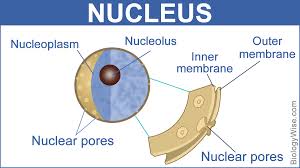
Tiny holes in the nuclear membrane that allow different cellular materials to come in and go out of the cell.
nucleus
nucleoplasm
nucleolus
nuclear pores
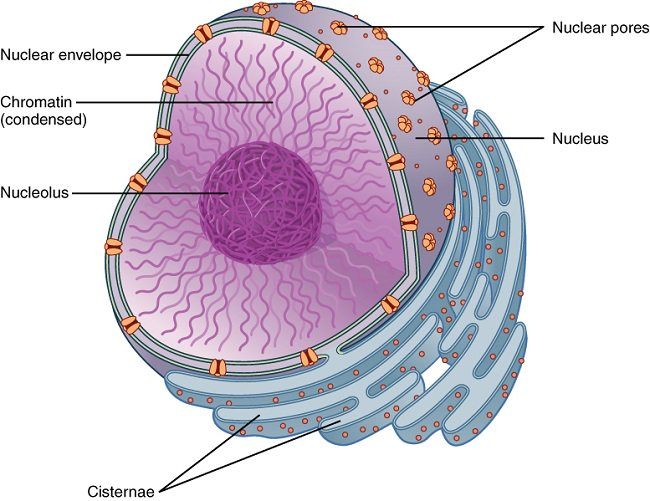
Helps assemble ribosomes, which are combinations made of protein and RNA (ribonucleic acid ).
nuclear membrane
nuclear pores
nucleoplasm
nucleolus

What important material is contained in the nucleus?
Jeans
Digestive enzymes
DNA
Nuclear ladders
What is the function of ribosomes?
Transcription
Translation
Cell division
Transport proteins
What is the function of ribosomes?
Transcription
Translation
Cell division
Transport proteins
What are the two locations that ribosomes can be allocated into?
Nucleus
Cytoplasm
Smooth Endomembrane Reticulum
Rough Endomembrane Reticulum
Site of ribosome synthesis.
nucleus
nucleolus
Golgi apparatus
lysosomes
Digests and recycles food and organelles
lysosomes
vesicles
Rough ER
mitochondria
Contains all the genetic material
ribosomes
mitochondria
nucleus
cell membrane
Which 2 organelles contain their own DNA and ribosomes and therefore are thought to have lived on their own at one time?
nucleus and Golgi apparatus
mitochondria and chloroplasts
lysosomes and vesicles
Rough ER and Smooth ER
Detoxifies and makes hormones
Rough ER
lysosomes
Smooth ER
centrioles
Site of cellular respiration.
chloroplast
mitochondria
Golgi apparatus
nucleus
Interconnected highway containing ribosomes to make proteins is called
Rough ER
Smooth ER
Golgi apparatus
mitochondria
2 rods sitting at 90 degrees and have a role in cell division
centrioles
cytoskeleton
cytosol
vesicles
True or False: The Golgi apparatus is made up of cisternae.
True
False
In the Golgi Apparatus macromolecules, such as lipids and proteins, are transported within the cell using____.
Vesicles
Ribosomes
Rough endoplasmic reticulum
DNA
Which organelle has 60 s and 40 s subunits
Ribosome
Golgi apparatus
Endoplasmic reticulum


which of the following plastids have no pigments?
Chromoplast
Chloroplast
Leucoplast
Carotenoplast
Pigment responsible for green color is
lycopene
xanthoplyll
chlorophyll
caroten
Which of plastids act as a storage sheds for starches, lipids, and proteins depending on the needs of the plants?
leucoplast
chloroplast
chromoplast
lycoplast

Plants on picture contain which plastid?
leucoplast
chromoplast
chloroplast
Which organelle contains digestive enzymes
Mitochondria
Lysosome
Centriole
Centrioles are present in which cells
plant cell
animal cell
What is the function of centriole
cell division
break down subtances
Who discover Golgi Apparatus
Camilla Golgi
Charles Darwin
Gregar John Mendel
J P Ekart
Cell wall of prokaryotes is made up of:
cellulose
lagnin
peptidoglycan
chitin
Microtubules are made up of:
tubulin
myosin
actin
tropomyosin
Flattened sac,cisternae are found in
mitochondria
golgi apparatus
ribosomes
plastids
Lysosomes were discovered by
F.A King
Camillio Golgi
Robert Hooke
Christian Rene de Duve
Diffusion & Facilitated Diffusion are both __________ transport.
Passive
Active
Easy
Free
Passive Transport is the movement of particles across the membrane from an area of [ ___ ] to an area of [ ___ ]
high to low
low to high
low to low
high to high
_____________ is the free movement of particles across the membrane with the concentration gradient
diffusion
facilitated diffusion
active transport
fusion
_____________ is the free movement of particles across the membrane with the concentration gradient
diffusion
facilitated diffusion
active transport
fusion
What is the movement of particles with the concentration gradient using protein "helpers"?
diffusion
facilitated diffusion
active transport
enzymatic reactions
The general name for movement of substances across cell membranes without need of energy input
passive transport
active transport

