wayground logo

Free Printable Worksheets

NEW

Font size

S
M
L
XL
Worksheets

Cell organelles, Cell transport, and Properties of water

Total questions: 78

Worksheet time: 56mins

Name
Class
Date
1.

Which organelle is the command center for eukaryotic (plant and animal) cells?

a)

Cell wall

b)

Nucleus

c)

Mitochondria

d)

Lysosome

2.

Plants and animal cells have...

a)

Mitochondria and chloroplasts

b)

Nucleus and chloroplast

c)

Cell wall and chloroplast

d)

Mitchochodria and cytoplasm

3.

Which of the following is a eukaryotic cell?

a)

Bacteria

b)

Plant

c)

Plant and animal

d)

Animal

4.

What is the difference between a prokaryotic cell and a eukaryotic cell?

a)

Prokaryotes do not have a nucleus or organelles, but a eukaryotic cell does

b)

Eukaryotic cells do not have a nucleus or organelles, but prokaryotes do

5.

What is the purpose of the nucleus?

a)

It is the command center, contains DNA, and cell division

b)

It protects the cell

c)

It stores energy for the cell

d)

It gets rid of waste in the cell

6.

What is the difference between mitochondria and chloroplast?

a)

Mitochondria produces energy and chloroplasts breaks down energy

b)

There is no difference. They are the same.

c)

Mitochondria breaks down energy from food and chloroplasts produce energy from sunlight.

d)

Mitochondria contains DNA and chloroplasts are green

7.

What does a plant cell have that an animal cell doesn't have?

a)

Cell Membrane and Cell Wall

b)

Cell Wall and Mitochondria

c)

Cell Wall and Nucleus

d)

Cell Wall and Chloroplast

8.

What is the jelly-like substance that keeps the organelles floating?

a)

Cell Membrane

b)

Nucleus

c)

ER

d)

Cytoplasm

9.
Which cellular structure in plants is responsible for photosynthesis?
a)
Nucleus
b)
Cell membrane
c)
Mitochondrion
d)
Chloroplast
10.
What is the function of the cell membrane, in ALL living organisms?
a)
Provides support and structure in the cell.
b)
Synthesizes protein for ATP for the cell.
c)
Storage of raw materials (food) and ATP for the cell. 
d)
Regulates the transport of materials into and out of the cell. 
11.
What type of transport is occurring in Part C of the diagram shown?
a)
Active Transport
b)
Osmosis
c)
Facilitated Diffusion
d)
Diffusion
12.
What organelle of the cell produces energy?
a)
Mitochondria 
b)
Golgi Body 
c)
Vesicle 
d)
Vacuole 
13.
What kind of transport does not require energy?
a)
Active 
b)
Vacuole 
c)
Passive 
d)
Na/K Pump 
14.
What is facilitated diffusion?
a)
Transport that uses proteins to help move molecules across the membrane. 
b)
Movements of substances through a membrane. 
c)
When molecules spread from High to Low concentration on their own. 
d)
When pressure pushes something through a membrane. 
15.
Which of the following is the best example of osmosis? 
a)
NA/K Pump 
b)
Water moving though the cell membrane 
c)
Kidneys 
d)
Photosynthesis 
16.
What is the significance of the cell membrane? 
a)
Provides protection 
b)
Maintains homeostasis 
c)
Give a cell hydrophobic ends
d)
Provides cholesterol 
17.
Movement of materials through a vesicle into the cell that requires energy is 
a)
exocytosis
b)
endocytosis 
c)
osmosis 
d)
simple diffusion 
18.
What are the 2 parts of a phospholipid? 
a)
Hydrophobic head, hydrophilic tails 
b)
Hydrophobic heads, hydrophobic tails 
c)
Hydrophilic heads, hydrophobic tails 
d)
Hydrophilic heads, hydrophilic tails 
19.
What is an isotonic solution?
a)
When solutions are in equilibrium 
b)
When the solution has more solute 
c)
When the solution has less solute 
d)
Has a greater pressure 
20.
Active transport does not require energy.
a)
True 
b)
False 
21.
Which of the following is correct about the Golgi? 
a)
Digests waste materials 
b)
Protection and Support 
c)
Modifies and packages molecules 
d)
cellular movement 
22.
Molecules using simple diffusion move from 
a)
high to low concentrations 
b)
low to high concentrations 
c)
no concentrations  
d)
both concentrations  
23.
Osmosis is the movement of... 
a)
salt 
b)
sugar 
c)
water 
d)
none of these 
24.
Cell powerhouse, provides energy for the cell:
a)
ribosome
b)
molecule
c)
mitochondria
d)
phospholipid
25.
Organelle that produces enzymes that digest waste, cell parts and foreign invaders:
a)
vacuole
b)
atom
c)
lysosome
d)
ribosome
26.
Command center for the cell, houses the genetic material:
a)
nucleolus
b)
nucleus
c)
cell
d)
molecule
27.
Provides rigid support for plant cells:
a)
cell wall
b)
cytoplasm
c)
cell
d)
centriole
28.
Protein factories:
a)
lysosome
b)
atom
c)
ribosome
d)
vacuole
29.
System of membranes around the nucleus that assist in production, processing and transport of proteins and lipids:
a)
molecule
b)
nucleic acid
c)
cytoplasm
d)
endoplasmic reticulum
30.
Protective Layer that covers the cell and regulates what goes in and out:
a)
cell wall
b)
cell
c)
carbohydrate
d)
cell membrane
31.
Organelle that stores water in a cell:
a)
cell
b)
molecule
c)
atom
d)
vacuole
32.
Center part of nucleus that contains DNA:
a)
vacuole
b)
nucleus
c)
cell
d)
nucleolus
33.
stiff, protective outer layer of plant cells
a)
cell membrane
b)
nuclear membrane
c)
cell wall
d)
cytoplasm
34.
packages proteins for delivery
a)
Endoplasmic reticulum
b)
ribosomes
c)
golgi apparatus
d)
lysosomes
35.

What am I?

a)

cell wall, converts sugar into sunlight

b)

mitochondria, converts sunlight into sugar for energy
c)

cytoplasm, converts sugar into sunlight

d)

chloroplast, converts sunlight into sugar for energy

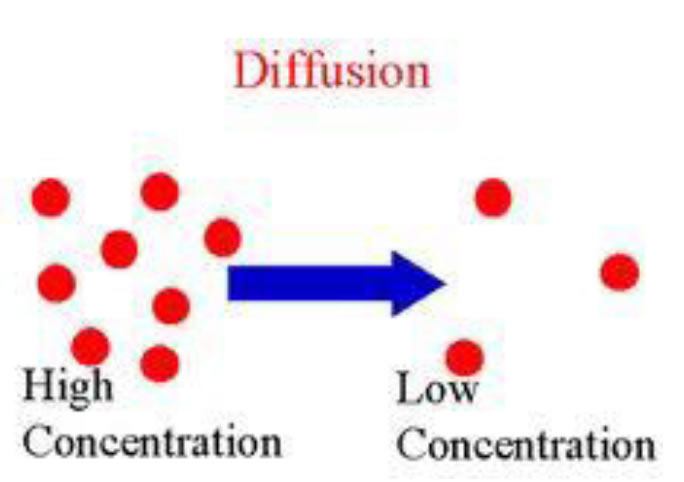
36.
a)
Passive Transport
b)
Active Transport
37.
Where are proteins made?
a)
Golgi body
b)
Mitoichondria
c)
Chromosomes
d)
Ribosomes
38.
Osmosis
a)
Passive Transport
b)
Active Transport
39.
High to Low
a)
Passive Transport
b)
Active Transport
40.
Uses ATP
a)
Passive Transport
b)
Active Transport
41.
Low to High
a)
Passive Transport
b)
Active Transport
42.
Endocytosis
a)
Passive Transport
b)
Active Transport
43.
Exocytosis
a)
Passive Transport
b)
Active Transport
44.
a)
Passive Transport
b)
Active Transport
45.

What will happen to an egg if it is left in a container of pure water?

a)

shrink

b)

expand

c)

stay the same

d)

change color

46.

Why would an egg/cell shrink when put in salt water?

a)

water leaves the egg/cell because there is less water in the egg than in the salt water

b)

water enters the egg/cell because there is more water in the egg than in the salt water

c)

water leaves the egg/cell because there is more water in the egg than in the salt water

d)

water enters the egg/cell because there is less water in the egg than in the salt water

47.
Which of the following uses energy (Is active transport)? 
a)
Diffusion 
b)
Osmosis 
c)
Facilitated diffusion
d)
Exocytosis
48.
Which cell is in a hypertonic solution?
a)
Right 
b)
center 
c)
left
49.
Which is in a hypertonic solution? 
a)
a
b)
b
c)
c
50.
Between the lipid bilayer is a nonpolar region that repels water. Its called: 
a)
Hydrophobic zone
b)
Hydrophilic polar head
c)
Cell Transport 
d)
Protein channel
51.
Facilitated Diffusion uses a __ to aid in diffusion, but they do not require energy to function
a)
Protein channels 
b)
Pumps 
c)
Vesicles
52.

Which of the following is a plant cell?

a)
b)
c)
53.
What are the 2 parts of a phospholipid? 
a)
Hydrophobic head, hydrophilic tails 
b)
Hydrophobic heads, hydrophobic tails 
c)
Hydrophilic heads, hydrophobic tails 
d)
Hydrophilic heads, hydrophilic tails 
54.
what type of solution causes the blood cells to swell and burst.
a)
hypotonic solution
b)
hypertonic solution
c)
isotonic solution
d)
active transport
55.
What is the name of the structure shown in the diagram where cellular respiration takes place?
a)
Chloroplast
b)
Mitochondrion
c)
Nucleus
d)
Vacuole
56.
This organelle contains the chlorophyll used to make food in a plant cell.
a)
Cellulose
b)
Chloroplast
c)
Molecule
d)
Photosynthesis
57.
What is adhesion?
a)
Water's ability to stick to itself
b)
Water's ability to stick to other substances
c)
The strength of the cohesion of all the water molecules combined
d)
Tape, glue and other adhesives
58.
What is cohesion?
a)
Water's ability to stick to itself
b)
Water's ability to stick to other substances
c)
The strength of the cohesion of all the water molecules combined
d)
Tape, glue and other adhesives
59.
What is surface tension?
a)
Water's ability to stick to itself
b)
Water's ability to stick to other substances
c)
The strength of the cohesion of all the water molecules combined
d)
Tape, glue and other adhesives
60.
What word describes when water is attracted to other substances?
a)
cohesion
b)
adhesion
c)
capillary action
d)
surface tension
61.
Attractions between the negative Oxygen atom of one water molecule and the positive Hydrogen atom of another water molecule are called
a)
Covalent bonds
b)
Ionic bonds
c)
Polar bonds
d)
Hydrogen bonds
62.
Water is a universal solvent because it...
a)
It can be found anywhere
b)
It freezes when it gets cold
c)
floats when frozen
d)
Dissolves most substances
63.
The tightness across the surface of water that enables paper clips to float is ____________.
a)
adhesion
b)
capillary action
c)
surface tension
d)
polarity
64.
What two elements make up water?
a)
Helium and oxygen
b)
Hydrogen and oxygen
c)
helium and carbon
d)
oxygen and carbon
65.
When a molecule has an opposite electrical charge on each end, it is known as what?
a)
cohesion
b)
polar molecule
c)
hydrogen bond
d)
solution
66.
What word describes when water is attracted to other substances?
a)
cohesion
b)
adhesion
c)
capillary action
d)
surface tension
67.

Identify the structure that is indicated by the arrow in the image.

a)

cell wall

b)

central vacuole

c)

chloroplast

d)

cell membrane

68.

Identify the structure that is indicated by the arrow in the image.

a)

cell wall

b)

central vacuole

c)

chloroplast

d)

nucleus

69.

Identify the structure that is labeled "C" in the image.

a)

central vacuole

b)

nucleus

c)

chloroplast

d)

mitochondria

e)

cell membrane

70.

Identify the structure that is labeled "H" in the image.

a)

cell wall

b)

chloroplast

c)

mitochondria

d)

nucleus

e)

cell membrane

71.

Name two organelles that are only found in plant cells.

a)

Cell wall and chloroplasts

b)

Cell wall and nucleus

c)

Chloroplast and mitochondria

d)

Cell membrane and ribosome

72.

This is an image of a(n)

a)

plant cell

b)

animal cell

73.

This is an image of a plant cell

a)

True

b)

False

74.
What makes the endoplasmic reticulum rough?
a)
Vessicles
b)
Vacuoles
c)
Ribosomes
d)
Chromosomes
75.
What is this?
a)
mitochondria
b)
lysosomes
c)
chloroplast
d)
endoplasmic reticulum
76.
What am I?
a)
vacuole
b)
ribosome
c)
endoplasmic reticulum
d)
golgi apparatus
77.

Which organelle is the labeled "4" in this picture?

a)

Nucleus

b)

Cell Wall

c)

Cytoplasm

d)

Cell Membrane

78.

What is part A

a)

Cell Membrane

b)

Cell Wall

c)

Mitochondria

d)

Chloroplast