
 Worksheets
Taxonomy & Evolution Test Review
Total questions: 124
Worksheet time: 1hrs 14mins
Why do scientists prefer to use scientific names over common names?
To sound smart
To get information on the organisms phylum
To avoid confusion
People are more familiar with scientific names
A eukaryotic, multicellular, motile heterotroph would belong to which kingdom?
Archaea
Animalia
Protista
Plantae
What is the order to taxa in the classification system from the largest group to the smallest?
Domain, Phylum, Order, Kingdom, Class, Genus, Family, Species
Domain, Kingdom, Phylum, Class, Order, Family, Genus, Species
Species, Genus, Family, Order, Class, Phylum, Kingdom, Domain
Species, Domain, Phylum, Kingdom, Order, Family, Genus
What is the main visible difference between prokaryotic and eukaryotic cells?
Eukaryotic cells have a nucleus
Eukaryotic cells are generally smaller
Prokaryotic cells are more complex
Eukaryotic cells have a cell wall

Based on this cladogram, which trait do sharks share with primates?
Amniotic egg
Four limbs
Vertebrae
Hair
What is a dichotomous key, and what is it used for?
A tool to help classify an unknown organism
A timeline that shows when traits developed
A graph that shows the evolution of a species
A tool that helps determine an organisms close relatives
Which kingdoms contain organisms with eukaryotic cells?
Animalia
Fungi
Protista
Plantae
All of the above
Which two kingdoms are composed of only prokaryotic organisms?
Protista and Eubacteria
Protista and Fungi
Eubacteria and Archaea
Archaea and Fungi
Which kingdoms contain organisms with eukaryotic cells?
Animalia
Fungi
Protista
Plantae
All of the above
Which two kingdoms are composed of only prokaryotic organisms?
Protista and Eubacteria
Protista and Fungi
Eubacteria and Archaea
Archaea and Fungi
How can scientists determine how closely species are related based off of the taxonomic classification system?
By knowing that organisms in the same kingdom are the most closely related
By comparing their traits and behaviors
By looking for homologous structures
By comparing how many taxons they share
What traits do all plants share?
unicellular
photosynthetic
no nucleus
ability to move
What traits do all members of the Animal kingdom share?
Prokaryotic cells, autotrophic
Eukaryotic, heterotrophic, ability to move
Eukaryotic, heterotrophic decomposers
Eukaryotic, autotrophic organisms
Which level of the taxonomic naming system is the most inclusive?
Species
Phylum
Domain
Family
What trait is common to all organisms of the Fungi kingdom?
autotrophic processes
photosynthesis
ability to move
heterotrophic decomposers
Organisms sharing the same ___________ name would be more closely related.
Genus
Family
Class
Kingdom
What makes up an organism's scientific name in the binomial nomenclature system?
phylum name + kingdom name
species name only
genus name + species name
order name + family name
What is taxonomy and what is it used for?
It is the practice of stuffing and preserving dead animals
It is a system that determines the relationships and interactions between organisms living in the same environment
It is a system used to name and classify organisms into similar groups
A test used to determine the evolutionary history of an organism

Based on this dichotomous key, what is the identity of leaf A?
Spruce
White oak
Magnolia
Walnut
Which taxa directly follows class?
Kingdom
Order
Species
Family
Which of the following is Thomas Malthus’ contribution to Charles Darwin’s theory of evolution?
The earth is of a very old age proven by the number of rock layers.
The earth’s geography has been shaped by slow processes
Organisms mutate new parts as they need them.
Populations tend to overpopulate and compete.
In the 1800s Jean-Baptiste Lamarck offered a hypothesis about evolution called the inheritance of acquired characteristics. Which of the following is an example of how Lamarck thought animals evolved?
Fish mutated the genes necessary to develop lungs and were able to eventually survive on land.
Giraffes once had short necks and stretched them reaching for leaves on trees, later passing the longer neck trait to their offspring.
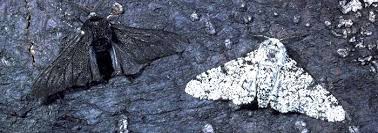
Dark moths, once outnumbered by light moths, began to survive longer and reproduce more after the industrial revolution turned the trees black.
The earth has been here so long that animals have had plenty of time to adapt to their environment through natural selection.
Which of the following men developed a theory of evolution very similar to Charles Darwin’s around the same time that Darwin developed his theory?
Malthus
Lyell
Lamarck
Wallace
What is an inherited characteristic that helps organisms survive?
Evolution
Adaptation
Natural Selection
Extinction
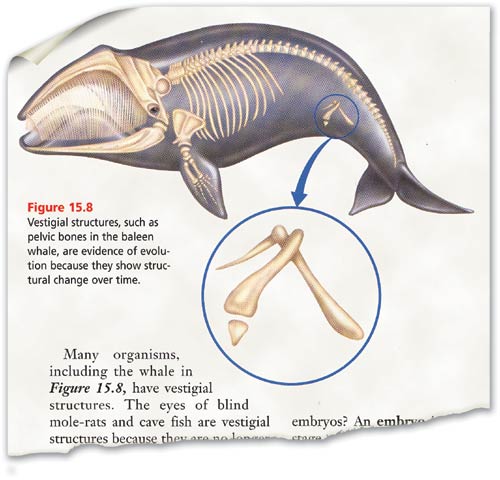
A body, organ, or bone that is still present but no longer useful to the organism is ______________________.
Homologous Structure
Vestigial Structure
A body, organ, or bone that is still present but no longer useful to the organism is ______________________.
Homologous Structure
Vestigial Structure
Father of evolution who believed that a process called natural selection explains how organisms evolved over time.
Carolus Linnaeus
Charles Darwin
Charles Lyell
Thomas Malthus
Scientists who formed amino acids and other simple organic compounds in a laboratory experiment with ammonia, methane, hydrogen and H2O
Hutton and Lyell
Miller and Urey
Chapman and Kaufman
Oparin and Haldane
Father of taxonomy (naming organisms) who classified organisms using groups within groups.
Charles Darwin
Jean-Baptiste de Lammark
Charles Lyell
Carolus Linnaeus
States that some of the organelles in eukaryotic cells were once prokaryotic microbes because mitochondria and chloroplasts are the same size as prokaryotic cells, have theor own DNA and divide by binary fission
Organic Evolutionary Theory
Cell Theory
Cellular Selection
Endosymbiotic Theory

Similar structures with different purposes found in different species are known as _____
vestigial structures
DNA
homologous structures
the fossil record

The picture shows a/an ___________
homologous structure
vestigial structure
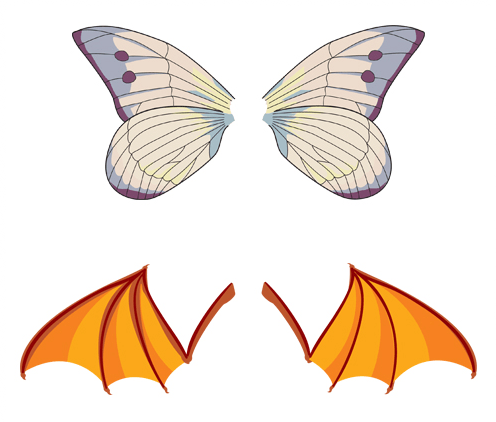
What is this an example of?
Homologous structure
Analogous structure
Vestigial organs
Functional adaption

Study of developmental stages of various organisms to suggest a common ancestor because of similarities from fertilization to birth
comparative anatomy
embryology
molecular biology
evolution
If modern organisms have a lot of homologous structures, what inference might paleontologists make about those organisms?
They are reptiles
One organism evolved from the other.
The organisms likely shared a common ancestor
The organisms can breed with one another

Which of the following can be determined by observing the embryos shown in the diagram

Some organisms have features that have different functions, but similar structures. One example is the forelimb of humans, dogs, birds, and whales. What term best describes the relationship between these forelimbs?
They are homologous.
They are vestigial.
They are analogous.
They are embryological.
How do fossils support evolution?
Individual species disappear and reappear in the fossil record over time.
Organisms in the fossil record are identical to living organisms.
The fossil record provides evidence that all organisms developed at the same time.
The fossil record provides evidence that organisms have changed over time.
What is the term for a feature that allows an organism to better survive and reproduce in its environment?
adaptation
variation
homologous structure
vestigial structure

The hypothesis that evolution of a species occurs in periods of rapid growth separated by periods of little or no change is called --
divergence
punctuated equilibrium
gradualism
isolation

Which of the following statements gives the most likely explanation for the presence of two very similar species of squirrels living on opposite sides of the Grand Canyon?
One squirrel traveled across the canyon and started a new population on the other side.
Members of one single squirrel species were geographically separated by the formation of the canyon.
One squirrel traveled across the canyon and interbred with a different population on the other side.
Members of two different squirrel species migrated from two different places to opposite sides of the canyon.

The hypothesis that evolution of a species occurs gradually over time as a slow and constant process is known as --
gradualism.
speciation.
punctuated equilibrium.
microevolution.
A population of chimpanzees was separated when the forest they had lived in had a section cut down and a town was built. After a long period of time, the chimpanzees came back into contact but were incapable of breeding. Which of the following best describes the process that occurred?
speciation
adaptation
gradualism
punctuated equilibrium
The gradual change in a species over a long time. It happens because of variations in genetic material that is passed down from parents to offspring
Evolution
Natural Selection
Genetic Variation
Limiting Factors
Overproduction
Organisms that are best suited to an environment will survive and reproduce.
Evolution
Natural Selection
Genetic Variation
Limiting Factors
Overproduction
Producing more offspring than necessary to ensure that some
survive. Ex: sea turtles lay over 100 eggs,
because many die before adulthood
Adaptation
Natural Selection
Genetic Variation
Limiting Factors
Overproduction
Within a species there
are differences in traits caused by non-
harmful mutations.
Adaptation
Natural Selection
Genetic Variation
Limiting Factors
Overproduction


Breeding dogs and cats are examples of
natural selection
evolution
acquiring traits
artificial selection
Darwin observed many finch species on the Galapagos Islands. To explain these observations, he
proposed that each species evolved from the same common ancestor, which was a finch species
that migrated to the islands from the mainland. What additional evidence did Darwin use to support
his explanation?
The finch populations were very numerous, and different species often bred with one another.
The finch species lived in different habitats on different islands, which isolated them from one another.
The finch species were distributed evenly among all of the islands, but did not interbreed.
The beaks of the finches were identical, allowing them to eat the same foods on any of the islands.
A population of rabbits grows rapidly from one year to the next. Then one year, a disease strikes approximately one fourth of the adult rabbits. The disease remains with the population in the years that follow.
As explained by Darwin’s theory, which of these conditions allows the rabbit population to evolve by natural selection?
The disease affects adult and juvenile rabbits equally.
The disease reduces the ability of the rabbits to reproduce.
Some rabbits are resistant to the disease, and they pass the resistance to their offspring.
No rabbits are resistant to the disease, and all die when the disease strikes them.


A species of spider is an average of 5 cm long. Any longer and it has trouble hiding from birds. Any smaller and it has trouble catching prey. What type of selection is this?
Stabilizing
Directional
Disruptive.
Individuals who enter or leave a population, taking their alleles with them are contributing to:
Gene flow
Genetic Bottleneck
Founder effect
Some female peacocks prefer males with large, colorful tales while other female peacocks prefer males with no tail at all. Females are now mating only with the tail they prefer. What type of reproductive barrier is this?
behavioral isolation
reduced hybrid sterility
temporal isolation
mechanical isolation
Which of the following examples of Reproductive Isolation depends on the timing of breeding to be compatible between mates?
Mechanical
Temporal
Behavioral
Gametic

Body parts that are structurally similar in related species ant that provide evidence for a common ancestor.
petrified fossil
homologous structure
variation
vestigial structure

Process by which individuals that are better adapted to their environment are more likely to survive and reproduce than others of the same species
punctuated equilibrium
adaptation
natural selection
artificial selection

Theory that species evolve during short periods of rapid change
Gradualism
Punctuated Equalibria
Preserved Remains
Natural Selection

Any difference between individuals of the same species
adaptations
evolution
variations
homologous structures
the evolution of a new species from an existing species
extinction
evolution
speciation
generation
an organism's ability to withstand a harmful agent
resistance
antibiotic
speciation
evolution
the combined genetic information of all members of a population
gene flow
gene pool
evolution
generation
process by which populations of organisms with variations that help them survive in their environments live longer, compete better, and reproduce more than those that do not have variations
natural selection
biological evolution
adaptations
comparative anatomy
process by which populations of organisms with variations that help them survive in their environments live longer, compete better, and reproduce more than those that do not have variations
natural selection
biological evolution
adaptations
comparative anatomy
resemblance of one species to another species is
camouflage
mimicry
adaptation
trait
body parts of organisms that are similar in structure and position but different in function
homologous structures
comparative anatomy
analogous structure
vestigial structure
body parts that perform a similar function but differ in structure
homologous structures
analogous structures
vestigial structures
comparative anatomy
an inability of organisms to interbreed due to geographic barriers
reproductive isolation
biodiversity
analagous structures
radioisotope dating
Evolution is...
changes over time in populations
natural process that passes favorable traits
historical timeline of fossils
the process in which an animal dies out
A change in an organism caused by a change in a gene or a chromosome.
mutation
fixation
adaptation
evolution
A change in an organism that results from natural selection and allows them to become better fitted to survive and multiply in its environment.
adaptation
natural selection
speciation
genetic drift
Random changes in the frequency of alleles in a gene pool, usually of small populations.
genetic drift
artificial selection
adaptation
microevolution

Which best explains why the birds evolved with differently shaped beaks?
They interbred with each other.
Some birds had defective gene pools.
All of the birds ate the same type of food.
They adapted to eating different types of food.
Select ALL of the correct answers.
Which of the following are a factor of evolution?
overproduction
change in environment
intellegence
natural selection
embryology
Sea turtles lay hundreds of eggs at a time, and only a few survive to adulthood. This is an example of which factor of evolution?
variation
genes
overproduction
environment
Which example shows disruptive selection?
Giraffe necks have become longer over time.
Medium-sized beaks in hummingbirds have decreased in frequency over time.
The peppered moth became less common in polluted environments.
Human babies with a very high or a very low birth mass have a higher mortality rate.
Natural selection is the process that passes down ____________________ traits.
Same
Old
Useless
Favorable
Temporal isolation occurs when two different populations:
develop different mating behavior
become geographically separated
reproduce at different times
interbreed
When a species environment favors one dominant type of characteristic to the point that the other variations of the trait start to disappear is called _____.
disruptive selection
directional selection
stabilizing selection
unstabilizing selection
A hunter tends to kill the bigger individuals of a population for their meat or for large ornamental trophies. Therefore, the population tends to have more individuals who are smaller. What is this an example of?
A. Directional selection
B. Disruptive selection
C. Natural selection
D. Stabilizing selection

The graph shows variations in beak size for the bird Geospiza fortis on an island in the Galápagos archipelago.
What evidence from the graph indicates that disruptive selection is occurring?
A. An intermediate beak size is less common.
B. Median beak size is the most common.
C. Smaller beaks are favoured.
D. Larger beaks are favoured.
Fossil records show that black bears increased in size during the Ice Age and decreased in size with warmer temperatures. What type of selection do these changes in size represent?
A. Allopatric
B. Directional
C. Disruptive
D. Stabilizing
Which of the following defines a gene pool?
The sum of alleles in an individual of a given species
An organism's complete set of DNA, including all of its genes.
The degree of variation in alleles present in an interbreeding population
The total collection of different alleles in an interbreeding population

Which statement is a possible explanation for the changes shown?

If this bee species dies out, this orchid species would most likely

Which species is most closely related to species L?

Each of these varieties was most likely produced as a result of

Which shows the correct classification group for each animal?
Ant - Group D
Tiger - Group A
Bird - Group B
Ant - Group A
Tiger - Group D
Bird - Group C
Ant - Group D
Tiger - Group A
Bird - Group C
Ant - Group A
Tiger - Group A
Bird - Group B

