
 Worksheets
U3P1 Review
Total questions: 98
Worksheet time: 7hrs 51mins
QT 8 - What is the mass of HCl if you have 44 liters at STP?
21.8 grams
10 grams
72 grams
36 grams
QT 3-Maxwell Distributions - If a system has a low temperature, what will the distribution look like?
QT 6 - What percentage of the pressure at STP will the hydrogen in CH4 be?
QT 2 - Kinetic Molecular Theory - According to the Kinetic Molecular Theory, which of the following statements is incorrect?
Mass is inverse and square to velocity.
QT 2. Kinetic Molecular Theory - If the temperature doubled, the kinetic energy of the gas molecules would-
QT 2. Kinetic Molecular Theory - What does v stand for in the formula: v= (KT/m)^2?
high temperature and large particle size
low temp and large particle size
high temp and small particle size
low temp and small particle size
QT 9 - Which temperature change would cause a sample of an ideal gas to double in volume while the pressure is held constant?
QT 9 - 2 H2+ O2---> 2 H2O; Three atm of hydrogen gas react with one atm oxygen gas in a closed container with rigid walls. What happened to the pressure in the vessel?
QT 11 - Which of the following is the most ideal gas?
CH4
HCl
O2
NaCl
QT 12 - What is the correct way to order strength of covalent bonds in intramolecular forces?
U0-7. Which problem is balanced?
U0-7. KNO3 --> KNO2 + O2 What coefficients are needed to balance the reaction?
U0-17. Use the equation 2 Al + 3 Cl2 ---> 2 AlCl3. If 2 moles of aluminum and 2 moles of chlorine are reacted, identify the limiting reactant.
QT U0-18. What is the excess reactant if 8 moles of NH3 react with 18 moles of NO and how much is left over?
4 NH3 + 6 NO --> 5 N2 + 6 H2O
NH3, 12 moles
NO, 6 moles
NH3, 6 moles
NO, 12 moles
QT 12. Which of the following is the weakest?
Intramolecular Forces- Double Bonds
Intramolecular Forces- Single Bonds
Intermolecular Forces- Polar Molecules
Intermolecular Forces- NonPolar Molecules
QT. 10 Under which conditions of temperature and pressure does carbon dioxide behave most like an ideal gas?
Low temperature and low pressure
Low temperature and high pressure
High temperature and low pressure
High temperature and high pressure
QT 10. Which of the following gases would have the largest a and b correction factors respectively:
C3H8 , H2O , CH4 , N2
C3H8 , H2O
H2O , CH4
H2O , C3H8
H2O , N2
QT 10. Which of the following are true?
The b correction factor adjusts pressure based on how "sticky" the molecule is
The a correction factor adjusts pressure based on how "sticky" the molecule is
The a correction factor adjusts volume based on the size of the molecule
The b correction factor adjusts volume based on the size of the molecule
A gas that has a pressure of 2 atm and a volume of 10 L. What equation would you use to calculate the new volume if the pressure was changed to 1 atm?
QT 5. You have a gas that has a pressure of 2 ATM and a volume of 10L. What would be the new volume if the pressure was changed to 1 ATM?
QT 5. In order to convert to Kelvin, you add ______ to the Celsius measurement.
QT 5. If 200 mL of a gas at 27°C is cooled to -33°C at a constant pressure, the volume will be

The diagram shows the Maxwell−Boltzmann distribution of molecular energies in a gas at two different temperatures.
Which letter represents the most probable energy of the molecules at the higher temperature?
A
B
C
D

The question below is about the Maxwell–Boltzmann distribution shown for a sample of a gas, X, at two different temperatures.
Which letter shows the mean energy of the molecules at the higher temperature?
P
Q
R
S

This question is about the Maxwell–Boltzmann distribution of molecular energies in a sample of a gas shown in the figure below.
What does the area under the curve represent?
The total energy of the particles.
The total number of particles.
The number of particles that can react with each other.
The total number of particles that have activation energy.
Boyle's PV law : When _______ is held constant, the pressure and volume of a gas are ________ proportional
temperature, equally
temperature, inversely
mass, equally
mass, inversely
Boyle's law : The pressure and volume of a gas show a _____ relationship.
Inverse
Direct
Whose law states that as pressure goes up, volume goes down?
Mazias
Boyle
Charles
Aglow
Charles' Law States...
As Volume goes up temperature goes up
As Pressure goes down volume goes down
As Pressure goes up volume goes down
As Pressure goes up temperature goes up
You leave a soccer ball outside in the winter. Will the ball end up flatter than it was before?
Only if it's REALLY cold
No
Only if it has a leak
Yes
As temperature rises ___________.
an atom's kinetic energy decreases
an atom's kinetic energy increases
an atom's kinetic energy stays the same
The more energy that particles have, the ___ they move.
faster
slower
A student measures the pressure and volume of an empty water bottle to be 1.4 atm and 2.3 L. She then decreases the pressure to 0.65 atm. What is the new volume?
2.1 L
5.0 L
8.2 L
3.9 L
What is the pressure of a car tire that had an initial pressure of 1.8 atm but was heated from 38°C to 123°C?
0.9 atm
2.1 atm
1.6 atm
3.4 atm
Three gases are mixed together in a container with a total pressure of 4.8 atm. If two of the gases have pressures of 1.2 atm and 1.5 atm, what is the pressure of the third gas?
2.5 atm
1.8 atm
2.1 atm
1.3 atm
If a hairspray can is heated, what can be expected of the pressure of the gas inside the can?
The pressure will increase
The pressure will decrease
The pressure will remain constant
The pressure will equalize
Determine the temperature required for 0.0470 mol of gas to fill a balloon to 1.20 L under .998 atm pressure.
0 K
107 K
207 K
307 K
Pressure is
defined as the mass that an object exerts when at rest.
not a measurable in gases.
defined as the number of moles of substance divided by the mass of the substance.
created by the force of the gas particles impacting the walls of the container.
A sample of gas with a volume of 30.0 mL at 25.0oC is heated to 50.0oC. What is the new volume of the gas?
60.0 mL
15.0 mL
27.5 mL
32.5 mL
What is the pressure exerted by 5.00 moles of nitrogen gas contained in a 30.0 Liter container at 25.0 °C?
3670 atm
0.245 atm
4.08 atm
605 atm

What describes the motion of a Gas Molecule?
Molecules are far apart
Move in constant, random motion
It will travel in a straight path
All of the above

A gas that has a pressure of 2 atm and a volume of 10 L. What would be the new volume if the pressure was changed to 4 atm?
2 L
4 L
8 L
5 L
All of the following are temperature units except ______
atm
Kelvin
Celsius
Farenheit
.001 L
1ml
10 ml
100 ml
.01 ml
why would O2 effuse faster than CO2 in the same room
because O2 has more energy
because CO2 has a greater molar mass
because oxygen has a higher temperature
they will effuse the same because the temperature is fixed
How much faster will He(g) travel than O2(g)?
4 times faster
2.8 times faster
0.35 times faster
0.125 times faster
Which of the following is the equation needed to calculate the kinetic energy, KE, of a moving particle?
KE = 1/2 mv2
KE = 2mv
KE = mv
KE = 1/2 m2v
If a gas has the same temperature throughout, which gas molecule has the highest average velocity?
O2
H2O
H2
Xe
Which condition is necessary for most gases to behave nearly ideally?
high pressure
high temperature
low compressibility
low expansion
Which gas deviates the most from ideal behavior?
CH4
H2O
Cl2
He
The electrons in a polar covalent molecule are shared...
Evenly
Unevenly
Electrons are not shared
None of the Above
In a polar covalent bond, the electrons gather around...
The atom with the Greatest Electronegativity
The atom with the Lowest Electronegativity
Each atom Equally
None of the Above
The polarity of a bond is determined by...
The sum of the electronegativities of the two atoms
The difference in the electronegativities of the two atoms
The charges of the atoms
None of the Above
Partial charges are present in which type of bond?
Ionic
Nonpolar Covalent
Polar Covalent
Both Polar Covalent and Ionic
In a polar covalent bond, which atom will have a partial positive charge? (choose 2 correct answers)
The atom that attracts fewer electrons
The atom with the greater electronegitivity
The atom that attracts more electrons
The atom with the lower electronegativity
What must the difference in electronegativity between two atoms be in order for the bond between them to be polar covalent?
less than 0.4
greater than 1.7
between 0.4 and 1.7
exactly 0
What must the difference in electronegativity between two atoms be in order for the bond between them to be nonpolar covalent?
less than 0.4
greater than 1.7
between 0.4 and 1.7
exactly 0
A diatomic molecule like O2 is always _____ because electrons are shared _____
nonpolar; unequally
polar; equally
nonpolar; equally
polar; unequally
Order the types of bonds based on the charge of their molecules. (lowest amount of charge to greatest)
Polar Covalent --> Ionic --> Nonpolar Covalent
Ionic --> Nonpolar Covalent --> Polar Covalent
Ionic --> Polar Covalent --> Nonpolar Covalent
Nonpolar Covalent --> Polar Covalent --> Ionic

When you have Br-Br, what is the polarity?
Polar
nonpolar
Ionic

When you have H-Cl, what is the polarity?
nonpolar
polar
ionic

When you have Li-O, what is the polarity?
nonpolar
polar
ionic
When you have C-H, what is the polarity?
nonpolar
polar
ionic
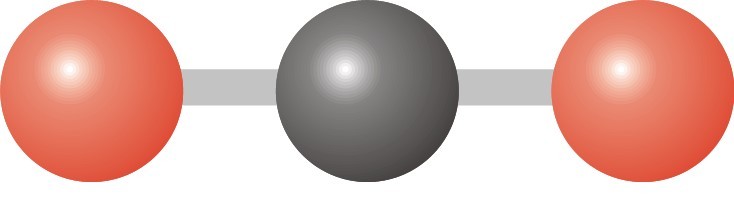
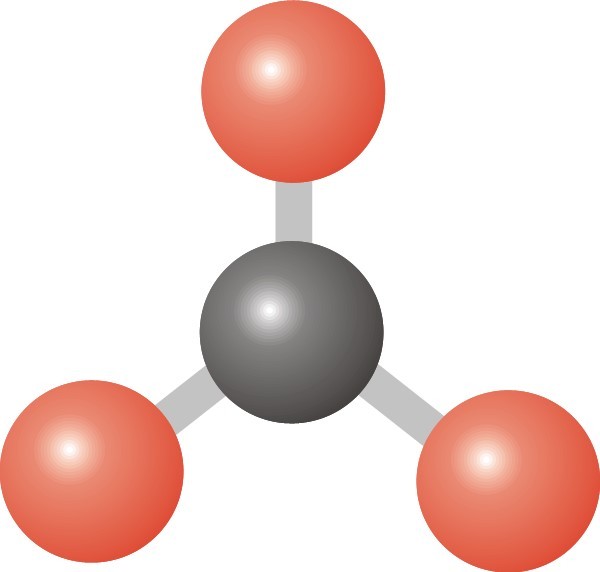
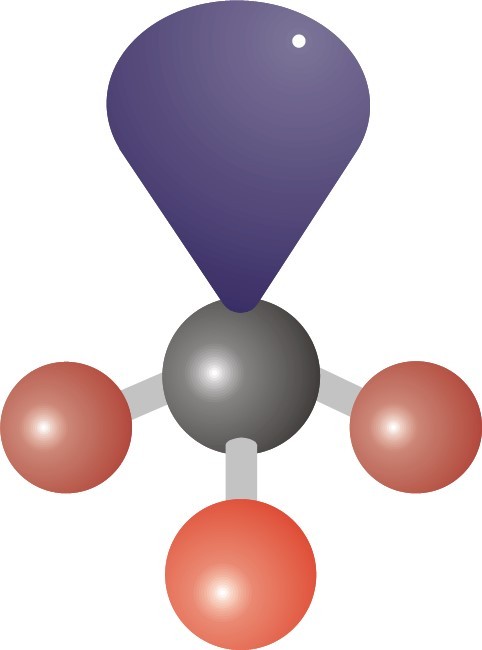
True or False
Attractions between polar molecules are Weaker than attractions between nonpolar molecules.
True
False

Is this molecule polar or non-polar?
Polar
Non-polar

Is this molecule polar or non-polar?
Polar
Non-polar

Is this molecule polar or non-polar?
Non-polar
Polar

Is this molecule polar or non-polar?
Non-polar
Polar

Is this molecule polar or non-polar?
Polar
Non-polar



