Wayground logo

Free Printable Worksheets

Font size

S
M
L
XL
Worksheets

Introduction to Evolution

Total questions: 73

Worksheet time: 1hrs 11mins

Name
Class
Date
1.
Structures are similar in appearance but not in structure
a)
Vestigial 
b)
Homologous 
c)
Analogous Structures 
d)
Embryonic 
2.
Which layer is the youngest
a)
1
b)
2
c)
3
d)
4
3.
Which layer is the oldest
a)
B
b)
A
c)
E
d)
C
4.

Which of the following is the collection of life's remains found in sedimentary rock?

a)

natural selection

b)

homologous structures

c)

Charles Darwin

d)

the fossil record

5.

Similar structures with different purposes found in different species are known as _____

a)

vestigial structures

b)

DNA

c)

homologous structures

d)

the fossil record

6.
The changes of species over time
a)
Embryonic 
b)
Natural selection 
c)
Mimicry 
d)
Evolution 
7.

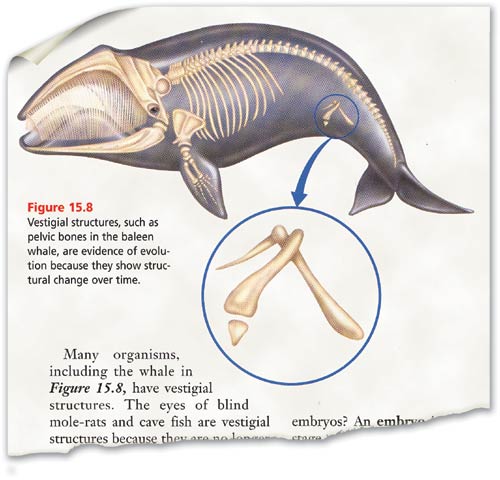
The picture shows a/an ___________

a)

homologous structure

b)

vestigial structure

8.
The opossum and kangaroo both incubate their young in a pouch. This provides evidence that they---
a)
are descended from a common ancestor
b)
Have very similar skeletal structures
c)
belong to the same species
d)
must range great distances to eat
9.

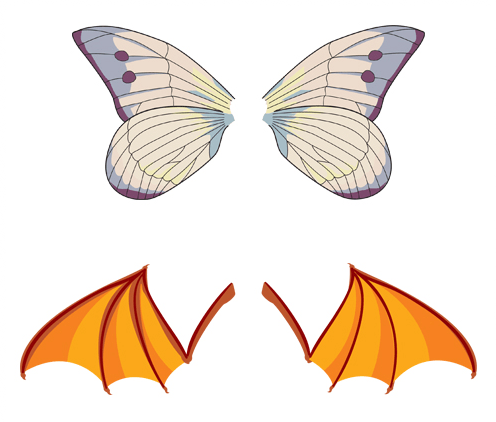
What is this an example of?

a)

Homologous structure

b)

Analogous structure

c)

Vestigial organs

d)

Functional adaption

10.
Which of the following is an example of a vestigial structure?
a)
the wings of a red-tailed hawk
b)
the hind limbs of a house cat
c)
the fins of sharks
d)
the tailbone of a human
11.
Which is not evidence for evolution?
a)
many animals have homologous structures due to common ancestry
b)
Many animals have vestigial structures from an ancestor
c)
We can observe changes in life forms by observing the fossil record
d)
All of these are evidence for evolution
12.
How do fossils provide evidence that evolution has happened on Earth?
a)
Fossils show how the sizes of certain animals has changed drastically over millions of years
b)
Fossils show that some species have gone extinct
c)
Fossils show how life forms present today are different than those from the past
d)
Different sedimentary rock layers provide evidence for how the environment has changed over time
13.
A change in the inherited characteristics of an organism over time is ________
a)
evolution.
b)
development.
c)
growth.
d)
ancestry.
14.
If two organisms have similar traits of DNA they are probably
a)
share a common ancestor
b)
share a common environment
c)
share a common population
d)
speciation
15.

The appendix, which is not needed to survive, is conisdered to be a

a)

Homologous Structure

b)

Analagous Structure

c)

Vestigial Structure

d)

Homology

16.

Similarities in bone arrangements, like those in the picture, support the hypothesis that...

a)

these organisms are not well adapted

b)

these organisms share a common ancestor

c)

these organisms all share the same DNA sequences

d)

these organisms are members of the same species

17.
Study of embryos of various organisms to show a common ancestor because of similarities in development
a)
natural selection
b)
embryology
c)
speciation
d)
evolution
18.
Two organisms that are closely related would have
a)
very similar DNA sequence
b)
exactly the same DNA sequences
c)
no proteins in common
d)
completely different DNA sequence
19.
Some organisms that share a common ancestor have features that have different functions, but similar structures.  These are known as
a)
vestigial structures
b)
analogous structures
c)
homologous structures
d)
fossil structures
20.
If modern organisms have a lot of homologous structures, what inference might paleontologists make about those organisms?
a)
They are reptiles
b)
One organism evolved from the other.
c)
The organisms have a common ancestor
21.
When all of the organisms of a species have died it is called
a)
evolution
b)
extinction
c)
adaptation
d)
natural selection
22.
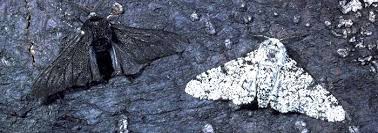
Predict which moth would increase in population
a)
light 
b)
dark
23.
What characteristic did Darwin observe about the finches on the Galapagos Islands?
a)
Their feathers 
b)
Genotypes 
c)
Their beaks
d)
Their body sizes
24.
The diagram illustrates an embryonic stage of two organisms.

Which of the following can be determined by observing the embryos shown in the diagram
a)
The organisms share a common ancestry.
b)
The organisms belong to the same genus.
c)
The organisms are native to the same geographic areas.
d)
The organisms will grow into anatomically similar adults.
25.

Recently, scientists have been able to use ___________to find common proteins and amino acids to determine how closely related species are.

a)

DNA

b)

Vestigial structures

c)

Fossils

d)

Homologous structures

26.
What kind of evidence for evolution is shown in this image?
a)
fossil evidence
b)
anatomical evidence
c)
molecular evidence
27.
Look at the image, what layer is the second oldest?
a)
Layer L
b)
Layer G
c)
Layer B
d)
Layer J
28.
What kind of evidence is shown in this image?
a)
anatomical evidence
b)
fossil evidence
c)
molecular evidence
29.
If an organism has a vestigial structure, that structure likely once had a function in a(n)
a)
close relative
b)
early ancestor
c)
unrelated organism
d)
embryological stage
30.
The diagram shows fossils in different rock layers. Which of these statements about the age of these fossils is most likely correct?
a)
Fossil A and C are the same age
b)
Fossil B is older than fossil C
c)
Fossils A is older than fossil B
d)
Fossil D is older than fossil C
31.
Which species’ DNA is most similar to the DNA of the toothed whale? 
a)
Hippopotamus 
b)
Baleen Whale
c)
Grazing Mammals
d)
Camels
32.
The similarities of organisms in which two areas numbered in the picture provide the best evidence for common ancestry?
a)
1 and 2
b)
3 and 4
c)
5 and 6
d)
7 and 8
33.

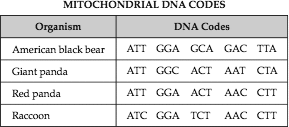
What conclusions can be made based on this table shown?

a)

the American black bear and the giant panda are most closely related

b)

the giant panda and the red panda are most closely related

c)

the red panda and the racoon are the most closely related

d)

the giant panda and the racoon are most closely related

34.

Which statement provides the best evidence that Ambulocetus natans is an ancestor of Basilosaurus isis?

a)

Homologous structures occur in each fossil

b)

Similar nitrogenous bases are found in the DNA of each fossil

c)

The fossils were found in different locations

d)

The youngest fossils is larger than the older fossils

35.

What conclusion can you draw from the fact that many modern whale species have vestigial pelvic and leg bones?

a)

The ancestors of whales may have been land mammals

b)

Whales could walk if they wanted to

c)

Whales are preparing to evolve into land animals

d)

Someday whales will be able to walk and will have legs
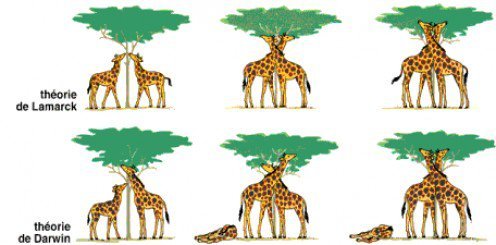
36.
What would happen if the Giraffes never evolve?
a)
they would survive
b)
They would thrive
c)
They would become extinct
d)
They will find another source of food
37.

Theory that all species of organisms arise and develop through the natural selection of small, inherited variations that increase the individual's ability to compete, survive, and reproduce

(a)  

38.

A particular animal or plant species which has no more individuals of that species alive anywhere in the world

(a)  

39.
The differences among a species, like different bird beaks, are called
a)
genes.
b)
variations.
c)
traits.
d)
theories.
40.
Who observed variations in the characteristics of plants and animals on the Galapagos Islands?
a)
James Hutton
b)
Charles Lyell
c)
Thomas Malthus
d)
Charles Darwin
41.
Which of the following is a term for a group of similar organisms that can reproduce fertile offspring?
a)
individual
b)
population
c)
species
d)
fossil
42.
Which of the following ideas proposed by Lamarck was later found to be incorrect?
a)
Acquired characteristics can be inherited
b)
All species are descended from other species
c)
Living things change over time
d)
There is a relationship between an organism and its environment
43.
Which of the following is a fossil?
a)
a plant that has recently died
b)
a group of organisms that can reproduce
c)
a structure or organ that no longer functions
d)
a trace of an organisms that existed in the past
44.
What is the advantage of having different shaped beaks?
a)
To look different from other species.
b)
To be able to eat the food readily available in the environment.
c)
To protect itself against predators.
d)
To protect itself against prey.
45.
Why are advantageous traits more likely to be passed onto offspring?
a)
Because they are more likely to survive and reproduce.
b)
Because they come from dominant alleles.
c)
Because they come from recessive alleles.
d)
Because the trait is an acquired phenotype.
46.
Do organisms "decide" to evolve and change?
a)
Yes, they know they need to change to survive 
b)
No, they change because of natural selection
47.
Which of the following variations would help members of a rabbit population survive if the climate turned very hot?
a)
Thinner fur
b)
Ability to run faster
c)
Ability to jump higher
d)
Ability to eat more
48.
Who said that geological forces acting today are the same ones that have been acting in the past?
a)
Lamarck
b)
Darwin
c)
Hutton
d)
Lyell 
49.
What is the name of the book Darwin published about his findings?
a)
Modes of Natural Selection 
b)
The Origins of the Earth
c)
Speciation 
d)
On the Origin of Species
50.
According to Lyell, how are geographical features formed? 
a)
Slowly, forces such as erosion have accumulated over time
b)
They appeared in a matter of hours
c)
They appeared in a matter of a few years 
d)
Differently than they were created in the past 
51.

Where did Charles Darwin travel to?

a)

Australia

b)

Galapagos

52.

The ______________ is referred to as the "missing link" between reptiles and birds. It has dinosaur-like claws. It also has wings and feathers like a bird.

a)

Mastodon

b)

Archaeopteryx

53.

the branch of biology concerned with the study of embryos and their development.

a)

embryology

b)

biogeography

c)

oncology

54.
Which statement is part of Darwin’s theory of evolution by natural selection? 
a)
More offspring are produced than can possibly survive.
b)
The organisms that are the fittest are always largest and strongest. 
c)
The number of offspring is not related to fitness.
d)
Acquired characteristics that are inherited are the cause of evolution.
55.
A plate boundary where two plates move away from each other is called
a)
Divergent Boundary
b)
Convergent Boundary
c)
Transform Boundary
d)
Subduction
56.
A boy touches a hot cup and burns his finger.  This is an example of
a)
Radiation
b)
Conduction
c)
Convection
d)
Convection Current
57.
Scientists hypothesize that a super continent existed 200 million years ago.  This continent is called
a)
America
b)
Super Earth
c)
Pangea
d)
Eurasia
58.
This boundary is described as moving toward one another  When the plates are both continental plates the will crumple up and form a mountains. When they are continental and oceanic plates, subduction occurs  and earthquakes and volcanoes form. 
a)
Convergent Boundary
b)
Divergent Boundary
c)
Transform Boundary
59.
A ______ is a section of the lithosphere that slowly moves over the asthenosphere, carrying large slabs of continental and oceanic crust.
a)
wedge
b)
plate
c)
chunk
d)
fault
60.
A break in Earth's crust along which rocks move is called a ________.
a)
plate
b)
rift
c)
fault
d)
breach
61.
The movement of fluid, caused by differences in temperature, that transfers heat from one part of the fluid to another is _____________.
a)
Convection current
b)
Seismic waves
c)
Sea-floor spreading
d)
Conduction current
62.
What is the process by which oceanic crust sinks beneath a deep-ocean trench and back into the mantle at a convergent plate boundary?
a)
Subduction
b)
Induction
c)
Abduction 
d)
Reduction
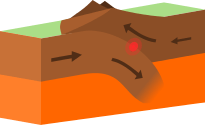
63.

What type of boundary is this?

a)

convergent

b)

divergent

c)

transform

64.

What evidence was NOT used by Wegener as proof of continental drift?

a)

land features

b)

erosion

c)

climate

d)

fossils

65.

Any trace of an ancient organism that has been preserved in rock is called a

a)

landform

b)

continent

c)

fossil

d)

landmass

66.

According to Wegener's theory of continental drift,

a)

Earth's surface is made up of seven major landmasses

b)

the continents do not drift

c)

Earth is slowly cooling and shrinking

d)

the continents were once joined together in a single landmass and have slowly moved.

67.

The geological theory that states that pieces of Earth's plates are in constant, slow motion, driven by convection currents is the theory of

a)

subduction

b)

plate tectonics

c)

deep ocean trenches

d)

sea floor spreading

68.
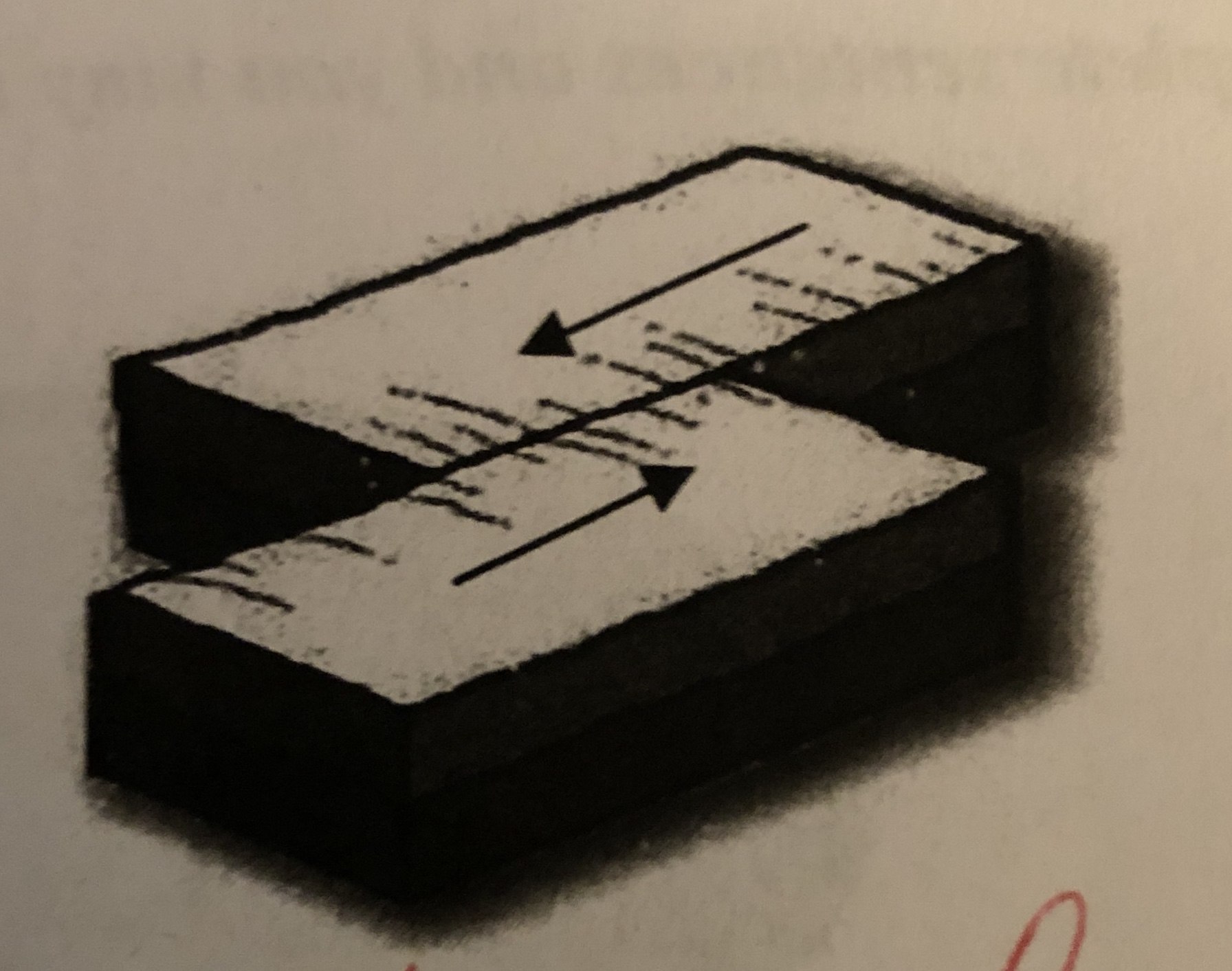
What type of event will occur at this boundary?
a)
Earthquake
b)
Volcano Eruption
c)
Tornado
d)
Mountain Building
69.
What type of plate boundary is this?
a)
Plate
b)
Divergent
c)
Convergent
d)
Transform
70.
Which of the following changes would end Earth's tectonic activity?
a)
Earth's crust becomes a cooler solid
b)
Earth's mantles becomes a warmer semiliquid
c)
Earth's mantle becomes cooler and solid.
d)
Earth's outer core becomes warmer
71.

What do we call an area where more then two plates interact in different ways

a)

plate boundary zones

b)

hot spots

c)

convergent boundaries

d)

subduction

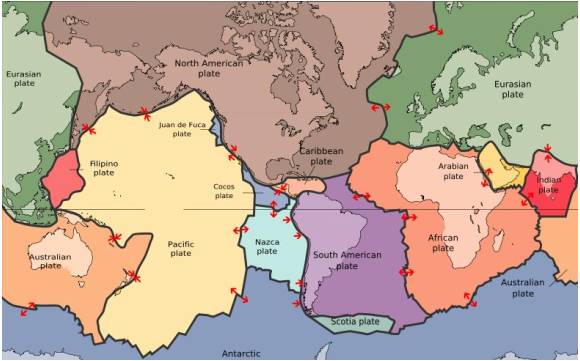
72.

The map in the picture shows tectonic plate boundaries. This map would be useful in predicting the location of future

a)

droughts

b)

hurricanes

c)

earthquakes

d)

tornadoes

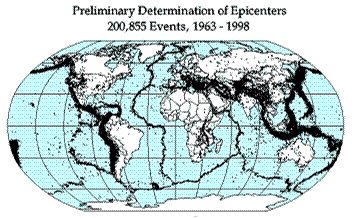
73.

Earthquake epicenters (center of where the earthquakes started) were mapped for a 35 year period in the diagram above. The black dots indicate these epicenters. The black dots appear along what feature on Earth?

a)

hot spots

b)

plate boundaries

c)

rift zones

d)

sea floor spreading