Wayground logo

Free Printable Worksheets

Font size

S
M
L
XL
Worksheets

Unit 7: History of Biological Diversity (Hon Bio)

Total questions: 127

Worksheet time: 3hrs 37mins

Name
Class
Date
1.
Which radioactive element is most likely used to date once living things?
a)
Uranium
b)
Nitrogen-14
c)
Carbon-14
2.
Which is the most accurate method of dating fossils?
a)
radioactive
b)
relative
c)
studying layers in the earth
3.
Which method determines a fossil's approximate age by examining which layer of earth is is found in?
a)
radioactive
b)
relative
c)
chemical
4.
Which of the following is NOT considered evidence of evolution?
a)
similar DNA
b)
similar development
c)
similar behavior
d)
vestigial structures
5.
Bird's beaks evolve mainly due to the type of ___________________ available.
a)
food
b)
water
c)
shrubs
d)
mates
6.
If an organism can't adapt fast enough, this might happen.
a)
hibernate
b)
stay the same
c)
live longer
d)
become extinct
7.
Darwin said that the number of offspring an organism has ___________________
a)
stays the same
b)
is more than can survive
c)
is less than needed
8.
Darwin said that within a species there will be _________________________
a)
nothing different
b)
variation/differences
9.
Organisms with differences/variations that are helpful will ______________________
a)
live longer
b)
become extinct
c)
show no change
10.
What can happen to a species over time if some of the organisms have an advantage?
a)
The population will decrease
b)
The population will become extinct
c)
The population will slowly increase
11.
Why don't we see horses with individual toes/paws anymore?
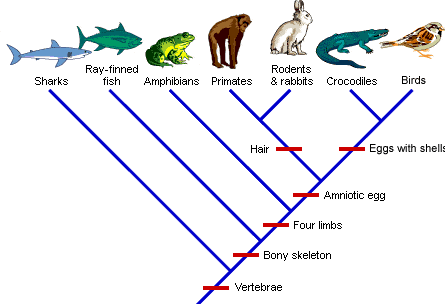
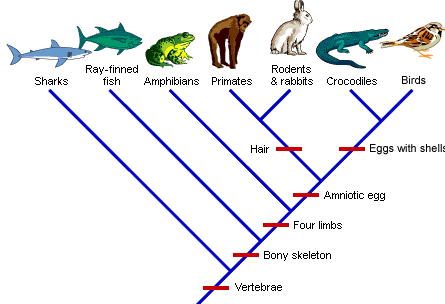
a)
It isn't an advantage
b)
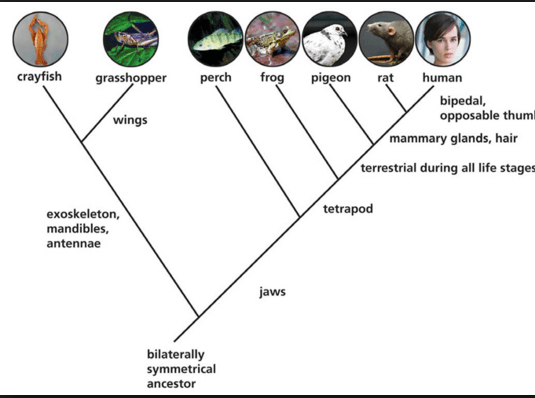
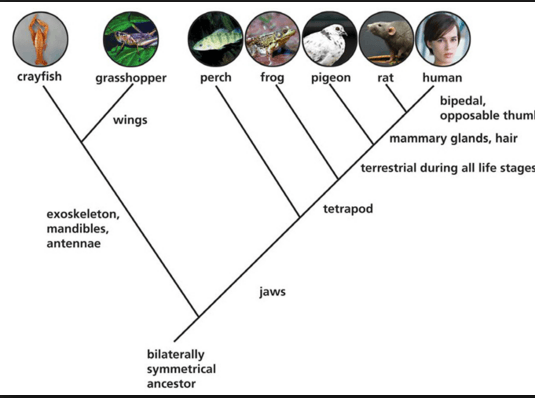
It was too helpful
c)
It helped them run faster
12.
The change over time in populations of related species.
a)
biological evolution
b)
transition
c)
variation
d)
adaptation
13.
These cause variations.
a)
mutations
b)
adaptations
c)
a desire to change
d)
injuries
14.
A slight difference in an inherited trait between individual members of the same species.
a)
variations
b)
adapatations
c)
homologous structures
d)
analogous structures
15.
An inherited trait that increases an organism's chance of surviving and reproducing.
a)
variation
b)
adaptation
c)
vestigial structure
d)
mutation
16.
The discovery of DNA and genes proved that
a)
Darwin was wrong
b)
mutations create variations and come from genes
c)
we are all the same species
d)
bats and butterflies have a very close common ancestor
17.
The study of the similarity and differences in body structures between species.
a)
comparative anatomy
b)
embryology
c)
molecular biology
d)
archaeology
18.
Body parts of organisms that are the same in structure and position but different in function.
a)
embryos
b)
homologous structures
c)
analogous structures
d)
vestigial structures
19.
Body parts that function like each other, but are different in structure.
a)
embryos
b)
homologous structures
c)
analogous structures
d)
vestigial structures
20.
Body parts that have lost their original function.
a)
embryos
b)
homologous structures
c)
analogous structures
d)
vestigial structures
21.
Organisms with these structures are believed to be closely related.
a)
analogous structures
b)
homologous structures 
c)
mutated DNA
d)
gills
22.
Organisms with these structures are NOT believed to be closely related.
a)
analogous structures
b)
homologous structures
c)
vestigial strucutres
d)
gills
23.
Organisms with these are believed to be related to an organism who once used the body part.
a)
analogous structures
b)
homologous structures
c)
vestigial structures 
d)
gills
24.
Studying the development of ____ can provide scientists with evidence that certain species are related.
a)
fish
b)
embryos
c)
Tiktaalik
d)
vestigial structures
25.
When an organism of a species has an adaptation, it will compete for resources better, survive longer and pass that adaptation on to it's offspring. This process is called
a)
evolution by natural selection
b)
artificial selection
c)
inbreeding
d)
outbreeding
26.
What is it called when humans decide which traits of an organism are the most desirable and only allow those organisms with the specific, desired traits to breed.
a)
biological evolution
b)
evolution by natural selection
c)
artificial selection
d)
inbreeding
27.
When an organism has a trait that allows it to blend in with its environment, we call that ____.
a)
mimicry
b)
camouflage
c)
lucky
d)
sonic hedgehog gene
28.
When an organism has a trait that makes it resemble another species, either in looks or behavior, we call that ____
a)
mimicry
b)
camouflage
c)
copycatting
d)
sonic hedgehog gene
29.
The English naturalist that developed the theory of how evolution works.
a)
Charles Darwin
b)
Charles M. Schulz
c)
Charles Dickens
d)
Charles Norris
30.
In recent years "SuperBugs" (bacteria that aren't effected by antibiotics) are becoming more and more common. How could natural selection explain this?
a)
Superbugs survive antibiotics and reproduce
b)
Antibiotics cause bacteria to become superbugs
c)
We have always had the same amount of superbugs; modern media just discusses them more.
d)
There is no reliable data on the origin of super bugs.
31.
Why do peppered moths tend to be the same color as the trees on which they live?
a)
The coloring goes along with tasting like the tree. 
b)
It keeps the moth the same temperature as the tree. 
c)
It makes the moths faster than the birds
d)
It makes the moths harder to see.
32.
Which of these is an example of natural selection?
a)
The largest animal in a population will have more opportunities for reproduction.
b)
Several species of organisms work together so that they all succeed.
c)
One species takes all the resources in an environment leaving none for others.
d)
Organism that are best suited to an environment tend to survive and reproduce more often.
33.
Humans have been a very successful species on earth.  They have very large, very diverse populations spread all around the world. As a result,
a)
Human have very limited ability to adapt to changes in the environment.
b)
Young humans have lower survival rates as compared to other species.
c)
Humans have a potential to adapt to various environmental changes.
d)
All humans are more disease resistant.
34.
Which of the following explains adaptation.
a)
An individual organism changes to meet its needs in the environment. These changes pass down to their offspring.
b)
The species as a whole changes their characteristics.
c)
Beneficial traits allow organism to survive and pass on those traits
d)
New characteristics arise in a species as needed.  If these traits are helpful, they are passed down.
35.
A large herd of goats lives in a field full of poison ivy.  Some goats are able to eat the poison ivy while others have become sick when they eat it. Over time the herd as a whole will tend to
a)
Become more likely to eat poison ivy.
b)
Become less likely to eat poison ivy.
c)
Not change in the proportion of goats that can and can not eat poison ivy.
d)
Eat all the poison ivy and leave only plants all the goats can eat.
36.
Darwin studied which of these species on Galapagos?
a)
Pigeons and tortoises
b)
Tortoises and finches
c)
Finches and Pigeons
d)
Zebras and Mockingbirds
37.
The clear wing moth and the wasp look similar to each other. Why? 
a)
The wasp mimics the moth to attract prey.
b)
The moth and the wasp are closely related
c)
The moth mimics the wasp to repel predators
d)
The moth had one wasp parent
38.
Breed an organism for a desired trait is the definition of
a)
selective breeding
b)
natural selection
c)
natural breeding
d)
biological evolution
39.
Which of these would best form a fossil?
a)
Muscle
b)
Bone
c)
Skin 
d)
Leaves
40.
When an environment changes faster that an species can adapt, the most likely outcome is...
a)
...biological evolution.
b)
...voluntary mutation
c)
...species extinction
d)
...selective breeding
41.
A group of orangutan have become very similar after a series of drastic changes in their environment.  This similarity is likely the result of
a)
selective breeding
b)
random mutaion
c)
inbreeding
d)
natural selection
42.
Evolution works by 
a)
individuals changing to suit their environment
b)
Individuals learned new traits and pass them on
c)
sudden change in the environment cause a species change 
d)
small changes pass down through many generations
43.
What might account for the fact that all of these limbs share similar structures?
a)
They came from the same source
b)
They are all from one animal
c)
They are very similar organisms
d)
Cooincidence
44.
Define homologous structures.
a)
Structures that appear the same, but have different ancestral origins.
b)
Structures that appear the different, but have the same ancestral origins.
c)
Any two body parts from the same organism
d)
Parts that no longer appear to have a function
45.
Define analogous structures.
a)
Structures that appear the same, but have different ancestral origins.
b)
Structures that appear the different, but have the same ancestral origins.
c)
Any two body parts from the same organism
d)
Parts that no longer appear to have a function
46.
Some people use similarities in embryos to support the the theory that 
a)
The organisms have the same ancestors 
b)
The organisms have similar numbers of offspring
c)
Cells naturally develop along similar line 
d)
There are no connections 
47.
When every organism of a species has died.
a)
Evolution
b)
Natural Selection
c)
Extinction
d)
Artificial Selection
48.
Which organisms are most likely to survive?
a)
the best adapted
b)
the fastest
c)
the strongest
d)
the most domesticated (tamed)
49.
Change over time
a)
Natural Selection
b)
Selective Breeding
c)
Homeostasis
d)
Evolution
50.
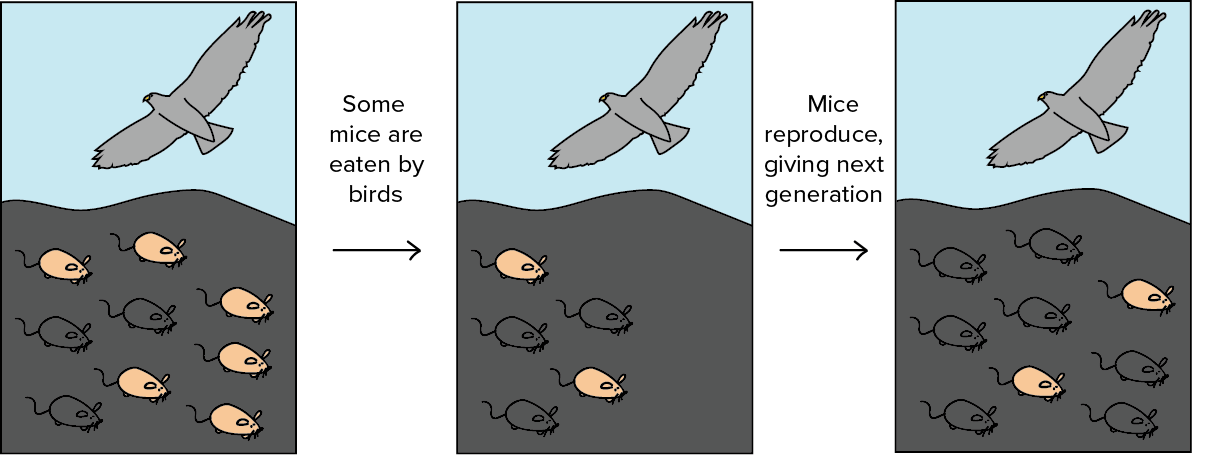
Why is the mouse population changing over time?
a)
The light mice can reproduce more successfully than the dark mice
b)
The hawks eat more dark mice than light mice because the dark mice taste better
c)
The hawks eat more light mice than dark mice because they can see the light mice more easily
d)
The hawks eat more dark mice than light mice because they can see the dark mice more easily
51.
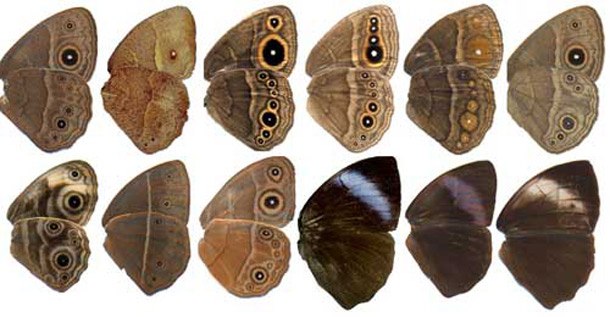
These moths are all the same species. The differences between their wings is an example of ________________
a)
Natural Selection
b)
Variation
c)
Homeostasis
d)
Extinction
52.
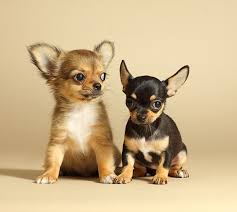
Dogs such as Chihuahuas are examples of....
a)
Artificial Selection 
b)
Natural Selection 
c)
Mutations 
53.

Darwin observed many finch species on the Galapagos Islands. To explain these observations, he

proposed that each species evolved from the same common ancestor, which was a finch species

that migrated to the islands from the mainland. What additional evidence did Darwin use to support

his explanation?

a)

The finch populations were very numerous, and different species often bred with one another.

b)

The finch species lived in different habitats on different islands, which isolated them from one another.

c)

The finch species were distributed evenly among all of the islands, but did not interbreed.

d)

The beaks of the finches were identical, allowing them to eat the same foods on any of the islands.

54.

A population of rabbits grows rapidly from one year to the next. Then one year, a disease strikes approximately one fourth of the adult rabbits. The disease remains with the population in the years that follow.

As explained by Darwin’s theory, which of these conditions allows the rabbit population to evolve by natural selection?

a)

The disease affects adult and juvenile rabbits equally.

b)

The disease reduces the ability of the rabbits to reproduce.

c)

Some rabbits are resistant to the disease, and they pass the resistance to their offspring.

d)

No rabbits are resistant to the disease, and all die when the disease strikes them.

55.

Which of the following is a situation that could cause evolutionary change that is NOT due to natural selection?

a)

A volcano erupts and kills many individuals in a population.

b)

A mutation produces sea stars that are less visible to predators.

c)

An insecticide is sprayed in a community to combat mosquitoes.

d)

Cattle are treated with antibiotics to prevent the spread of infections.

56.

The graphs below show the changes in crab color at one beach.

Which of the following is most likely to have caused the change in the distribution?

a)

A new predator arrived that preferred dark-tan crabs.

b)

A new predator arrived that preferred light-tan crabs.

c)

A change in beach color made medium-tan crabs the least visible to predators.

d)

A change in beach color made medium-tan crabs the most visible to predators.

57.

The figure shows how natural selection of a single-trait gene affects lizard survival.

Which of the following most likely causes the changes in allele distribution?

a)

The allele for light gray coloration disappears from the population. This may be because light gray lizards are more visible to predators and therefore they might be less likely to survive and reproduce.

b)

The allele for black coloration decreases fitness and becomes less common. This may be because black coloration keeps the lizards cool during hot summer temperatures.

c)

Medium gray coloration in lizards appears to be a neutral mutant allele that allows the lizards to hide better from predators. This leads to increases in phenotype and allele frequency of gray coloration.

d)

Because black and medium gray lizards are less visible to predators, these alleles are neutral to natural selection and therefore will not disappear from the population of lizards.

58.

A population that is isolated in a remote environment is still able to experience genetic variation. How could genetic variation that contributes to evolution occur in such a population?

a)

A mutation in a liver cell produces liver cancer.

b)

Lateral gene transfer occurs that produces an organism that is less resistant to drought.

c)

A mutation in an egg cell causes a change in DNA that produces an organism that is more sensitive to sunlight.

d)

A mistake in DNA replication before meiosis produces an organism that is better able to outrun predators.

59.

Grass plants in a population range in height from 6 cm to 25 cm. The short plants receive little sunlight, and the tall plants are eaten by grazing animals. Which statement best describes the effect of natural selection on the grasses?

a)

Because average height grass plants are favored, stabilizing natural selection is occurring.

b)

Because average height grass plants are favored, disruptive natural selection is occurring.

c)

Because tall grass plants are favored by the animals that eat grass, directional selection is occurring.

d)

Because short and tall grass plants are favored, normal natural selection is occurring.

60.

Scientists use several concepts to explain patterns of evolutionary change. Which evidence would be most useful for identifying a pattern of punctuated equilibrium in an evolutionary lineage?

a)

Similar bone structures among mammal species alive today

b)

An identical genetic code in use among all species alive today

c)

Fossil sequences that show gradual changes over long spans of geologic time

d)

Fossil sequences that show rapid changes over brief spans of geologic time

61.

Which of the following best illustrates natural selection?

a)

An organism with favorable genetic variations will tend to survive and breed successfully.

b)

A population monopolizes all of the resources in its habitat, forcing other species to migrate.

c)

A community whose members work together utilizing all existing resources and migratory routes.

d)

The largest organisms in a species receive the only breeding opportunities.

62.

Which of the following is NOT part of the that mechanisms of natural selection?

a)

Organisms produce more offspring than can survive.

b)

Disease and natural disaster will limit population growth.

c)

Species today descended with modifications from ancestral species.

d)

Organisms with advantages will survive and reproduce.

63.

Before the invention of the light bulb, Americans burned oil in lamps for light. Whale oil was popular bio-fuel for these

lamps. Ship crews would hunt whales for their oil. They searched for the largest whales they could find so that they could obtain as much whale oil as possible. How mighty decades of whale hunting possibly affect the natural selection of the species?

a)

The whales lost their legs.

b)

The whales became slower.

c)

The whales became smaller.

d)

The whales changed their calls.

64.

What is the most likely explanation of the data shown below?

a)

There has been a drought in the area that is affecting all life forms.

b)

The population of natural predators of the moths has gotten smaller.

c)

The moths are living in an environment with light trees.

d)

The moths are living in an environment with dark trees.

65.

Which of the following statements best describes what will most likely occur to the moth populations in the image above?

a)

The light moths will be captured by predators more easily than the dark moths, and the population of dark moths will rise.

b)

The light moths will be captured by predators more easily than the dark moths, and the population of light moths will rise.

c)

The dark moths will be captured by predators more easily than the light moths, and the dark moths will probably go extinct.

d)

The light moths will change their wing color to match that of the dark moths.

66.

The pair of population graphs below display the results of two different five-year hunting cycles, one on light trees and one on dark trees. The population of light-colored moths is shown by the light gray dots, and the population of dark moths is shown by the dark gray dots. How do these results demonstrate natural selection?

a)

The moth populations shown here demonstrate random fluctuations over time that are not explained by tree color.

b)

On light trees, individual moths tried to become lighter in color to match the tree background. On dark trees, individual moths tried to become darker in color.

c)

The moths that were the same color as their background were more likely to survive and reproduce. Over time, the populations of these well-adapted moths increased.

d)

Small particles of tree bark became embedded in the moth’s wings, causing the moths to become darker on the dark trees and lighter on the light trees. These acquired traits were then passed down to the next generation of moths, causing the populations to change color over time.

67.

Suppose a certain species of insect lives in the lush green canopy of the rain forest. Some of the insects are bright green in color, and some are bright yellow. Assume there is a natural predator of the insect in the area. What do you expect to happen to the populations of the green and the yellow insects over time?

a)

The green insect population will increase and the yellow insect population will decrease.

b)

The green insect population will decrease and the yellow insect population will increase.

c)

Both insect populations will remain constant over time.

d)

Both insect populations will increase over time.

68.
Charles Darwin came up with this theory 
a)
Natural Selection
b)
Mutation
69.
Which species’ DNA is most similar to the DNA of the toothed whale? 
a)
Hippopotamus 
b)
Baleen Whale
c)
Grazing Mammals
d)
Camels
70.
The separation of a group of individuals from the rest of the population is referred to as 
a)
genetic drift
b)
natural selection
c)
geographic isolation
d)
survival of the fittest
71.
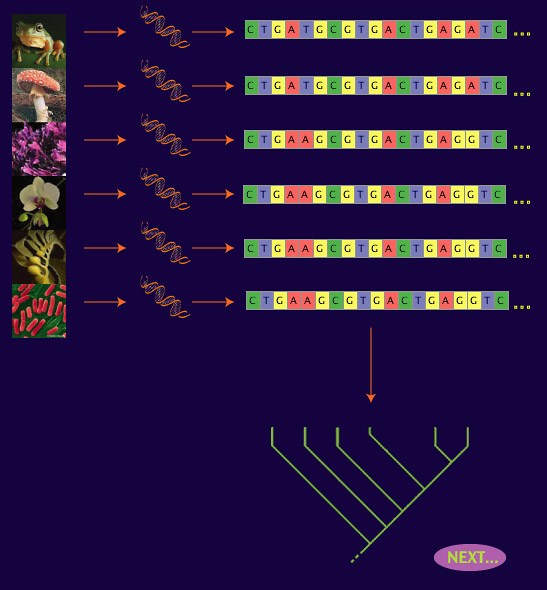
Two organisms that are closely related would have
a)
very similar DNA sequence
b)
exactly the same DNA sequences
c)
no proteins in common
d)
completely different DNA sequence
72.
The scientific theory of evolution is supported by different types of evidence. The diagrams below show the skeletons of two different animal species. How does comparing the skeletons of these animals provide support for the scientific theory of evolution?
a)
 It provides information about the organisms' habitats.
b)
 It shows possible common ancestry between organisms.
c)
It provides information to determine the organisms' ages.
d)
It shows possible chromosomal similarities between organisms.
73.
According to fossil records, the horses that lived 50 million years ago were much smaller, weaker and slower than modern horses. Which process is most likely responsible for the changes that have led to the increased size, strength, and speed in horses?
a)
commensalism
b)
inbreeding
c)
migration
d)
evolution by natural selection
74.
The diagram illustrates an embryonic stage of two organisms.Which of the following can be determined by observing the embryos shown in the diagram? 
a)
The organisms share a common ancestry.
b)
The organisms belong to the same genus.
c)
The organisms are native to the same geographic areas.
d)
The organisms will grow into anatomically similar adults.
75.
Scientists have found evidence that about 2.4 million years ago a gene regulating jaw muscles mutated and may have led to the more graceful human jaw we see today. The diagram below shows the skulls of 3 hominid species.Which statement below most closely explains the link between jaw size and hominid evolution? 
a)
The jaws of hominids evolved to be smaller and less protruding over time. 
b)
The jaws of hominids evolved to be smaller and less protruding over time. 
c)
There appears to be no change in the jaws of hominids over time.
d)
The jaws of hominids changed over time due to a change in brain size. 
76.
Scientists are studying the evolutionary history of a group of plants in the United States, and they developed an evolutionary tree, as shown below.Which statement can be inferred from the evolutionary tree?
a)
Species 1 is most closely related to Species 8.
b)
Species 2 is most closely related to Species 3.
c)
Species 3 is most closely related to Species 7.
d)
Species 5 is most closely related to Species 6.
77.
Scientists are studying the evolutionary history of a group of plants in the United States, and they developed an evolutionary tree, as shown below.What information about the organisms best helps the scientists to determine the evolutionary relationships among them?
a)
DNA sequences
b)
 Anatomical features
c)
Habitat types
d)
Reproductive Strategies
78.
One of the accepted scientific theories describing the origin of life on Earth is known as chemical evolution. According to this theory, which of the following events would need to occur first for life to evolve?
a)
 onset of photosynthesis 
b)
 origin of genetic material 
c)
 Synthesis of organic molecules
d)
formation of the plasma membrane
79.
 The diagram represents the relationship between beak structure and food in several species of finches found on the Galapagos Islands. The different beak structures observed in the diagram are evidence of
a)
 different species of finches adapting to different environments over many generations
b)
 finches changing their beak characteristics so that they could feed efficiently
c)
finch species with different beak structures coming to the Galapagos Islands from the mainland
d)
 finches mating with birds of other species and acquiring some of their traits
80.
The law of superposition states
a)
the oldest rock layer is on the top, the younger rock layer is on the bottom
b)
rock layers are always in sequence from oldest to youngest
c)
the youngest rock layer is on the bottom and the oldest is on the top
d)
the oldest layer is on the bottom and the youngest is on the top when it is undisturbed
81.
What can help a scientist know the approximate age of bones?
a)
the soil it is found in
b)
the index fossils in the area
c)
the type of rock it is formed in
d)
absolute dating
82.
Scientist find dinosaur fossils in the bottom of a cliff and mammals fossils in the middle layer, what can be inferred?
a)
dinosaurs ate plants
b)
dinosaurs were eaten by the mammals
c)
they lived at the same time
d)
dinosaurs lived before the mammals
83.
Ostrich wings are examples of
a)
homologous structures
b)
vestigial structures
c)
adaptations
d)
traits
84.

Some organisms have genes that improve their ability to survive and reproduce. If the genes also help their offspring survive and reproduce, then which of the following will most likely increase?

a)

The frequency of the genes in one individual

b)

The frequency of the genes in the population

c)

The number of genes in one chromosome

d)

The number of genes in the species

85.
Which Hardy-Weinberg equation represents the genotype frequencies in a population?
a)
p + q = 1
b)
p2 + 2pq + q2 = 1
c)
p2 + pq2 + q2 = 1
d)
p + 2pq + q3 = 1
86.
Which Hardy-Weinberg factor represents the frequency of heterozygous individuals in a population?
a)
p2
b)
2pq
c)
q2
d)
p2 + 2pq
87.
What do you call all of the genes in a population?
a)
Gene pool
b)
Relative Frequency
c)
Genetic Drift
d)
Allele pool
88.
A few deer wander out of their native woods into a completely new park where no deer had ever been before. They go on to create an entirely new population.
a)
Genetic Drift
b)
Natural Selection
c)
Non-random mating
d)
Mutation
89.
Genetic drift is likely to be seen in a population
a)
That has a low mutation rate
b)
In which natural selection is occurring
c)
That is very small
d)
For which environmental conditions are changing
90.
What does the Hardy-Weinberg equilibrium measure?
a)
changes in allele frequencies
b)
numbers of mutations
c)
goodness of fit
d)
genetic diversity
91.
In the Hardy-Weinberg Equation, q2 is the frequency of what?
a)
The recessive allele 
b)
the dominant allele
c)
the recessive genotype
d)
the dominant genotype
92.
The Hardy-Weinberg Model is...
a)
available at local hobby stores and retailers throughout the Greater Tazewell area.
b)
a mathematical tool that biologists can use to predict allele frequencies and determine whether or not evolution is occurring within a population.
c)
always occurring within individual organisms in nature.
d)
only useful in the lab and cannot be practically applied to real-world populations of organisms.  
93.
A population of 150 individuals has an allele frequency of 0.3 for the dominant allele (B) and a frequency of 0.7 for the recessive allele (b). Use the Hardy-Weinberg equation to determine the frequency of the genotype (bb).
a)
0.09
b)
0.42
c)
0.49
d)
0.21
94.

The allele frequency of p=.20 What is the percentage of Heterozygous Dominant genotype?

a)

.80

b)

.04

c)

.32

d)

.64

95.

The allele frequency of p=.20 What is the percentage of recessive genotype?

a)

.80

b)

.04

c)

.32

d)

.64

96.

The allele frequency of p=.20 What is q?

a)

.80

b)

.04

c)

.32

d)

.64

97.
Gene flow involves
a)
Natural disasters killing most of the members of a population
b)
Individuals moving into and out of the population
c)
Selective mating
d)
Small changes because of the environment
98.
Which is a mechanism for change in allele frequency?
a)
gene flow
b)
genetic drift
c)
natural selection
d)
all answers are correct
99.

If a population experiences no migration, is very large, has no mutations, has random mating, and there is no selection, which of the following would you predict?

a)

The population will evolve, but much more slowly than normal

b)

The makeup of the population's gene pool will remain virtually the same as long as these conditions hold.

c)

The composition of the population's gene pool will change slowly in a predictable manner.

d)

Dominant alleles in the population's gene pool will slowly increase in frequency while recessive alleles will decrease.

e)

The population probably has an equal frequency of A and a alleles.
100.
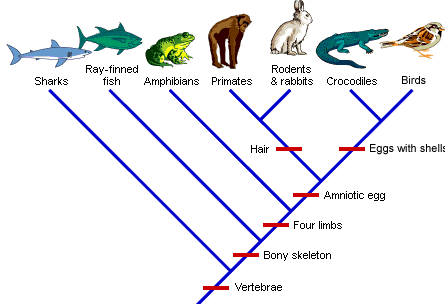
According to this cladogram, sharks are MOST closely related to which organism? 
a)
Amphibians
b)
Ray finned fish
c)
Crocodiles
d)
Birds
101.
Which two orgainsms have hair? 
a)
Sharks & Ray Finned Fish
b)
Primates & Rodents
c)
Birds & Crocodiles
d)
Rabbits & Birds
102.
According to this cladogram, birds are LEAST related to: 
a)
Amphibians
b)
Sharks
c)
Ray Finned Fish
d)
Crocodiles
103.
According to the cladogram, which organism is most distantly related to the human?
a)
crayfish
b)
grasshopper
c)
perch
d)
frog
104.
Which trait do only humans have, according to the cladogram?
a)
jaws
b)
mammary glands & hair
c)
terrestrial during all life stages
d)
bipedal & opposable thumbs
105.
Individuals that are well adapted to their environment will survive and produce:
a)
Fewer mutations
b)
Stronger genes
c)
More offspring
d)
Better traits
106.
You look at two species and see very similar DNA. What does this likely tell you?
a)
These are the same animal.
b)
These animals have a common ancestor.
c)
These animals are not likely related.
d)
These animals are likely becoming one species.
107.
An inherited characteristic that increases an organisms ability to survive and reproduce in its specific environment is called a(n)
a)
vestigial structure
b)
speciation
c)
analogous structure
d)
adaptation
108.

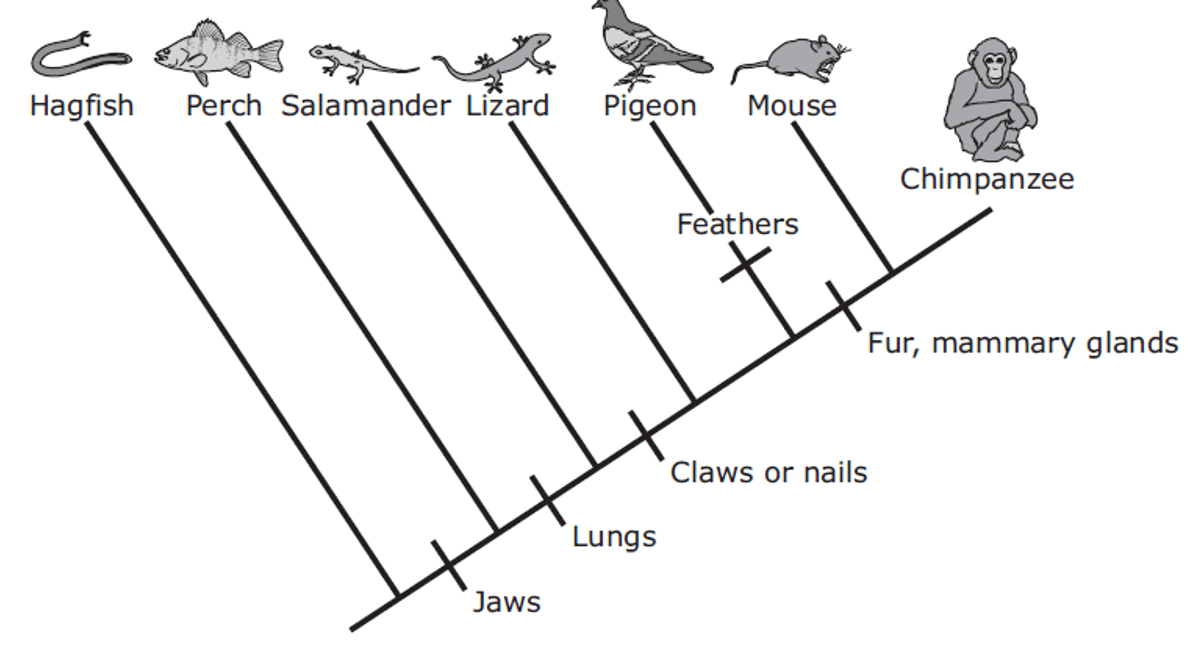
Which species is most closely related to species C?

a)

A

b)

B

c)

D

109.

All the animals to the right of the salamander would have the common characteristic of...

a)

Fur

b)

Claws or nails

c)

Lungs

d)

Jaws

110.

Which is the newest trait?

a)

Amniotic egg

b)

Walking legs

c)

Jaws

d)

Hair

111.

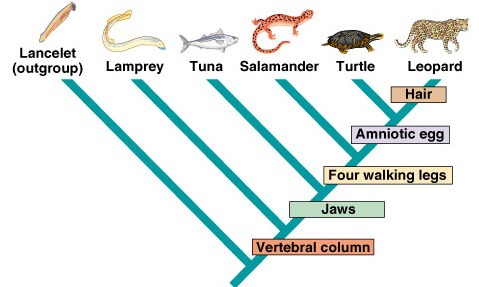
What is this a picture of?

a)

Pedigree

b)

Cladogram

c)

Family Tree

d)

Oak Tree

112.

Which best describes shared characteristics?

a)

They appear in all the ancestors.

b)

They appear at the end of each branch.

c)

They are newly evolved traits that all future organisms have in common.

d)

They stem from primary characteristics.

113.
A flash flood carried a raft of Amazon ants away from their original population. There is enough distance between the two groups, that they will never meet in nature again. What type of reproductive barrier is this?
a)
behavioral isolation
b)
temporal isolation 
c)
gametic isolation
d)
geographic isolation 
114.
The genitalia of the male damselfly varies in shape. Certain males can only hold onto & mate with females whose genitalia fit.  What type of reproductive barrier is this?
a)
behavioral isolation
b)
temporal isolation 
c)
gametic isolation
d)
mechanical isolation 
115.
Some female peacocks prefer males with large, colorful tales while other female peacocks prefer males with no tail at all. Females are beginning to only mate with the type of males with the tail they prefer. What type of reproductive barrier is this?
a)
behavioral isolation
b)
hybrid sterility 
c)
temporal isolation
d)
mechanical isolation 
116.
The flowers of pink tulips open in the morning, while the flowers of lavender tulips open in the early afternoon. The bees that pollinate these tulips cannot carry pollen back & forth between the two types of tulips because of their flowers being closed at different times of day. What type of reproductive barrier is this?
a)
behavioral isolation
b)
hybrid sterility 
c)
temporal isolation
d)
mechanical isolation 
117.
The term for the formation of new and distinct species over the course of evolution is...
a)
speciation
b)
biological species concept
c)
reproductive barrier
d)
natural selection
118.

when the organism develops different courtship rituals which do not attract main population this is a part of ____________ speciation.

a)

Allopatric

b)

Sympatric

c)

Simple

d)

Temporal

119.

The emergence of a mountain range is an event that would lead to _______________ speciation

a)

Allopatric

b)

Sympatric

c)

Temporal

d)

Behavioral

120.

The emergence of new rivers or streams is a type of ____________ isolation.

a)

Temporal

b)

Mechanical

c)

Behavioral

d)

Geographic

121.

When the Grand Canyon in Arizona formed, two populations of one squirrel species were separated by the giant canyon. This is an example of _____________ speciation.

a)

Allopatric

b)

Sympatric

c)

Simple

d)

Divergent

122.

Different finch populations lived on separate islands with different environments. They evolved to best adapt to those particular environments and can no longer mate. What type of speciation is this?

a)

Allopatric

b)

Sympatric

c)

Temporal

d)

Mechanical

123.

The presence of islands represents what type of reproductive isolation

a)

allopatric speciation

b)

sympatric speciation

124.
Which of the following is NOT part of the Biological Species Concept?
a)
Must meet in nature & have gene flow
b)
Must be able to reproduce & share a gene pool
c)
Offspring must be sterile
d)
Offspring must be fertile
125.
The pollen (sperm) of a flowering plant cannot fertilize the egg cell of a nearby flowering plant of its kind. What type of reproductive barrier is this?
a)
behavioral isolation
b)
temporal isolation 
c)
gametic isolation
d)
geographic isolation 
126.
When reproductive barriers separate a population of a species in nature, the species no longer share a... 
a)
taxa
b)
gene pool 
c)
phylogenetic tree
d)
species 
127.
When a zebra & horse mate, they create a zorse. Zorses are most often sterile. What type of reproductive barrier is this?
a)
behavioral isolation
b)
hybrid sterility 
c)
gametic isolation
d)
mechanical isolation