
 Worksheets
Plant & Body Systems Test Review
Total questions: 149
Worksheet time: 2hrs 1mins
pumps blood throughout the body and transports materials to and from cells
respiratory system
circulatory system
excretory system
digestive system
muscular system
takes in oxygen and removes carbon dioxide
respiratory system
circulatory system
excretory system
digestive system
muscular system
breaks down food, absorbs nutrients, and removes solid waste
respiratory system
circulatory system
excretory system
digestive system
muscular system
filters blood to remove liquid waste
respiratory system
circulatory system
excretory system
digestive system
muscular system
movement, heartbeat, digestion, etc.
respiratory system
circulatory system
excretory system
digestive system
muscular system

What structure is found at #1?
bladder
kidney
ureter
urethra

What structure is found at #2?
esophagus
stomach
large intestine
liver
What structure is found at #3?
esophagus
stomach
large intestine
liver

What structure is at #8?
bronchi
bronchiole
alveoli
trachea
Which muscle type controls involuntary muscle functions that aid in breathing, digestion, etc?
cardiac
skeletal
smooth
Which muscle type pumps blood through your body?
cardiac
skeletal
smooth
Different tissues that work together
tissue
organism
cell
organ
Groups of cells that work together
tissue
organism
cell
organ
A living thing
tissue
organism
organ system
cell
What system circulates blood and gases to body tissues (and includes the heart, arteries, veins, and capillaries)?
respiratory system
muscular system
nervous system
digestive system
circulatory system
What system includes the lungs, which inhale oxygen and exhale carbon dioxide?
respiratory system
muscular system
digestive system
circulatory system
excretory system
What system has different types of muscle groups working together with the skeletal system and the nervous system to move the body?
respiratory system
muscular system
nervous system
digestive system
excretory system
Which system controls your body by sending messages to and from your brain?
circulatory system
respiratory system
nervous system
excretory system
muscular system
Which system is responsible for removing wastes from the body in conjunction with the circulatory system?
circulatory system
nervous system
respiratory system
excretory system
muscular system
Which system processes food, breaking it down into nutrients small enough to travel through the blood to all cells?
respiratory system
muscular system
nervous system
digestive system
excretory system
The brain, spinal cord, and nerves working together is an example of:
cell
tissue
organ
organ system
The heart is an example of a(n):
cell
tissue
organ
organ system
Blood is an example of a(n):
cell
tissue
organ
organ system
What are the levels of organization from simplest to most complex?
cell-tissue-organ-organ system-organism
organism-organ system-organ-tissue-cell
cell-organ-organ system-tissue-organism
organism-organ system-cell-tissue-organ
What system provides a frame for the body?
skeletal
muscular
excretory
circulatory
What system brings in oxygen and removes carbon dioxide?
digestive
skeletal
circulatory
respiratory
What system filters and removes waste from the blood?
circulatory
nervous
excretory
digestive

Why could the lungs be considered part of the excretory system?
They help us breathe.
They help us bring in oxygen.
They help us remove carbon dioxide.
They help us remove oxygen.

Place the words below in order from the smallest to largest level of organization:
Organs, tissues, cells, organ systems
Cells, tissues, organs, organ systems
Organ systems, organs, tissues, cells
Cells, tissues, organ systems, organs

Your heart is a powerful, fist-shaped muscle that beats 100,000 times a day to power the circulatory system. Which of the following are functions of the circulatory system? Choose the THREE that apply.
bringing nutrients and oxygen to cells
removing oxygen from cells
breaking down nutrients
helping fight off diseases and infections
removing wastes from the body

The main purpose of homeostasis is to...
Fight disease-causing organisms
Keep internal conditions stable
Produce offspring
Replicate DNA

Nervous tissue makes up most of the
Lungs
Kidneys
Brain
Stomach

How does the hormone insulin help maintain homeostasis in the human body?
It helps cells absorb sugar from the blood after you eat and digest food.
It stimulates the production of sweat on a hot day to cool the body.
It controls the contractions of cardiac muscles when you work out.
It keeps the level of carbon dioxide in the blood within a narrow range.
How is breathing related to cellular respiration?
Breathing supplies the oxygen needed for cellular respiration.
Breathing supplies the glucose “burned” during cellular respiration.
Breathing supplies the carbon dioxide needed for cellular respiration.

How do the digestive and circulatory systems interact?
The circulatory system transports waste and the digestive system rids the waste from the body.
The circulatory system creates waste and the digestive system rids the waste from the body.
The digestive system breaks down food and the circulatory system transports the nutrients.
The digestive system transports nutrients and the circulatory system breaks the nutrients down.
Hormones are produced in the the body by ______________
glands
blood cells
bones
muscles
What takes place in the capillaries?
materials are exchanged between blood and body cells
blood is carried away
blood is carried to the heart
What do enzymes do?
break down starches into simpler sugars for chemical digestion
break down food into smaller pieces for mechanical digestion
eliminate wastes from the body
move blood throughout the body
Where is sperm produced?
fallopian tubes
penis
ovaries
testes
What is homeostasis?
the process by which an organism's internal environment is kept stable in spite of changes to the external environment (balance)
an impulse
a response to a stimulus
when oxygen is moved from outside environment into the body

Which body system helps maintain homeostasis due to being able to interpret and respond to information?
lymphatic
endocrine
circulatory
nervous

This body system produces blood cells, stores minerals, and protects organs.
circulatory
immune
skeletal
reproductive
This body system fights virus and bacteria that have attacked the body.
endocrine
immune
excretory
muscular
This system helps regulate temperature and is the first defense against infection
lymphatic
immune
integumentary
skeletal
This system collects excess fluid.
lymphatic
excretory
muscular
digestive
The following terms are associated with which system: skin, epidermis, dermal
integumentary
digestive
excretory
endocrine
Which 2 systems work together to pump blood thru the body?
reproductive and skeletal
muscular and skeletal
respiratory and circulatory
muscular and circulatory
Which 2 systems work together to maintain homeostasis by producing hormones?
endocrine and nervous
endocrine and reproductive
respiratory and circulatory
skeletal and digestive
This happens due to involuntary contractions of voluntary muscles to warm up
Shivering
Sweating
Vasodilation
Vasoconstriction
What might happen if you didn't run a fever when you got sick?
You would recover much more quickly
Your body temperature would drop to dangerous levels
Your immune system would shut down
Your body wouldn't fight off the infection as efficiently as it could
Why does your heart beat faster when you exercise?
To provide your muscle cells extra oxygen
To provide your muscle cells extra carbon dioxide
To heat your body up
To make you feel more tired
When glucose levels in the blood rise, your brain sends a signal to your pancreas. The pancreas releases insulin, which opens channels in cell membranes to allow glucose to enter the cell, lowering blood sugar levels. This is an example of a:
Positive Feedback Loop
Negative Feedback Loop
Which of the following scenarios describes a positive feedback mechanism?
After childbirth, high levels of prolactin induce lactation in the mother. During nursing, infant suckling triggers the release of more prolactin, which further stimulates lactation.
After eating, blood glucose levels rise, stimulating the release of insulin from the pancreas. Insulin causes cells to uptake glucose from the blood, lowering blood glucose levels.
several hours after a meal, blood glucose levels begin to drop, prompting the pancreas to secrete glucagon. Glucagon causes the liver to convert stored glycogen into glucose, raising blood glucose levels.
During exercise, an increase in body temperature causes the body to produce sweat. As the sweat vaporizes, the body cools down due to evaporative cooling.
In a negative feedback loop, what happens to a variable (like temperature) when it increases past its normal state?
It continues to increase.
It decreases until it resumes its normal state.
It decreases until it is lower than its normal state.
It does not change.
Rapid growth during puberty causes your body to release more and more growth hormones. As you grow, more and more growth hormones are released until puberty is reached, and then the hormones stop.
Positive feedback
Negative feedback
Feedback interactions in the human body are important because they
determine the diversity necessary for evolution to occur.
direct the synthesis of altered genes that are passed on to every cell in the body.
regulate the shape of molecules involved in cellular communication.
keep the internal body environment within its normal range.
What are the levels of organization starting from simple to complex?
cells- tissues- organs- organ systems- organisms-
organisms- organ systems- organs- tissues- cells
cells- organs- tissues- organ systems-
tissue- cells- organs- organ systems- organisms-


A plants roots grow thicker towards the stream than away from the stream. To what stimulus is the plant responding to?
thigmotropism
gravitropism
photoropism
hydrotropism
A vine plant brushes against a fence and wraps itself around the fence. To what response is the stimulus is the plant responding to?
phototropism
gravitropism
hydrotropism
thigmotropism
The plants have two movements
Tropical and tropismis movements
Tropism and nastic movements
Nassis and stem movements

#1 - outermost layer and not made of cells; helps regulate water loss.
Epidermal cells
Palisade cells
Xylem cells
Waxy cuticle
#2 & #5 - outermost layer of cells; provides protection from outside elements.
Epidermal cells
Palisade cells
Phloem cells
Waxy cuticle
#2 & #5 - outermost layer of cells; provides protection from outside elements.
Epidermal cells
Palisade cells
Phloem cells
Waxy cuticle
#4 - layer of irregular cells with space in between the cells
Pallisade mesophyll
Phloem
Spongy mesophyll
Xylem
#8 - Cell tissue that makes up part of each vein that transports glucose and nutrients throughout the plant
Epidermal cells
Guard cells
Phloem cells
Xylem cells
#8 - Cell tissue that makes up part of each vein that transports glucose and nutrients throughout the plant
Epidermal cells
Guard cells
Phloem cells
Xylem cells
The outermost layer of CELLS of the leaf is the
cuticle
epidermis
spongy mesophyll
bundle sheath


What's the main function of the leaf?
Absorb Sunlight
Make Food
Attract Insects
Move Water and Minerals
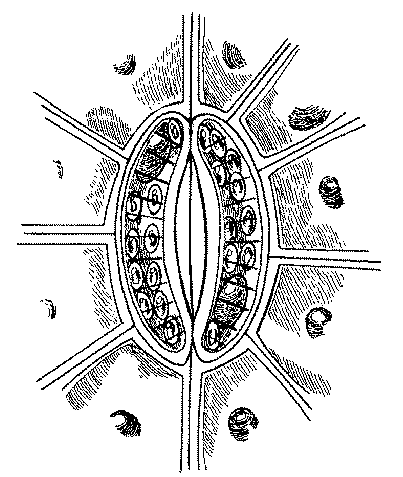
All of the following are functions of the roots except.
Absorb water and minerals
Store food
Anchor the plant
Collect Sunlight for photosynthesis
What is transpiration?
Excess water being released from the aerial parts of plants in the form of water vapor
Excess sugar being released from the leave
The way a plant makes its food
When the plant uses sugar for energy
Water transported from stems to leaves through what?
xylem
phloem
stems
roots
Select all of the environmental factors that would increase transpiration.
Increased humidity
Increased wind speed
Increased temperature
Decreased surface area
Select all of the environmental factors that would increase transpiration.
Increased humidity
Increased wind speed
Increased temperature
Decreased surface area
Which statement correctly identifies the substance and direction it is transported in the xylem?
Water, only upwards
Glucose, only upwards
Water, up and down the plant
Glucose, up and down the plant
Stomata opens during night and closes during day
True
False
Which is true?
99% of water taken by the plant evaporates through transpiration
9% of water taken by the plant evaporates through transpiration
Evaporation through transpiration accounts only for 1% of all the water the plant takes in
Evaporation through transpiration is minuscule
Adaptations in plant to reduce transpiration are -
No of stomata
Thickness of cuticle
Loss of leaves
All of the above
Adaptations in plant to reduce transpiration are -
No of stomata
Thickness of cuticle
Loss of leaves
All of the above
All plants are classified based on ...
Whether they have vascular tissue or not
Whether they have flowers or not
Whether they have cuticle or not
Whether they do photosynthesis or not
Select ALL plants that reproduce by using seeds.
Gymnosperms
Angiosperms
Seedless vascular plants
Nonvascular plants
Select ALL examples that are matched correctly.
Nonvascular plants >> moss
Seedless vascular plants >> fern
Gymnosperms >> cherry tree
Angiosperms >> rose
Select ALL examples that are matched correctly.
Nonvascular plants >> moss
Seedless vascular plants >> fern
Gymnosperms >> cherry tree
Angiosperms >> rose
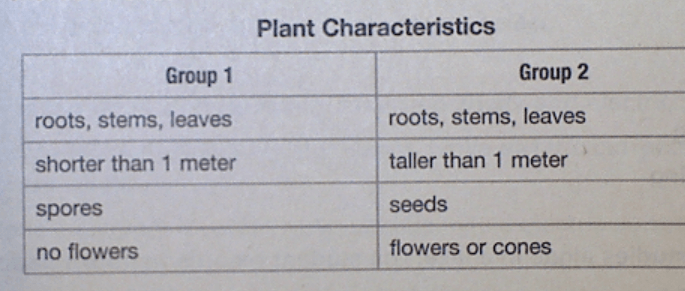
A student researches several plants. She then groups them according to their characteristics.
Which are MOST LIKELY the names of the plant groups.
ferns, trees
mosses, flowering plants
spore producers, seed producers
flowering plants, coniferous plants

What is the difference from the seeds of gymnosperms vs. the seeds of flowering plants?
The seeds of gymnosperms have a thick covering
The seeds of gymnosperms are round
The seeds of gymnosperms have no covering
The seeds of gymnosperms are always found inside fruit
Most bryophytes are only a few centimetres tall because they lack
vascular tissues
reproductive organs
stems
leaves
Parenchyma is present beneath the ___________________.
collenchyma
epidermis
vascular bundles
cork cambium
Which of the following is a result of transpiration?
Soil receives nutrients.
Flowers produce seeds.
Roots absorb more water.
Plants become inactive.
Which of the following is a result of transpiration?
Bacteria and viruses are destroyed.
Water flows from roots to shoots.
Minerals and nutrients leave plants.
Plants attract pollinators.
Which of the following is an example of negative phototropism?
roots growing toward water
roots growing away from light
shoots growing away from gravity
shoots growing toward water
Which of the following is an example of positive geotropism?
roots growing down into the soil
flowers turning toward the sun
stems bending toward warm temperatures
branches growing up toward the sky
What hormone speeds up the rate at which a plant's cells grow?
hormone
auxin
darknessium
visuals
Why shoots must respond to sunlight?
Shoots can't live in dark
Shoots scared of dark
Shoots can do photosynthesis
Shoots can do osmosis
Shoots of plants respond to................. and................... .
Sunlight, water
Water, air
Sunlight, air
Sunlight, touch
Roots of plants respond to .................. and.................. .
Water, air
Sunlight, air
Water, gravity
Gravity, touch
in cactus what gets modified?
stem,leaves and roots
stem and leaves
leavs
stem
roots

What are the levels of organization in plants?
Plants have cells, but not tissues.
Plants are made up of cells, tissues, organs, and organ systems
Plants contain cells and tissues, but not organs.

The body of a plant is made up of organs called roots, ________, and leaves.
vacuole
stems
cones

Plants have two organ systems, the _________________ system and the root system.
vascular
seedless
shoot
non-vascular

