
 Worksheets
Biodiversity, biomes and microhabitats
Total questions: 112
Worksheet time: 2hrs 22mins
A student walks the schoolyard and observes that there are many living things such as different plants and animals. She notices that moss grows in moist shady areas but did not see any in the open yard where its sunny. What is the best explanation for her observation?
Different habitats support different plants and animals
All plants and animals can live in any environment
Schoolyards are not able to sustain living things
Schoolyards are the only places where moss can grow.

Which plants would most likely be found in a rain forest?
1
2
3
4
Which of the following statements about biodiversity in ecosystems is true?
Small ecosystems have less biodiversity and are affected more by natural disasters
Large ecosystems are so spread out that maintaining diversity is difficult
Stresses to an ecosystem increase biodiversity by introducing factors that lead to evolution
Despite size, ecosystems with biodiversity are better suited to handle natural disasters.
A certain kind of plant lives only in a small area of a deciduous forest. What can you conclude?
Not all parts of a deciduous forest are the same
A deciduous forest does not have many types of plants
A deciduous forest does not have many types of animals
All parts of a deciduous forest are the same.
Increasing biodiversity affects the sustainability of an ecosystem by
always decreasing competition for limited resources within an ecosystem
allowing an ecosystem to survive many changes
preventing an ecosystem from surviving many changes
always increasing competition for limited resources within an ecosystem

What is one important way the arctic fox is adapted to its environment?
its strong paws help it climb trees
Its small size helps the fox hide below forest plants
Its white fur helps the fox stand out to other animals
its small ears and nose help slow the fox's heat loss in a cold climate

The picture shows an arctic fox.
In which biome does the fox most likely live?
Desert
Tundra
Grasslands
Temperate Rainforest
Which of the following factors determines a biome's identity
the climate that exists there
the number of people who live there
the amount of pollution that occurs there
the types of activities that can be done there
You observe a garden in a schoolyard. Corn, tomatoes, pumpkins, and other crops thrive in the garden. What is most likely true of the soil in this micro-habitat?
It is dry and frozen
It is rocky, sandy, and dry
It is deep, dark, and nutrient rich
It is thin, acidic, and nutrient poor.
In which biome would you expect to find many coniferous trees?
Taiga
Tundra
Savanna
Tropical rain forest
How is a tundra biome similar to a desert biome
Both biomes have dry rocky soils
Both biomes lack plants or animals
Both biomes are hot during the day and cold at night
Both biomes are characterized by very little precipitation.
Who is your favorite teacher.
Any other 7th grade teacher
Any other 6th grade teacher
Pizana
A teacher from elementary school
I don't have one.
Which statement is true?
There are a few number of animals that live in the rain forest, and they belong to a small number of species.
The population of animals in the rainforest is large and diverse.
Many animals live in the rainforest, but there are just a few species that can survive there.
There are many species living in the rainforest, but their populations are usually very small.
What might happen to the earth’s atmosphere if the rainforest disappeared?
We’d have less oxygen and more carbon dioxide.
We’d have more oxygen and less carbon dioxide.
We’d have more oxygen and more carbon dioxide.
We’d have less oxygen and less carbon dioxide.
The tropics can be found…
Throughout the pacific ocean.
On every continent.
Only in the southernmost regions of the earth.
Near the equator.
Which of the following most likely supports the most sustainable ecosystem?
The habitat with the greater number of green plants
The habitat with the greatest variety of living things
The habitat with the warmest average temperature
The habitat with the greatest number of consumers
Which of the following is considered a BIOTIC factor?
Rocks
Sun
Water
Tree
What is the name of an area that has a large variety of flora and fauna in which that it makes up?
Habitat
Biome
Abiotic Factors
Biotic Factors
Which of the following biomes is considered the most biodiverse?
The ocean
The tundra
The rainforest
The grasslands
Fauna are ____________ and Flora are ____________
Plants, Animals
Animals, Plants
Biotic Factors, Abiotic Factors
Abiotic Factors, Biotic Factors
Under which biome would an Alpine and the Arctic fall under?
Tundra
Aquatic
Desert
Grasslands
In which biome would you most likely find fish?
Tundra
Desert
Grasslands
Forests
What is an Abiotic Factor?
Living things that shape an ecosystem
The fauna and flora that make up and ecosystem
Non-living chemical and physical parts of the environment that affect living organisms and the functioning of ecosystems.
The microhabitats within an ecosystem.
Which of these makes up 70% to 71% of the planet?
Ocean
Forests
Tundra
Grasslands
A student walks the schoolyard and observes that there are many living things such as different plants and animals. She notices that moss grows in moist shady areas but did not see any in the open yard where its sunny. What is the best explanation for her observation?
Different habitats support different plants and animals
All plants and animals can live in any environment
Schoolyards are not able to sustain living things
Schoolyards are the only places where moss can grow.
Which plants would most likely be found in a rain forest?
1
2
3
4
Which of the following statements about biodiversity in ecosystems is true?
Small ecosystems have less biodiversity and are affected more by natural disasters
Large ecosystems are so spread out that maintaining diversity is difficult
Stresses to an ecosystem increase biodiversity by introducing factors that lead to evolution
Despite size, ecosystems with biodiversity are better suited to handle natural disasters.
A certain kind of plant lives only in a small area of a deciduous forest. What can you conclude?
Not all parts of a deciduous forest are the same
A deciduous forest does not have many types of plants
A deciduous forest does not have many types of animals
All parts of a deciduous forest are the same.
Increasing biodiversity affects the sustainability of an ecosystem by
always decreasing competition for limited resources within an ecosystem
allowing an ecosystem to survive many changes
preventing an ecosystem from surviving many changes
always increasing competition for limited resources within an ecosystem
The picture shows an arctic fox.
In which biome does the fox most likely live?
Desert
Tundra
Grasslands
Temperate Rainforest
Which of the following factors determines a biome's identity
the climate that exists there
the number of people who live there
the amount of pollution that occurs there
the types of activities that can be done there
You observe a garden in a schoolyard. Corn, tomatoes, pumpkins, and other crops thrive in the garden. What is most likely true of the soil in this micro-habitat?
It is dry and frozen
It is rocky, sandy, and dry
It is deep, dark, and nutrient rich
It is thin, acidic, and nutrient poor.
In which biome would you expect to find many coniferous trees?
Taiga
Tundra
Savanna
Tropical rain forest
How is a tundra biome similar to a desert biome
Both biomes have dry rocky soils
Both biomes lack plants or animals
Both biomes are hot during the day and cold at night
Both biomes are characterized by very little precipitation.

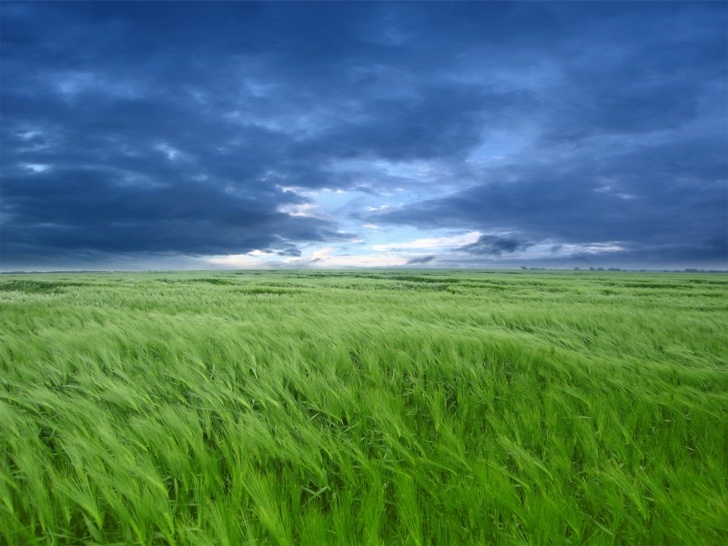
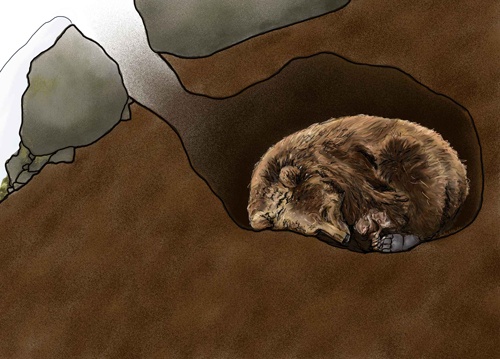


Which of the following is an abiotic factor in the tundra?
soil
rocks
water
ice
Which of the following is an adaptation to survive in the taiga?
broad leaves
thorns
hibernation
long necks
Which of the following is an adaption to survive in the desert?
needle leaves
dormancy
nocturnal
hibernation
What is the difference in a microhabitat and a biome?
size
temperature
climate
precipitation
What is the difference in a microhabitat and a biome?
size
temperature
climate
precipitation


This biome is found around the equator, has a dense canopy, and is home to a large amount of biodiversity.
Deserts
Tropical Rain Forests
Savannas
Grasslands
Microhabitats are very small parts of the environment that supports a distinct flora (plant) and fauna (animal). Of the following, which one is a microhabitat?
Moss growing on top of a rotting log
Aquatic biomes
Deer, Rabbits, and Fox sharing a field
Fish and seahorses swimming around a reef.

The most sustainable ecosystem would
Have low biodiversity
Have high biodiversity
Not experience change
Have no predators
Biodiversity refers to
How an organism interacts with it's environment
The variety of life on Earth
Nonrenewable resources
The rate of species decline
When an ecosystem is more diverse it has more sustainability.
False
True
Pioneer species are the first
Trees that replace the original trees after a forest fire
Organisms to live in previously uninhabited areas
Organisms to live in a forest canopy
Trees to grow in an area that has been disturbed
What is Ecological Succession?
Competition between plants in a society
A natural disaster such as a flood or fire
The cycle of a tomato plant
The change an ecosystem experiences over time
A student walks the schoolyard and observes that there are many living things such as different plants and animals. She notices that moss grows in moist shady areas but did not see any in the open yard where its sunny. What is the best explanation for her observation?
Different habitats support different plants and animals
All plants and animals can live in any environment
Schoolyards are not able to sustain living things
Schoolyards are the only places where moss can grow.

Students in two different schools created gardens at their campus. They only planted native plants that do not require extra care. Students from each of the schools were asked to sketch some of the native plants included in their gardens. Sample images from each school are included below.
Which of the following characteristics of the garden environments pictured above has the greatest affect on the types of plants that grow in them?
Temperature
Amount of rainfall
Amount of light
Space
If your local environment begins to turn into a desert, what will most likely happen to the organisms in the environment?
The populations of organisms currently existing in the environment will increase.
The populations of organisms currently existing in the environment will not be affected.
The new desert environment will be unable to support any populations of organisms.
A different variety of organisms will be supported rather than the ones that currently exist.
Which statement best describes the comparison of lake and ocean environments?
The lake and ocean environments support the same organisms because they are both water and are made up of the same elements.
The lake and ocean environments support different organisms because most freshwater organisms cannot live in saltwater.
The lake and ocean environments support the same organisms, but they will look different because of the type of water.
The lake and ocean environments support different organisms because ocean organisms are blocked by land from getting into lakes.

5 Four students were asked to observe microhabitats of their schoolyard and describe how microhabitats are able to support different varieties of organisms. Their observations and responses are shown below.
Which student best describes how microhabitats are able to support a variety of organisms?
student 1
student 2
student 3
student 4

A student rolled over a wooden log and made the following observations.
Which observations support the student’s claim that the log represents a microhabitat?
Observation 1 and 2
Observation 1, 2, and 3
Observation 1, 2, and 4
Observation 3 and 4

Students created the table below based on observations of two microhabitats near their school.
Based on the information above, what is the best explanation for the different variety of organisms in the two microhabitats?
The rotting log and grassy area are in different biomes.
Conditions for survival are different in each location.
The rotting log has predators while the grassy area does not.
There is more space in the rotting log than in the grassy area.
The more diverse an ecosystem is --
the more threatened its populations are
the more similar the species will be
the more sustainable it is
the fewer varieties of species are present
The more diverse an ecosystem is --
the more threatened its populations are
the more similar the species will be
the more sustainable it is
the fewer varieties of species are present

Refer to the food webs above. If the grasses in each ecosystem are attacked or killed by a disease, which ecosystem will most likely survive?
The prairie ecosystem, because fewer organisms eat grass
The tundra ecosystem, because there is a variety of producers
The prairie ecosystem, because there are fewer top predators
The tundra ecosystem, because it has more herbivores
Which statement below best describes how biodiversity contributes to the sustainability of an ecosystem?
A variety of plant and animal species allows for more survivors of a natural disaster.
Having more species in an ecosystem allows the human population to increase in size.
Low biodiversity reduces the competition for resources, which helps native species survive.
Fewer species in the ecosystem reduces the likelihood that disease spreads through the ecosystem.
Which of the following situations contributes to the sustainability of an ecosystem?
Increase in biodiversity
Decrease in biodiversity
Extinction of a population from the ecosystem
Removal of many populations of organisms

The food webs below model relationships among organisms in two ecosystems.
Students were asked to make a claim supported with evidence to answer the question, “Which ecosystem would be most sustainable if all the grasses died from severe drought?” What claim is valid and supported by the evidence?
The forest ecosystem is most sustainable because there are more top predators.
The grassland ecosystem is most sustainable because there are fewer organisms that eat grass.
The forest ecosystem is most sustainable because most of the animals can eat other organisms.
The grassland ecosystem is most sustainable because there is less competition for food.
Which event would most likely cause an ecosystem to have the lowest biodiversity and population sizes 3 years later?
Clearing land for a highway
A river floods a cornfield
A forest fire destroys the plant growth
A lava flow creates a new section of land


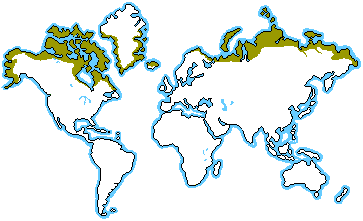

Which biome has the largest number of species of plants and animals (highest biodiversity)?
tundra
desert
tropical rainforest
pine forest

Which biome is home to cacti, scorpions, coyotes, kangaroo rats, and lizards?
Desert
Grasslands
Temperate Forest
Taiga
A biome is characterized by all of the following EXCEPT...
human population size
temperature
precipitation
plant and animal communities
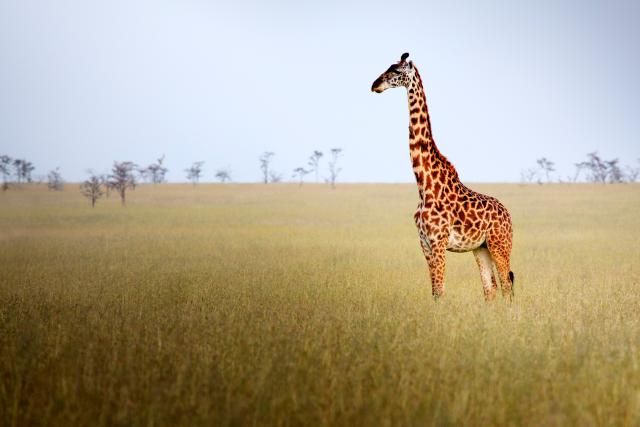
Which biome is home to lions, zebras, wildebeests, giraffes, and elephants?
Grasslands
Tundra
Tropical Rainforest
Deciduous Forest

Which biome is home to jaguars, anacondas, leopards, gorillas, and poisonous tree frogs?
Grasslands
Deciduous Forest
Tropical Rainforest
Tundra

Which of the following statements provides the best evidence of a successful ecosystem?
low amounts of biodiversity
human activities thriving in place of natural processes
natural events leading to primary succession frequently occuring
energy and nutrients moving between living and non living components.
An area with common populations of animals, similar vegetation, in a common area is called a(n)..
Ecosystem
community
population
biosphere

In which biome would I find prairie dogs, is also known as “Tornado Alley”, and is flat with lots of grasses?
desert
grassland
tundra
tropical rain forest

