wayground logo

Free Printable Worksheets

Font size

S
M
L
XL
Worksheets

Weather & Climate Test Part 1

Total questions: 149

Worksheet time: 3hrs 41mins

Name
Class
Date
1.

What causes wind?

a)

differences in air pressure

b)

differences in gravity

c)

difference in oxygen

d)

differences in the thermosphere

2.

What causes differences in air pressure?

a)

even heating of the Earth

b)

Even cooling of the earth

c)

uneven heating of the earth

d)

global warming

3.
Which statement correctly defines wind?
a)
Wind is the movement of air from areas of low pressure to areas of high pressure
b)
Wind is the movement of air to a colder area in the atmosphere.
c)
Wind is the movement of air from areas of high pressure to areas of low pressure.
d)
Wind is the movement of air pushed around and bouncing off Earth's surface.
4.
Why does warm air rise?
a)
Warm air is more dense than cooler air.
b)
Warm air has more pressure than cooler air.
c)
Warm air is less dense than cooler air.
d)
Warm air has a higher dew point than cooler air.
5.

Air is warmer and less dense at the equator because the equator receives more____________________.

a)

wind

b)

solar radiation

c)

air pressure

d)

condensation

6.

In the Northern Hemisphere, winds traveling north appear to curve east because of the:

a)

trade winds

b)

convection currents

c)

Coriolis effect

d)

polar easterlies

7.
The Coriolis effect is the curving of wind across Earth. What causes winds to curve?
a)
Earth's revolution
b)
Earth's magnetic field
c)
Earth's rotation
d)
Earth's gravitational pull
8.
In which direction do prevailing westerlies flow?
a)
from east to west
b)
from west to east
c)
from north to south
d)
from south to north
9.
The tropical winds running from 0 to 30 degrees latitude are called:
a)
subtropical westerlies
b)
polar westerlies
c)
trade winds
d)
polar winds
10.
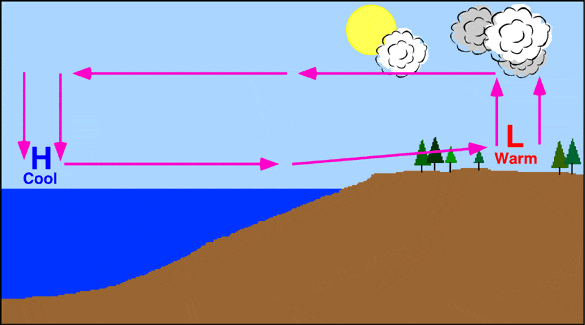
If differences in air pressure produce winds, what can you conclude about temperature and air pressure based on the figure?
a)
As warm air rises, it creates an area of lower pressure, and cooler air flows in as wind
b)
Warm air is denser than cold air is, creating an area of high pressure the produces wind.
c)
Winds flow from areas of low pressure to areas high pressure when temperature is warmer
d)
Air pressure decreases at night because temperature is lower, producing land and sea breezes
11.
Which one heats and cools fastest?
a)
land
b)
sea
c)
both are the same rate
d)
air
12.
The cycle that powers the ocean currents, weather, and tectonic plates it called
a)
conduction current
b)
radiation
c)
condition current
d)
convection current
13.
Energy for convection on the Earth comes from...
a)
The sun
b)
The moon
c)
Solar winds
d)
The ocean
14.
In convection, COOL air
a)
Rises
b)
Sinks
15.
In convection, WARM air
a)
Rises
b)
Sinks
16.
Warm air is __________ dense than cold air and rises creating convection currents.
a)
more
b)
less
17.
What is the name for cooler air blowing from the land to the sea?
a)
Sea Breeze
b)
Land Breeze
c)
Mountain Breeze
d)
None of the Above
18.
What is the name for cooler air blowing from the sea to land?
a)
Sea Breeze
b)
Land Breeze
c)
Mountain Breeze
d)
None of the Above
19.
What do you call winds that blow in the same direction all over the Earth?
a)
global winds
b)
Coriolis effect
c)
Greenhouse effect
d)
sea breezes
20.
What kind of breeze is this and when would it form?
a)
Land breeze - daytime
b)
Land breeze - nighttime
c)
Sea breeze - daytime
d)
Sea breeze - nighttime
21.
Why does a sea breeze at the beach keep you cool and comfortable during the hottest part of the day?
a)
warm air rising over land lets cooler air from the ocean blow in
b)
a storm is approaching
c)
cool air rising over land lets warm air from the ocean blow in
d)
Similarities in temperature between land and water
22.

Contains the Ozone Layer.

a)

Troposphere

b)

Stratosphere

c)

Mesosphere

d)

Thermosphere

e)

All of the above.

23.

Where ALL weather takes place.

a)

Troposphere

b)

Stratosphere

c)

Mesosphere

d)

Thermosphere

e)

All of the above.

24.

Located CLOSEST to Earth's surface.

a)

Troposphere

b)

Stratosphere

c)

Mesosphere

d)

Thermosphere

e)

All of the above.

25.

Where most water vapor is found.

a)

Troposphere

b)

Stratosphere

c)

Mesosphere

d)

Thermosphere

e)

All of the above.

26.

Meteors burn up in this layer.

a)

Troposphere

b)

Stratosphere

c)

Mesosphere

d)

Thermosphere

e)

All of the above.

27.

Coldest layer.

a)

Troposphere

b)

Stratosphere

c)

Mesosphere

d)

Thermosphere

e)

All of the above.

28.

Contains molecules that absorb harmful ultraviolet rays.

a)

Troposphere

b)

Stratosphere

c)

Mesosphere

d)

Thermosphere

e)

All of the above.

29.

Hottest layer, thinnest air.

a)

Troposphere

b)

Stratosphere

c)

Mesosphere

d)

Thermosphere

e)

All of the above.

30.

Greatest air pressure because it has the most molecules.

a)

Troposphere

b)

Stratosphere

c)

Mesosphere

d)

Thermosphere

e)

All of the above.

31.

Eventually fades into space.

a)

Troposphere

b)

Stratosphere

c)

Mesosphere

d)

Thermosphere

e)

All of the above.

32.

Air pressure decreases as altitude increases.

a)

Troposphere

b)

Stratosphere

c)

Mesosphere

d)

Thermosphere

e)

All of the above.

33.

Why is the ozone layer vital to life on Earth?

a)

Planes fly in the ozone layer

b)

It is made up of oxygen (O2)

c)

It shields the Earth from ultraviolet (UV) rays from the sun

d)

It causes clouds to be created

34.

This layer is the outermost layer of the atmosphere. Satellites orbit the atmosphere in this layer.

a)

Exosphere

b)

Mesosphere

c)

Thermosphere

d)

Ozone Layer

35.
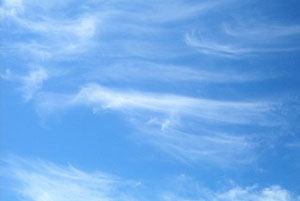
This type of cloud is thin, wispy, and made of ice crystals
a)
cumulus cloud
b)
stratus cloud
c)
cirrus cloud
d)
cumulonimbus cloud
36.
This type of cloud is thick and puffy on top, and generally flat on the bottom. It has well-defined edges and can change shape rapidly.
a)
cumulus cloud
b)
stratus cloud
c)
cirrus cloud
d)
cloud 9
37.

Which term best describes water vapor?

a)

Solid

b)

Liquid

c)

Gas

38.
Ocean water contains stream-like movements of water called _____________  _____________.
a)
ocean currents
b)
ocean temperature
c)
surface currents
d)
deep current
39.
Currents are influenced by weather, the Earth's rotation, and the position of the _______.
a)
sun
b)
continents
c)
wind
40.
Surface currents are _____________ stream-like movements of water that occur at or near the surface of the ocean.
a)
horizontal
b)
vertical
c)
strong
d)
weak
41.
The apparent curving of moving objects from a straight path due to Earth's rotation is called the _____________  effect.
a)
Coriolis
b)
Jupiter
c)
sun
d)
continental
42.
What three factors work together to form a pattern of surface currents on Earth?
a)
weather, wind, sun
b)
global winds, the Coriolis effect, continental deflections
c)
global winds, the Coriolis effect, sun
d)
the Coriolis effect, continental deflections, the moon
43.
Warm-water currents begin near the _______ and carry ______ water to other parts of the ocean.
a)
pole, warm
b)
equator, warm
c)
equator, cold
d)
pole, cold
44.
The density of ocean water is affected by temperature and ___________.
a)
salinity
b)
depth
c)
volume
45.

______ causes surface currents.

a)

The Coriolis Effect

b)

gravity

c)

density differences

d)

wind

46.

______ causes deep ocean currents

a)

The Coriolis Effect

b)

gravity

c)

wind

d)

density differences

47.

Decreasing ocean temperature causes the density of the water to ______.

a)

decrease

b)

increase

c)

stay the same

d)

fluctuate

48.

As plants and animals in the ocean die, the nutrients produced from their decay _____.

a)

are recycled by the Global Conveyor Belt

b)

sink to the bottom

c)

are destroyed by sunlight

d)

become coral reefs

49.

Nutrients are brought to the surface for phytoplankton to use at _______.

a)

gyres

b)

eddies

c)

upwellings

d)

the equator

50.

_______ causes the Coriolis Effect

a)

Earth's rotation

b)

gravity

c)

wind

d)

density

51.

The __________ is a surface current that flows along the eastern US and brings warm water to Europe.

a)

California Current

b)

Gulf Current

c)

North American Gyre

d)

Arctic Current

52.
What is the process during which water changes from a liquid to a gas as it heats up?
a)
Condensation
b)
Runoff
c)
Precipitation
d)
Evaporation
53.
What step of the water cycle occurs when clouds become too heavy
a)
Condensation
b)
Runoff
c)
Precipitation
d)
Evaporation
54.
What is the process during which water cools and turns from a gas to a liquid?
a)
Condensation
b)
Runoff
c)
Precipitation
d)
Evaporation
55.
True or False: Water vapor is the name given to water in liquid form.
a)
True
b)
False
56.
What is NOT an example or precipitation?
a)
Rain
b)
Snow
c)
Sleet
d)
Wind
57.
True or False: Runoff is water that is absorbed by the ground.
a)
True
b)
False
58.
True or False: Most runoff eventually travels back to the ocean.
a)
True
b)
False
59.

True or False: Clouds form during condensation.

a)

True

b)

False

60.
True or False: Evaporation is caused by the sun's heat.
a)
True
b)
False
61.
True or False: Water is constantly being recycled because of the water cycle.
a)
True
b)
False
62.

True or False: The process by which water moves through the Earth and the atmosphere is called the nitrogen cycle.

a)

True

b)

False

63.

What is the process during which water evaporates from the leaves of plants and trees and goes up into the atmosphere as water vapor.

a)

Condensation

b)

Runoff

c)

Precipitation

d)

Transpiration

64.

What step of the water cycle does this picture show?

a)

Condensation

b)

Runoff

c)

Precipitation

d)

Evaporation

65.

What is it called when water droplets form on the outside of a cool glass?

a)

Condensation

b)

Transpiration

c)

Precipitation

d)

Evaporation

66.

What step of the water cycle is shown in this picture?

a)

Condensation

b)

Runoff

c)

Precipitation

d)

Evaporation

67.

What step of the water cycle is shown in this picture?

a)

Condensation

b)

Runoff

c)

Precipitation

d)

Evaporation

68.

What causes wind?

a)

differences in air pressure

b)

differences in gravity

c)

difference in oxygen

d)

differences in the thermosphere

69.

What causes differences in air pressure?

a)

even heating of the Earth

b)

Even cooling of the earth

c)

uneven heating of the earth

d)

global warming

70.

Local winds blow over:

a)

short distances

b)

long distances

c)

the poles

d)

the equator

71.
Which is NOT a characteristic of local winds?
a)
They occur within a small area.
b)
Land and sea breezes are examples.
c)
They blow over short distances.
d)
They blow steadily over long distances.
72.
Which is NOT a characteristic of local winds?
a)
They occur within a small area.
b)
Land and sea breezes are examples.
c)
They blow over short distances.
d)
They blow steadily over long distances.
73.
What is responsible for warming the Earth’s surface and creating wind?
a)
The Moon
b)
Earth's interior (inside)
c)
Coriolis effect
d)
The Sun
74.
Which statement correctly defines wind?
a)
Wind is the movement of air from areas of low pressure to areas of high pressure
b)
Wind is the movement of air to a colder area in the atmosphere.
c)
Wind is the movement of air from areas of high pressure to areas of low pressure.
d)
Wind is the movement of air pushed around and bouncing off Earth's surface.
75.
Why does warm air rise?
a)
Warm air is more dense than cooler air.
b)
Warm air has more pressure than cooler air.
c)
Warm air is less dense than cooler air.
d)
Warm air has a higher dew point than cooler air.
76.
How does the air move in a land breeze?
a)
From east to west
b)
From west to east
c)
From the land to the ocean
d)
From the ocean to the land
77.
Is this a land or a sea breeze?
a)
land breeze
b)
sea breeze
78.

During the land breeze, what starts moving the cooler air out and warmer air in?

a)

conduction

b)

convection

c)

radiation

79.

Air at the poles is colder and denser so it_______________.

a)

rises

b)

circulates

c)

stagnates

d)

sinks

80.

Air is warmer and less dense at the equator because the equator receives more____________________.

a)

wind

b)

solar radiation

c)

air pressure

d)

condensation

81.

In the Northern Hemisphere, winds traveling north appear to curve east because of the:

a)

trade winds

b)

convection currents

c)

Coriolis effect

d)

polar easterlies

82.
Which is NOT a characteristic of global winds?
a)
They occur as global wind belts.
b)
They occur within small areas.
c)
They occur over large areas.
d)
They blow steadily over long distances.
83.
The Coriolis effect is the curving of wind across Earth. What causes winds to curve?
a)
Earth's revolution
b)
Earth's magnetic field
c)
Earth's rotation
d)
Earth's gravitational pull
84.
Which diagram shows the formation of a land breeze?
a)
diagram Y
b)
diagram X
c)
neither 
d)
both
85.
Use the diagram to determine which statement is correct.
a)
The air at location 3 is more dense than the air at location 6.
b)
The air at location 2 is rushing in to take the place of the colder air at location 3.
c)
Location 1 heats up and cools down slower than location 7.
d)
High pressure air at location 2 is taking the place of the low pressure air at location 3.
86.
If the Earth did not rotate on its axis, there would be no
a)
Greenhouse effect
b)
Coriolis effect
c)
Global warming
d)
Convection
87.

This Image represents...

a)

Downwelling

b)

Upwelling

c)

Thermohaline circulation

d)

Rip Current

88.
Movements of ocean water in a continuous flow are called?
a)
ocean currents
b)
global winds
c)
air mass
d)
front
89.
The Coriolis Effect is caused by
a)
Earth rotating around the sun
b)
Earth rotating on its axis
c)
The tides
d)
Gravity
90.
Due to the Coriolis Effect, water in the northern hemisphere moves
a)
clockwise
b)
counter clockwise
c)
both
d)
neither
91.
Due to the Coriolis Effect, water in the southern hemisphere moves
a)
clockwise
b)
counter-clockwise
c)
both
d)
neither
92.
What is represented at point 2?
a)
wave height
b)
wavelength
c)
crest
d)
trough
93.
Warm ocean currents generally come from
a)
The North Pole
b)
The South Pole
c)
The Equator
d)
Both A and B
94.
Deep Ocean currents are a result of
a)
Global Wind Patterns
b)
Earth's Rotation
c)
Density
d)
All of the above
95.

______ causes surface currents.

a)

The Coriolis Effect

b)

gravity

c)

density differences

d)

wind

96.

The more scientific name of the Global Conveyor Belt is _____.

a)

halinethermal circulation

b)

thermohaline circulation

c)

thermodensity circulation

97.
As you go deeper in the ocean, the water is colder and less salty.
a)
True
b)
False
98.
The large, circular surface-current pattern found in each ocean.
a)
California Current
b)
Surface Current
c)
Gyre
d)
Global Conveyor Belt
99.

The __________ is a surface current that flows along the eastern US and brings warm water to Europe.

a)

California Current

b)

Gulf Current

c)

North American Gyre

d)

Arctic Current

100.
What causes ocean currents in the Northern Hemisphere to curve to the right?
a)
Earth's orbit around the Sun
b)
Earth's spinning on its axis
c)
Earth's magnetic field
d)
Earth's force of gravity
101.

Two types of ocean currents are

a)

local and global

b)

sea and land

c)

surface and deep

d)

warm and cold

102.

Temperature and salinity differences in ocean water cause:

a)

Mid-ocean ridges

b)

Deep Currents

c)

Surface Currents

d)

High tide and low tide

103.
What do ocean currents move around the world?
a)
Gases
b)
Nutrients
c)
Heat Energy
d)
All of these
104.
What is represented at point 3?
a)
wave height
b)
wavelength
c)
crest
d)
trough
105.
Water does not move, _____________ moves.
a)
Water
b)
Energy
c)
Waves
d)
Fish
106.

What Layer do Plants and Animals live in?

a)

Thermosphere

b)

Troposphere

c)

Exosphere

d)

Stratosphere

e)

Mesosphere

107.

What layer houses the International Space Station

a)

Exosphere

b)

Mesosphere

c)

Thermosphere

d)

Troposphere

108.

What layer do Thunderstorms take place in?

a)

Troposphere

b)

Mesosphere

c)

Stratosphere

d)

Thermosphere

109.

What layers are dry? (Mark All)

a)

Troposphere

b)

Mesosphere

c)

Stratosphere

110.

This layer houses the coldest place on earth

a)

Thermosphere

b)

Mesosphere

c)

Troposphere

d)

Exosphere

111.

What movie is this?

a)

Bat Man

b)

Little House on the Prairie

c)

Jumanji

d)

Superman

112.

The Mesosphere has all of the following (mark all)

a)

Cold Temperatures

b)

Sprites from Thunderstorms

c)

Iron and other metals

d)

a lot of water vapor

113.

This layer has 99% of the Atmospheric Water Vapor

a)

Mesosphere

b)

Stratosphere

c)

Thermosphere

d)

Troposphere

114.

The Montreal Treaty made CFCs illegal to help reduce the holes in the ____________ layer

a)

Troposphere

b)

Mesosphere

c)

Ozone

d)

Exosphere

115.

What TV Show is this?

a)

Hey Arnold

b)

Stranger Things

c)

Pokemon

116.

What contains 5 layers of air that separates Earth from Outer Space?

a)

Water

b)

Atmosphere

c)

Gasses

d)

CO2

117.

The outermost layer of the Atmosphere that is sometimes considered to just be outer space

a)

Troposphere

b)

Thermosphere

c)

Exosphere

d)

Stratosphere

118.

Clouds are made up of...

a)

Smoke

b)

Water vapor

c)

Ash

d)

Ice crystals

119.

Clouds form in the atmosphere when the temperature and ____________ are the same.

a)

Humidity

b)

Dew point

c)

Windiness

d)

Brightness

120.

"Curl" or a "curl of hair" is the Latin meaning for which type of cloud?

a)

Cumulus

b)

Cirrus

c)

Stratus

d)

Cumulonimbus

121.

"Heap" or "pile" is the Latin meaning for which type of cloud?

a)

Cumulus

b)

Cirrus

c)

Stratus

d)

Cumulonimbus

122.

"Layer" is the Latin meaning for which type of cloud?

a)

Cumulus

b)

Cirrus

c)

Stratus

d)

Cumulonimbus

123.

What does the Latin word "nimbus" mean?

a)

High altitude

b)

Low altitude

c)

Dark, stormy

d)

Clear

124.

If a cloud name has the root word "cirro" in it, this may mean that the cloud is in a ________ altitude.

a)

Low

b)

Middle

c)

High

d)

Any of these

125.

Which cloud type is characterized by a thin and wispy shape?

a)

Stratus

b)

Cumulus

c)

Cirrus

126.

Fog is considered which type of cloud?

a)

Stratus

b)

Cumulus

c)

Cirrus

127.

Select all the clouds that do NOT produce precipitation.

a)

Cirrus

b)

Stratus

c)

Cumulus

d)

Cumulonimbus

128.

How are clouds classified?

a)

height

b)

temperature

c)

form

d)

taste

129.

What type of cloud is pictured here?

a)

mackerel sky

b)

cumulus

c)

stratus

d)

cirrus

130.

This cloud is called a ________ cloud and is located in _______ altitudes.

a)

Cirrus; low

b)

Cirrus; high

c)

Stratus; high

d)

Cumulus; low

131.
This type of cloud is thin, wispy, and made of ice crystals
a)
cumulus cloud
b)
stratus cloud
c)
cirrus cloud
d)
cumulonimbus cloud
132.
The temperature at which water vapor condenses is the 
a)
relative humidity
b)
humidity
c)
freezing point
d)
dew point
133.
This type of cloud is flat layers and the edges are not clearly defined
a)
cirrus cloud
b)
cumulus cloud
c)
stratus cloud
d)
cumulonimbus cloud
134.
Nimbostratus and cumulonimbus clouds can signal what type of upcoming weather?
a)
fair skies
b)
hot, sunny weather
c)
windy weather
d)
rainy weather
135.
Which of the following is an example of a cloud of vertical development?
a)
nimbostratus cloud
b)
cumulonimbus cloud
c)
cirrus cloud
d)
stratus cloud
136.
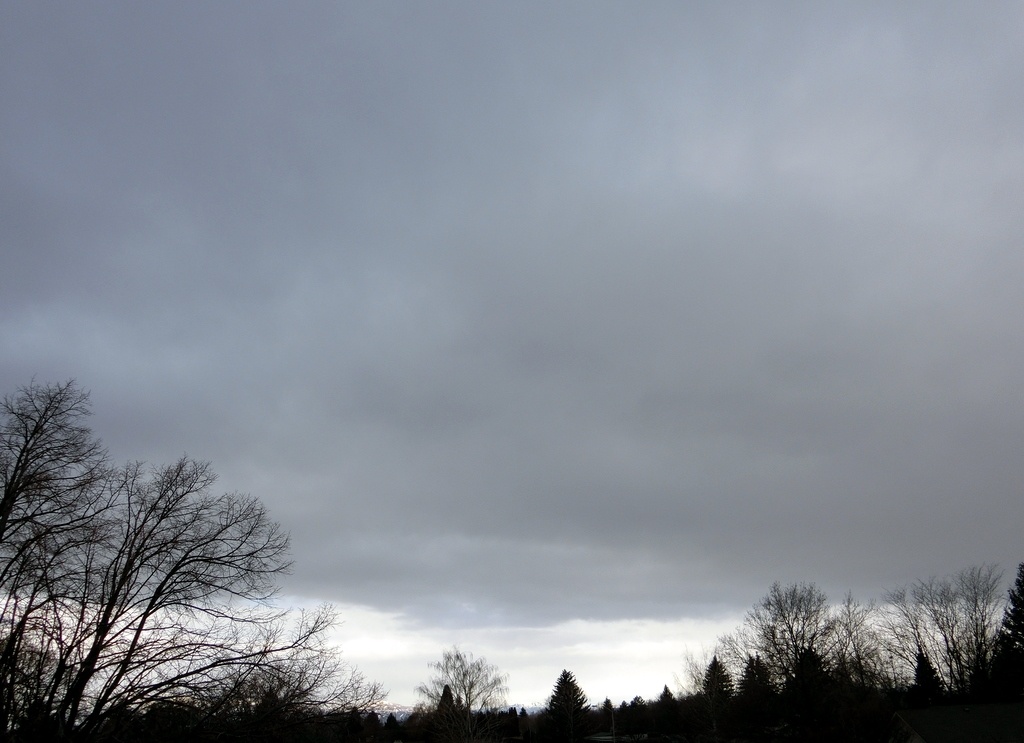
what type of cloud is shown?
a)
cumulus
b)
cirrus
c)
stratus
137.
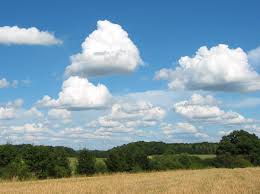
what type of cloud is shown?
a)
cumulus
b)
cirrus
c)
stratus
138.
They are highest clouds in the sky. They look curly, white and feathery. Usually mean good weather.
a)
Cumulus
b)
Cumulonimbus
c)
Cirrus
d)
Stratus
139.
What type of cloud is fog an example of?
a)
Nimbus
b)
Stratus
c)
Cirrus
d)
Cumulus
140.
True or False: Cirrus clouds often produce rain or drizzle.
a)
True
b)
False
141.
What does "nimbus" mean in Latin?
a)
Rain
b)
Curl
c)
Heap
d)
Spread out
142.
What type of cloud is this?
a)
Cumulonimbus
b)
Cirrus
c)
Nimbus
d)
Stratus
143.

What type of cloud is this? Made of ice crystals, signals snow; high puffy clouds

a)

Cirrocumulus

b)

Altocumulus

c)

Cirrostratus

d)

Altostratus

144.
What type of cloud is this? Very high, flat layer, makes a halo
a)
Cirrostratus
b)
Cirrocumulus
c)
Altocumulus
d)
Stratocumulus
145.
What type of cloud is this? Middle altitude, flat layer
a)
Altostratus
b)
Cumulonimbus
c)
Altocumulus
d)
Stratocumulus
146.
What type of cloud is this? A middle level puffy cloud
a)
Altocumulus
b)
Fog
c)
Nimbostratus
d)
Stratocumulus
147.

What type of cloud is this? Causes rain or snow showers

a)

Nimbostratus

b)

Fog

c)

Cirrcocumulus

d)

Cirrostratus

148.
The only cloud that can produce thunder, lighting and hail
a)
nimbostratus
b)
cirrus
c)
cumulonimbus
d)
stratocumulus
149.
True or False: Solid particles that water vapor condenses on to form a cloud is condensation nuclei
a)
false
b)
true