wayground logo

Free Printable Worksheets

Font size

S
M
L
XL
Worksheets

Unit 7: Evolution

Total questions: 81

Worksheet time: 2hrs 35mins

Name
Class
Date
1.

What word describes an inherited trait that helps an organism survive in its environment?

a)

natural selection

b)

mutation

c)

camouflage

d)

adaptation

2.

Why do frogs and other organisms reproduce so many eggs or offspring?

a)

so that their babies can have friends to play with

b)

the more offspring the more likely it is that some of the offspring will survive

c)

the more offspring the less likely it is that some of the offspring will survive

d)

the more offspring the less competition

3.
Almost all adaptations started off as?
a)
selective breeding
b)
physiological
c)
structural
d)
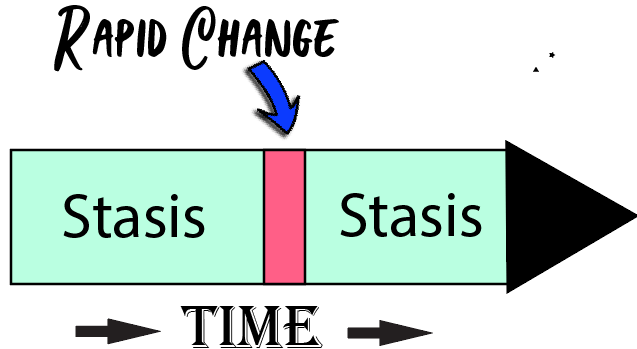
mutation
4.
Which of the following means "genetic change over time"
a)
natural selection
b)
speciation
c)
evolution
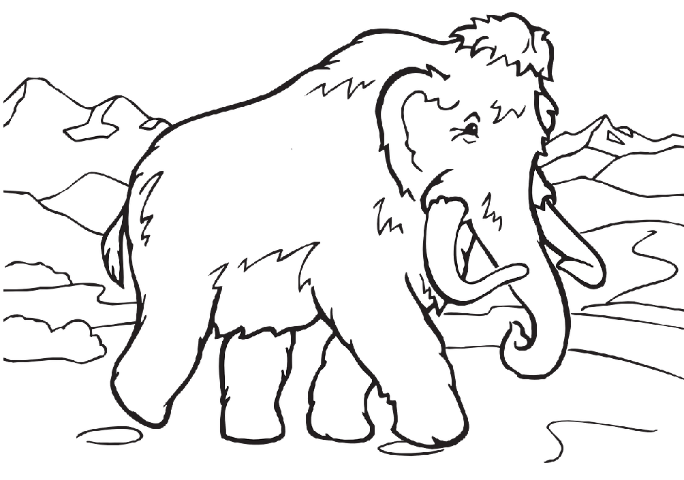
d)
fitness
5.

What word describes the process that causes beneficial genetic mutations to survive in a species and become adaptations?

a)

natural selection

b)

adaptation

c)

mutation

d)

genetic engineering

6.
Two organisms that are closely related would have:
a)
completely different DNA sequences
b)
exactly the same DNA sequence
c)
no proteins in common
d)
very similar DNA sequences
7.
A structure that seems to serve no purpose in an organism is called:
a)
dichotomous
b)
vestigal
c)
homologous
d)
fossilized
8.
Scientists think that dolphins and whales may have evolved from a common ancestor.  What evidence supports this hypothesis?
a)
They swim the same way.
b)
They live in the same area of the ocean.
c)
They have similar anatomies.
d)
They eat the same food.
9.
Structures with the same parts but have different functions and suggests that organisms share a common ancestry are:
a)
vestigial structures.
b)
homologous structures.
c)
fossils.
d)
adaptive radiation.
10.
This image shows the development of various organisms and how they share a common ancestor because of similarities in development.  It is called:
a)
natural selection.
b)
speciation.
c)
evolution.
d)
embryology.
11.
Which evidence of common ancestry is being studied in this visual?
a)
biogeography
b)
fossil record
c)
anatomical homology
d)
molecular homology
12.
Which evidence of common ancestry is being studied in this visual?
a)
biogeography
b)
fossil record
c)
anatomical homology
13.
The similarities among early stages of the embryos provide evidence that -
a)
these organisms evolved from a common ancestor
b)
the organisms all retained their gills and tails
c)
the organisms belong to the same species
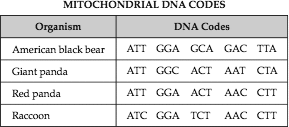
14.
What conclusions can be made based on this table shown?
a)
the American black bear and the giant panda are most closely related
b)
the giant panda and the red panda are most closely related
c)
the red panda and the racoon are the most closely related
15.
The picture shows the members of the Camelidae family. The physical features and the geographical origin of these animals provide evidence that - 
a)
they live in the same type of environment.
b)
have slowly evolved to become herbivores.
c)
have a common ancestor.
d)
exchanged DNA in the past.
16.
In a population of ladybugs, black bugs are more successful in escaping predators. Overtime, this gene becomes more popular in the population and the ladybug population loses its red color.  
a)
Natural Selection
b)
Mutation
c)
Genetic Drift
d)
Gene Flow
17.
 A lion gets chased off from his pride, then joins another pride. He mates with a lioness and make 6 lion cubs.
a)
Natural Selection
b)
Mutation
c)
Genetic Drift
d)
Gene Flow
18.
 A hurricane wipes out half the population of blue jays in Cape Hatteras, North Carolina.
a)
Natural Selection
b)
Mutation
c)
Genetic Drift
d)
Gene Flow
19.
Ten years ago, in a small population of ducks, two sizes of eyes were observed, large and small. Three ducks have large eyes and 7 have small.  2 of the large-eyed ducks are randomly hit by cars and killed. Today, no large-eyed ducks are present in the population.
a)
Natural Selection
b)
Mutation
c)
Genetic Drift
d)
Gene Flow
20.

A few deer wander out of their native woods into a completely new park where no deer had ever been before. They go on to create an entirely new population.

a)

Founder Effect

b)

Natural Selection

c)

Non-random mating

d)

Mutation

21.

There was once a large population of cheetah, but about 12,000 years ago most of the cheetahs were killed off because of human activity and only a few survived. What is this an example of?

a)

Bottleneck Effect

b)

Gene Flow

c)

Founder Effect

d)

Natural Selection

22.
Which of the following is true of genetic drift?
a)
It can decrease genetic diversity in a population
b)
It is necessary in order for a population to be in equilibrium
c)
It can increase genetic diversity in a population 
d)
It plays a much larger role in determining the genetic makeup of populations than natural selection 
23.
This mechanism of evolution occurs when populations migrate.
a)
Extinction
b)
Gene flow
c)
Genetic drift
d)
Natural Selection
24.
Which radioactive element is most likely used to date once living things?
a)
Uranium
b)
Nitrogen-14
c)
Carbon-14
25.

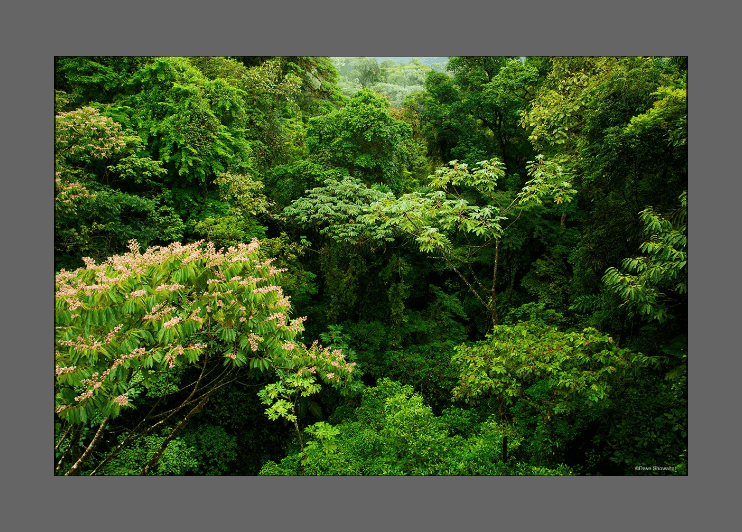
A yellow morph and green morph of an insect lives in the rainforest canopy. You would expect:

a)

the green population to increase and the yellow to decrease

b)

both populations should stay the same

c)

both populations will increase

d)

the green population to decrease and the yellow to increaseThis is a wrong answer

26.

How do you "win" at natural selection?

a)

survive

b)

go extinct

c)

survive & reproduce

27.
When every organism of a species has died.
a)
Evolution
b)
Natural Selection
c)
Extinction
d)
Artificial Selection
28.
In recent years "SuperBugs" (bacteria that aren't effected by antibiotics) are becoming more and more common. How could natural selection explain this?
a)
Superbugs survive antibiotics and reproduce
b)
Antibiotics cause bacteria to become superbugs
c)
We have always had the same amount of superbugs; modern media just discusses them more.
d)
There is no reliable data on the origin of super bugs.
29.
Which of these is an example of natural selection?
a)
The largest animal in a population will have more opportunities for reproduction.
b)
Several species of organisms work together so that they all succeed.
c)
One species takes all the resources in an environment leaving none for others.
d)
Organism that are best suited to an environment tend to survive and reproduce more often.
30.
Humans have been a very successful species on earth.  They have very large, very diverse populations spread all around the world. As a result,
a)
Human have very limited ability to adapt to changes in the environment.
b)
Young humans have lower survival rates as compared to other species.
c)
Humans have a potential to adapt to various environmental changes.
d)
All humans are more disease resistant.
31.
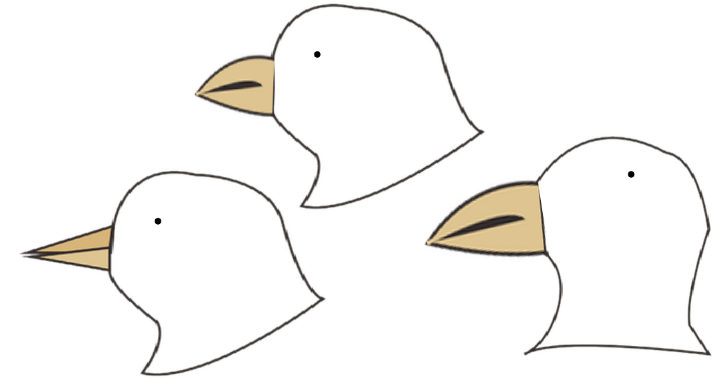
Darwin studied which of these species on Galapagos?
a)
Pigeons and tortoises
b)
Tortoises and finches
c)
Finches and Pigeons
d)
Zebras and Mockingbirds
32.
A large herd of goats lives in a field full of poison ivy.  Some goats are able to eat the poison ivy while others have become sick when they eat it. Over time the herd as a whole will tend to
a)
Become more likely to eat poison ivy.
b)
Become less likely to eat poison ivy.
c)
Not change in the proportion of goats that can and can not eat poison ivy.
d)
Eat all the poison ivy and leave only plants all the goats can eat.
33.
Which of these was not a form of adaptation mentioned in the reading?
a)
Structural
b)
Behavioral
c)
Survival
d)
Functional
34.
The clear wing moth and the wasp look similar to each other. Why? 
a)
The wasp mimics the moth to attract prey.
b)
The moth and the wasp are closely related
c)
The moth mimics the wasp to repel predators
d)
The moth had one wasp parent
35.
Breed an organism for a desired trait is the definition of
a)
selective breeding
b)
natural selection
c)
natural breeding
d)
biological evolution
36.
When an environment changes faster that an species can adapt, the most likely outcome is...
a)
...biological evolution.
b)
...voluntary mutation
c)
...species extinction
d)
...selective breeding
37.
Evolution works by 
a)
individuals changing to suit their environment
b)
Individuals learned new traits and pass them on
c)
sudden change in the environment cause a species change 
d)
small changes pass down through many generations
38.
Among organism that live in the desert, the most common adaptation is 
a)
water conservation
b)
large ears
c)
broad leaves
d)
deep roots
39.

A population of rabbits grows rapidly from one year to the next. Then one year, a disease strikes approximately one fourth of the adult rabbits. The disease remains with the population in the years that follow.

As explained by Darwin’s theory, which of these conditions allows the rabbit population to evolve by natural selection?

a)

The disease affects adult and juvenile rabbits equally.

b)

The disease reduces the ability of the rabbits to reproduce.

c)

Some rabbits are resistant to the disease, and they pass the resistance to their offspring.

d)

No rabbits are resistant to the disease, and all die when the disease strikes them.

40.

Which of the following is a situation that could cause evolutionary change that is NOT due to natural selection?

a)

A volcano erupts and kills many individuals in a population.

b)

A mutation produces sea stars that are less visible to predators.

c)

An insecticide is sprayed in a community to combat mosquitoes.

d)

Cattle are treated with antibiotics to prevent the spread of infections.

41.

The graphs below show the changes in crab color at one beach.

Which of the following is most likely to have caused the change in the distribution?

a)

A new predator arrived that preferred dark-tan crabs.

b)

A new predator arrived that preferred light-tan crabs.

c)

A change in beach color made medium-tan crabs the least visible to predators.

d)

A change in beach color made medium-tan crabs the most visible to predators.

42.

The figure shows how natural selection of a single-trait gene affects lizard survival.

Which of the following most likely causes the changes in allele distribution?

a)

The allele for light gray coloration disappears from the population. This may be because light gray lizards are more visible to predators and therefore they might be less likely to survive and reproduce.

b)

The allele for black coloration decreases fitness and becomes less common. This may be because black coloration keeps the lizards cool during hot summer temperatures.

c)

Medium gray coloration in lizards appears to be a neutral mutant allele that allows the lizards to hide better from predators. This leads to increases in phenotype and allele frequency of gray coloration.

d)

Because black and medium gray lizards are less visible to predators, these alleles are neutral to natural selection and therefore will not disappear from the population of lizards.
43.

Punctuated Equilibrium implies catastrophic events caused natural selection to speed up due to great environmental changes.

a)

True

b)

False

44.

Gradualism means Natural Selection would normally happen over many generations and very

a)

slowly

b)

quickly

c)

in space

d)

beyond time

45.

Over the years, white mice became extinct and darker mice survived. This is

a)

stabilizing selection

b)

directional selection

c)

disruptive selection

d)

due to exercise

46.

Birds with smaller beaks die out when a disease kills all food sources except hard nuts.

a)

adaptive radiation

b)

respiration

c)

an anomoly

d)

unlikely

47.

Average phenotypes are favored in the environment, while extremes have lower survival rates.

a)

seasonal selection

b)

distruptive selection

c)

directional selection

d)

stabilizing selection

48.

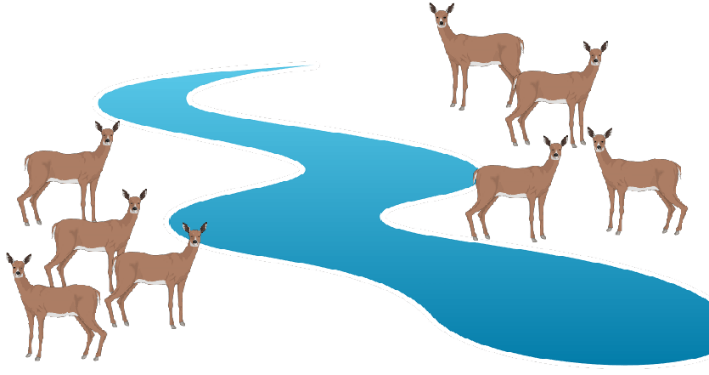
Two populations of the same species are separated by land barriers like rivers or mountains.

a)

geographical isolation

b)

temporal isolation

c)

adaptive ratiation

d)

behavioral isolaton

49.

Two populations of the same species do not have the same mating rituals or signals.

a)

geographical isolation

b)

temporal isolation

c)

adaptive ratiation

d)

behavioral isolaton

50.

Organisms of the same species do not interbreed for various reasons.

a)

Genetic Isolation

b)

Gene Pool

c)

Adaptation

d)

Survival of the Fittest

51.

Organisms of the same species can no longer interbreed therefore creating two species.

a)

Gene Pool

b)

Genetic Drift

c)

Gene Frequency

d)

Speciation

52.

Severe population reduction reduces the gene pool

and increases the rate of genetic drift. Woolly mammoths became extinct. Elephants survived.

a)

Gene Pool

b)

Bottleneck Effect

c)

Founders Effect

d)

Gene Frequency

53.
Some organisms that share a common ancestor have features that have different functions, but similar structures.  These are known as
a)
vestigial structures
b)
analogous structures
c)
homologous structures
d)
fossil structures
54.

Evolved from different ancestors, but due to living in similar environments have a similar function.

a)

Homologous structures

b)

Analogous structures

c)

Vestigial structures

d)

All of the above

55.

What characteristic do all the organisms on this cladogram share?

a)

Being bi-pedal & having language

b)

Complex brains

c)

Fully binocular vision

d)

Partial binocular vision & opposable thumbs

56.
What does the variable q represent?
a)
Frequency of the heterozygote genotype
b)
Frequency of the homozygous recessive genotype
c)
The frequency of the recessive allele
d)
The frequency of the dominant allele 
57.
In a population of humans, the frequency of no dimples is 0.36. If having no dimples is the recessive phenotype, what is the frequency of the recessive allele?
a)
0.6
b)
0.36
c)
0.64
d)
0.18
58.
In a population of bears, the frequency of q is 0.44. What is the frequency of p?
a)
0.1936
b)
0.44
c)
0.56
d)
0.22
59.
In a type of flower, Red (R) is dominant over white (r). If generation 1 had p=0.6 and q=0.4, and generation 2 had p=0.8 and q=0.2, which generation showed the greatest frequency of having one of each allele?
a)
Generation 1
b)
Generation 2
60.
Which of the following is NOT a condition for Hardy-Weinberg Equilibrium?
a)
No mutations
b)
Random Mating
c)
No natural selection
d)
No offspring
61.
The Hardy-Weinberg Model is?
a)
Available at local hobby stores and retailers throughout the Greater Cleveland area.
b)
A mathematical tool that biologists can use to predict allele frequencies and determine whether or not evolution is occurring within a population.
c)
Always occurring within populations of organisms in nature.
d)
Only useful in the lab and cannot be practically applied to real-world populations of organisms.  
62.
A population of 150 individuals has an allele frequency of 0.3 for the dominant allele (B) and a frequency of 0.7 for the recessive allele (b). Use the Hardy-Weinberg equation to determine freq.(Bb).
a)
0.09
b)
0.42
c)
0.49
d)
0.21
63.

The recessive allele frequency for a given locus is 36%. What is the frequency of the dominant allele?

a)

72%

b)

64%

c)

50%

d)

18%

64.

What variable represents the frequency of homozygous recessive for a given locus?

a)

q

b)

q2

c)

p

d)

p2

65.

What variable represents the frequency of the dominant allele for a given locus?

a)

q

b)

q2

c)

p

d)

p2

66.

Individuals undergo evolution.

a)

True

b)

False

67.

What is speciation?

a)

combining of two species to form one with different traits

b)

Intentional breeding designed to maintain a desired trait

c)

timing of mating that prevents normal sexual selection

d)

A population splits and accumulates different genes in the new groups

68.

Which of the following is NOT an example of natural selection?

a)

People selectively breeding hamsters for size.

b)

Insect populations developing resistance to certain pesticides.

c)

Bacteria becoming resistant to antibiotics.

d)

Male birds of certain species inheriting colorful feathers that are more attractive to females.

69.

The pelvic bone of whales is not needed for movement within the water. This is an example of a(n) ______________ structure.

a)

vestigial

b)

analogous

c)

homologous

70.

What type of speciation would involve mating during different seasons?

a)

geographic isolation

b)

reproductive isolation

c)

habitat isolation

d)

gametic isolation

71.
The diagram shows fossils in different rock layers. Which of these statements about the age of these fossils is most likely correct?
a)
Fossil A and C are the same age
b)
Fossil B is older than fossil C
c)
Fossils A is older than fossil B
d)
Fossil D is older than fossil C
72.

What is the main difference between a post-zygotic barrier and a pre-zygotic barrier?

a)

all Post-zygotic barriers lead to Allopatric speciation

b)

all Pre-zygotic barriers lead to Sympatric speciation

c)

Fertilization of egg and sperm have occured with post-zygotic barriers

d)

Fertilization of egg and sperm have occured in pre-zygotic barriers

73.

This salamander is an example of reduced viability because it

a)

has poor development of body parts

b)

does not have the same vigor as non hybrids

c)

is Frail or fragile

d)

all are examples of reduced viability

74.

When Animals have reproduced offspring that are not frail and are vigous, yet their chromosomal differences are too great to produce fertile offspring, are an example of this post-zygotic barrier.

a)

Reduced Hybrid Viability

b)

Reduced Hybrid Fertility

c)

Hybrid Breakdown

d)

None of the above

75.

Most of the time this post zygotic barrier is seen in plants and affects the offspring's offspring. In other words, the initial hybrids are perfectly strong but when the offspring try to reproduce that next generation is stunted or sterile.

a)

Reduced hybrid fertility

b)

Reduced hybrid viability

c)

Hybrid breakdown

d)

All of the above

76.

Punctuated equalibrium or gradualism?

a)

Punctuated equalibrium

b)

Gradualism

77.

Punctuated equalibrium or gradualism?

a)

Punctuated equalibrium

b)

Gradualism

78.

Species X and Species Y live in the same area in the same environment but they occupy different niches. Because of this they rarely encounter each other. This is an example of what type of barrier (which leads to speciation)?

a)

Geographic isolation

b)

Behavioral isolation

c)

Ecological isolation

d)

Mechanical isolation

e)

Temporal isiolation

79.

A lot of female snails can not physically reproduce with different male snails even if they are closely related because their genetalia (sex organs) do not fit with each other. This is an example of....

a)

Mechanical isolation

b)

Behavioral isolation

c)

Gametic isolation

d)

Ecological isolation

e)

Geographical isolation

80.

Sex is possible between these closely related species but the sex cells (egg and sperm) can not fertilize each other due to lack of egg penetrance, difference in hormonal levels , hostile environment for the sperm etc...

a)

Mechanical isolation

b)

Gametic isolation

c)

Ecolgical isolation

d)

Behavioral isolation

e)

Geographical isolation

81.

Allopatric or Sympatric speciation?

a)

Allopatric

b)

Sympatric