
 Worksheets
Periodical Test Science 6
Total questions: 106
Worksheet time: 1hrs 23mins
It is the thinnest layer in earth's layer.
crust
mantle
outer core
inner core
It is the thickest layer in earth's layer.
crust
mantle
outer core
inner core
It is made of hot liquid molten materials containing iron and nickel. The temperature ranges from 2200 to 5000 degrees Celsius.
crust
mantle
outer core
inner core
It is the innermost layer beginning at a depth of about 5150 km below Earth’s surface. It is also made of iron and nickel, but they remain in their solid form.
crust
mantle
outer core
inner core
It is the solid region or part of earth.
lithosphere
hydrosphere
atmosphere
ionosphere
Layer of Earth ranging from 5 to 100 km thick.
crust
mantle
outer core
inner core
It is the crust beneath the continents elements like potassium, sodium, aluminum, and silicon are mostly found in this part.
(a)
The crust beneath the oceans with an average thickness of 8 km. It is rich in iron, silicon, and magnesium. It is mostly made of basalt rocks.
(a)
The correct order of the Earth's layers starting from the OUTSIDE going IN is
crust, inner core, mantle, outer core
mantle, outer core, inner core, crust
crust, mantle, outer core, inner core
inner core, outer core, mantle, crust
Which layer is made of liquid metal (Fe and Ni)?
crust
mantle
outer core
inner core
Which layer is made of slightly molten rock?
crust
mantle
outer core
inner core
Which layer is the hottest?
crust
mantle
outer core
inner core
Which layer can be described as either Oceanic or Continental?
crust
mantle
outer core
inner core
Which layer is responsible for creating Earth's magnetic field?
crust
mantle
outer core
inner core
Which of the following statements are true?
As you go deeper into Earth, pressure increases.
As you go deeper into Earth, temperature increases.
As you go deeper into Earth, the particles are packed tighter together (increasing density).
All of the above.
It is the vibration of Earth due to the rapid release of energy
earthquake
plate
fault
fissure
The intensity of earthquake is measured using
Barometer
Thermometer
Seismograph
Telegraph
The place in the crust of the Earth where the earthquake originates is known as
Core
Focus
Mantle
epicenter
fissure
A Tsunami is caused due to
Undersea Earthquake
Lightning
Heavy thunder
heavy Storm
Flood
The scale used to measure the intesity of earthquake is
Ruler
Ritcher scale
weighing scale
Consider the list of terms given below
(i) Tsunami (ii) Floods (iii) Landslide (iv)Lahar
Earthquakes can cause
(i), (ii) & (iii)
(ii), (iii) & (iv)
(iii) & (iv)
The epicenter is where the earthquake originates.
True
False
Earthquakes happen when crustal plates move causing the nearby rocks to move.
True
False
Earthquakes can also happen during volcanic eruption.
True
False
When you are outside the house, one among the following places is better during earthquake.


Choose one option which is not a cuase for the earthquake
Volcanic eruption
Tectonic plate movement
Tsunami

Identify the given part of the earth
Mantle
Outer core
Inner core
Crust
Two plates come together or collide at what boundary?
Convergent
Divergent
Transform
Two plates spread or move apart at what boundary?
Convergent
Divergent
Transform
Two plates slide past each other at what boundary?
Covergent
Divergent
Transform

New oceanic lithosphere (sea floor) is created at this boundary.
Divergent
Tectonic
Convergent
Transform

The process where oceanic crust slides under another plate and is melted is called ___________.
seafloor spreading
subduction
continental drift
recycling
Subduction happens in which plate boundary?
Divergent
Convergent
Transform
Terraform

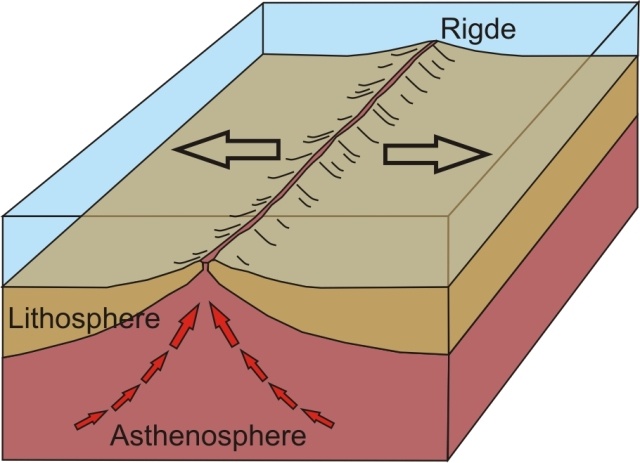

The movement of the tectonic plates is caused by
the rotation of the Earth.
convection currents in the Asthenosphere
the gravity of the iron-nickel core.
the Moho discontinuity.

What two topography occur near every subduction zone in convergent boundaries?
Volcanoes and Trenches
Rift Valleys and Mid Ocean Ridges
Volcanoes and Rift Valleys
Mid Ocean Ridges and Trenches
A divergent boundary creates what feature?
Ocean Ridge
Rift Valley
Subduction Zone
Ocean Trench
The focus is the ground above the epicenter.
True
False
The point above the focus where shaking on the ground originates.
(a)
It is a subjective measure of the destructive power of an Earthquake.
Magnitude
Intensity
Seismic Energy
It describes the severity of an earthquake in terms of its effects on the earth's surface and on humans and their structures.
Magnitude
Intensity
Seismic Energy
It is measured using a seismograph.
Magnitude
Intensity
Seismic Energy
It uses the Richter Scale.
Magnitude
Intensity
Seismic Energy
It uses the Mercalli Scale.
Magnitude
Intensity
Seismic Energy
It is the measure of energy released by the earthquake.
Magnitude
Intensity
Seismic Energy
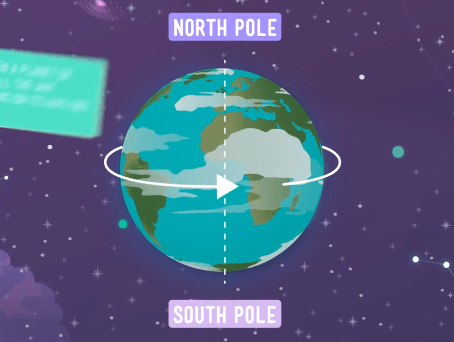
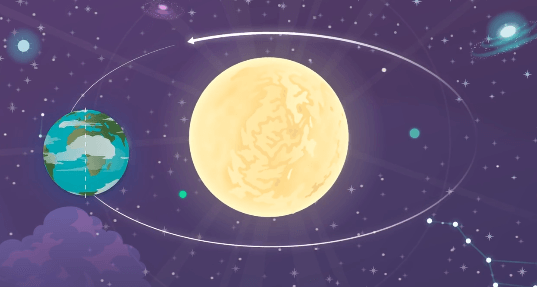
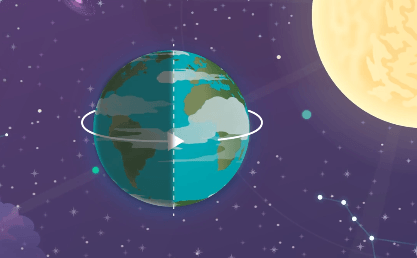


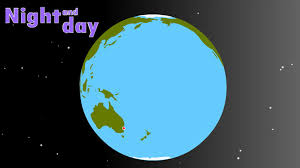
Because of the rotation of the earth, the Foucault’s pendulum appears to be changing its direction where in fact, it just moves back and forth.
True
False
The deflection of wind that powers the typhoon known as Coriolis Effect is due to the revolution of the earth around the sun.
True
False
When the Northern Hemisphere is experiencing daytime, the Southern Hemisphere is experiencing nighttime.
True
False


When is the start of Spring in the Northern Hemisphere?
March 20/21
June 20/21
September 22/23
December 21/22
When is the start of Spring in the Southern Hemisphere?
March 20/21
June 20/21
September 22/23
December 21/22
The earth is tilted on its axis by what degrees?
23.5
22.5
23
22
The Philippine Climate is classified as ___________
Arid
tropical rainforest
Temperate
Continental
During winter in the northern hemisphere, the cool air over the Asiatic mainland moves in a clockwise direction and brought _______________________
Northeast Monsoon
Southwest Monsoon
During summer in the Northern Hemisphere, wind blows from the West Philippine Sea into the heated continental interior.
Northeast Monsoon
Southwest Monsoon
Locally known as Amihan
Northeast Monsoon
Southwest Monsoon
Locally known as Habagat
Northeast Monsoon
Southwest Monsoon
this wind brings rain over the eastern coasts of the Philippines and gives a cold temperature in the country
Northeast Monsoon
Southwest Monsoon
brings heavy rain throughout the country because it gathers much moisture from the sea.
Northeast Monsoon
Southwest Monsoon
blows from October to March.
Northeast Monsoon
Southwest Monsoon
blows from May to October.
Northeast Monsoon
Southwest Monsoon
The Philippines has four seasons throughout the year.
True
False
Wet season characterized by heavy rainfall throughout the country which usually comes from March to May.
True
False
heavy rainfall throughout the country usually comes from May to December, but the heaviest downpour in most areas is from July to October
True
False
Which part of the Philippines is usually affected by rain brought by northeast monsoon?
eastern part of the country
southern part of the country
western part of the country
people experience this season from January to early part of May
Wet Season
Dry Season
Dry season is from November to April
Type 1
Type 2
Type 3
Type 4
Wet season is from May to September
Type 1
Type 2
Type 3
Type 4
No dry season (select at least 2)
Type 1
Type 2
Type 3
Type 4
Short Dry season either from december to february or march to may
Type 1
Type 2
Type 3
Type 4
Maximum rain period from December to February; Minimum rainfall from March to May
Type 1
Type 2
Type 3
Type 4
No very pronounced maximum rain period.
Type 1
Type 2
Type 3
Type 4
Rainfall is evenly distributed throughout the year.
Type 1
Type 2
Type 3
Type 4
The Philippine Climate is classified as ___________
Arid
tropical rainforest
Temperate
Continental
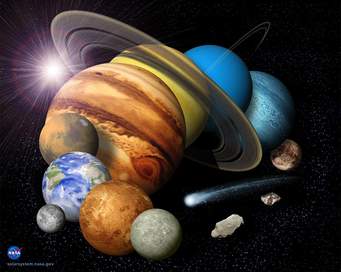
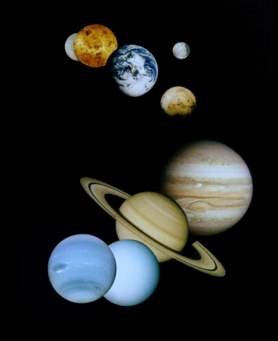
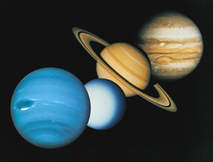

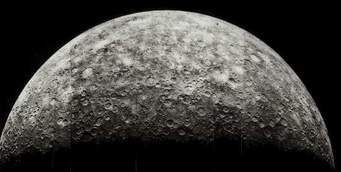
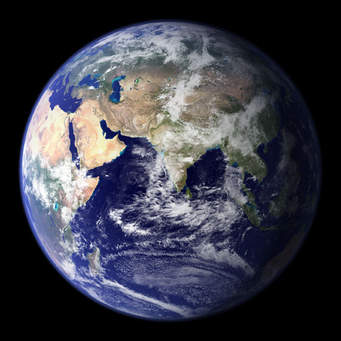
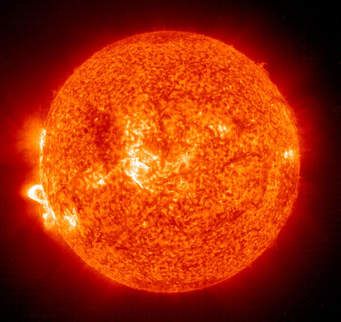
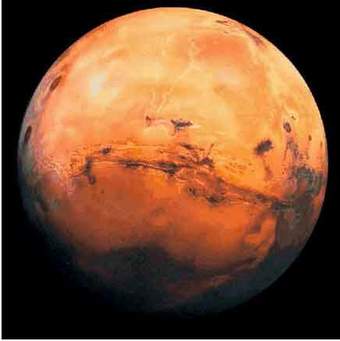
Which of the following lists the correct order of the planets from the sun?
Mercury, Venus, Mars, Earth, Jupiter, Saturn, Uranus, Neptune
Mercury, Venus, Earth, Mars, Saturn, Jupiter, Uranus, Pluto
Mercury, Venus, Earth, Mars, Jupiter, Saturn, Uranus, Neptune
Mars, Venus, Earth, Mercury, Jupiter, Saturn, Uranus, Neptune
Which planet is the furthest from the sun?
Venus
Neptune
Saturn
Pluto
Which is the smallest planet?
Saturn
Uranus
Earth
Mercury
Based on the diagram of the planet orbits around the sun, which planet has the largest orbit around the sun?
Saturn
Neptune
Mercury
Earth
Which planet has the tallest mountain in the solar system?
Saturn
Neptune
Venus
Mars
Which planet hits the the coldest temperatures?
Saturn
Earth
Mars
Uranus

