
 Worksheets
HUMAN DIGESTION /ENZYMES IN THE MOUTH
Total questions: 102
Worksheet time: 57mins
What is the oesophagus
A tube leading down from the back of the mouth that takes air down to the lungs
A tube leading down from the back of the mouth that takes food down to the stomach
Cells that produce mucus
Helps break down fats in the duodenum
layers of the teeth
enamel, dentine, pulp cavity
Enamel, veins, fibers
Pulp arterie, Enamel, sucrose
What does amylase break down?
Carbohydrates like starch into maltose molecules
Breaks down syliva
Breaks down proteins
Breaks down lipids

What stage of digestion is being shown by this picture?
absorption
assimilation
digestion
egestion
ingestion
How many different kinds of teeth are found in the mouth?
2
4
6
8
How many sets of teeth does a human develop in their lifetime?
1
2
3
4
What are the names of the sets of teeth?
baby teeth and permanent teeth
temporary teeth and adult teeth
baby teeth and adult teeth
temporary teeth and permanent teeth
How many teeth in the first set of teeth?
10
20
32
40
How many teeth in the second set of teeth?
10
12
20
32
What types of digestion occur in the mouth?
physical digestion
chemical digestion
physical and chemical digestion
Which food is a food that is high in carbohydrates?
apple
beans
corn on the cob
eggs
What three things make up saliva?
amylase
food
mucus
water
A bolus is..
a ball of enzymes
a ball of muscular contractions
a ball of food
Chemical digestion of ________ begins in mouth
proteins
fats
carbohydrates
all of them
Amylase converts
Starch into maltose
starch into glycogen
starch into glucose
none of them
What are the five processes in human nutrition (in order)?
ingestion,digestion,egestion,absorption,assimilation
ingestion,digestion,absorption,egestion,assimilation
ingestion,digestion,absorption,assimilation,egestion
absorption,ingestion,digestion,egestion,assimilation
Where does ingestion begin?
duodenum
stomach
mouth
colon
Chewing cuts food into smaller pieces which is a form of chemical digestion
True
False
Salivary amylase digests starch into glucose
True
False
Peristalsis mixes food with gastric juice in the stomach
True
False

The diagram shows the human alimentary canal.
Which of the organs are related to digestion of carbohydrates?
R and T only
P and Q only
S and T only
Q, R, S, and T


What is the correct order of the digestive system?
Mouth, Stomach, Esophagus, Small Intestine, Large Intestine
Mouth, Esophagus, Stomach, Large Intestine, Small Intestine
Mouth, Esophagus, Stomach, Small Intestine, Large Intestine
Mouth, Large Intestine, Small Intestine, Stomach, Esophagus
At what point does digestion begin?
When you put food in your mouth
After the food enters the stomach
After the food enters the large intestine
After you go to the bathroom

What is the purpose of teeth?
To grind them to annoy your parents
To break food into smaller pieces
To bite your little brother/sister
To eat apples and ONLY apples

The test tubes in the photo represent a negative and positive result for
Benedict's with glucose
Biuret with protein
Iodine with starch
Ethanol with fat

Which biomolecule does Benedict's solution test for?
simple sugars
complex starches
proteins
lipids

This food belongs to which food group?
Carbohydrate
Protein
Fat
Fibre

Jerry is on the rugby team and wants to build up his muscles, which food group intake he should increase ?
Carbohydrates
Fats
Proteins
vitamins
Which of the following foods is a good source of carbohydrates?


Which component of a healthy, balanced diet helps with constipation?
Fibre
Fats
Minerals
Protein

Which component of a healthy, balance diet is responsible for providing energy before an event?
Fats
Proteins
Carbohydrates
Vitamins
Which of the following factors determine the energy requirement of humans?
Occupation/ Daily activities
Age
Gender
All of the above
Which of the following correctly describes the purpose of digestion?
To break down complex food molecules into simple soluble molecules
To make complex food molecules from simple soluble molecules
To make use of simple soluble food molecules
To remove complex food molecules from the body
Large food molecules need to be broken down to be small enough to pass through cell membranes.
True
False
Why is the oesophagus muscular?
To break the food into even smaller pieces
To produce enzymes to digest food
To push food from the mouth into the stomach
To move the food back and forth in two directions
Where does carbohydrate digestion begins?
liver
mouth
oesophagus
stomach
Name the enzyme that acts on starch.
(a)
What colour will starch turn brown iodine solution into?
blue-black
colourless
red
yellow
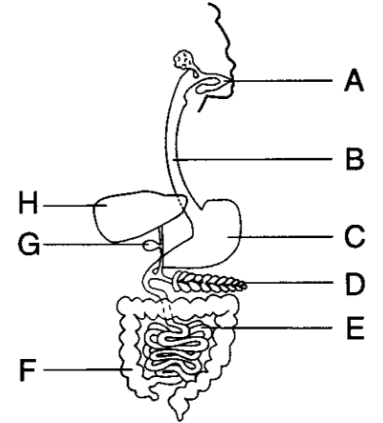
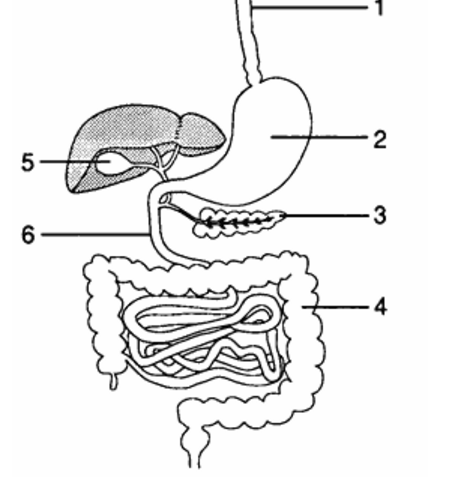
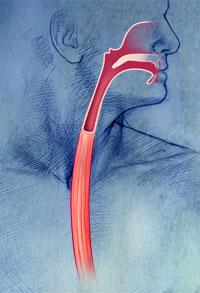
What are the 4 steps of digestion? (in order)
ingestion, digestion, absorption, elimination
digestion, absorption, elimination, ingestion
ingestion, congestion, pregestion, elimination
pre-gestion, congestion, digestion, elimination
hard question, Sugestion, analyzation, pretention
The mechanical and chemical breakdown of food into small particles and molecules that your body can absorb and use....
ingestion
elimination
digestion
absorption
the removal of undigested food and other wastes from the body
absorption
elimination
digestion
ingestion
a type of digestion where food is physically broken into smaller pieces...
chemical digestion
mechanical digestion
indigestion
automatic digestion
A type of digestion where chemical reactions break down pieces of food into smaller molecules
mechanical digestion
indigestion
chemical digestion
such thing does not exist
TRUE or FALSE:
Enzymes speed up, or catalyze the rate of chemical reactions.
FALSE
TRUE
TRUE OR FALSE:
Enzymes change the chemical reaction
TRUE, but not entirely
FALSE, they just speed it up
FALSE, they have no role in chemical reactions
The digestive system produces enzymes that are specialized to help break down each type of
food molecule
chemical reaction
bolus
stool
___________ are enzymes that help break down carbohydrates.
Amylase
Papain
Lipase
Pepsin
___________ are enzymes that help break down fats.
Lipase
Amylase
Papain
Pepsin
________ enzymes that help break down proteins.
Amylase
Lipase
Pepsin
Papain
Food moves through the esophagus and the rest of the digestive tract by waves of muscle contractions called
peristalsis
homeostasis
sonar waves
tsunami waves

The stomach:
Does chemical digestion only
Does mechanical digestion only
Does both chemical and mechanical digestion
Starts the chemical digestion of starchy foods
The muscle of the esophagus squeeze the food to the
Pharynx
Stomach
Large intestine
Small intestine
What breaks food into smaller pieces to begin mechanical digestion?
Stomach
Esophagus
Amylase
Teeth
Which Glands associated with the Human Digestive System?
Salivary glands and Pancreas
Salivary glands and Liver
Liver and Pancreas
Salivary glands, Liver and Pancreas

Which of the following is the longest part of the Alimentary Canal?
A. Large intestine
A. Small intestine
A. Liver
A. Stomach
______________ are catalysts for chemical reactions in living things.
Acids
Bases
Substrates
Enzymes
FATS---->FATTY ACIDS/GLYCEROL
enzymes
STARCH---->MALTOSE
If a solution has a pH of 3, it is considered an
acidic solution.
basic solution
neutral solution.
liquid solution.
If a solution has a pH of 12, it is considered a
basic solution.
acidic solution.
neutral solution.
primary solution.
When an enzyme changes shape due to heat or certain chemicals, what is this called?
Denaturation
Coenzyme
Competitive inhibitor
Non-competitive Inhibitor
How do enzymes work?
By raising the activation energy
By lower the activation energy
By providing water.
By providing heat.
The substance that an enzyme attracts to its active site it called
the substrate
the by-product
the protein base
the end product
Chewing food would be a example of
Chemical Digestion
Mechanical Digestion
Abdominal Digestion
the digestive system.
Lemon juice, coca cola, and coffee would all be examples of ____________ solutions.
Neutral
Basic
Acidic
Polyatomic
The name of the enzyme that is produce in our salivary glands and helps break down simple sugars is
pepsin
benzene
acetone
amylase
Enzymes are what type of molecule?
carbohydrates
proteins
fats
starch
Which sentence is true?
Amylase breaks down fats into fatty acid and glycerol
Amylase breaks down starch into glucose
Amylase breaks down starch into maltose
Amylase breaks down proteins into amino acids
Which sentence is true?
Starch is a large, soluble molecule
Starch digestion starts in the stomach
Starch is a large, insoluble molecule
Maltose breaks down maltase into glucose
Which of the following is a monosaccharide?
amino acids
fatty acids
glycerol
glucose
Which reagent would test for the presence of enzymes (proteins)?
Benedict's solution
iodine solution
Biuret solution
ethanol

