

wayground logo

Free Printable Worksheets

Font size

S
M
L
XL
Worksheets

Earth's Systems Test Review

Total questions: 73

Worksheet time: 2hrs 18mins

Name
Class
Date
1.
What is the mostly solid, rocky part of earth, composed of solid and molten rock, soil and sediments?
a)
Biosphere
b)
Atmosphere
c)
Hydrosphere
d)
Geosphere
2.
This part of the Earth System includes the gases that surround the earth.
a)
Geosphere
b)
Atmosphere
c)
Hydrosphere
d)
biosphere
3.
This part of the Earth System includes all living things, including plants and animals.
a)
Geosphere
b)
Atmosphere
c)
Hydrosphere
d)
Biosphere
4.
Mount Everest is:
a)
Geosphere
b)
Biosphere
c)
Hydrosphere
d)
Atmosphere
5.
A monkey is:
a)
Atmosphere
b)
Biosphere
c)
Geosphere
d)
Hydrosphere
6.
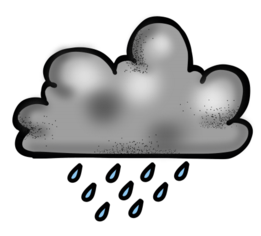
This picture shows:
a)
Biosphere
b)
Atmosphere
c)
Geosphere
d)
Hydrosphere
7.
This picture best describes which connection?
a)
Atmosphere-Biosphere
b)
Atmosphere-Biosphere
c)
Hydrosphere-Geosphere
d)
Geosphere-Biosphere
8.
Which of the following does NOT belong in the atmosphere?
a)
Rain
b)
Winds
c)
Clouds
d)
Helium
9.
Which of the following does NOT belong in the geosphere?
a)
Sand
b)
Volcano
c)
Mushrooms
d)
Rocks
10.
Which of the following does NOT belong in the hydrosphere?
a)
Lakes 
b)
Rivers
c)
Fish 
d)
Rain
11.
Which of the following does NOT belong in the biosphere?
a)
Coral 
b)
Grass
c)
Starfish
d)
Clouds
12.
Polar Bears hunt seals on ice:
a)
Biosphere-Hydrosphere
b)
Biosphere-Atmosphere
c)
Hydrosphere-Atmosphere
d)
Hydrosphere-Geosphere
13.
Bats find shelter in caves:
a)
Atmosphere-Biosphere
b)
Biosphere-Geosphere
c)
Geosphere-Hydrosphere
d)
Atmosphere-Hydrosphere
14.
An example of a connection between HYDROsphere and GEOsphere is:
a)
Waves eroding rocks on beach
b)
Fish swimming in water
c)
Water evaporating to make clouds
d)
Boats transporting goods
15.
You are best connected to the geosphere:
a)
By water you drink
b)
By minerals you use
c)
By plants you eat
d)
By air you breathe
16.
Which sphere would contain whales and dolphins?
a)
Geosphere
b)
Biosphere
c)
Hydrosphere
d)
Atmosphere
17.
When a deer drinks water from a creek, which 2 earth systems are interacting?
a)
Atmosphere Biosphere
b)
Atmosphere Geosphere
c)
Biosphere Geosphere
d)
Biosphere Hydrosphere
18.
This part of the Earth System includes the crust, mantle, and core.
a)
Geosphere
b)
Atmosphere
c)
Hydrosphere
d)
Biosphere
19.
This part of the Earth System includes the gases that surround the earth.
a)
Geosphere
b)
Atmosphere
c)
Hydrosphere
d)
Biosphere
20.
This part of the Earth System includes the planet's water, including the oceans, lakes, rivers, ground water, ice, and vapor.
a)
Geosphere
b)
Atmosphere
c)
Hydrosphere
d)
Biosphere
21.

What causes wind?

a)

differences in air pressure

b)

differences in gravity

c)

difference in oxygen

d)

differences in the thermosphere

22.

What causes differences in air pressure?

a)

even heating of the Earth

b)

Even cooling of the earth

c)

uneven heating of the earth

d)

global warming

23.
Which statement correctly defines wind?
a)
Wind is the movement of air from areas of low pressure to areas of high pressure
b)
Wind is the movement of air to a colder area in the atmosphere.
c)
Wind is the movement of air from areas of high pressure to areas of low pressure.
d)
Wind is the movement of air pushed around and bouncing off Earth's surface.
24.
Why does warm air rise?
a)
Warm air is more dense than cooler air.
b)
Warm air has more pressure than cooler air.
c)
Warm air is less dense than cooler air.
d)
Warm air has a higher dew point than cooler air.
25.

In the Northern Hemisphere, winds traveling north appear to curve east because of the:

a)

trade winds

b)

convection currents

c)

Coriolis effect

d)

polar easterlies

26.
The Coriolis effect is the curving of wind across Earth. What causes winds to curve?
a)
Earth's revolution
b)
Earth's magnetic field
c)
Earth's rotation
d)
Earth's gravitational pull
27.
Use the diagram to determine which statement is correct.
a)
The air at location 3 is more dense than the air at location 6.
b)
The air at location 2 is rushing in to take the place of the colder air at location 3.
c)
Location 1 heats up and cools down slower than location 7.
d)
High pressure air at location 2 is taking the place of the low pressure air at location 3.
28.
In which direction do prevailing westerlies flow?
a)
from east to west
b)
from west to east
c)
from north to south
d)
from south to north
29.
The tropical winds running from 0 to 30 degrees latitude are called:
a)
subtropical westerlies
b)
polar westerlies
c)
trade winds
d)
polar winds
30.
Wind belts are always named according to...
a)
how strong they are
b)
what temperature they are
c)
where they blow to
d)
where they come from
31.
The wind belts that surround the equator cause large amounts of hot air to rise and converge together causing what type of weather?
a)
rain
b)
dry
c)
snow
d)
clear skies
32.

Middle latitudes that border the equatorial region are characterized by

a)

dry, descending air

b)

hot, humid air

c)

heavy rain

d)

warm, low pressure

33.

Unit to measure atmospheric pressure

a)

Millibar

b)

Cm

c)

Meter

34.

The hot regions in the world have (a)   pressure.

35.

The cold regions in the world have (a)   pressure

36.

Regions at the equator have (a)   pressure.

37.
What happens to the amount of oxygen molecules as altitude increases?
a)
fewer molecules
b)
more molecules
c)
same amount of molecules
d)
nothing happens to the molecules
38.
As you climb up a mountain what happens to the air pressure?
a)
decreases
b)
increases
c)
stays the same
39.
Air pressure is greatest when near Earth's surface because?
a)
The air molecules are farther apart.
b)
The air molecules are closer together.
c)
Air molecules collide.
d)
Air molecules are tightly packed.
40.
Altitude is greater __________.
a)
at the bottom of the mountain
b)
at the top of the mountain
c)
at the center of the mountain
41.

What happens to temperature in the troposphere as you go higher up?

a)

It stays the same

b)

It descreases

c)

It increases

d)

It stays below breezing

42.

What happens to temperature in the stratosphere as altitude increases?

a)

It does not change

b)

It gets colder

c)

It gets warmer

d)

It stays below freezing

43.

What happens to temperature in the mesosphere as altitude increases?

a)

It gets colder

b)

It gets warmer

c)

It does not change

d)

It stays very hot

44.

What happens to temperature in the thermosphere as you go higher up?

a)

It does not change

b)

It gets very cold

c)

Its gets very hot

d)

It stays below freezing

45.

Which layer gets the coldest?

a)

Troposphere

b)

Thermosphere

c)

Mesosphere

d)

Stratosphere

46.

Which layer gets the hottest?

a)

Troposphere

b)

Stratosphere

c)

Mesosphere

d)

Thermosphere

47.

What special layer of gases is in the stratosphere that causes the temperatures to increase?

a)

CO2

b)

Oxygen

c)

Ozone

d)

Sulfur

48.

Which layer of the atmosphere is the thickest (covers the largest part of your graph?)

a)

Thermosphere

b)

Mesosphere

c)

Stratosphere

d)

Troposphere

49.

Which layer of the atmosphere is the smallest (covers the least amount of area on your graph)?

a)

Troposphere

b)

Stratosphere

c)

Mesosphere

d)

Thermosphere

50.

Scientists have divided the atmosphere into layers based mainly on?

a)

Temperature changes

b)

Air pressure changes

c)

Altitude changes

d)

Composition of gases

51.
The changes to water when it cycles the earth is called
a)
the moon cycle
b)
the sun cycle
c)
the water cycle
d)
the wind cycle
52.
When water vapor s cooled and forms droplets-
a)
Condensation
b)
Evaportation
c)
Transpiration
d)
Run-off
53.
Forms of precipitation are-
a)
only sleet and snow
b)
rain, sleet, hail, and snow
c)
only dew and rain 
d)
only snow and rain
54.
Water in lakes and rivers that does not contain salt-
a)
recycled water
b)
new water
c)
salt water
d)
fresh water
55.
When water is heated in the ocean by the sun and turns into water vapor
a)
condensation
b)
evaporation
c)
transpiration
d)
runoff
56.
What is it called when plants give off water vapor as a waste product?
a)
condensation
b)
evaporation
c)
sublimation
d)
transpiration
57.
What is precipitation?
a)
The part of the water cycle when the sun heats up water, turning it from a liquid into water vapor or steam. It rises from the ground into the air.
b)
The part of the water cycle when the water vapor in the air gets cold. The water turns back into a liquid and forms clouds.
c)
The part of the water cycle when clouds get heavy and can no longer hold the liquid water. This causes the water to fall from the sky to the earth as rain, snow, sleet, or hail.
58.
On which kind of day would you expect the most evaporation from the surface of a pond?
a)
cold, rainy
b)
cold, sunny
c)
warm, rainy
d)
warm, sunny
59.
What is water vapor?
a)
Water on the land (geosphere)
b)
Water in the air (atmosphere)
c)
Water in plants
d)
Water in the water (hydrosphere)
60.
Which of these is not an example of precipitation?
a)
rain
b)
clouds
c)
sleet
d)
snow
61.

What is the role of the sun in the water cycle?

a)

provide heat energy for evaporation

b)

provide heat energy for condensation

c)

dry out the soil for runoff to occur

d)

provide thermal energy for accumulation

62.

What do we call water in its gas state?

a)

rain

b)

snow

c)

ice

d)

water vapor

63.
What part of the water cycle does this picture show?
a)
condensation
b)
precipitation
c)
evaporation
64.
Which is the opposite of condensation?
a)
runoff
b)
evaporation
c)
precipitation
d)
transpiration
65.
True or False -
The greatest amount of water found on earth is fresh water.
a)
True
b)
False
66.
What part of the water cycle does this picture show?
a)
condensation
b)
precipitation
c)
evaporation
67.
The Earth's inner core is 
a)
a layer of hot rock
b)
a dense ball of solid metal
c)
a layer of molten metal
d)
part of Earth's outer skin
68.
Most geologists think that the movement of Earth's plates is caused by 
a)
Earth's magnetic field
b)
conduction
c)
earthquakes
d)
convection currents in the mantle
69.
Using data from seismic waves, geologists have learned that Earth's interior is made up of several
a)
trenches
b)
ridges
c)
continents
d)
layers
70.
The Earth's mantle is
a)
a layer of molten metal
b)
a layer of hot rock
c)
a dense ball of solid metal
d)
forms the Earth's crust
71.
What is the correct order of Earth's layers? Starting from surface
a)
Crust, mantle, outer core, inner core
b)
outer core, inner core, crust, mantle
c)
crust, outer core, inner core, mantle
d)
mantle, outer core, inner core, crust
72.

The uppermost layer over the earth’s surface is called :

a)

Crust

b)

Mantle

c)

Core

73.

The main mineral constituents of the continental mass are :

a)

silicon and aluminium

b)

silica and nickel

c)

silica and alumina

d)

silicon and magnesium
