wayground logo

Free Printable Worksheets

Font size

S
M
L
XL
Worksheets

Global Science Revision Y8

Total questions: 202

Worksheet time: 10hrs 6mins

Name
Class
Date
1.
´Elizabeth was examining elements and their physical properties. She described an element is her science journal as having no shine, an insulator, and  very brittle. What would this element be a metal, nonmetal, or metalloid?
a)
metal 
b)
nonmetal 
c)
metalloid
2.
All of the following are properties used to classify elements as metals, non-metals, and metalloids EXCEPT —
a)
texture
b)
conductivity
c)
luster
d)
malleability
3.
The elements argon, krypton, and xenon are all non-metals. What property would these elements have in common?
a)
Good conductor of thermal energy
b)
Poor conductor of electricity
c)
Shiny, lustrous surface
d)
Soft and malleable
4.
A student is given a sample of an unknown substance. He is asked to determine if it is classified as a metal, a metalloid, or a nonmetal. He discovered that the unknown element conducted some heat and electricity, had a shiny luster, and broke easily. This element is most likely a 
a)
metal
b)
nonmetal
c)
metalloid
d)
cannot be determined
5.
Some students conducted a laboratory investigation to learn more about the physical properties of different elements. They observed four samples and recorded their observations in the table . Based on these observations, which sample is most likely a nonmetal?
a)
Sample 1
b)
Sample 2
c)
Sample 3
d)
Sample 4
6.
Which type of elements touch the zigzag line?
a)
Metals
b)
Nonmetals
c)
Metalloids
d)
Metals and Metalloids
7.
Which of the following tables correctly lists the physical properties of metals and nonmetals?
a)
A
b)
B
c)
C
d)
D
8.
If an object is a better conductor of heat and electricity than nonmetals, but not as good of a conductor as metals, then it is a-
a)
semi-conductor
b)
non-conductor
c)
good conductor
9.
If an object breaks easily, that means it is probably-
a)
malleable
b)
brittle
c)
ductile
10.
A pure substance that cannot be broken down into anything simpler is a/an-
a)
atom
b)
element
c)
cell
d)
compound
11.
Silicon is a semiconductor and has properties of both metals and nonmetals. What type of element is Silicon? 
a)
Metal
b)
Nonmetal
c)
Metalloid
d)
Pretty
12.
How would this element be classified?
a)
Metal
b)
Nonmetal
c)
Metalloid
d)
Metamorphic
13.
What does ductile mean?
a)
electricity flows easily
b)
quacks like a duck
c)
can be drawn into a wire
d)
able to bend
14.
What does malleable mean?
a)
able to bend
b)
will break easily
c)
can be used for wire
d)
is shiny
15.
What element in Group 1 is not a metal but a nonmetal?
a)
Helium
b)
Lithium
c)
Hydrogen
d)
Oxygen
16.
Metals appear to the _______ of the dark ziz-zag line on the periodic table. 
a)
A. right
b)
B. middle
c)
C. left
17.
Which of these grouping of elements could have the characteristic of luster (shiny)?
a)
Metal
b)
Nonmetal
c)
metalloids
d)
Both metals and metalloids
18.
Which of these grouping of elements could have the characteristic of brittle?
a)
Metal
b)
Nonmetal
19.
Which of the following is a good conductor of heat?
a)
Metal
b)
Nonmetal
c)
Metalloid
20.
Which of these is a property of metals?
a)
It's malleable
b)
It can't conduct electricity
c)
They are used in food
d)
It's very brittle
21.
One property of a nonmetals is that it is a good conductor of electricity?
a)
true
b)
false
22.
All of the following would classify an element as a metal except?
a)
Dull
b)
Luster
c)
Malleable
d)
Hard
23.
Some characteristics of a metal are that it is malleable and ductile.
a)
TRUE
b)
FALSE
24.
Non-metals are good conductors of heat and electricity. 
a)
TRUE
b)
FALSE
25.
Metalloids are weak conductors of heat and electricity. 
a)
TRUE
b)
FALSE
26.
Which of the following properties refers to the ability of metals to be drawn into wires?
a)
A. malleability 
b)
B. compressibility
c)
C. ductility
d)
D. luster
27.
If a substance breaks easily, it is said to be ________________.
a)
A. Magnetic
b)
B. Brittle
c)
C. Conductive
d)
D. Ductile
28.

Which elements are shiny?

a)

metals only

b)

nonmetals only

c)

metals and nonmetals

d)

metals and MAYBE metalloids

29.

Sulfur is considered:

a)

malleable

b)

brittle

c)

ductile

d)

a good conductor

30.

How did you find out if an element is a good conductor?

a)

it lit up a light bulb

b)

hit it with a hammer

c)

bubbled in the presence of acid

d)

turned black

31.

copper can be used to make statues like the statue of liberty

a)

therefore copper is malleable

b)

therefore copper is ductile

c)

therefore copper is shiny

d)

therefore copper is a conductor

32.

Which of these was NOT a conductor?

a)

sulfur

b)

magnesium

c)

zinc

d)

aluminum

33.

Which elements are colored red?

a)

nonmetals

b)

metals

c)

metalloids

34.
Which travels faster: sound or light waves?
a)
sound
b)
light
35.
Which comes first: lightning or thunder?
a)
lightning
b)
thunder
36.

What is the part of your ear you can see called?

a)

ear drum

b)

stirrup

c)

cochlea

d)

pinna

37.
What part of your body sends messages from your ears to your brain?
a)
optic nerve
b)
auditory nerve
c)
ear canal
d)
semi-circular canals
38.
Can sounds travel through liquids?
a)
Yes
b)
No
39.
Which of the following is an example of sound traveling through a solid?
a)
When you hear people in another room
b)
When you hear things underwater
c)
When you are talking to the person next to you
d)
Sound cannot travel through solids
40.
What unit do we use to measure sound?
a)
decibels
b)
inches
c)
pounds
d)
centimeters
41.

Are volume and pitch the same thing?

a)

yes

b)

no

42.
Does a man's snore have a high pitch or a low pitch?
a)
high
b)
low
43.

Sound is caused by ______________.

a)

light

b)

vibrations

c)

the sun

44.
The rate in which sound waves occur is?
a)
vibration
b)
echo
c)
frequency
45.

How many parts does the ear have?

a)

one

b)

two

c)

three

46.
Where are the three smallest bones in your body found? 
a)
outer ear
b)
middle ear
c)
inner ear
d)
eye
47.

What part of the ear helps with balance?

a)

anvil

b)

stirrup

c)

ear drum

d)

cochlea

48.

What is an example of a low pitched sound?

a)

a cat meowing

b)

a dog barking

c)

piano playing

d)

a drum

49.

What do sound, light, heat, and electricity have in common?

a)

auditory

b)

both have noise

c)

energy

d)

pitch

50.
Is this a high pitch or a low pitch?
a)
High
b)
Low
51.
The Ear Drum has sound vibrate off of it. It is located in the... 
a)
Inner Ear
b)
Middle Ear
c)
Outer
52.
The hearing organ, the Cochlea is located in the...
a)
Inner Ear
b)
Middle Ear
c)
Outer Ear
53.

Loudness of sound depends on

a)

Frequency

b)

Amplitude

c)

Wave length

d)

Velocity

54.

Pitch of a sound depends on

a)

Amplitude

b)

Frequency

c)

Wave length

d)

Velocity

55.

The high pitch sound is

a)
b)
c)
56.

The loudest sound is

a)
b)
57.

______________ measures the loudness of a sound (how high or tall the wave is).

a)

Frequency

b)

Trough

c)

Amplitude

d)

Wavelength

58.

Loudness of sound depends on

a)

Frequency

b)

Amplitude

c)

Wave length

d)

Velocity

59.
What is #2?
a)
Ear Canal
b)
Pinna
c)
Hammer
d)
Anvil
60.
What is #19?
a)
Semicircular Canals
b)
Ear Canal
c)
Auditory Nerve
d)
Cochlea
61.
What is #13?
a)
Eardrum
b)
Anvil
c)
Hammer
d)
Cochlea
62.
What happens in the inner ear? 
a)
Sound waves are captured.
b)
Sound waves move deeper into the ear. 
c)
Sound waves are reflected.
d)
Sound waves are converted into nerve impulses.
63.
Where is a place a person would hear no sound?
a)
in a cave
b)
in a forest
c)
in space
d)
in water
64.

Which of of the following is an example of a carbohydrate?

a)

fish

b)

potato

c)

peanut

d)

butter

65.

which of the following is an example of a protein?

a)

corn

b)

olive oil

c)

muffin

d)

beans

66.

Which of the following is an example of a lipid?

a)

egg

b)

wheat

c)

coconut oil

d)

tortilla

67.

Which macromolecule is responsible for long term energy storage in animals?

a)

carbohydrates

b)

lipids

c)

protein

d)

nucleic acids

68.

Which macromolecule is responsible for growth and repair of cells?

a)

lipids

b)

carbohydrates

c)

proteins

d)

nucleic acids

69.
Tube that carries swallowed food to the stomach
a)
esophagus
b)
liver
c)
pancreas
d)
rectum
70.
What happens when the food goes to the small intestine?
a)
nutrients gets into the blood
b)
the food keeps on going
c)
nothing
71.
The organ in orange represents the:
a)
Liver
b)
Lung
c)
Stomach
d)
Pancreas
72.
The highlighted organ is the
a)
liver
b)
large intestine
c)
small intestine
d)
stomach
73.
Chewing food is an example of _____________.
a)
chemical digestion
b)
mechanical digestion
74.
The main purpose of the large intestine.
a)
absorb hormones
b)
absorb protein
c)
absorb nutrients
d)
absorb water
75.
The organ that stores bile.
a)
gall bladder
b)
stomach
c)
liver
d)
appendix
76.
Bile is made by which digestive organ?
a)
Gallbladder
b)
Stomach
c)
Rectum
d)
Liver
77.
Which is NOT a function of the Digestive System?
a)
To rid the body of solid waste
b)
Absorb nutrients for energy & growth
c)
Break down nutrients from food
d)
Pump blood around the body
78.
a)
Liver
b)
Esophagus
c)
Urethra
d)
Large Intestine
79.
a)
Pancreas
b)
Stomach
c)
Small Intestine
d)
Liver
80.
Nutrients from digested food are absorbed in which digestive organ?
a)
Small Intestine
b)
Stomach
c)
Large Intestine
d)
Gallbladder
81.
As waste moves through the digestive system, the ______ absorbs water before storing waste in the rectum.
a)
Small intestine
b)
Stomach
c)
Esophagus
d)
Large intestine
82.

When rings of smooth muscle contract in a wave-like motion to move food through the digestive system it is called. . .

a)

peristalsis

b)

homeostasis

c)

wave transport

d)

contractile wave propulsion

83.
Light bending as it passes from one medium (object) to another is...
a)
Refraction
b)
Reflection
84.
Light bouncing off a mirror is an example of...
a)
Refraction
b)
Reflection
85.
A prism separating white light is an example of...
a)
Refraction
b)
Reflection
86.
It's called _______ when light bounces off the smooth surface of an object.
a)
Refraction
b)
Reflection
87.
Light will _______ through transparent materials.
a)
transmit
b)
transparent
c)
translucent
d)
transverse
88.
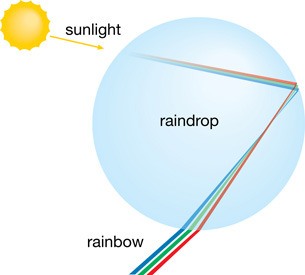
Light bending as it passes through a rain drop is an example of...
a)
Refraction
b)
Reflection
89.
The pictures shows what a student observed when he looked through a hand lens at a penny.
What happens to light passing through a hand lens that makes the image of the penny appear larger? The light is-
a)
absorbed
b)
reflected
c)
refracted
d)
stopped
90.
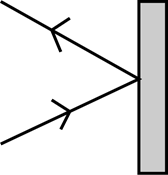
The illustration shows a light ray striking an object.
In the illustration, the light ray striking the object is-
a)
absorbed
b)
stopped
c)
reflected
d)
refracted
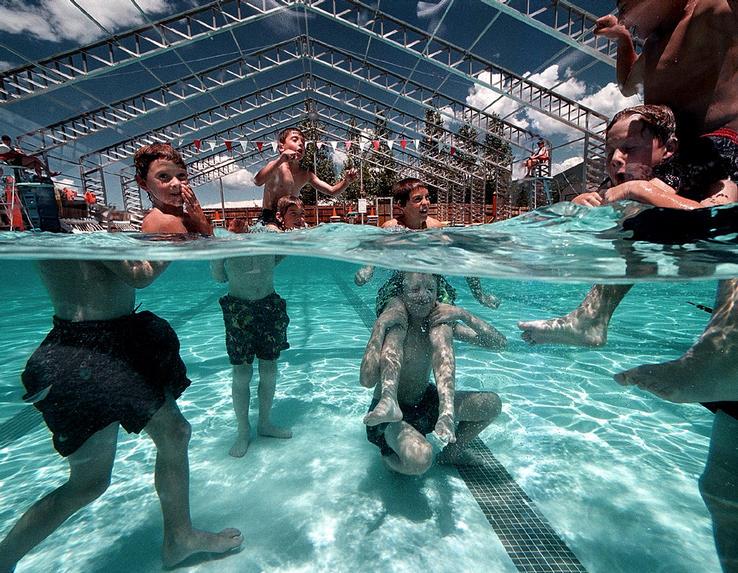
91.
Why does the lower part of the child appear so much different in size from the upper part?
a)
The light rays that travel through water and then into air are refracted.
b)
The light rays that travel through water and then into air are enlarged.
c)
The light rays that travel through air and then into water are reflected.
d)
The light rays that travel through air and then into water are reduced.
92.

Objects that reflect well are

a)

Matte surfaces

b)

Smooth, shiny surfaces

c)

Dark coloured surfaces

d)

Medium coloured surfaces

93.

The law of reflection states that

a)

Angle of incidence = Angle of reflection

b)

Angle of incidence = Angle of incidence

c)

Angle of reflection = Angle of translucence

d)

Angle of reflection = Angle of reflection

94.
What does it mean to reflect?
a)
bounce off
b)
bend
c)
refract
d)
energy
95.
How does light travel?
a)
in a wavy path
b)
in a straight path
c)
in a zig zag path
96.
What does transparent mean?
a)
some light is able to pass through
b)
no light is able to pass through
c)
all light is able to pass through
97.
___________ is a from of energy that we can see with our eyes.
a)
shadow
b)
light
c)
energy
d)
reflection 
98.
The term for any wave that hits a surface and bounces off
a)
Transparent
b)
Translucent
c)
Refraction
d)
Reflection
99.
Which is a natural source of light?
a)
flashlight
b)
cell phone
c)
lightning
d)
headlights
100.
How is a rainbow created?
a)
All colors are reflected off of an object.
b)
White light is refracted through a prism.
c)
White light is reflected off of a mirror.
d)
All colors are absorbed by a prism.
101.
When light cannot pass through an object, we say that that object is ____ .
a)
opaque
b)
transparent
c)
translucent
d)
translated
102.
The angle produced as a source of light bounces off a reflecting surface is called ______.
a)
angle of crookedness
b)
angle of reflection
c)
angle of incidence
d)
angle of bounce
103.
The ray of light that strikes a reflecting surface is called ________.
a)
incident ray
b)
reflected ray
c)
normal ray
d)
none of the above
104.
MCQ 02
Why can you see most objects?
a)
A. they emit light
b)
B. light refracts through them
c)
C. light reflects off them
d)
D. they absorb light
105.
Section B1a
Given that the angle of incidence = 30 degrees
a. Draw a ray diagram, labelling clearly the normal, incident ray, angle of incidence, reflected ray and angle of reflection accurately.
Which is the correct diagam? 
a)
A
b)
B
c)
C
d)
D
106.

Your light-sensing organ is your

a)

ear

b)

finger

c)

brain

d)

eye

107.
MCQ 011
According to the laws of reflection, if i = angle of incidence and r = angle of reflection,
a)
A. i =  r
b)
B. i >  r
c)
C. r >  i
d)
D. i is not equal to r
108.
Glass has a _____________ index of refraction than air.
a)
Equal
b)
Greater
c)
Less
d)
Impossible to say
109.
Light has the lowest velocity in which medium?
flint glass n=1.70
barium glass n=1.60
crown glass n=1.523
water n=1.33
diamond n=2.45
a)
diamond
b)
water
c)
flint glass
d)
barium glass
110.

On the diagram, D is:

a)

The reflected ray

b)

The incidence ray

c)

The normal

d)

The refracted ray

111.

On the diagram, B is:

a)

The refraction ray

b)

The normal

c)

The angle of incidence

d)

The incidence ray

112.

How does light behave when hitting this shirt?

a)

Yellow is absorbed; all other colors are reflected.

b)

Yellow is reflected; all other colors are absorbed.

c)

All colors are absorbed, but yellow is refracted.

d)

Yellow is scattered and all other colors are absorbed.

113.

How will this object appear when looking at it through a blue filter?

a)

Blue

b)

Green

c)

Black

d)

Orange

114.

Which color(s) does this filter transmit?

a)

No colors are transmitted.

b)

All colors but green

c)

Only green

115.

Which color will transmit through the filter?

a)

Red only

b)

Blue and Violet

c)

Green

d)

All colors

116.

Why won't the red filter allow the other colors to transmit?

a)

Because they reflect off of the filter.

b)

Because only red can transmit through a red filter.

c)

Because red has the longest wavelength.

117.

Which colors make up white light?

a)

Red, Orange, and Yellow

b)

All colors

c)

Reds and Violets

118.
What colours is white light made from?
a)
Orange, Green, Pink, Magenta, Peach, Rose, Lemon
b)
Red, Orange Yellow, Green, Black, Indigo, Violet
c)
Red, Orange, Yellow, Green, Blue, Indigo, Violet
d)
Red, Orange, Yellow, Grey, Blue, Indigo, Violet
119.

Which pair of colours do NOT combine to make the correct secondary colours?

a)

Red + Blue = Magenta

b)

Red + Green = Yellow

c)

Blue + Green = Cyan

d)

Red + Yellow = Green

120.
Why does this the t-shirt appear red and the shorts appear blue?
a)
The t-shirt reflects red light, the shorts reflect green light, other colours are absorbed.
b)
The t-shirt reflects blue light, the shorts reflect red light, other colours are absorbed.
c)
The t-shirt reflects red light, the shorts absorb yellow light, all other colours are reflected
d)
The t-shirt reflects red light, the shorts reflect blue light, other colours are absorbed.
121.

Which part of the eye protects the front of the eye?

a)

Sclera

b)

Cornea

c)

Vitreous humor

d)

Optic nerve

122.

What is the name of the part represented by letter A?

a)

Conjunctiva

b)

Cornea

c)

Iris

d)

Retina

123.

This part of the eye changes shape to focus light on the retina...

a)

Iris

b)

Pupil

c)

Lens

d)

Ciliary body (muscle)

124.

What is the part of the eye represented by letter H?

a)

Suspensory ligaments

b)

Lens

c)

Iris

d)

Pupil

125.

This part of the eye is the opening that light passes through...

a)

F

b)

J

c)

H

d)

I

126.

Which part of the eye is represented by letter I?

a)

Pupil

b)

Lens

c)

Iris

d)

Aqueous humor

127.

This part of the eye sends nerve impulses of images to the brain...

a)

Retina

b)

Fovea

c)

Vitreous humor

d)

Optic nerve

128.

Which part of the eye is represented by letter B?

a)

Optic nerve

b)

Retina

c)

Cornea

d)

Ciliary muscles

129.
Glucose (C6H12O6) contains atoms of carbon, hydrogen, and oxygen that are chemically bonded together.  What type of matter is glucose?
a)
Glucose is an element
b)
Glucose is a compound 
c)
Glucose is a mixture
d)
Glucose is a metal
130.
The smallest particle of any element that still has the properties of that element is called
a)
an atom
b)
a compound
c)
a solution
d)
a mixture
131.
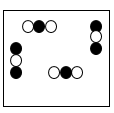
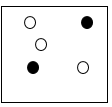
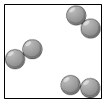
What does the diagram show?
a)
A mixture of two elements
b)
A pure compound
c)
A mixture of two compounds
d)
A mixture of a compound & element
132.
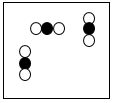
What does the diagram show?
a)
A mixture of two elements
b)
A pure compound
c)
A mixture of two compounds
d)
A mixture of a compound & element
133.
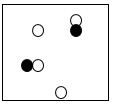
What does the diagram show?
a)
A mixture of two elements
b)
A pure compound
c)
A mixture of two compounds
d)
A mixture of a compound & element
134.
What does the diagram show?
a)
A mixture of two elements
b)
A pure compound
c)
A mixture of two compounds
d)
A mixture of a compound & element
135.
Which description below is a true statement about the diagram?
a)
The diagram can be classified as an element and a molecule
b)
The diagram can be classified as a compound
c)
The diagram can be classified as a mixture of two compounds
d)
The diagram can be classified as a mixture of two elements
136.
Which statement below is TRUE about compounds?
a)
The properties of compounds are totally different than the properties of the elements that form them
b)
All compounds are listed on the Periodic Table of Elements
c)
A compound is a pure substance that is made from one type of atom
d)
The properties of compounds are the same as the properties of the elements that form them
137.
A pure substance that is made from one type of atom is a(n) ______________ .
a)
Mixture
b)
Atom
c)
Element
d)
Compound
138.
Classify Sulfuric Acid (H2SO4) as an element or compound.
a)
Element
b)
Compound
139.
How many TOTAL atoms make up the molecule 8K2SO4?
a)
8
b)
56
c)
7
d)
15
140.
TRUE OR FALSE:
There are millions of elements.
a)
True
b)
False
141.
TRUE OR FALSE:
There are millions of compounds.
a)
True
b)
False
142.
The air is a _________. 
a)
element 
b)
mixture 
c)
compound 
d)
energy 
143.

Examples are diamonds (C) and Uranium (U)

a)

elements

b)

mixtures

c)

compounds

144.

Sn

a)

tin

b)

iron

c)

sulfer

d)

sodium

145.

Zinc

a)

Z

b)

Zc

c)

Zi

d)

Zn

146.

Neon

a)

Nn

b)

No

c)

N

d)

Ne

147.

Calcium

a)

Ca

b)

CA

c)

Cl

d)

CL

148.

Copper

a)

C

b)

Co

c)

Cu

d)

CP

149.

Helium

a)

H

b)

He

c)

HE

d)

Hl

150.

Au

a)

Silver

b)

Golg

c)

Gold

d)

sliver

151.

Pb

a)

lead

b)

gold

c)

peanutbutter

d)

nitrogen

152.

Fe

a)

Lead

b)

Iron

c)

Gold

d)

Lead

153.

Nickel

a)

Nc

b)

Ni

c)

N

d)

NI

154.

Mercury

a)

HG

b)

Hg

c)

H

d)

M

155.
Electricity is the flow of _________.
a)
Protons
b)
Neutrons
c)
Electrons
156.
A series circuit has ____ path(s) that the electric current can take. 
a)
One
b)
Two 
c)
Three 
d)
Four
157.
What is the unit of Current?
a)
Amps
b)
Watts
c)
Volts
d)
Joules
158.
What is the unit of voltage?
a)
Amps
b)
Watts
c)
Volts
d)
Joules
159.
What is the unit of energy?
a)
Amps
b)
Watts
c)
Volts
d)
Joules
160.
If the voltage from the battery was 10V in this diagram what would be the voltage across each bulb?
a)
10V
b)
5V
c)
20V
d)
0V
161.
If you decrease the voltage of a circuit, what happens?
a)
Current decreases
b)
Current increases
c)
Electrons disappear
d)
Bulbs get brighter
162.
Resistance is measured in:
a)
joules
b)
ohms
c)
amperes
d)
watts
163.
Identify the following as characteristics of either a series circuit or a parallel circuit:

When one light bulb burns out, they all go out.
a)
Series circuit
b)
Parallel circuit
164.
Identify the following as characteristics of either a series circuit or a parallel circuit:

When one light bulb burns out, the rest stay lit.
a)
Series circuit
b)
Parallel circuit
165.
If you decrease the resistance of a circuit, what happens?
a)
Current decreases
b)
Current increases
c)
Electrons disappear
d)
Bulbs get dimmer
166.
The relationship between current, voltage and resistance can be predicted according to:
a)
Coulomb's Law
b)
Ohm's Law
c)
Newton's
d)
Kirchoff's Law
167.
The current flowing in an electric circuit can be increased by:
a)
increasing voltage or decreasing resistance.
b)
decreasing voltage or increasing resistance.
c)
increasing voltage and increasing resistance.
d)
decreasing voltage and decreasing resistance.
168.
According to Ohm's Law, if the resistance is increased, what happens to the current through the resistor?
a)
It increases.
b)
It decreases.
c)
It remains the same.
169.
A 20 Ω and a 40 Ω resistor are connected in series across a battery. If the current is 2.00 A, what is the voltage of the battery?
a)
30.0 V
b)
60.0 V
c)
80.0 V
d)
120 V
170.
A 2 Ω and 12 Ω resistor are connected in parallel across a 20 V battery. What is the current through the 2 Ω resistor?
a)
1.40 A
b)
1.67 A
c)
11.6 A
d)
10.0 A
171.
A/An _________ is used to measure the Voltage (potential difference) across a portion of a circuit.
a)
ammeter
b)
battery
c)
resistor
d)
voltmeter
172.
Which device measures the current in a circuit?
a)
ammeter
b)
amplifier
c)
voltmeter
d)
rheostat
173.

What needs to be done to this circuit so that the lamp lights up?

a)

Close the switch

b)

Add a source and close the switch

c)

Add another lamp

d)

Add another lamp and a switch

174.

1. Which switch or switches must be closed to make the lamps light?

a)

Only switch 1

b)

Only switch 1

c)

Switches 1 and 2

d)

Switches 1 , 2 and 3

175.

Peter has connected two bulbs across two batteries in a simple circuit. How can she make the bulbs dimmer?

a)

Replace one of the batteries with a section of wire

b)

Replace one of the bulbs with a section of wire

c)

Replace one of the batteries with a cork

d)

Replace the batteries for more wire

176.

Why is a bulb brighter when it is powered by two batteries rather than one?

a)

Because the flow of electricity in the circuit is less

b)

Because the flow of electricity in the circuit is the same

c)

Because the flow of electricity in the circuit is greater

d)

Because the flow of electricity will go backward

177.
what is this symbol for?
a)
light bulb
b)
cell
c)
battery
d)
resistor
178.

This is the circuit symbol for ...

a)

an AC current source

b)

amps

c)

an ammeter

d)

a voltmeter

179.

This is the circuit symbol for ...

a)

a voltage

b)

a DC current source

c)

an ammeter

d)

a voltmeter

180.
This is the circuit symbol for ...
a)
an AC current source
b)
a DC current source
c)
a battery
d)
a single cell
181.
This is the symbol for a _____?
a)
Lamp
b)
Water wheel
c)
Loudspeaker
d)
Motor
182.

Why electrical wiring usually are covered with a layer of plastic?

a)

To make it look pretty

b)

To help electricity flow along the wire

c)

To make it safe

d)

To add more energy

183.

A 4000-Ω resistor is connected across a 220-V power source. What current will flow through the resistor?

a)

0.055 A

b)

1.8 A

c)

5.5 A

d)

18 A

184.
This is the symbol for a _____?
a)
switch
b)
light 
c)
battery
d)
wires
185.
A continuous flow of electricity is called_____________
a)
series
b)
circuit
c)
static
d)
current
186.
What size resistor would produce a 3 Amp current flow with a 12 Volt battery
a)
1 Ohm
b)
3 Ohms
c)
4 Ohms
d)
12 Ohms
187.
What is the Voltage of a circuit that has a resistance of 5 Ω and a current of 2 A?
a)
25 V
b)
10 V
c)
2.5 V
d)
0.4 V
188.
Current times Resistance equals
 (I X R)
a)
Power
b)
Voltage
c)
Amperage
d)
Ohm
189.

Voltage divided by Resistance

(V / R)

a)

Current

b)

Power

c)

Ohms

d)

Watts

190.

Voltage divided by Current

(V / I)

a)

Current

b)

Power

c)

Resistance

d)

Watts

191.
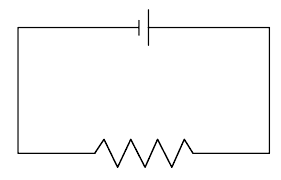
This circuit has a 24 volt battery and the resistor is 8 ohms. How many amps are running through the circuit?
a)
3 Amps
b)
192 Amps
c)
2 Amps
d)
4 Amps
192.
What word means how hard it is for electrons to flow through.
a)
Current
b)
Voltage
c)
Resistance
d)
Power
193.
Which circuit diagram matches this picture of a circuit?
a)
A
b)
B
c)
C
d)
D
194.
This is the symbol for 
a)
An Ammeter
b)
A Voltmeter
c)
A Meter
d)
A Motor
195.

Look at the diagram of a simple circuit. What is the function of the part labeled X?

a)

causes resistance to electric current

b)

opens and closes the circuit

c)

provides an energy source for the circuit

d)

allows a path for the current to flow

196.
This is the symbol for a _____?
a)
Thermistor
b)
Resistor
c)
Diode
d)
Cell
197.
This is the symbol for a _____?
a)
Variable resistor
b)
Thermistor
c)
Resistor
d)
Fuse
198.
This is the symbol for a _____?
a)
Variable Resistor
b)
Thermistor
c)
Light Dependent Resistor
d)
Resistor
199.
This is the symbol for a _____?
a)
Diode
b)
LED
c)
Microphone
d)
Loudspeaker
200.
This is the symbol for a _____?
a)
Fixed resistor
b)
Variable resistor
c)
Fuse
d)
Box
201.
This is the symbol for a _____?
a)
Fuse
b)
Resistor
c)
Heater
d)
Strip light
202.
This is the symbol for a _____?
a)
LED
b)
LDR
c)
Lamp
d)
Loudspeaker