wayground logo

Free Printable Worksheets

Font size

S
M
L
XL
Worksheets

Tissues

Total questions: 117

Worksheet time: 1hrs 11mins

Name
Class
Date
1.
Which of the following is not one of the four basic types of tissue?
a)
epithelial
b)
connective
c)
muscle
d)
avascular
2.

Which epithelial tissue has more than one layer of flattened cells?

a)

simple squamous

b)

stratified squamous

c)

transitional

d)

simple columnar

3.

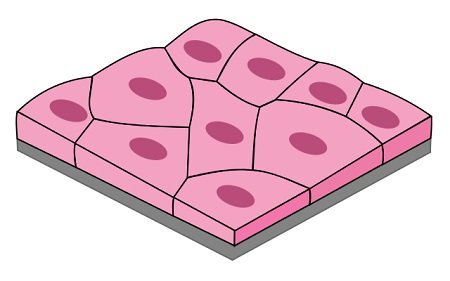
Name the type of epithelium

a)

simple cuboidal

b)

simple squamous

c)

simple columnar

d)

stratified squamous

4.

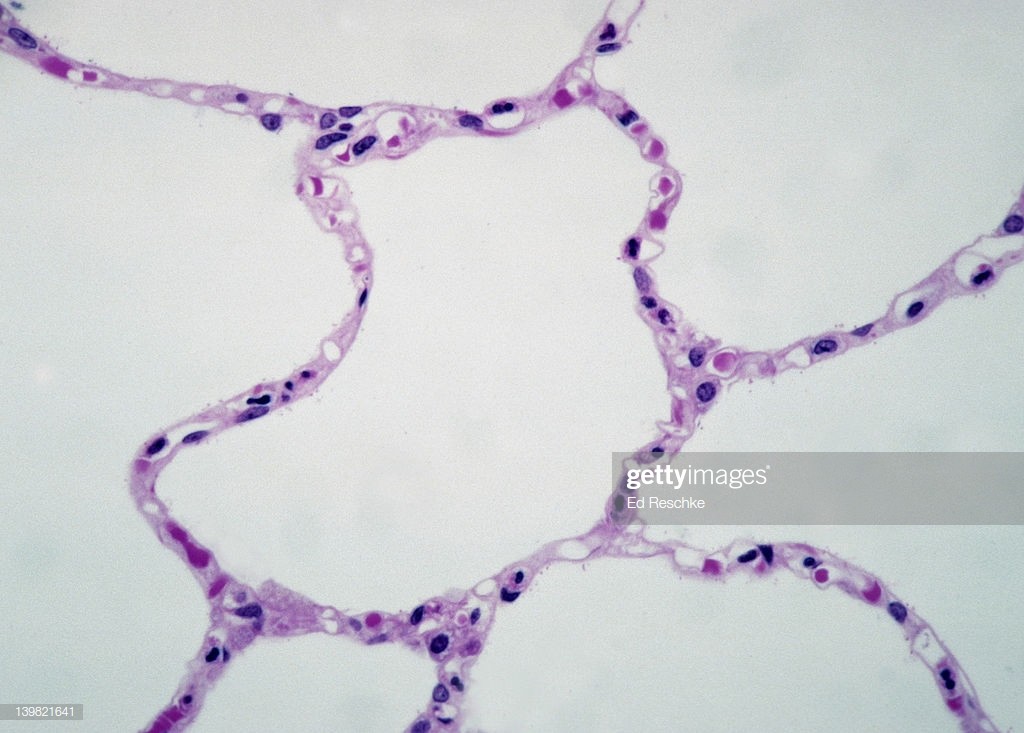
What type of epithelium lines the air sacs in this slide of lung tissue?

a)

simple cuboidal

b)

simple columnar

c)

simple squamous

d)

pseudostratified columnar

5.

What feature found on the surface of this epithelial layer greatly increases the surface area for absorption?

a)

cilia

b)

microvilli

c)

endoplasmic reticulum

d)

multiple nuclei

6.

What type of epithelial tissue is this and where might you find it?

a)

stratified cuboidal ; small intestine

b)

simple squamous ; lung

c)

pseudostratified columnar ; trachea

d)

transitional ; bladder

7.

All of the following are common locations of simple squamous epithlium EXCEPT

a)

lungs

b)

lining blood vessels

c)

trachea

d)

kidney tubules

8.
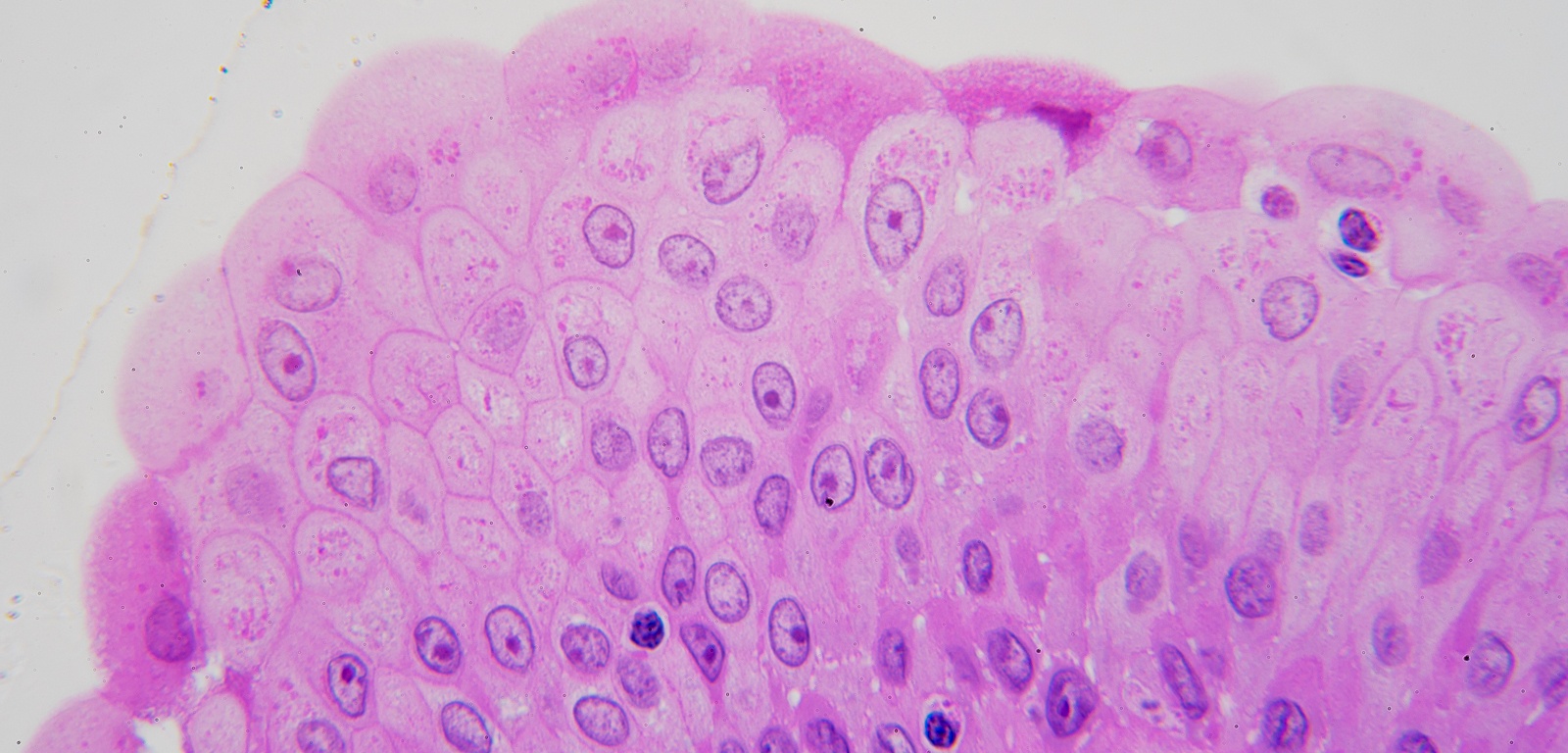
Identify:
a)
Pseudostratified
b)
Smooth Muscle
c)
Transitional
d)
Stratified Squamous
9.
Identify:
a)
Smooth Muscle
b)
Columnar
c)
Transitional
d)
Pseudostratified
10.
Identify:
a)
Areolar
b)
Smooth Muscle
c)
Transitional
d)
Simple Squamous
11.
Identify:
a)
Columnar
b)
Cuboidal
c)
Pseudostratified
d)
Transitional
12.

A single layer of tall, skinny epithelial cells would be best described as

a)

simple cuboidal epithelium

b)

simple columnar epithelium

c)

simple squamous epithelium

d)

stratified columnar epithelium

13.

Stratified epithelium is typically used for

a)

excretion

b)

secretion

c)

protection

d)

absorption

14.

Simple ____________ epithelial cells are specialized for secretion and are found in pancreas.

a)

columnar

b)

cuboidal

c)

squamous

d)

transitional

15.

Which epithelial cell is best suited for diffusion?

a)

simple squamous

b)

simple columnar

c)

stratified squamous

d)

stratified columnar

16.

An epithelium made up primarily of flattened cells is called:

a)

squamous

b)

cuboidal

c)

columnar

d)

stratified

17.

Epithelial cells that can stretch from a cuboidal or columnar shape to a squamous shape are called

a)

Transitional epithelium

b)

Simple cuboidal epithelium

c)

Stratified keratinized squamous epithelium

d)

Stratified non-keratinized squamous epithelium

18.

____________ epithelium tissue is found on the surface of the ovaries.

a)

Stratified

b)

Simple cuboidal

c)

Pseudostratified

d)

Simple columnar

19.

The principal difference between simple and stratified epithelium is in the number of

a)

Microvilli

b)

Cell layers

c)

Free surfaces

d)

Nuclei per cell

20.

Which of the following task is NOT performed by epithelial cells?

a)

Filtration

b)

Secretion

c)

Absorption

d)

Contraction

21.

Epithelial tissue always has an exposed outer surface and an inner surface anchored to connective tissue by a thin, non- cellular structure called the

a)

Nonstratified layer

b)

Stratified layer

c)

Basement membrane

d)

Fibroblast

22.

Ciliated columnar epithelium cells are meant for

a)

Absorption

b)

Secretion

c)

Digestion

d)

Egestion

23.

Intestine absorb the digested food materials. What type of epithelial cells are responsible for that?

a)

Stratified squamous epithelium

b)

Columnar epithelium

c)

Spindle fibres

d)

Cuboidal epithelium

24.

Which of the following helps in the repair of tissue and fills up the space inside the organ?

a)

Tendon

b)

Adipose tissue

c)

Areolar

d)

Cartilage

25.
a)

smooth muscle

b)

bone

c)

nerve

d)

blood

26.
a)
nerve
b)
elastic cartilage
c)
fibrocartilage
d)
cardiac muscle
27.
What is the function of epithelial cells?
a)
Act as barriers between the external environment, or between organs and fluidfilled cavities
b)
Provide movement by pulling on bones
c)
Provide secretions which help to digest food
d)
Act as the messaging pathway between different areas of the body
28.
Define tissue with regards to anatomy
a)
A group of structurally and functionally related cells that come together to perform common functions
b)
Multiple sheets of thin paper used to clean your nose
c)
A series of different cells in the same area
d)
The smallest structural and functional unit of an organism
29.
Which type of muscle tissue would line the intestines?
a)
Smooth
b)
Cardiac
c)
Skeletal
d)
Transitional
30.
What tissue type is this?
a)
Adipose tissue
b)
Cardiac muscle
c)
Nervous tissue
d)
Skeletal muscle
31.
What tissue type is this?
a)
Nervous tissue
b)
Cardiac muscle
c)
Smooth muscle
d)
Connective tissue proper
32.
What tissue type is this?
a)
Skeletal muscle
b)
Nervous tissue
c)
Adipose tissue
d)
'Specialised' connective tissue
33.
Cells make up.....
a)
Tissues
b)
Organs
c)
Organ systems
d)
more cells
34.
Organs  make up.....
a)
Tissues
b)
Organs
c)
Organ systems
d)
more cells
35.
Which of the following tissues binds everything together?
a)
Epithelial
b)
Connective
c)
Muscle 
d)
Nervous
36.
Which of the following tissues lines the interior and exterior of organs?
a)
Epithelial
b)
Connective
c)
Muscle 
d)
Nervous
37.
Which of the following tissues is made up of cells that conduct impulses?
a)
Epithelial
b)
Connective
c)
Muscle 
d)
Nervous
38.

What tissue is this?

a)

Muscle

b)

Epithelial

c)

Nervous

d)

Connective

39.
The muscle tissue shown is called ______.
a)
Skeletal
b)
Cardiac
c)
Smooth
40.

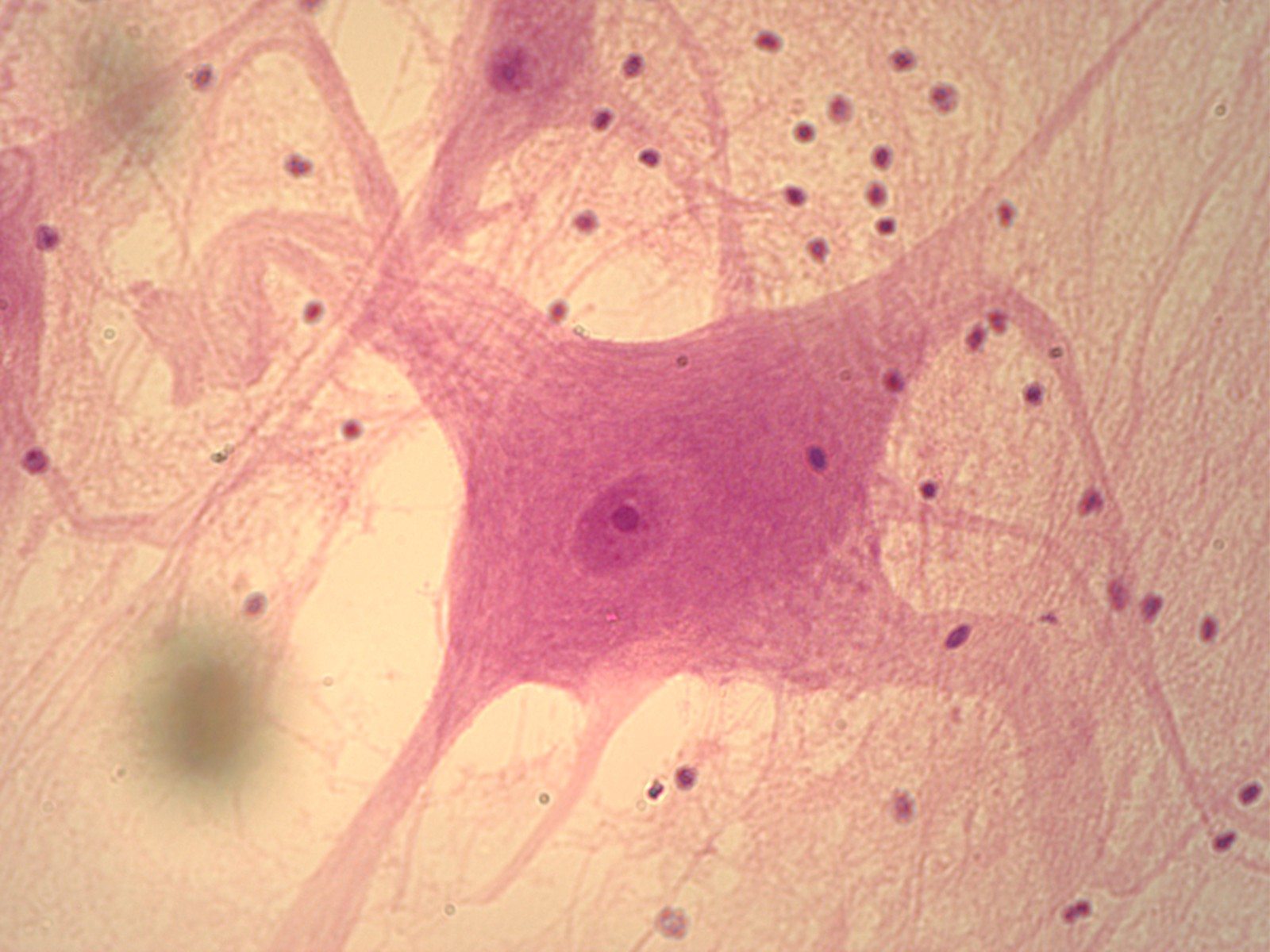
What tissue is this?

a)

Epithelial

b)

Nervous

c)

Connective

d)

Muscular

41.

What tissue is this?

a)

Epithelial

b)

Connective

c)

Muscular

d)

Nervous

42.
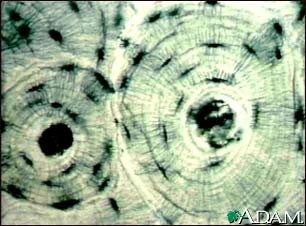
Name this tissue
a)
Bone
b)
Cartilage
c)
Blood
d)
Adipose
43.
The top surface of an epithelial tissue
a)
Apical Suface
b)
Basement membrane
44.
Which tissue is this?
a)
Simple Squamous
b)
Stratified Squamous
c)
Simple cuboidal
d)
Pseudostratified columnar
45.
Which tissue is this?
a)
Simple squamous
b)
simple columnar
c)
transitional
d)
simple cuboidal
46.
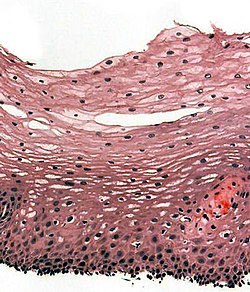
which tissue is this?
a)
Pseudostratified columnar
b)
Stratified Squamous
c)
Simple Columnar
d)
Transitional
47.
Which type of epithelial tissue would allow oxygen to quickly pass through it?
a)
Simple Squamous
b)
Simple Cuboidal
c)
Simple Columnar
d)
Transitional
48.
Which type of muscle tissue would line the intestines?
a)
Smooth
b)
Cardiac
c)
Skeletal
d)
Transitional
49.
What type of Connective Tissue are TENDONS and LIGAMENTS
a)
Dense Connective Tissue
b)
Osseous Tissue
c)
Loose connective Tissue
d)
Cartilage
50.
What type of Connective tissue is found at the ends of bones to reduce friction?
a)
Cartilage
b)
Dense connective tissue
c)
Adipose Tissue
d)
Loose connective tissue
51.
What type of tissue SIGNALS the intestines to move food along?
a)
Nervous Tissue
b)
Blood Tissue
c)
Smooth muscle tissue
d)
Skeletal Muscle Tissue
52.
Salivary glands are 
a)
Endocrine Glands
b)
Exocrine Glands
53.
The pituitary gland puts growth hormone into the blood. What type of gland is it?
a)
Endocrine Gland
b)
Exocrine Gland
54.
What is the MATRIX of Blood tissue?
a)
Collagen
b)
Calcium and Salts
c)
Plasma
d)
Fat
55.
What type of muscle tissue is VOLUNTARILY controlled
a)
Skeletal Only
b)
Skeletal and Cardiac
c)
Smooth and Cardiac
d)
Cardiac Only
56.
What are the smooth wave-like motions of Smooth muscle tissue?
a)
Peristalsis
b)
Pseudostratified movement
c)
Plasmadosis
d)
Plutoniosis
57.
Which type of epithelial tissue stretches and is found in the bladder and other urinary organs?
a)
Transitional
b)
Simple Cuboidal
c)
Stratified Squamous
d)
Stratified Columnar
58.
What type of epithelial tissue would make up salivary, sweat, oil, and mammary glands?
a)
Simple cuboidal
b)
Simple columnar
c)
Simple squamous
d)
Transitional
59.

Define tissue with regards to anatomy

a)

Multiple sheets of thin paper used to clean your nose

b)

The smallest structural and functional unit of an organism

c)

A series of different cells in the same area

d)

A group of structurally and functionally related cells that come together to perform common functions

60.
What is the function of epithelial cells?
a)
Act as barriers between the external environment, or between organs and fluidfilled cavities
b)
Provide movement by pulling on bones
c)
Provide secretions which help to digest food
d)
Act as the messaging pathway between different areas of the body
61.
What is the general structure of cuboidal cells?
a)
Square with large central nucleus
b)
Flat, 'fried egg' appearance
c)
Rectangular with nucleus towards basal end
d)
Dead apical cells filled with keratin
62.

What is the difference between exocrine and endocrine functions?

a)

Exocrine cells secrete fluids to the outside of the body; endocrine cells secrete fluids into the inside of the body

b)

They are synonymous

c)

Exocrine cells secrete fluids into ducts; endocrine cells secrete fluids into the blood stream

d)

Exocrine cells secrete clear fluids; endocrine cells secrete opaque fluids
63.
The stomach consists of what type of muscle?
a)
Smooth muscle
b)
Skeletal muscle
c)
Cardiac muscle
d)
Deoxygenated muscle
64.
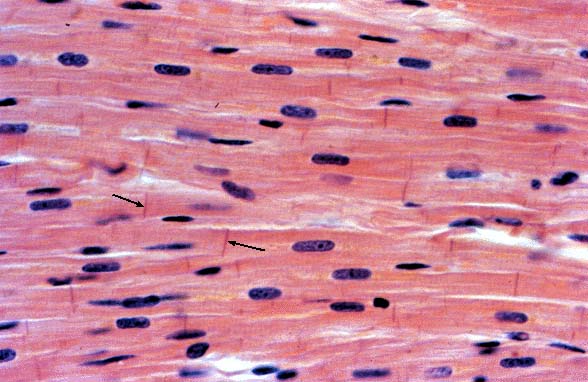
What tissue type is this? (The arrows are a clue)
a)
Cardiac muscle
b)
Skeletal muscle
c)
Smooth muscle
d)
Nervous tissue
65.

Collagen is a protein that is particularly abundant in

a)

covering and lining epithelium

b)

dense regular connective tissue

c)

smooth muscle

d)

adipose tissue

66.

How many types of epithelial tissues are there?

a)

3

b)

4

c)

8

d)

6

67.

What tissues out of these are fluid connective tissues?

a)

blood

b)

neuron

c)

lymph

d)

cartilage

68.

Which of the following are Supportive connective tissues

a)

Bone

b)

Blood

c)

Adipose

d)

Cartilage

69.
What is the correct order of organization
a)
tissues-cells-organs-organ systems-organism
b)
cell-tissue-organs-organ systems-organism
c)
organism-cells-tissues-organ systems-organism
d)
tissues-cells-organs-organ sytems-organism
70.
What is blood classified as?
a)
tissue
b)
organ
c)
organ system
71.

This name means that there are multiple layers of cells

a)

Simple

b)

Stratified

c)

Columnar

d)

Pseudostratified

72.

These cells are small and flat

a)

Cuboidal

b)

Columnar

c)

Squamous

d)

Pseudostratified

73.

Which of the following is NOT a function of epithelial tissues?

a)

covering exposed surfaces

b)

lining internal passageways

c)

producing glandular secretions

d)

contracting to produce movement

74.
Which is NOT a shape of epithelial cells?
a)
cuboidal
b)
columnar
c)
squamous
d)
circular
75.

Which of the following is NOT true about epithelial tissue?

a)

it forms glandular tissue

b)

it has a good blood supply

c)

one side rests on a basement membrane

d)

it forms continuous cellular sheets

76.

Name the tissue

a)

Pseudostratified

b)

Simple columnar

c)

Transitional

d)

Stratified Squamous

77.

Where might you find this type of epithelium?

a)

stomach

b)

trachea

c)

small intestine

d)

lungs

78.

What type of epithelium lines the air sacs in this slide of lung tissue?

a)

simple cuboidal

b)

simple columnar

c)

simple squamous

d)

pseudostratified columnar

79.

What feature found on the surface of this epithelial layer greatly increases the surface area for absorption?

a)

cilia

b)

microvilli

c)

endoplasmic reticulum

d)

multiple nuclei

80.

Where in the body would you most likely find this type of cell layer?

a)

lungs

b)

heart

c)

small intestine

d)

pancreas

81.

What type of epithelial tissue is this and where might you find it?

a)

stratified cuboidal ; small intestine

b)

simple squamous ; lung

c)

pseudostratified columnar ; trachea

d)

transitional ; bladder

82.

What type of epithelium is this and where might you find it?

a)

stratified squamous ; skin

b)

pseudostratified columnar ; trachea

c)

simple squamous ; lung

d)

simple cuboidal ; kidney tubules

83.

What physiological functions are enhanced by epithlial cells bearing microvilli and cilia?

a)

increased surface area for absorption & capturing debris

b)

decreased surface area for absorption & capturing debris

c)

increased surface area for absorption of oxygen

d)

decreased surface area for absorption of oxygen

84.

Name the type of epithelium surrounding the lumen (opening)

a)

simple squamous

b)

simple cuboidal

c)

stratified cuboidal

d)

stratified columnar

85.
Which of the following is NOT a type of connective tissue?
a)
Bone
b)
Cartilage
c)
Skin
d)
Blood
86.
What type of connective tissue is this?
a)
Bone
b)
Cartilage
c)
Blood
d)
Adipose
87.
Most connective tissue is well vascularized. What does that mean?
a)
Poor blood supply
b)
Good blood supply
88.
Which of the following represents the reason that cartilage repairs itself so slowly?
a)
it is never damaged
b)
it is vascular
c)
it is avascular
d)
hormones are present
89.

Which of these contain collagen?

a)

tendons

b)

ligaments

c)

both

d)

neither

90.

Which type of connective tissue makes up the dermis of the skin?

a)

Stratified squamous

b)

Loose connective

c)

Adipose

d)

Bone

91.

Where would you find hyaline cartilage?

a)

ends of bones

b)

nose

c)

ear pinnae

d)

vertebral discs

e)

epiglottis

92.
What is the correct order of organization
a)
tissues-cells-organs-organ systems-organism
b)
cell-tissue-organs-organ systems-organism
c)
organism-cells-tissues-organ systems-organism
d)
tissues-cells-organs-organ sytems-organism
93.
What is blood classified as?
a)
tissue
b)
organ
c)
organ system
94.

This name means that there are multiple layers of cells

a)

Simple

b)

Stratified

c)

Columnar

d)

Pseudostratified

95.

These cells are small and flat

a)

Cuboidal

b)

Columnar

c)

Squamous

d)

Pseudostratified

96.
Used in places where diffusion needs to occur, such as blood vessels and air sacs in the lungs
a)
Cuboidal
b)
Columnar
c)
Simple Squamous
d)
Stratified Squamous
97.
Absorbs nutrients in the digestive tract
a)
Columnar
b)
Cuboidal
c)
Simple Squamous
d)
Pseudostratified
98.

Which tissue assists in support and protection of organs and limbs?

a)

epithelial

b)

connective

c)

muscle

d)

nerve

99.

Which tissue enables various forms of movement, both voluntary and involuntary?

a)

Muscle

b)

nerve

c)

connective

d)

epithelial

100.

Which of the following connective tissues supports the soft tissues and reduces friction at joints?

a)

Cartilage

b)

Muscle tissue

c)

Bone tissue

d)

Fibrous connective tissue

101.

A form of connective tissue in which the cells are specialized for the synthesis and storage of energy-rich reserves of fat, or lipid.

a)

Hyaline cartilage

b)

Adipose tissue

c)

Connective tissue

d)

Areolar tissue

102.

What epithelial tissues are found along tissues that function to allow the exchange of gases?

a)

Simple squamous

b)

Simple cuboidal

c)

Simple columnar

d)

Stratified squamous

103.
Absorbs nutrients in the digestive tract
a)
Columnar
b)
Cuboidal
c)
Simple Squamous
d)
Pseudostratified
104.

In what part of your body you can mostly find the stratified squamous tissues?

a)

Intestines

b)

Kidneys

c)

Lungs

d)

Skin

105.
Which of the following is not one of the four tissue types? 
a)
Blood
b)
Connective
c)
Epithelial
d)
Nervous 
106.
Which type of epithelium is found in glands? 
a)
Cubiodal
b)
Squamous
c)
Transitional
d)
Columnar
107.
Intercalated discs are found in which muscle type?
a)
Cardiac
b)
Skeletal
c)
Lateral
d)
Smooth 
108.
Which type of muscle cells are voluntary? 
a)
Skeletal
b)
Cardiac
c)
Medial 
d)
Smooth 
109.
Which of the following is NOT an arrangement type of epithelial tissue?
a)
Striated
b)
Stratified
c)
Pseudo-stratified 
d)
Simple 
110.
Which type of membrane is found around joints? 
a)
Serous
b)
Mucous
c)
Synovial
d)
Cutaneous 
111.

Which is NOT a type of tissue in your body?

a)

muscle tissue

b)

nervous tissue

c)

connective tissue

d)

specialized tissue

e)

epithelial tissue

112.

What is the function (purpose or job) of muscle tissues?

a)

to allow movement

b)

barrier that protects, absorbs or excretes

c)

supports and attaches

d)

processes and transmits information

113.

What is the function (purpose or job) of nervous tissue?

a)

to allow movement

b)

barrier that protects, absorbs or excretes

c)

supports and attaches

d)

processes and transmits information

114.

What is the function (purpose or job) of epithelial tissues?

a)

to allow movement

b)

barrier that protects, absorbs or excretes

c)

supports and attaches

d)

processes and transmits information

115.

Covers the body surface and forms the lining for most internal cavities.

a)

epithelial tissue

b)

connective tissue

c)

muscle tissue

d)

nervous tissue

e)

episodic tissue

116.

Composed of specialized cells which not only receive stimuli but also conduct impulses to and from all parts of the body.

a)

epithelial tissue

b)

connective tissue

c)

muscle tissue

d)

nervous tissue

e)

episodic tissue

117.

The most abundant and the most widely distributed of this type of structure in the body. They perform a variety of functions including support and protection. Examples are bone, cartilage, etc.

a)

epithelial tissue

b)

connective tissue

c)

muscle tissue

d)

nervous tissue

e)

episodic tissue