
Font size
 Worksheets
Extra Mile #4
Total questions: 111
Worksheet time: 2hrs 14mins
6.8C- Which two measurements are needed to determine the speed of an object?
Position and time
Distance and time
Position and direction
Distance and direction

6.8D- During a science experiment, a student dropped a metal ball from a height of 150 m. The graph shows the distance the metal ball traveled from its initial position to where it hit the ground.
What information does the graph give you about the speed of the metal ball over time?
The ball travels at a constant speed.
The speed of the ball increases over time.
The speed of the ball decreases over time.
e speed of the ball increases at first, and then decreases as time increases.
6.8C- An airplane leaves New York to fly to Boston. It travels 1,000 km in 2 hours. What is the average speed of the airplane?
500 km
1000 hours
500 km/hour
5000 hours/km
6.8A- A ball is sitting at the top of a ramp. As the ball rolls down the ramp, the potential energy of the ball decreases. What happens to the potential energy as the ball moves?
It is lost as gravitational energy.
It is destroyed as the ball moves.
It is converted to kinetic energy
It is used to make the ball slow down.

Which picture of the rock has the LEAST amount potential energy and the GREATEST amount of kinetic energy? Read the answers carefully!
Rock A
Rock B
Rock D
Rock E
6.8D- During a science experiment, a student dropped a metal ball from a height of 150 m. The graph shows the distance the metal ball traveled from its initial position to where it hit the ground.
What information does the graph give you about the speed of the metal ball over time?
The ball travels at a constant speed.
The speed of the ball increases over time.
The speed of the ball decreases over time.
e speed of the ball increases at first, and then decreases as time increases.
6.8C- Which two measurements are needed to determine the speed of an object?
Position and time
Distance and time
Position and direction
Distance and direction
6.8C- An airplane leaves New York to fly to Boston. It travels 1,000 km in 2 hours. What is the average speed of the airplane?
500 km
1000 hours
500 km/hour
5000 hours/km

6.8A- At what point is Mary about to transfer
Potential Energy to Kinetic Energy?
Position A
Position B
They are both the same at all places
Mary never has potential energy
6.8A- Kinetic Energy is the energy of:
Potential
Motion
Storing Energy
Fuel
Light-years is a unit of distance to measure distance in space. The Star Trek Voyager is travelling 30 light years in 3 seconds. What is its speed? SPEED=Distance/Time
10 light years/second
9.5 light years
7 light years

6.8B- A box and forces are shown below. A box rests motionless on the ground. One student is pushing the box to the right with a force of 2 Newtons. The other student is pushing to the left with a force of 5 Newtons. In which direction and with what type of speed will the box move?
It will move left
It will move to the right
It will float in the air
It will not move

6.8B- An image of a toy rocket and forces are shown below. Assuming the only two forces on the toy rocket are lift and gravity, which of the following combinations would result in the rocket moving upward?
Lift= 5 Newtons / Gravity = 5 Newtons
Lift = 3 Newtons / Gravity = 4 Newtons
Lift = 5 Newtons / Gravity = 4 Newtons
Lift = 4 Newtons / Gravity = 4 Newtons

6.8E- The diagram shows an investigation in a science classroom.
Students pulled the same mass up an inclined plane propped up on five blocks, then six, seven, and eight blocks. Each time, they use a spring scale to measure the forces needed to pull the mass up the inclined plane. This investigation can show how which of the following affects the force needed to move an object up an inclined plane?
The mass of the object
The height of the inclined plane
The length of the inclined plane
The surface area of the object
If a car is moving on a highway at 70 kilometers per hour, going south, and then turns to travel 70 kilometers per hour, going east, what happens to its speed and velocity?
Speed - changing, Velocity - constant
Speed - constant, Velocity - changing
Speed - constant, Velocity - constant
Speed - changing, Velocity - changing
Which measurements are necessary for determining both the speed and velocity of a moving object?
Distance, time, and direction
Direction, displacement, and distance
Distance, direction, and acceleration
Direction, time, and acceleration
If a car is moving on a highway at 70 kilometers per hour, going south, and then turns to travel 70 kilometers per hour, going east, what happens to its speed and velocity?
Speed - changing, Velocity - constant
Speed - constant, Velocity - changing
Speed - constant, Velocity - constant
Speed - changing, Velocity - changing
To make an object move you must first apply ---
an opposing force
an unbalanced force
a stationary force
a vertical force
What would you be measuring if you had the object's speed and direction
momentum
velocity
force
weight
What factor will slow down an object moving through space?
air resistance
friction
another object
gravity
What is the change in velocity divided by time?
momentum
force
speed
acceleration
The force of gravity is dependent on an object's ________.
mass
volume
temperature
speed
Newton's second law states that greater the mass the more _________ will be needed to move the object.
power
force
distance
speed
force equals mass times .......
speed
acceleration
velocity
momentum
The force of gravity is dependent on an object's ________.
mass
volume
temperature
speed
What is the change in velocity divided by time?
momentum
force
speed
acceleration
What factor will slow down an object moving through space?
air resistance
friction
another object
gravity
What would you be measuring if you had the object's speed and direction
momentum
velocity
force
weight
If a speed boat is traveling at a constant rate and hits a large wave, how would the boat respond?
It would keep going straight
it would go backward a bit
It would go forward a bit
It would stop
If I threw a rock in space what force would be acting against it?
gravity
friction
electromagnetism
nothing
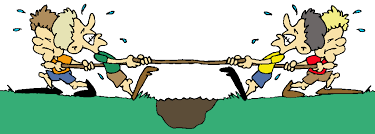
To make an object move you must first apply ---
an opposing force
an unbalanced force
a stationary force
a vertical force

2. By changing the surface over which the car rolls from sandpaper to wax paper, you might be able to test the effect of what force?
A. Magnetism
B. Wind
C. Wind
D. Friction

5. An experiment is conducted to measure the amount of force required to push a square cardboard box from one side of the room to the other side. What variable is likely to lessen the force required?
A. Adding several heavy weights to the box
B. Tipping the box onto its side
C. Adding another box on top
D. Placing the box onto a wheeled cart
6. Some students were investigating if the height that a ball was dropped would affect its bounce. The ball was dropped at 60 cm and at 80 cm. What statement is true of the results for each of the heights that the balls were dropped?
F. There was no difference in the results.
G. The ball dropped from 60 cm bounced 20 cm higher than
the ball dropped from 80 cm.
H. The ball dropped from 80 cm bounced higher than the ball dropped from 60 cm.
J. The ball dropped from 60 cm bounced higher than the ball dropped from 80 cm.

7. A ball is sitting loose in the moving wagon pictured below. If the wagon stops suddenly, the ball will
A. stop immediately with the wagon
B. roll forward in the wagon and fall off
C. both the wagon and the ball will crash
D. stay exactly where it is

The energy associated with motion is called
kinetic energy
potential energy
sound energy
nuclear energy
Thermal Energy is
the energy of motion
energy of nuclear processes
an indication of a physical change
heat energy
At higher temperature
Particles in an object have less kinetic energy
particles in an object move faster
a gas contracts
particles in an object move slower
Hot objects begin to cool as
cooler air is transferred to the hot object
atoms in the object react with the oxygen in the air
thermal energy in the object is transferred to the surrounding air
thermal energy in the object cancels out the energy in the air
Which of the following is TRUE when particles GAIN thermal energy?
particles move more slowly
particles stop moving
particles move further apart
particles move closer together
What happens to particle movement/speed when energy is removed?
particles slow down
particles go faster
particles don't move
particles stay the same speed
The temperature of a substance increases as
the substance expands
the substance's volume increases
the substance's mass increases
the average kinetic energy of its particles increaes
Potential energy depends on the _______ and _________ of an object.
Height and friction
position and composition
Height and mass
Mass and friction
Unlike Kinetic energy, Potential energy is __________.
distributed
stored
destroyed
created
When you are stretching a rubber band, you are storing __________ energy.
Kinetic
Potential
Gravitational
Spring
The Law of Conservation of Energy states that ...
Energy can be created but not destroyed
Energy cannot be created or destroyed but can be transferred or transformed.
Energy cannot be created but can be destroyed.
Energy and work are measured in _________.
Newtons
Joules
m/s
Meters
What happens when a ball is dropped?
PE decreases and KE decreases
PE increases and KE decreases
PE decreases and KE increases
PE increases and KE increases
Roller coasters slow down when going up because . . .
Someone stops it
Kinetic energy gets converted to Potential energy as you are gaining more height.
Kinetic energy increases because more height at the top.
Velocity is increasing thus roller coaster slows down
What are the two type of mechanical energy?
Kinetic & Potential
Potential & Thermal
Kinetic & Electrical
Electrical & Thermal
Energy released when atoms split or join together is called
Gravitational
Nuclear
Elastic
Chemical
Energy stored in the bonds of chemical compounds that is released during certain reactions is called...
Sound
Elastic
Radiant
Chemical
Energy stored in an object when it is compressed or stretched like in a spring or rubber band is called...
Sound
Elastic
Radiant
Chemical

Where would this tossed baseball have the greatest amount of kinetic energy?
point X
point z

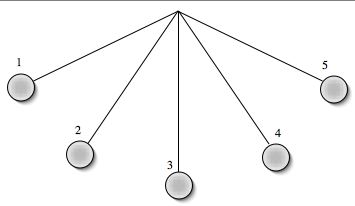
5
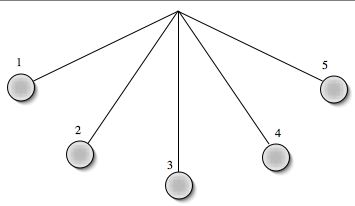

Batteries laying on the table
potential
kinetic

At which point is potential energy greatest?
W
X
Y
Z


Assuming the object is moving from left to right, at which point does it have the most potential energy?
E
F
B
A


Assuming the object is moving from left to right, at which point does it have the most kinetic energy?
D (always at the bottom)
A (always at the top)
Assuming the object is moving from left to right, at which point does it have the most potential energy?
D (always at the bottom)
A (always at the top)
At which point is kinetic energy greatest?
W
X
Y
Z
What can causes a moving object to have more kinetic energy? Select 2 answers. Think about what would hurt more (more energy) to get hit by....
Fast moving
Slow moving
Heavy object
Light object
Problem
A student walks 3 km in 20 minutes. What is the student’s average speed in km/h
12
9
7
6
Problem
A car travels 10 km in 15 minutes. What is the average speed of the car?
25 km/h
20 km/h
40 km/h
45 km/h


Problem
A dog runs 6 km in 30 minutes. What is the dog’s average speed in km/h?
25
180
12
5

Carleton walked for a while, stopped to sit on a bench in the park, and then ran the rest of the way home.
Carleton ran all the way from school to home going the same constant speed and never stopping.
Carleton waited around after school for his friend, and then they ran home together.
Carleton ran for a long time, then slowed down to walk the rest of his trip. Once he got home, he sat down on the couch.

Jessica ran all the way from school to home going the same constant speed and never stopping.
Jessica waited around after school for her friend, and then they ran home together.
Jessica ran for a long time, then slowed down to walk the rest of her trip. Once she got home, she sat down on the couch.
Jessica walked for a while, stopped to sit on a bench in the park, and then ran the rest of the way home.
Problem
Which of the following best describes the speed of an object?
14 m/s2
14 m/s south
14 m/s
14 m south

0.8 m/s
0.08 m/s
1.25 m/s
0.125 m/s

Sam ran for a long time, then slowed down to walk the rest of his trip. Once he got home, he sat down on the couch.
Sam waited around after school for his friend, and then they ran home together.
Sam walked for a while, stopped to sit on a bench in the park, and then ran the rest of the way home.
Sam ran all the way from school to home going the same constant speed and never stopping.


7. How fast are you going if you walk 24 km in 3 hours?
72 km/h
36 km/h
27 km/h
8 km/h

#4 Show all your work on your answer document.
4.5 m/s
0.22 m/s
175 m/s
11250 m/s

#10 Show all your work on your answer document. (Average speed = total distance / total time)
6.25 km/min
21 m/s
0.16 km/min
100 m/s

#9 Show all your work on your answer document. (Average speed = total distance / total time)
1.6 km/min
1.6 m/s
0.625 km/min
0.625 m/s

#2 Show all your work on your answer document.
400 m/min
0.0025 m/min
3600 mi/hr
40 m/s

Ms. H rides her unicorn to the mall. The mall is 2400 meters from her home and it takes her 12 minutes to get to the mall. What is Ms. H's average speed in meters per minute?
200 m/m
150 m/m
220 m/m
250 m/m

How fast is uncle Billy running if it takes him 30 minutes to travel 240 meters?
10 m/m
6 m/m
8 m/m
5 m/m
What is the speed of a rocket that travels 9000 meters in 12.12 seconds?
725 m/s
7,425 m/s
742.5 m/s
680 m/s

