
 Worksheets
1st 9 weeks exam review biology
Total questions: 105
Worksheet time: 6hrs 41mins
Which of the following is NOT part of the cell theory?
All living things are composed of cells.
All cells require oxygen.
Cells are the basic unit of structure and function.
Cells come from preexisting cells.
Monomers come together to form _______________
Energy
Polymers
Chemical Reactions
Enzymes

Letter D in the picture is...
Active Site
Enzyme
Substrate
Products

What is being represented by Letter A in the image
Substrate
Enzyme
Complex
Product
The part of the enzyme that the substrate bonds to is called the _________
Activation Energy
Bond Site
Active Site
Protein

When is the reaction most active?
A
B
C
D
Which statement is part of the CELL THEORY?
eukaryotic cells are complex
humans are multicellular
bacteria are prokaryotic cells
all cells come from preexisting cells
Rigid, outermost layer of the plant cell
Nucleus
Cytoplasm
Cell Wall
Chloroplast
The control center that controls all the functions of the cell
Cytoplasm
Cell Wall
Nucleus
Cell Membrane
Contains chlorophyll and is where PHOTOSYNTHESIS takes place. Found in plant cells only.
Mitochondria
Chloroplast
Vacuole
Cytoplasm
I am the "Powerhouse" of the cell. I make most of the energy!
Vacuole
Nucleus
Mitochondria
Lysosomes

I store water in both plant and animal cells. What am I?
cytoplasm
ribosomes
vacuole
lysosomes

Which of the following is not an autotroph?
mushroom
wheat grass
oak tree
green moss
rose bush

Which are the 3 parts of the Cell Theory? (Check the 3 right answers)
All living things are composed of cells
All cells require water and oxygen to survive
Cells are the basic units of structure and function in living things
All cells are produced from other cells

I decide what goes in and out of the cell. I am fluid like and found in BOTH plant and animal cells. I am a...
Cell Wall
Cell Membrane
Cytoplasm
Golgi Apparatus
The ___ is the basic unit of structure and function of organisms
atom
cell
matter
molecule
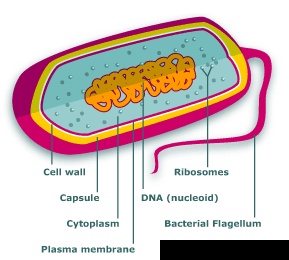
Which type of cell is shown in the diagram?
Prokaryote
Eukaryote
Plasma membranes are selectively permeable. This means
anything can pass in and out
the membrane regulates the passage of the material in and out of the cell
glucose cannot enter the cell
cholesterol cannot enter

This image is an example of a phospholipid. Which part of a phospholipid is HYDROPHOBIC?
the phosphate "head"
the lipid "tails"
This image is an example of a phospholipid. Which part of a phospholipid is HYDROPHILIC?
the phosphate "head"
the lipid "tails"

The majority of the plasma membrane is composed of ______.
phospholipids
proteins
carbohydrates
cholesterol
The invention of the ___ made it possible for scientist to view and study the cell.
blow horn
microscope
slides
telescope
Which group of cells have NO nucleus, are all unicellular, have single strand DNA, and can be found in bacteria?
Prokaryotic Cells
Eukaryotic Cells
Both
Neither
Instead of light, a TEM and SEM utilize ____________ to create an image
a colored pencil
neutrons
protons
electrons
Which cell type tends to be smaller?
Prokaryote
Eukaryote
there is not a size difference

A negatively charged object and a positively charged object will...
attract.
repel.
not experience an electric force.
implode.
A substance that is formed as the result of a chemical reaction is a __________________
Product
Reactant
Starters
Enders
A change in the shape of an object is an example of _________________.
a chemical change
energy
an endothermic change
a physical change
Which of the following is an example of a chemical change?
water freezes to form ice
sugar dissolves in water
gasoline burns in a car engine
a piece of metal expands when it is heated
How does a catalyst work in speeding up a reaction?
By lowering the activation energy or reaction
by giving them more energy
by making them more available
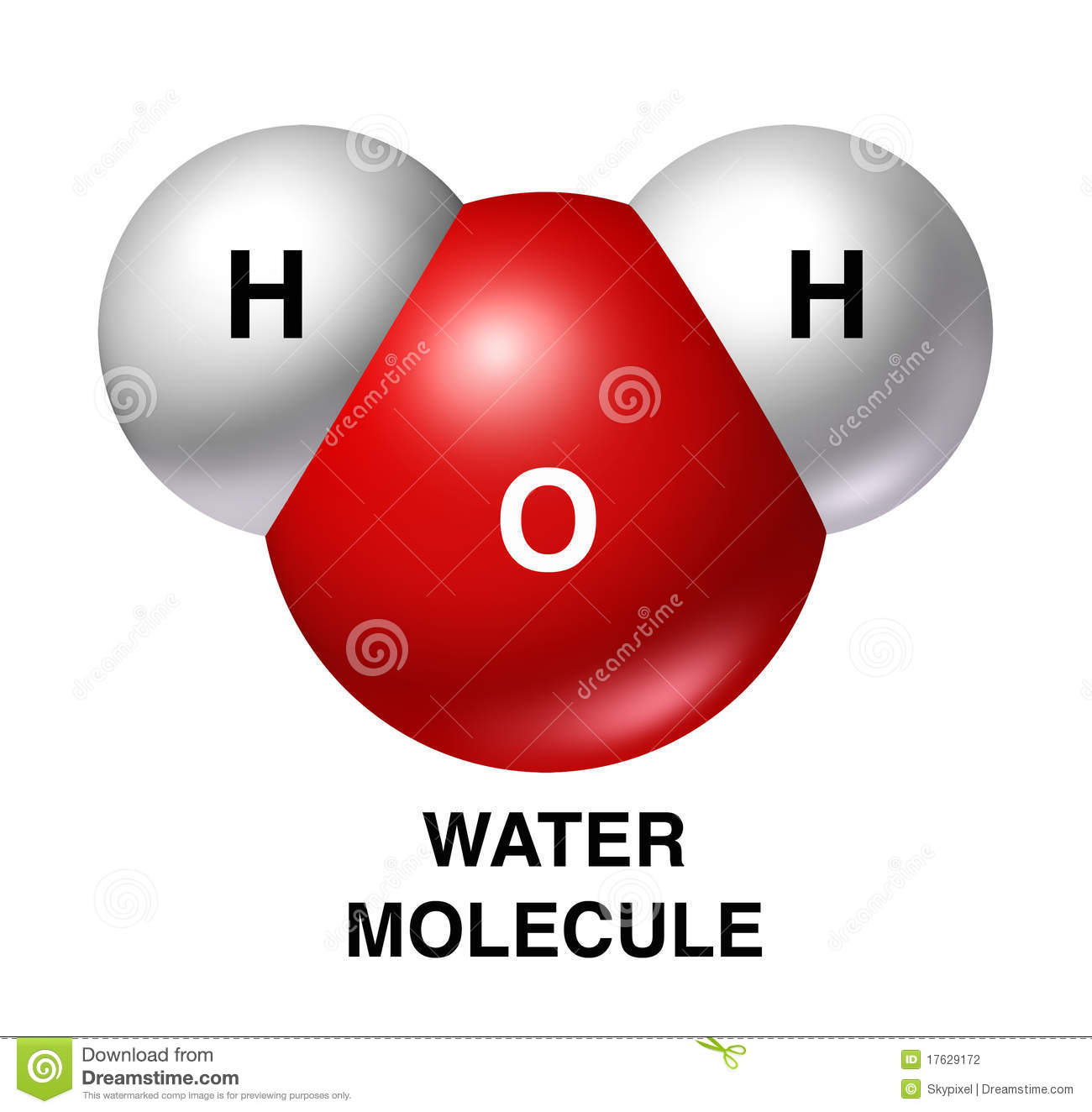
Which part of a water molecule has a Positive Charge?
The Hydrogen
The Oxygen
The Top
The Bottom
What is the correct chemical formula for water?
H2O
HO2
H2O2
2H1O
Which of the following is an example of COHESION?
water sticking to water
water sticking to glass
oil sticking to plastic
hydrogen sticking to oxygen
Which of the following is the CORRECT list of water's properties?
Read Carefully!
adhesion, cohesion, high specific heat, universal solvent
adhesion, cohesion, low specific heat, universal solvent
adhesion, no cohesion, low specific heat, universal solute
no adhesion, cohesion, high specific heat, universal solute
Water is polar. What does that mean?
it is a molecule with opposite charges on opposite ends
it is a molecule with no charge
it is a molecule with identical charges on opposite ends
it is a molecule with too many protons
Water sticks well to many materials. What term relates to this property of water?
cohesion
adhesion
density
surface tension
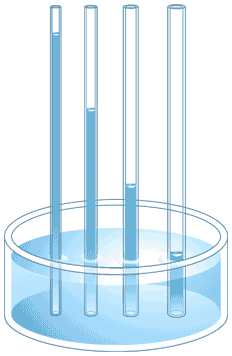
What is the term for water's ability to defy gravity and climb up a tube?
Capillary Action
Specific Heat
Universal Solvent
Magic
____________ are large molecules necessary for life.
Macromolecules
Monomers
Micromolecules
Substrates
Atoms in molecules share pairs of electrons when they make
covalent bonds.
ionic bonds.
hydrogen bonds.
Polar bonds.
Select all of the characteristics shared by all living things.
respond to stimuli
reproduce
made of atoms
grow and develop
use photosynthesis
There are two types of data. Which type of data involves numbers that are obtained by counting or measuring?
quantitative
qualitative
There are two types of data. Which type of data involves descriptions/photographs/illustrations that cannot be counted or measured?
qualitative
quantitative
Why do scientists use the scientific method?
To make sure they get credit for their discoveries.
To make sure their results are valid and can be performed by other scientists.
So that other scientist don't get mad at them
So they can seem intelligent.
Scientific thinking begins with...
Data
Hypothesis
Theory
Observation
Scientific hypotheses are most often tested by the process of....
communicating
inferring
experimenting
analyzing data
Water beads up on the surface of a penny because of this property.
Adhesion
Surface Tension
Universal Solvent
Changes in Density
A: sugar and water
B: water and oxygen
C: carbon dioxide and water
D: oxygen and carbon dioxide



