wayground logo

Free Printable Worksheets

Font size

S
M
L
XL
Worksheets

HW Week of 10/4

Total questions: 61

Worksheet time: 2hrs 45mins
Name
Class
Date
1.
What structures distinguish a plant cell from an animal cell?
a)
Plant cells have cell walls and ribosomes.
b)
Plant cells have cell walls and chloroplasts.
c)
Plant cells have chloroplasts and ribosomes.
d)
Plant cells have chloroplasts and mitochondria.
2.
When cells are damaged, new cells are created by cell division. How does the cell theory support this fact?
a)
It states that all cells have a nucleus which divides.
b)
It states that all living things are made up of one or more cells.
c)
It states that cells come from previously existing cells.
d)
 It states that the basic units of structure and function are cells.
3.
Which organism is made up of cells that have both a cell membrane and a cell wall?
a)
desert mouse
b)
human 
c)
maple tree
d)
zebra
4.
Has membrane bound organelles
a)
Prokaryote
b)
Eukaryote
c)
both
5.
Where is the DNA found in a prokaryotic cell? 
a)
floating around in the cytoplasm 
b)
in the nucleus 
c)
in the ribosomes
d)
attached to the cell membrane
6.

Has cell membrane

a)

Prokaryote

b)

Eukaryote

c)

both

7.
Has cytoplasm
a)
Prokaryote
b)
Eukaryote
c)
both
8.
Has nucleus
a)
Prokaryote
b)
Eukaryote
c)
both
9.
multicellular
a)
Prokaryote
b)
Eukaryote
c)
both
10.
plants
a)
Prokaryote
b)
Eukaryote
c)
both
11.

packages and distributes proteins

proteins may be modified here

a)

golgi body

b)

chloroplast

c)

ribosomes

d)

lysosome

12.

outermost structure that gives support and shape to plant cells

a)

cell wall

b)

cell membrane

c)

mitochrondria

d)

cytoplasm

13.

uses sunlight, carbon dioxide, and water to make glucose and oxygen

a)

chloroplast

b)

nucleus

c)

endoplasmic reticulum

d)

lysosome

14.

stores digestive enzymes and aid in digestion within plant and fungal cells

stores water and waste

a)

vacuole

b)

cytoplasm

c)

chloroplast

d)

cell wall

15.

protective barrier that encloses all cells

controls the movement of materials into and out of the cell

a)

cell membrane

b)

cell wall

c)

endoplasmic reticulum

d)

golgi body

16.

makes proteins from amino acids

a)

ribosomes

b)

mitochondria

c)

nucleus

d)

lysosome

17.

breaks down glucose to produce energy (ATP) during cellular respiration

a)

mitochondria

b)

nucleus

c)

cytoplasm

d)

chloroplast

18.

contains DNA, which has the information on how to make the cell's proteins

control center for the cell

a)

nucleus

b)

lysosome

c)

mitochondria

d)

endoplasmic reticulum

19.

detroys worn-out or damaged organelles

gets rid of waste materials and protects the cell from foreign invaders

found mostly in animal cells

a)

lysosome

b)

vacuole

c)

cell wall

d)

golgi body

20.

gel-like substance where all other organelles are found

it is constantly moving and some cellular reactions can occur here

a)

cytoplasm

b)

vacuole

c)

chloroplast

d)

golgi body

21.

site of many cellular reactions

can be rough or smooth

transports proteins

a)

endoplasmic reticulum

b)

golgi body

c)

ribosomes

d)

mitochondria

22.
What organelle controls and regulates cellular activity?
a)
Ribosome
b)
Nucleus
c)
Mitochondria
d)
Lysosome 
23.
The major function of ribosomes is to
a)
Make fats
b)
Synthesize protein
c)
Digest protein
d)
Make sugars
24.
Which of the following is an enzyme filled organelle that breaks down waste in the cell?
a)
lysosomes
b)
chloroplast
c)
mitochondria 
d)
Golgi apparatus 
25.
In what type of cells would you expect to find many mitochondria ?
a)
muscle cells
b)
nerve cells
c)
skin cells
d)
sperm cells
26.
Rough endoplasmic reticulum has ________________ attached to it. 
a)
ribosomes 
b)
chromosomes 
c)
Golgi apparatus 
d)
nucleolus 
27.
Which of these statements best describes the function of the cell membrane?
a)
It allows things to freely enter and exit the cell
b)
it controls which substances enter and exit the cell
c)
it prevents substances from entering the cell
d)
it prevents substances from leaving the cell
28.
All living things want to remain in...
a)
chaos
b)
homeostasis
c)
limbo
d)
plasmolysis
29.
This is a ____.
a)
Golgi body
b)
plasma membrane
c)
lysosome
d)
cell wall
30.
If the sodium concentration inside a cell is greater than outside the cell, how can a cell take in more sodium?
a)
osmosis
b)
diffusion
c)
active transport
d)
passive transport
31.
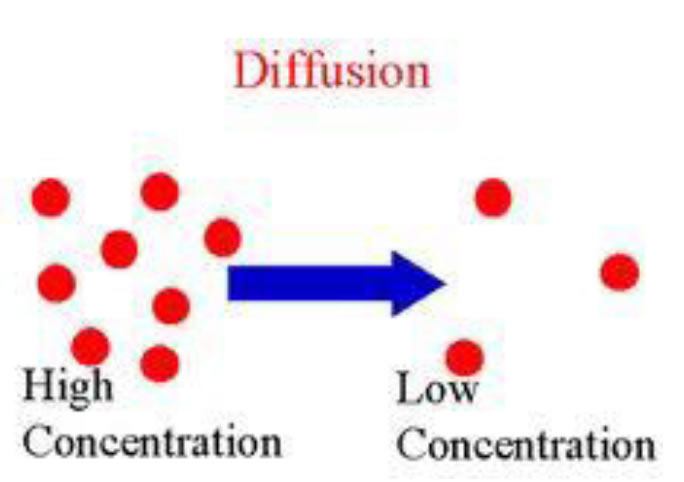
Which process involves the movement of molecules from high concentration to low concentration?
a)
Endocytosis
b)
Active transport
c)
osmosis
d)
phagocytosis
32.
Two different solutions are separated by a membrane permeable only to water. How will molecules move?
a)
solutes will move by dissolving
b)
water will move by active transport
c)
solutes will move by osmosis
d)
water will move by osmosis
33.
Cells need to bring in molecules to carry out cellular processes. Often, this requires moving the molecules across the cell membrane against the concentration gradient. How do these molecules get into the cell?
a)
passive transport by diffusion
b)
active transport using ATP 
c)
passive transport by osmosis
d)
 osmosis
34.
A person with swollen gums rinses his mouth with warm salt water, and the swelling decreases. Which of the following has occurred?
a)
The swollen gums have absorbed the saltwater solution.
b)
The saltwater solution lowers the temperature of the water in the gums.
c)
The salt in the solution has moved against the concentration gradient.
d)
The water in the gums has moved out due to the high concentration of salt in the solution. 
35.
 Look at the diagram of a cross-section of a cell membrane below. The cell membrane controls movement of materials into and out of the cell. The following particles are moving from high concentration to low concentration and are using a carrier protein. How would you describe this type of movement across the membrane? 
a)
simple osmosis
b)
active transport
c)
simple diffusion
d)
facilitated diffusion
36.
Look at the cross section of a cell membrane of a eukaryotic cell. H+ ions are being pumped from a low concentration to a high concentration. How do you describe this type of transport across the cell membrane?
a)
active transport
b)
passive transport
c)
facilitated diffusion
d)
co-transport
37.
 In pure water, a red blood cell from an animal will swell and burst, but a leaf cell from a plant will not. Which structure in the leaf cell is responsible for this difference?
a)
cell membrane
b)
cell wall
c)
 mitochondrion
d)
nucleus
38.
Movement of particles from high to low concentration. 
a)
Passive Transport
b)
Active Transport
39.
What is it called when molecules move across the cell membrane from an area of high concentration to an area of low concentration through a carrier protein?
a)
Diffusion
b)
Osmosis
c)
Active Transport
d)
Facilitated Diffusion
40.
This picture represents what type of cell transport?
a)
endocytosis
b)
exocytosis
c)
osmosis
d)
passive transport
41.
Which is true about active transport?
a)
It requires energy
b)
it does not require energy
c)
It moves substances down the concentration gradient
d)
it moves material from high to low concentration
42.
This cell organelle helps organisms maintain homeostasis by controlling what substances may enter or leave cells.
a)
vacuole
b)
nucleus
c)
cell membrane
d)
cell wall
43.
The cell below is in a _________ solution.
a)
Hypotonic
b)
Hypertonic
c)
Isotonic
44.
The cell below is in a _____________ solution.
a)
Hypertonic
b)
Hypotonic
c)
Isotonic
45.
What is the cell cycle?
a)
The gradual development of something, especially from a simple to a more complex form.
b)
The study of heredity and the variation of inherited characteristics.
c)
The branch of biology that deals with the relations of organisms to one another and to their physical surroundings.
d)
The series of events that take place in a cell leading to its division and duplication of its DNA to produce two daughter cells.
46.
Which part of the Cell Cycle takes the longest?
a)
Interphase
b)
Mitosis
c)
Prophase
d)
Cytokinesis
47.
What happens in the first part of Interphase?
a)
Mitosis
b)
Cell Growth
c)
DNA Replication
d)
Anaphase
48.
What part of the cell cycle results in the splitting of the new cells?
a)
Interphase
b)
Mitosis
c)
Metaphase
d)
Cytokinesis
49.
True or False. 
After a cell goes through cytokinesis, it starts mitosis all over again.
a)
True
b)
False
50.
What phase is this cell in?
a)
Cytokinesis
b)
Mitosis
c)
Prophase
d)
Metaphase
51.
What phase is this cell in?
a)
Mitosis
b)
Interphase
c)
Anaphase
d)
Telophase
52.
What phase is this cell in?
a)
Mitosis
b)
Interphase
c)
Prophase
d)
Telophase
53.
What phase is this cell in?
a)
Mitosis
b)
Cytokinesis
c)
Prophase
d)
Telophase
54.
What is the longest phase in MITOSIS?
a)
Prophase
b)
Metaphase
c)
Interphase
d)
Anaphase
55.
In what phase does chromatin condense to form chromosomes?
a)
Mitosis
b)
Interphase
c)
Prophase
d)
Anaphase
56.
In what phase do the chromosomes get pulled apart into sister chromatid to opposite sides of the cell?
a)
Prophase
b)
Interphase
c)
Metaphase
d)
Anaphase
57.
In what phase do the organelles disperse out into the daughter cells, and the cell prepares for cytokinesis?
a)
Prophase
b)
Interphase
c)
Mitosis
d)
Telophase
58.

Select all stages of interphase?

a)

G1

b)

S

c)

G2

d)

Mitosis

59.

In which stage of the cell cycle does the cell grow in size?

a)

G1

b)

S

c)

G2

d)

Mitosis

60.

In which stage of the cell cycle does the cell duplicate its DNA?

a)

G1

b)

S

c)

G2

d)

Mitosis

61.

In which stage of the cell cycle does the cell split into two?

a)

Mitosis

b)

G1

c)

Cytokinesis

d)

S