
NEW
Font size
 Worksheets
Biome Review - Unit #4 (environmental)
Total questions: 60
Worksheet time: 38mins
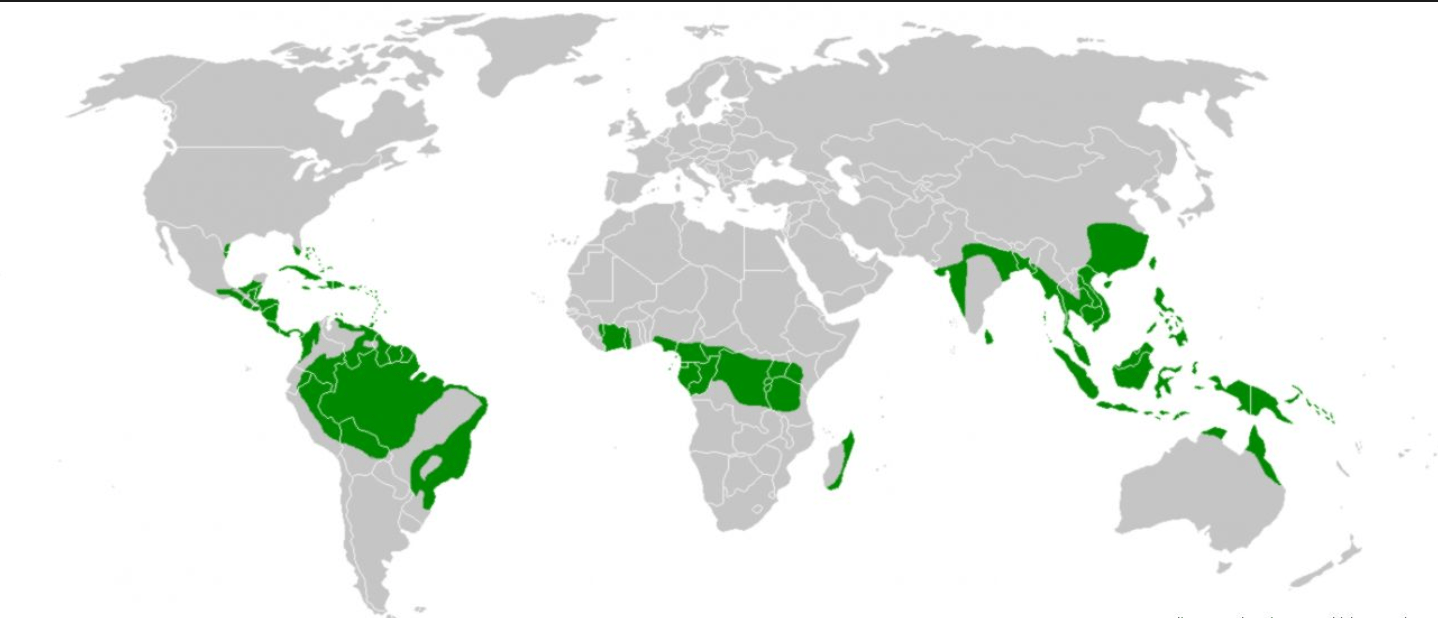
Which biome covers most of the land mass near Earth's equator?
tundra
desert
grassland
tropical rainforest
Which biome has the largest number of species of plants and animals (highest biodiversity)?
tundra
desert
tropical rainforest
pine forest
One characteristic of the tundra is that it has a layer of permanently frozen soil though which no tree roots are able to grow. This characteristic is known as:
glaciation
permafrost
crystallization
soilfrost

Which biome contains large populations of grazing herbivores, like cows and bison, few species of birds, and deep, rich soil but few trees?
taiga
tundra
deciduous forest
grassland
The most important abiotic factors when studying biomes are...
Soil and Freshwater
Producers and Consumers
Native Plants and Animals
Precipitation and Temperature

Which biome has deciduous trees (that lose their leaves in the fall)?
Temperate Forest
Rainforest
Grasslands
Taiga

Which biome has 4 seasons?
Taiga
Tundra
Tropical Rainforest
Temperate Forest

Which biome is home to cacti, scorpions, coyotes, kangaroo rats, and lizards?
Desert
Grasslands
Temperate Forest
Taiga

lichens, mosses, grasses, and other low-growing plants are common vegetation in this biome due to the permafrost, low rainfall, and very cold temperatures.
Desert
Taiga
Tundra
Grasslands
What term describes the living parts of an ecosystem?
Biotic Factors
Abiotic Factors

A desert is very hot during the day and receives very little rain.
Which plants have an adaptation that would help them survive?
plants with waxy coatings
plants with deep roots
plants with large leaves
plants with soft stems

An organism has thick white fur, a bushy tail, and short ears. It often burrows holes and curls into a ball for warmth. To which biome is this organism most likely adapted?
Grassland
Tundra
Taigia
Desert
A biome is characterized by all of the following EXCEPT...
human population size
temperature
precipitation
plant and animal communities

Which biome is highlighted in the picture?
Taiga
Temperate Deciduous Forest
Grasslands
Tundra

Which biome is highlighted in the picture?
Desert
Taiga
Temperate Forest
Tropical Rainforest

This biome, also called a boreal forest, has dense forests of conifers (cone-bearing evergreen trees). Temperatures are cold, but soil is not completely frozen.
Tundra
Taiga
Temperate Forest
Grasslands

The three-toed sloth is adapted to living in a hot, humid climate with lush vegetation and no seasons. What biome would you most liked find this organism?
Temperate Deciduous Forest
Tropical Rainforest
Grasslands
Taiga (Boreal Forest)
What is the best description of a biome?
A group of ecosystems with similar climates (temperature and rainfall) and organisms.
A system of trees, forests, and rivers.
A habitat where large numbers of animals live.
An area with significant amounts of rainfall.
Which of these is NOT part of a marine biome?
open ocean
deep ocean floor
seashore
wetlands
Which of these is NOT part of a freshwater biome?
coral reef
flowing water
wetlands
ponds and lakes
Freshwater biome ecosystems vary by all of the following except
amount of light
temperature
pressure
salt concentration
Lakes are divided into zones. These zones are based on
the size of the lake
the availability of sunlight
the pressure of the lake
the vegetation that lives there
This zone covers the surface of the lake and is known as the photic zone.
Littoral
Limnetic
Profundal
Benthic
What are corals?
living organisms
non-living structures
abiotic
terrestrial
What animals live in the abyss?
Sea Turtles
Sand Dollar
Lantern Fish
Pufferfish
Area of ocean that extends from the low-tide line out to the edge of the continental shelf
deep zone
neritic zone
open ocean
aphotic zone
permanently dark layer of the oceans below the photic zone
aphotic zone
photic zone
surface zone
intertidal zone
Portion of the shoreline that lies between the high and low tide lines
open ocean
deep zone
intertidal zone
aphotic zone
Portion of the marine biome that is shallow enough for sunlight to penetrate.
open ocean
aphotic zone
photic zone
deep zone
the deepest, darkest area of the ocean beyond the edge of the continental shelf
photic zone
oceanic zone
surface zone
intertidal zone
What is the defining difference between the marine, freshwater, and estuary biomes?
Salinity (dissolved salt)
Sunlight
Oxygen
Amount of Water

Which aquatic biome is characterized by where rivers meet oceans?
Marine
Freshwater
Coral Reef
Estuary
A land area that is covered with water for part of the year is called:
Lake
Wetland
River
Estuary

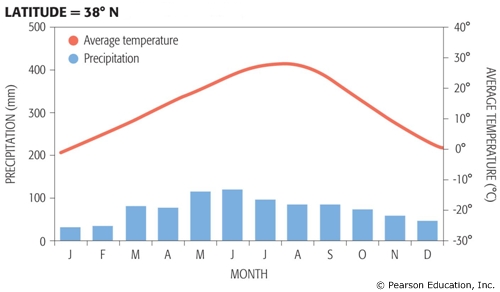
The biome shown in the climatogram above would best be described as a:
temperate deciduous forest
desert
tundra
tropical rain forest

What factors influence the type of plants grow in a biome?
temperature & precipitation
temperature only
precipitation only
none of these


Which month has the lowest average temperature?
December
November
January
February

A climate graph measures:
Temperature (A)
Precipitation (B)
Landforms
A and B

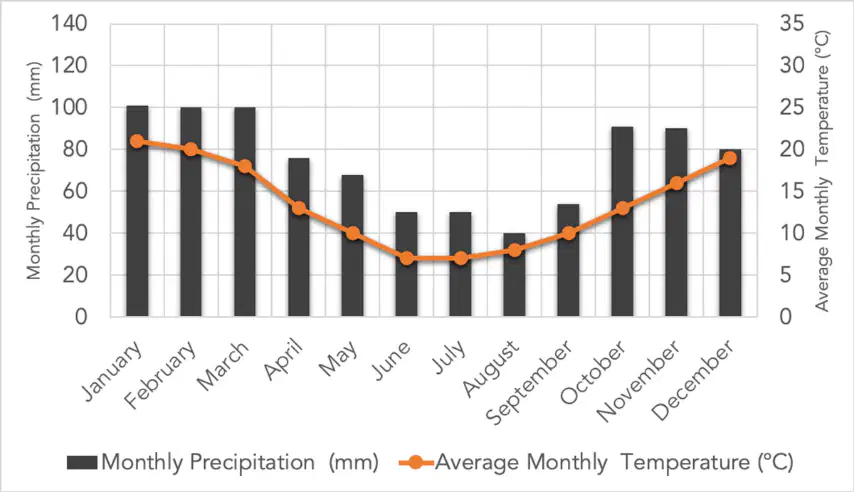
Which biome is pictured in this climatogram?
Grassland
Tundra
Temperate Deciduous Forest
Savannah
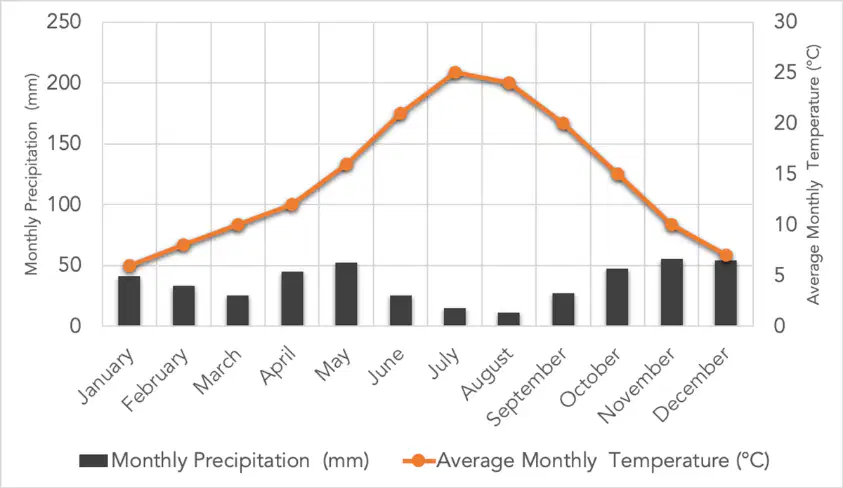
Which biome is pictured in this climatogram?
Tropical Rainforest
Temperate Deciduous Forest
Grassland
Desert
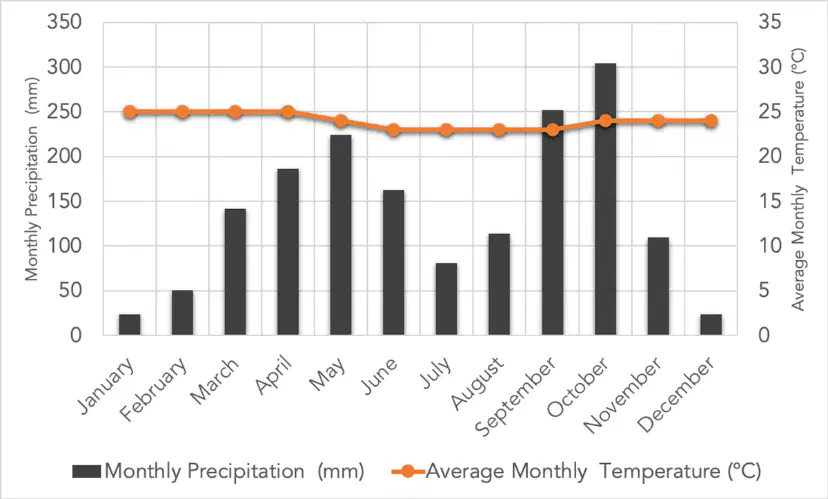
Which biome is pictured in this climatogram?
Temperate Deciduous Forest
Tropical Rainforest
Chapparal
Tundra
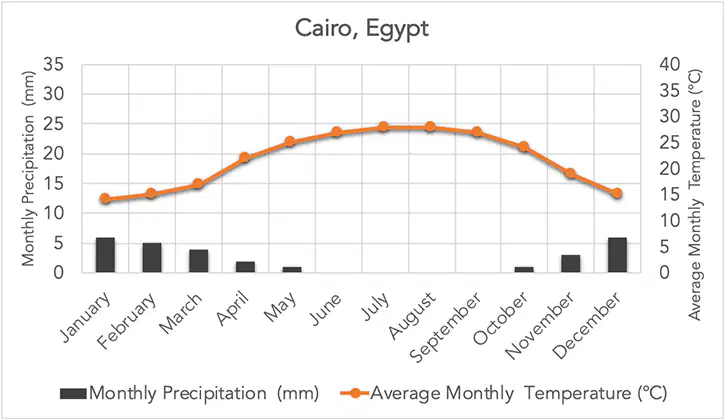
Which biome is pictured in this climatogram?
Tundra
Temperate Decidusou Forest
Desert
Taiga

