Worksheets
Grade 9 Life Science - Cells
Total questions: 162
Worksheet time: 3hrs 24mins
This name means that there are multiple layers of cells
Simple
Stratified
Columnar
Pseudostratified
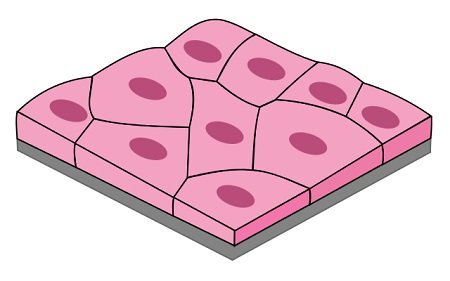
Name the type of epithelium
simple cuboidal
simple squamous
simple columnar
stratified squamous
This type of muscle has no striations and is involuntary, which means that we cannot consciously control it.
skeletal
smooth
cardiac
What do all cells need in order to function?
plasma
oxygen
carbon dioxide
platelet
mitochondria


Who came up with the name "cells" while looking at a slice of cork under a microscope?
Matthias Schleiden
Anton van Leeuwenhoek
Robert Hooke
Rudolf Virchow

Who looked at living organisms in dental scrapings and pond water, and became known as "the father of microbiology?"
Rudolf Virchow
Anton van Leeuwenhoek
Matthias Schleiden
Theodor Schwann

In 1838, who was the German botanist that found that all plants were made of cells?
Matthias Schleiden
Theodor Schwann
Rudolf Virchow
Robert Hooke

In 1839, who was the German physician that added to the cell theory by finding all animals were made of cells?
Anton van Leeuwenhoek
Robert Hooke
Matthias Schleiden
Theodor Schwann

Prokaryotes are
bacteria
fungi
plants
animals

Prokaryotic cells do NOT have membrane bound organelles or ______________________________.
cytoplasm
a nucleus
ribosomes
DNA

In eukaryotic cells DNA is primarily contained within the:
cytoplasm
ribosomes
vacuoles
nucleus

Eukaryotes include fungi, plants, animals, and....
bacteria
protists
archaebacteria
eubacteria

Of the two types of cells, which one is smaller and more simplistic?
prokaryotic cells
eukaryotic cells

Which German scientist published findings that all cells come from existing cells?
Theodor Schwann
Rudolf Virchow
Matthias Schleiden
Robert Hooke

What kind of microscope (seen here) is common in classrooms, uses light to shine through a sample, with a maximum magnification of about 1000 to 1500x?
Dissecting microscope
Compound light microscope
Scanning Electron Microscope (SEM)
Transmission Electron Microscope (TEM)

The fluid portion of the cell (all cells have this):
nucleus
cytoplasm
pili
cell membrane

Structures that have different jobs within the cell:
antibodies
lipids
organelles
blood cells

What is NOT a part of cell theory:
all cells come from existing cells
all cells have a nucleus
all living things are made of cells
cells are basic unit of structure and function in living things

All cells have a cell membrane, cytoplasm, DNA, and...
cell wall
nucleus
ribosomes
chloroplast

Structure in the cell made of protein and RNA, used for protein synthesis...(found in all cells)
nucleus
cell membrane
cytoplasm
ribosomes


What is this structure?
Mitochondria
Nucleus
Chloroplast
Vacuole

What is this structure?
Cell membrane
Cytoplasm
Cell wall
Chloroplast

What is this structure?
Chloroplast
Cytoplasm
Mitochondria
Vacuole

What is this structure?
Chloroplast
Nucleus
Mitochondria
Vacuole

Which organelle is the control center of the cell.?
nucleus
cell membrane
ER
ribosomes
The nucleus
Controls what enters and leaves the call
Contains genetic material
Makes proteins for the cell
Makes food for the cell
gel-like substance that surrounds the organelles of a cell
Cytoplasm
Mitochondria
DNA
Chloroplasts

receives, packages and distributes proteins
golgi body
chloroplast
ribosomes
lysosome

protects and supports plant cells
cell wall
cell membrane
mitochrondria
cytoplasm

Convert's the sun's energy to food for the cell
chloroplast
nucleus
endoplasmic reticulum
lysosome

storage area for the cell
vacuole
cytoplasm
chloroplast
cell wall

controls what enters and leaves the cell
cell membrane
cell wall
endoplasmic reticulum
golgi body

builds proteins for cell functions
ribosomes
mitochondria
nucleus
lysosome

powerhouse of the cell, produces energy
mitochondria
nucleus
cytoplasm
chloroplast

command center, direct's the cell's activities
nucleus
lysosome
mitochondria
endoplasmic reticulum

breaks down food and worn out parts
mostly in animal cells
lysosome
vacuole
cell wall
golgi body

transports materials in the cell
endoplasmic reticulum
golgi body
ribosomes
mitochondria

fluid that fills the cell
cytoplasm
vacuole
chloroplast
golgi body

Which organelle is circled in the diagram?
Nucleus
Mitochondria
Vacuole
Ribosomes

Which organelle is colored in the diagram?
Nucleus
Mitochondria
Vacuole
Ribosomes

Which organelle is colored in the diagram?
Nucleus
Mitochondria
Vacuole
Ribosomes

Which part is colored in the picture? (Look closely--it's the little dots!)
Nucleus
Mitochondria
Vacuole
Ribosomes

Which organelle is colored in this picture?
Cell membrane
Cytoplasm
Vacuole
Nucleus

Which organelle is colored in this picture?
Plasma membrane
Cytoplasm
Vacuole
Nucleus

Which organelle is colored in this picture?
Cytoplasm
Chloroplast
Ribosomes
Nucleus

Which organelle is colored in this picture?
Endoplasmic reticulum
Gogli body
Lysosomes
Cell mebrane

Which organelle is colored in this picture?
lysosome
nucleus
cytoplasm
chloroplast

Smears are often made of blood or slime that is smeared over the slide and allowed to dry before observing them.
True
False
Red blood cells are mostly flat.
True
False
Choose the correct answer(s) about Epithelial cells.
They are long and spindle shaped.
They cover the surface of the body for protection.
They carry oxygen through the body.
They are mostly flat.
Select false statement(s) about nerve cells.
they can contract and relax allowing for movement within your body.
the are very long and have branched ends.
some are long and spindle shaped.
they are specialized to carry messages that coordinate the functions of the body.
in a short paragraph, describe the process of Calvin cycle that takes place in a stroma.
Briefly explain how the sunlight reaches the chloroplast in the process of photosynthesis.

Which letter represents the cell membrane?
F
G
H
I

Which letter represents the nucleus?
A
B
C
D

Which letter represents cytoplasm?
F
G
H
I

Which letter represents the chloroplast?
D
E
F
G

Which letter represents the mitochondria?
A
B
C
D

Which letter represents the central vacuole?
B
C
D
E

Which letter represents the ribosomes?
D
E
F
G

Which letter represents the vacuole?
F
G
H
I
What is the function of the nucleus?
Produce energy (ATP)
To control the cell
Control what enters and exits the cell
Produce proteins
What is the function of the mitochondria?
To produce energy (ATP)
To control the cell
To control what enters and exits the cell
Store water, wastes, and nutrients
What is the function of the vacuole and central vacuole?
To protect the cell
To control what enters and exists the cell
To produce proteins
To store water, wastes, and nutrients
What is the function of the cytoplasm?
To produce proteins
Fills the cell and allows organelles to move
Protects the cell
To produce food for the cell
What is the function of the cell wall?
To control the cell's activity
To produce energy (ATP)
To protect the plant cell
To protect the animal cell
What is the function of the chloroplast?
To produce food for plant cells (photosynthesis)
To produce proteins
To produce energy (ATP) (cellular respiration)
To store water, wastes, and nutrients
What is the function of the cell membrane?
To control the cell's activity
To protect the cell
To control what enters and exits the cell
To produce waste
What is the main function of the ribosomes?
To produce energy (ATP)
To produce waste
To produce proteins
To produce food (photosynthesis)

Which letter represents the cell wall?
C
D
E
F