wayground logo

Free Printable Worksheets

Font size

S
M
L
XL
Worksheets

g 7 q 1 final revision

Total questions: 150

Worksheet time: 3hrs 20mins
Name
Class
Date
1.
Name the planets in order from the one closet to the Sun
a)
Mercury, Venus, Earth, Mars, Jupiter, Saturn, Uranus, Neptune
b)
Neptune, Uranus, Saturn, Jupiter, Mars, Earth, Venus, Mercury
c)
Mercury, Earth, Mars, Venus, Saturn, Jupiter, Uranus, Neptune
d)
Mercury, Venus, Earth, Mars, Jupiter, Saturn, Uranus, Neptune, Pluto
2.
What are the rings of Saturn made of?
a)
Rocks and Dust
b)
Rock, Frozen gases, Ice crystals, and water
c)
Ice Crystals
d)
Stars
3.
Which planet is the only planets to spin on its side?
a)
Earth
b)
Neptune
c)
Jupiter
d)
Uranus
4.
A small, solid, rocky body that orbits the Sun. 
a)
Asteroid
b)
Comet
c)
Meteoroid
d)
Meteor
5.
A chunk of rock that burns up upon entering a planet's atmosphere
a)
Comet
b)
Meteor
c)
Meteoroid
d)
Asteroid
6.
What six things make up our Solar System?
a)
Sun, Planets, Moons, Asteroids, Comets, Meteors
b)
Galaxies, Planets, Stars, Asteroids, Planets, Moons
c)
Sun, Planets, Moons, Stars, Asteroids, Comets
d)
Planets, Stars, Galaxies, Comets, Meteors, Sun
7.
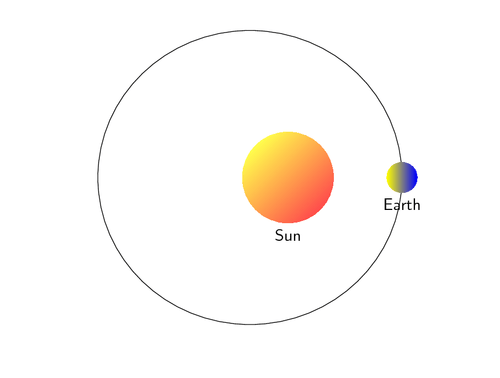
Which of the following is an accurate model of how the Sun, Earth, and Moon move?
a)
Sun and moon orbit Earth
b)
Earth and moon orbit Sun
c)
Earth orbit's the Sun and the moon orbits Earth
d)
Earth and sun orbit moon
8.
What is a planet?
a)
a group of stars that forms a pattern in the sky
b)
a large ball of hot gases that gives off heat and light
c)
a large ball or rock or gas that moves around the sun
d)
a toy aliens play with
9.

the path Earth takes as it moves around the sun. called?

a)
a constellation
b)
a moon
c)
an orbit
d)
a planet
10.
It takes the Earth 365 1/4 days to make one what?
a)
rotation
b)
revolution 
c)
resolution 
d)
circle
11.
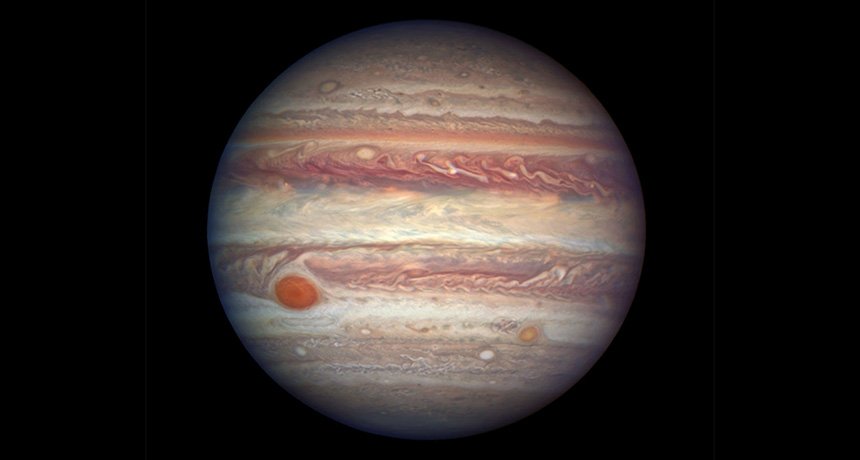
Which is the largest planet in our solar system?
a)
Mars
b)
Earth
c)
Jupiter
d)
Neptune
12.
______ contains 99.8% of the mass in our solar system.
a)
Jupiter
b)
The Sun
c)
Saturn
d)
Venus
13.
Which of the following is an example of a dwarf planet?
a)
Pluto
b)
Mercury
c)
Mars
d)
Neptune
14.

The sun, moon, and earth all rotate on an __________.

a)

Axle

b)

Axis

c)

Pivot

d)

Point

15.

How long does it take for the moon to revolve around the earth?

a)

28 days

b)

31 days

c)

14 days

d)

28 months

16.

Which planet is farthest from the sun?

a)

Pluto

b)

Neptune

c)

Uranus

d)

Jupiter

17.

The ________ are caused by the moon.

a)

weather

b)

gravity

c)

tides

d)

night/day

18.

Which moon phase occurs directly after the new moon?

a)

Waxing gibbous

b)

Full

c)

Waning crescent

d)

Waxing crescent

19.

The orbit of a planet around a star is an_____________.

a)

oval

b)

octogon

c)

elliptical

d)

equator

20.
The four terrestrial planets are known for their _________
a)
hot temps
b)
deep atmospheres
c)
rocky surfaces
d)
large size
21.
A force of attraction between any two objects is called _____________.
a)
static electricity 
b)
rotation
c)
gravity
d)
orbit
22.
One of the main differences between the outer and inner planets is __________.
a)
The inner planets all have water
b)
the inner planets are much bigger than the outer planets
c)
the outer planets are gas planets
d)
the inner planets have rings, and the outer planets don't
23.
Which planet is an INNER planet?
a)
Jupiter
b)
Mars
c)
Uranus 
d)
Neptune
24.
Which planet is an Outer planet?
a)
Earth
b)
Mercury
c)
Saturn
d)
Venus
25.
What are the rings of Saturn made of?
a)
Rocks and Dust
b)
Rock, Frozen gases, Ice crystals, and water
c)
Ice Crystals
d)
Stars
26.
Where is the the asteroid belt located?
a)
between Earth and Mars
b)
between Mars and Jupiter
c)
between Jupiter and Saturn
d)
out beyond the orbit of Neptune
27.

This planet rotates the fastest.

a)

Neptune

b)

Saturn

c)

Uranus

d)

Jupiter

28.

What planet takes the longest to orbit the sun?

a)

Uranus

b)

Jupiter

c)

Neptune

d)

Saturn

29.

5th planet from the sun. Has 67 moons

a)

Saturn

b)

Uranus

c)

Neptune

d)

Jupiter

30.
What causes us to only see the same side of the moon?
a)
The Moon's tilt.
b)
The Moon's gravity.
c)

The Moon's rotation and revolution are at the same time.

d)
None of the above
31.
Fall and Spring occur during ___.
a)
solstices
b)
equinoxes
c)
New Moons
d)
Full Moons
32.
Winter and Summer occur during ___.
a)
solstices
b)
equinoxes
c)
Full Moons
d)
New Moons
33.
Which phase of the moon does not reflect any sunlight toward Earth?
a)
New Moon
b)
Full Moon
c)
Waning Gibbous
d)
Waxing Gibbous
34.
What are the reasons for the seasons?
a)
Earth's tilt and rotation.
b)
Earth's rotation and revolution.
c)
Earth's tilt and revolution.
d)
Earth's tilt and resolution
35.

the Northern Hemisphere of Earth is away from the Sun, What season is the Southern Hemisphere ?

a)
Summer
b)
Winter
c)
Spring
d)
Fall
36.
What is at the center of the Solar System?
a)
Earth
b)
Moon
c)
Sun
d)
Jupiter
37.
The rotation of the Earth causes . . .
a)
day & night
b)
summer & winter
c)
fall & spring
d)
Leap Year
38.

It takes just about a month for the moon to -

a)

completely revolve around the Earth

b)

travel to Earth

c)

leave its orbit

d)

revolve around the Sun

39.

Which season is taking place in the Northern Hemisphere in Position 3?

a)

Winter

b)

Spring

c)

Summer

d)

Fall

40.

The moon's rotation around Earth takes approximately how many days?

a)

14 days

b)

27.3 days

c)

14.75 days

d)

29 ish days

41.

What is a blood moon?

a)

Where the moon is in total eclipse and appears to be a reddish color

b)

When the moon gets a cut and bleeds

c)

When it's a full moon, cause that's when werewolves come out.

d)

When the moon appears to be a blue color

42.

Our moon can also be known as a.....

a)

Ball of cheese

b)

Planet

c)

Floating golf ball

d)

Satellite

43.

Why do we have different phases of the moon?

a)

The positioning of the moon relative to the sun and earth

b)

The way the sun revolves around the moon

c)

The moon goes through phases just like we do

d)

The way the earth revolves around the moon

44.

What moon phase is this?

a)

No moon

b)

New moon

c)

Full moon

d)

Half moon

45.

What moon phase is this?

a)

No moon

b)

Ful Moon

c)

Full Moon

d)

New moon

46.

Which phase of the moon does not reflect any sunlight toward Earth?

a)

New Moon

b)

Full Moon

c)

Waning Gibbous

d)

Waxing Gibbous

47.

The partial or total blocking of one object in space by another.

a)

Ellipse

b)

Equinox

c)

Eclipse

d)

Solstice

48.

The two days of the year on which neither hemisphere is tilted toward or away from the sun.

a)

Summer

b)

Equinox

c)

Winter

d)

Solstice

49.

An imaginary line that passes through Earth's center and the North and South poles, about which Earth rotates.

a)

Ellipse

b)

Orbit

c)

Rotation

d)

Axis

50.
a)

Lunar Eclipse

b)

Solar Eclipse

51.
a)

Lunar Eclipse

b)

Solar Eclipse

52.

During a Full Moon or New Moon we experience __________.

a)

Spring Tides

b)

Neap Tides

53.

During a 1st Quarter Moon or 3rd Quarter Moon we experience __________.

a)

Spring Tides

b)

Neap Tides

54.
What moon phase is at position 5?
a)
waning gibbous 
b)
waxing crescent 
c)
New
d)
Full 
55.
What moon phase is at position 8?
a)
Waxing crescent
b)
waxing gibbous
c)
waning crescent
d)
waning gibbous
56.
what moon phase is position 3? 
a)
full
b)
new
c)
3rd quarter 
d)
1st quarter 
57.
what moon phase is position 1?
a)
Full 
b)
1st quarter
c)
3rd quarter
d)
new 
58.
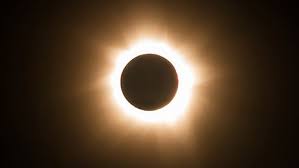
What event is shown in the figure?
a)
lunar eclipse
b)
solar eclipse
c)
tide formation
d)
sun spots
59.
How many times a day does the water rise and fall to produce tides?
a)
once
b)
twice
c)
three times
d)
four times
60.
During which phases of the Moon do spring tides occur?
a)
the first phase and the new moon
b)
the new moon and the full moon
c)
only the full moon
d)
third quarter and first quarter
61.
The moon's pull on the Earth makes the surface level of the ocean rise and fall. This change in level is ________
a)
rotations
b)
tides
c)
moon phases
62.

Put the moon phases in order starting with the new moon.

a)

H,D,C,F,B,G,E,A

b)

D,C,B,A,H,G,F,E

c)

A,D,E,G,B,F,C,A

d)

H,A,E,G,B,F,C,D

63.
Waxing means...
a)
Growing
b)
Dying
c)
Losing light
d)
Moving
64.
What would be the result if the Earth's axis was not tilted but straight up and down?
a)
Nothing would change
b)
There would be no seasons
c)
Days would get longer
d)
The Equator would burn up and the poles would freeze
65.
When the visible (lit) portion of the moon is increasing, the moon is:
a)
waning
b)
full
c)
waxing
d)
new
66.

As the moon's shape light part decreases , we say that the moon is _.

a)
swelling
b)
waxing
c)
waning
d)
disappearing
67.
List the moon phases in order
a)
New Moon, Waxing Crescent, First Quarter, Waxing Gibbous, Full Moon, Waning Gibbous, Third Quarter, Waning Crescent
b)
New Moon, Waning Crescent, First Quarter, Waning Gibbous, Full Moon, Waxing Gibbous, Third Quarter, Waxing Crescent
c)
New Moon, Waxing Crescent, Third Quarter, Waxing Gibbous, Full Moon, Waning Gibbous, First Quarter, Waning Crescent
d)
New Moon, Waning Crescent, Third Quarter, Waning Gibbous, Full Moon, Waxing Gibbous, First Quarter, Waxing Crescent
68.
The longest day of the year in the northern hemisphere (June 21 aka Jalen's birthday)
a)
Summer Solstice
b)
Winter Solstice
c)
Solar Eclipse
d)
Lunar Eclipse
69.
The shortest day of the year in the northern hemisphere (December 21 aka Jalen sister's birthday)
a)
Summer Solstice
b)
Winter Solstice
c)
Solar Eclipse
d)
Lunar Eclipse
70.
The following is a picture of...
a)
Spring Tide
b)
Neap Tide
c)
Tide
d)
Ocean Current
71.
The following is a picture of...
a)
Spring Tide
b)
Neap Tide
c)
Tide
d)
Ocean Current
72.
During a solar eclipse...
a)
The sun is blocked by the moon
b)
The Earth is blocked moon
c)
The moon is blocked by the sun
d)
You are blocked
73.

What type of tides does the diagram show?

a)

Neap Tides

b)

Spring Tides

74.
Meteors that don't burn up in Earth's atmosphere and collide with Earth are called __________
a)
Meteoroid
b)
Meteor 
c)
Meteorite
d)
Asteroid
75.
Smaller pieces of asteroids that float in space are called
a)
Meteoroid
b)
Meteorite
c)
Meteor
d)
Asteroidites
76.
Rocks that enter Earth's atmosphere and burn creating a shooting star are called
a)
Asteroid
b)
Meteor
c)
Meteoroid
d)
Comet
77.
What happens to a comet as it approaches the sun?
a)
It burns up completely. 
b)
It develops 2 tails and a coma.
c)
It turns into an asteroid.
d)
It hits the sun.
78.
What type of tides would this arrangement of earth-moon-sun create?
a)
neap tide
b)
spring tide
c)
new moon tide
d)
full moon tide
79.
What type of tide would this arrangement of earth-moon-sun create?
a)
full moon tide
b)
new moon tide
c)
neap tide
d)
spring tide
80.
Which planet is the hottest planet?
a)
Mercury
b)
Mars
c)
Venus
d)
Saturn
81.
which of the following is the cause of Mercury having a shorter year than Jupiter
a)
Mercury orbits closer to the sun
b)
Mercurys orbit is more circular than Jupiter
c)
Mercury rotates at a slower speed than Jupiter
d)
Mercury has a more elliptical orbit than Jupiter
82.
What planet is colder?
a)
Mercury
b)
Earth
c)
Jupiter
d)
Neptune
83.
The Sun is Made up of...
a)
Helium and Hydrogen
b)
Oxygen and Nitrogen
84.
Our galaxy is called the
a)
Earth Nebula
b)
The Hubble Galaxy
c)
The Milky Way
d)
The Snickers
85.
The surface of this planet appears red due to rusting iron in the rocks.
a)
Mercury
b)
Mars
c)
Pluto
d)
Venus
86.
What does the atmosphere on Venus create?
a)
Slow rotation
b)
Cooling effect
c)
Cloud cover
d)
Greenhouse effect
87.
Took place in the center of the cloud of dust and gas to create energy that formed the Sun.
a)
Solar wind
b)
Evaporation
c)
Gravity
d)
Nuclear fusion
88.

(A)n _____ is a meteoroid that survives the heat of falling through Earth's atmosphere and lands on Earth's surface.

a)

asteroid

b)

comet

c)

meteor

d)

meteorite

89.

Our Milky Way Galaxy is one of billions (~200,000,000,000+) of other galaxies that together make up the _____.

a)

Local Group of galaxies

b)

Virgo Supercluster of galaxies

c)

Orion Nebula

d)

Universe

90.
What is NOT a common characteristic of the outer planets?
a)
Gaseous
b)
Giant
c)
Rings
d)
Smaller than Earth
91.

An astronomical unit, or AU, is the distance

a)

From the Sun to Mars

b)

From the Sun to the Earth

c)

From Earth to Mars

d)

From the Sun to the end of the solar system

92.
What is the theory that states the universe began with a huge explosion?
a)
Apparent Magnitude
b)
Light year
c)
Big Bang Theory
d)
Galaxy
93.
What is a large grouping of stars, dust, and gas bound together by gravity?
a)
Nebula
b)
Galaxy
c)
Cosmology
d)
Gravity
94.
The color of a star depends on its
a)
size
b)
temperature
c)
shape
d)
magnitude
95.
What color are the hottest stars?
a)
red
b)
yellow
c)
orange
d)
blue
96.
What type of galaxy has no defined pattern or shape?
a)
Spiral 
b)
Elliptical
c)
Irregular
d)
Constellation
97.

What is a light-year?

a)

The distance between two stars

b)

The distance light travels in one year

c)

The time it takes light to travel 300,000,000 meters

d)

The time it takes light to travel to Earth from the sun

98.

What are the three major types of galaxies ?

a)
spiral, triangular, irregular
b)
spiral, elliptical, irregular
c)
spiral, elliptical, triangular
d)
triangular, elliptical, irregular
99.

What is the measurement unit used to describe distances between stars and galaxies?

a)

astronomical units

b)

kilometers

c)

miles

d)

light-year

100.

Which model shows the positions of the sun, the moon, and Earth that have the greatest effect on ocean tides?

a)
b)
c)
d)
101.

Which statement best describes a galaxy?

a)

A cloud of gas that is the birthplace of stars

b)

A system of billions of stars, gas, and dust held together by gravity

c)

A ball of plasma that experiences nuclear fusion in its core

d)

A mass of dust and ice that orbits a star in an elliptical pattern

102.
What type of galaxy is this?
a)
Spiral
b)
Elliptical
c)
Irregular
d)
Irrational
103.
What type of galaxy is this?
a)
Spiral
b)
Elliptical
c)
Irregular
d)
Irrational
104.
The type of galaxy that is composed of the older stars and low-mass stars.
a)
Spiral
b)
Elliptical
c)
Irregular
d)
Constellation
105.
What type of galaxy has no defined pattern or shape?
a)
Spiral 
b)
Elliptical
c)
Irregular
d)
Constellation
106.
What is a difference between spring and neap tides?
a)
Spring tides occur when the earth and sun are IN LINE with the new or full moon. 
b)
Spring tides occur when moon in 3rd or 1st quarter phases
c)
Spring tides are LOWER than neap tides
d)
Spring tides occur in Spring and neap tides can occur in any season
107.
The type of galaxy that has few young stars, little gas or dust, and NO arms is a/n
a)
elliptical galaxy
b)
spiral galaxy
c)
irregular galaxy
d)
barred spiral galaxy
108.
The type of galaxy that has few young stars, little gas or dust, and NO arms is a/n
a)
elliptical galaxy
b)
spiral galaxy
c)
irregular galaxy
d)
barred spiral galaxy
109.

Stars are classified according to their

a)

size, temperature, and distance.

b)

size, distance, and brightness.

c)

color, brightness, and temperature.

d)

temperature, brightness, and size.

110.

Since the Big Bang, and even today, the universe is still _____.

a)

Expanding

b)

Shrinking

c)

Cooking

d)

Spinning

111.

Most scientists believe the Big Bang Theory explains which of the following questions?

a)

How our planets and moons formed

b)

How our universe began

c)

How the sun turns hydrogen into helium

d)

How fast light travels through space

112.

Why does our Sun, an average sized star, appear so much brighter than other more massive stars?

a)

The Sun is lit

b)

The Sun is closer to Earth than other stars

c)

The Sun is made of different elements

d)

The Sun is prettier so it shines brighter

113.
The ______ includes all of the gases around Earth
a)
hydrosphere
b)
crust
c)
atmosphere
d)
cloud
114.
The Geosphere is...
a)
All liquid water on Earth
b)
A 100km thick layer of gases
c)
frozen water on earth
d)
Earths entire solid body 
115.
_______ of water on Earth is ocean water. (about) 
a)
75%
b)
92%
c)
3%
d)
97%
116.
What percentage of our atmosphere is made up of other gases such as argon, water vapor, and carbon dioxide?
a)
1%
b)
21%
c)
78%
d)
90%
117.
What is the percentage of oxygen in Earth's atmosphere?
a)
1%
b)
21%
c)
78%
d)
90%
118.
What is the percentage of nitrogen in Earth's atmosphere?
a)
1%
b)
21%
c)
78%
d)
90%
119.
In which layer of the atmosphere does weather occur?
a)
Mesosphere
b)
Thermosphere
c)
Stratosphere
d)
Troposphere
120.
Which atmospheric layer is the closest to Earth's surface?
a)
Stratosphere
b)
Troposphere
c)
Ionosphere
d)
Exosphere
121.
The Ozone layer protects the Earth from...
a)
Visible Light
b)
Ultraviolet Light
c)
Infrared Rays
d)
Carbon Dioxide
122.
The amount of water vapor in the air is ...
a)
temperature
b)
air pressure
c)
humidity
d)
altitude
123.
Why is MOST of the freshwater on Earth not available for our use?
a)
All freshwater on Earth is easily accessible for use.
b)
It is frozen in the icecaps and glaciers.
c)
It is surface water.
d)
It is underground.
124.
Study the graph below.  Where is most of the Earth's water located?
a)
Rivers and Lakes
b)
Glaciers and Icecaps
c)
oceans
d)
groundwater
125.

All living things on earth are part of the....

a)

Biosphere

b)

Geosphere

c)

Hydrosphere

d)

Cryosphere

126.
____________ rocks form when heat and pressure inside Earth change one kind of rock into another kind.
a)
Metamorphic
b)
Extrusive
c)
Intrusive
d)
Sedimentary
127.
What type of rock is formed when molten rock cools and hardens?
a)
metamorphic
b)
sedimentary
c)
organic
d)
igneous
128.

Which most accurately represents the order of the compositional layers of the Earth from A - D in the diagram below.

a)

Crust, Mantle, Inner Core, Outer Core

b)

Crust, Mantle, Outer Core, Inner Core

c)

Crust, Outer Core, Inner Core, Mantle

d)

Crust, Inner Core, Outer Core, Mantle

129.

Which letter would include the asthenosphere in the diagram?

a)

Letter A

b)

Letter B

c)

Letter C

d)

Letter D

130.

Earth's core is mostly made of_____.

a)

nickel and iron

b)

silicon and oxygen

c)

oxygen and calcium

d)

magnesium and potassium

131.
The ________ the difference in pressure, the __________ the wind speed.
a)
greater, slower
b)
less, faster
c)
greater, faster
132.
All frozen water on Earth is...
a)
Hydrosphere
b)
Geosphere
c)
Cryosphere
d)
Atmosphere
133.

The layer of rock that forms Earth's outer surface.

a)

inner core

b)

skin

c)

crust

d)

mantle

134.

The relatively thick part of the Earth's crust which forms the large land masses

a)

crust

b)

oceanic crust

c)

asthenosphere

d)

continental crust

135.

The layer of hot, solid material between Earth's crust and core

a)

mantle

b)

inner core

c)

outer core

d)

lithosphere

136.

The relatively thin part of the Earth's crust which lies beneath the ocean basins

a)

continental crust

b)

crust

c)

oceanic crust

d)

mantle

137.

A layer the Earth that is made of liquid iron and nickel ; responsible for Earth's magnetic field

a)

crust

b)

mantle

c)

inner core

d)

outer core

138.

The average weather pattern for a region over a long period of time.

a)

climate

b)

process

c)

rock cycle

d)

weather

139.
Which of Earth's spheres includes rocks and sediments?
a)
hydrosphere
b)
biosphere
c)
geosphere
d)
atmosphere
140.
Which of these is an example of how Earth's hydrosphere interacts with the atmosphere?
a)
the ocean affecting air temperature
b)
a river flowing through a canyon
c)
earthquakes
d)
migration of birds in winter
141.

What is it called when the wind breaks down and changes rocks?

a)

wind currents

b)

weathering & erosion

c)

sand dunes

d)

evaporation

142.

(_______________)- Land (Earth's core, mantle, mountains, sand, metals)

a)

Geosphere

b)

Hydrosphere

c)

Atmosphere

d)

Biosphere

143.

(_______________)- Water (oceans, lakes, rivers, groundwater, glaciers)

a)

Geosphere

b)

Hydrosphere

c)

Atmosphere

d)

Biosphere

144.

(_______________)- Air (oxygen, nitrogen, water vapor, zone, wind)

a)

Geosphere

b)

Hydrosphere

c)

Atmosphere

d)

Biosphere

145.

(_______________)- Life (plants, animals, insects, humans)

a)

Geosphere

b)

Hydrosphere

c)

Atmosphere

d)

Biosphere

146.

(_______________) Groundwater is absorbed plants into their roots (_______________).

a)

Geosphere

b)

Hydrosphere

c)

Atmosphere

d)

Biosphere

147.

(_______________) Ocean water evaporates into the air (_______________).

a)

Geosphere

b)

Hydrosphere

c)

Atmosphere

d)

Biosphere

148.

(_______________) River deposits sediment (_______________).

a)

Geosphere

b)

Hydrosphere

c)

Atmosphere

d)

Biosphere

149.

What is happening in our atmosphere at a certain time and place maximum one week.

a)
weather 
b)
front
c)
climate
d)
zone
150.
The process when rocks break into smaller pieces due to exposure to natural elements is called
a)
erosion
b)
weathering
c)
sediments